When winter settles in, you’re probably wondering if your solar panels will keep producing electricity—especially when everything is covered in snow. It’s a normal question, and many homeowners ask it every year. You may have noticed that the light drops, days get shorter, and sometimes you have to go outside to clear snow off the roof. Yet, even under snow, solar panel production in winter doesn’t stop completely. There are some tricks and things to know to keep your panels efficient, even when it’s biting cold and the sky remains gray. Here’s what you should remember about solar production in winter, without complicated jargon.
Key Points to Remember
- Solar panels continue to produce electricity in winter, despite snow and cold.
- A thin layer of snow can sometimes melt by itself thanks to the panels’ warmth, but heavy build-ups should be monitored.
- Increasing panel tilt and cleaning them before winter helps maintain good output.
- Snow can also play a positive role, as it reflects light and can improve production at certain times.
- It’s important to regularly monitor the condition of your panels and act if you notice a drop in performance or damage from frost or hail.
Winter Solar Panel Production: Understanding the Impact of Cold and Snow
Influence of Temperature on Photovoltaic Performance
You might think solar panels hate the cold, but the reality is quite different. Cold winter weather improves the performance of photovoltaic cells. When temperatures drop, the electrical conductivity inside the modules improves, making it easier to convert light into electricity. Paradoxically, it’s excessive heat that slows things down—each degree above 25°C pushes efficiency downward.
- Production depends only on brightness, not heat
- Cold reduces internal electrical loss
- A heatwave can reduce production by 0.25 to 0.5% per extra degree
Consequences of Snow Accumulation on Panel Surfaces
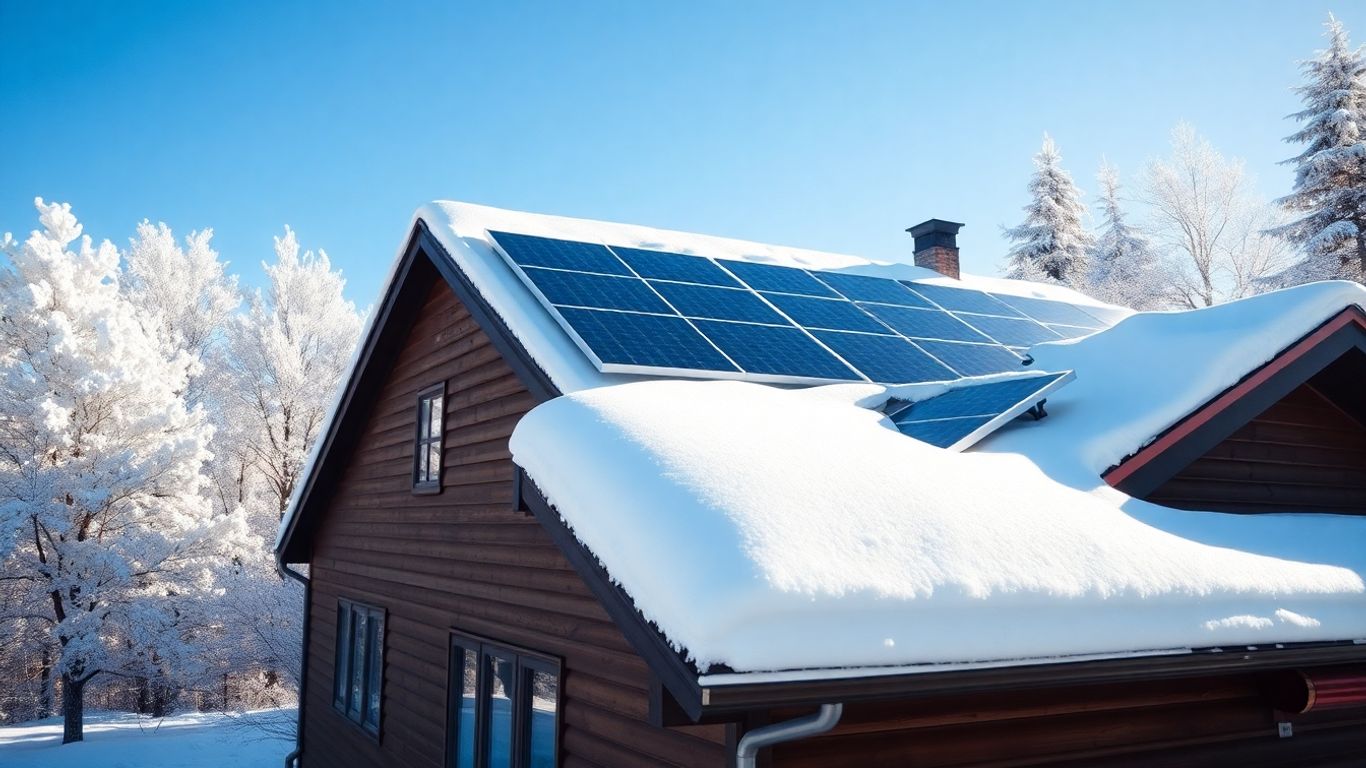
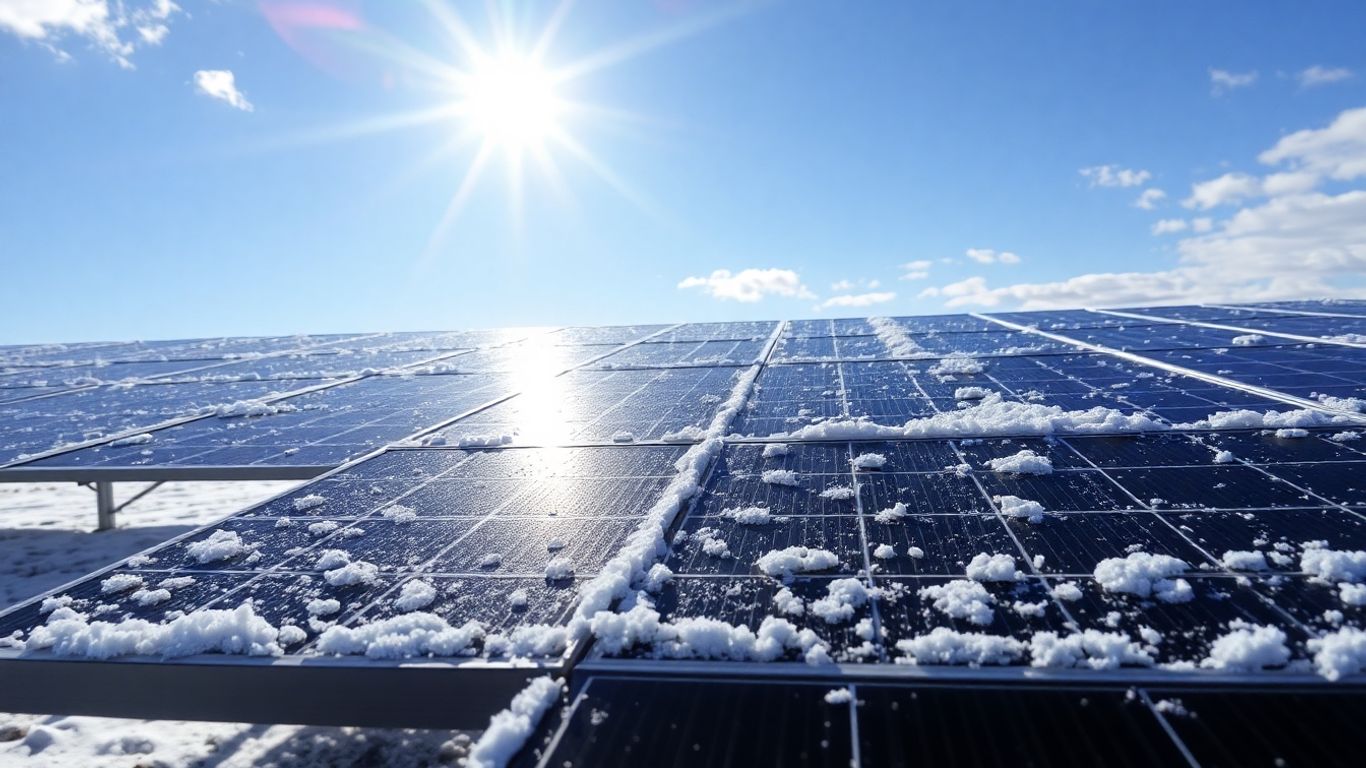
White snow on the roof looks nice, but it’s more complex for your installation. A fine dusting of snow lets light through, but a thick layer prevents any production. This blockage is temporary: as soon as part of the panel is exposed to light, production resumes, even if only partially.
Even beneath the snow, a solar panel can supply energy as soon as the light gets through or you clear part of the surface.
Also, don’t forget snow loads can become problematic if they pile up heavily. This adds mechanical stress to the panels, so keep an eye on them during winter. To minimize losses, it’s advised to clear snow carefully without damaging the modules (this article details how snow affects production).
| Panel Condition | Expected Production |
|---|---|
| Clear (no snow) | Maximum |
| Thin snow film | Slight decrease |
| Thick, uncleared layer | No production |
Positive Effect of Light Reflection on Snow
Snow isn’t just a hindrance—it can sometimes be an asset. Thanks to the albedo effect, the white surface can reflect up to 90% of light, sending more radiation onto the cells. This can temporarily increase output, especially if your panels are tilted at the right angle. It’s not uncommon to see a production spike on a sunny winter day, even when the freezing air seems to chill everything else around you.
- Light reflection amplifies the amount of light captured
- This albedo effect is especially pronounced in heavily snowy regions
- Steep panel angles in winter let snow slide off better and maximize light collection
How Winter Solar Panel Production Differs from Other Seasons
Winter is very different from the rest of the year for electricity production via photovoltaic panels. Even if your panels keep working despite the cold, their output varies a lot between January and July. Let’s take a look at the concrete reasons for these differences.
Shorter Days and Reduced Solar Irradiance
- The sun rises later and sets earlier: the daily production window is shorter.
- Solar irradiance—that is, the intensity of the received light—naturally drops in winter.
- This means fewer hours of production, no matter how good your installation’s orientation and quality are.
In winter, it’s common to see days with only 40 to 50% of the usable sunlight compared to summer, which limits total production.
Winter vs. Summer Output Comparison
Here’s a look at the main output differences:
| Season | Share of Annual Production | Average Monthly Sunlight Hours | Example Energy Produced (3 kWc, Lille) |
|---|---|---|---|
| Winter | 30% | 40-70 h | 70-90 kWh |
| Summer | 70% | 180-220 h | 350-400 kWh |
- In general, your panels produce 2 to 5 times less electricity during the winter period.
- On a standard setup, January often has about 80% lower output than July.
- However, as long as it’s daytime, you will always get some minimum production.
Role of Diffuse Light and Clouds During Winter
- Contrary to popular belief, your panels also capture diffuse light—the kind that passes through clouds.
- Even on overcast days, your system produces electricity, though in reduced amounts.
- This portion of diffuse light partially compensates for the lack of direct sunlight, but can’t reach summer levels.
As you see, the winter drop in production is natural, caused by less abundant light and shorter days, but your panels never stop working altogether.
Weather Risks for Winter Solar Panel Production
When you install solar panels, you probably expect their performance to drop in winter, mainly due to the cold. However, it’s not the cold that causes issues, but specific weather phenomena like freezing, thawing, hail, and heavy snowfall. Let’s see what all this means for your system.
Effects of Freezing, Thawing, and Hail on Photovoltaic Modules
Even though modules are designed to withstand cold, repeated freeze-thaw cycles can cause microcracks on the glass or in the cells. These micro-defects are rarely visible to the naked eye, but they weaken the strength and longevity of your panels over time.
When it comes to hail, it’s really only severe storms that pose a risk. Large hailstones can directly damage the cells and weaken the frame. Quality panels often come with hail resistance certification, but that doesn’t mean they’re invulnerable.
| Phenomenon | Associated Risks | Possible Consequence |
|---|---|---|
| Freeze/thaw | Microcracks, water infiltration | Reduced output |
| Hail | Direct impact on cells/glass | Breakage, malfunction, leaks |
| Heavy snow | Compression, excessive weight | Panel sagging, breakage |
Panel Resistance to Harsh Winter Weather
In most cases, today’s solar modules are tested for extreme conditions. Whether it’s snow, wind, or freezing rain, there are standards (like IEC 61215) that good manufacturers meet. It’s rare to see an immediate breakdown from bad weather, unless the conditions are truly exceptional.
- Reinforced glass panels (like borosilicate) are well-designed for impact resistance.
- Aluminum frames are designed to avoid moisture-related corrosion.
- Mountings generally withstand heavy snow loads, but checking their condition before each winter is recommended.
The main thing is not just impact resistance, but regular inspections and anticipating weak points.
Protecting Your System from Seasonal Damage
There’s no magic bullet, but several practices can help control the risks:
- If possible, install a temporary protective cover when a severe storm or hail forecast is announced.
- Check your panel tilt, as a sufficient angle helps limit snow buildup and aids sliding.
- Visually inspect your modules after every episode of extreme weather for cracks or distortion.
In winter, vigilance is your solar panels’ best friend. Taking time to monitor their condition and following some simple rules often makes the difference between a high-performance system and recurring problems next spring.
Optimizing Winter Solar Panel Production with Tilt and Maintenance
In winter, maximizing the efficiency of your solar panels comes down to precise adjustments and the right maintenance. Light becomes scarce, the weather gets unpredictable, and every detail counts for reliable output.
Adjusting Tilt to Capture Maximum Light
The orientation and angle of your panels are crucial during the cold season. With the sun lower in the sky, rays hit the modules at a slant, which makes a real difference from what happens in summer. To improve exposure, recommended tilt is around 60°, sometimes higher depending on your latitude. But often, the slope of the roof limits this option.
Here’s a handy formula for adjusting the angle if your setup allows:
| Your Region’s Latitude | Recommended Tilt (Winter) |
|---|---|
| 45° | 69° |
| 50° | 74° |
Note: changing the panel tilt can be risky; always get a professional for any major intervention.
Preventive and Regular Cleaning Before Winter
At the end of autumn, remember to clear away dust, leaves, and other dirt that accumulates. Even a thin film seriously limits how much light can get in. As frost arrives, this coating prevents good output and speeds up buildup of persistent snow.
Some cleaning tips:
- Use warm water (never overly hot)
- Pick soft tools (special snow rake for panels, soft-bristled broom)
- Avoid any abrasive products or metal scrapers
By keeping your panels clean and clear from the very first cold days, you naturally limit losses in efficiency.
Monitoring and Analyzing Winter Performance
Your system deserves careful attention through winter. Modern monitoring systems display the amount of energy generated day by day. A steep drop often signals a problem—unremoved snow, dirt build-up, or a technical fault.
For effective monitoring:
- Check your production stats regularly
- Note unusual fluctuations
- Act promptly in case of ongoing drops
Vigilance and routine maintenance are your best allies for continued solar power production, even during the toughest season.
Managing Snow and Ice on Photovoltaic Panels
When and How to Clear Snow Without Damaging Modules
Even in winter, your photovoltaic panels can keep producing electricity. However, when snow piles up, it can temporarily halt production. Clearing snow from panels must be done carefully since their surface is still fragile.
Some tips for maintaining your panels without risk or damage:
- Wait for natural melting if the layer is thin and daytime temperatures are above freezing;
- Use a soft-bristle broom or a rubber-bladed squeegee to remove thick layers without scratching the glass;
- Avoid climbing on the roof; use a telescopic arm when possible;
- Never pour hot or cold water on the panels to prevent thermal shock.
Sometimes, letting the snow melt naturally is the safest option—especially if accessing your installation is dangerous.
Risks From Excessive Snow Accumulation
Heavy snow buildup causes two main problems:
- It blocks light, stopping all production until it’s removed;
- Its weight can stress the supports or damage the integrity of the mounts.
Here’s a summary table of effects by snow thickness:
| Snow Thickness | Impact on Production | Recommended Action |
|---|---|---|
| Less than 3 cm | Low, temporary | Let it melt |
| 3 to 10 cm | Strong decrease | Clear with care |
| More than 10 cm | No production, mechanical risks | Clear promptly |
Check your panels regularly during heavy snow periods, especially in mountain areas or windy locations.
Using Snow as an Ally with the Albedo Effect
Snow, far from being only an obstacle, can also help capture more light. Its reflective power (albedo) means the sun’s rays bounce up toward the underside of the panels—sometimes surprisingly so. This effect can, for short periods and when panels are well exposed, boost output by several percent.
- Angle the panels optimally in winter (generally steeper than in summer);
- Avoid clearing all the snow on the ground around the panels—reflectivity is higher with snow cover;
- Think of snow as a natural mirror for your installation!
Even in mid-winter, by simply managing snow and ice, your system stays efficient and keeps supplying you with clean electricity.
The Impact of Shadows and Environment in Winter
Monitoring Shadow Zones From the Sun’s Low Position
In winter, the sun stays lower on the horizon all day. This path deeply changes the distribution of shadows around your solar setup. A chimney, bare tree, or even a fence can suddenly block light at certain times, reducing your production.
That’s why it’s crucial to monitor for new shadows during winter—even if you didn’t see them in summer.
- Regularly inspect areas around your panels.
- Watch for growing trees or seasonal obstacles.
- Consider temporary additions like garden sheds or decorations.
The Role of the Local Environment and Seasonal Obstacles
Your home’s environment becomes especially important once winter sets in. Neighboring buildings or snow piles can create unexpected shadows over the day. Even a wall or hedge that never causes trouble in summer might be an issue in winter due to the sun’s low angle.
Here’s what to watch for:
- Snow accumulation on the roof or near the panels creating unwanted shadows
- Changed lighting conditions because of temporary or seasonal structures
- Frost nearby, which may reflect or absorb light, affecting yields
Paying attention to these seasonal changes lets you anticipate output drops and limit their impact.
Consequences of an Installation Poorly Suited to Winter
Installing solar panels without considering the winter environment can significantly reduce output.
Common issues:
- Uneven production with large swings throughout the day
- Overall lower yields for several weeks
- Permanent shadow zones that keep some modules from working
| Factor | Production Impact |
|---|---|
| Shadow from buildings | -15 to -40% |
| Natural Obstacles | -10 to -35% |
| Poor orientation | Up to -20% |
Pays special attention to the environment even at the installation stage—this is your best guarantee of winter performance.
Unique Advantages of Solar Installations in Snowy Regions
Installing solar panels in heavily snowy areas might seem risky at first glance, but in fact, there are several specific benefits in this context. You can maximize photovoltaic output even during long winter months with a few simple adaptations and the right equipment.
Benefits of Adjustable Mounts or Solar Trackers
Adjustable mounts and solar trackers let you change the tilt and orientation of panels. Here’s why this matters in winter:
- They let you follow the sun’s path, which is much lower in the sky during the cold season.
- Changing the angle helps avoid snow buildup, as it slides off more easily from steeper panels.
- Proper orientation increases capture of light reflected by snow.
| Setup | Production (Winter) | Production (Summer) |
|---|---|---|
| Fixed mount (30°) | Low/average | High |
| Adjustable mount (60-65°) | Average/high | Good |
When sunlight is weak, a well-oriented system with a steeper angle really makes a difference in the amount of energy you collect.
Performance in Remote or Mountainous Areas
In remote or high-altitude regions, solar solutions offer real benefits:
- Colder air naturally improves photovoltaic cell efficiency, offsetting less sunlight.
- Lack of light or air pollution favors even better yields.
- The electricity produced allows independence for off-grid sites, reducing need for traditional generators.
Equipment Adaptation to Extreme Conditions
For top performance in snowy areas, your setup needs to adapt:
- Choose panels certified to withstand snow weight and freezing.
- Pick mounting structures with a steeper angle for easier snow clearing.
- Use reinforced, watertight connectors less prone to water infiltration during freeze/thaw cycles.
The tip is that with the right setup, you can make use of the albedo effect: snow on the ground reflects light, increasing how much your panels receive. This gives your system a boost on clear winter days—even when temperatures stay low.
Conclusion
In summary, even during winter, your solar panels keep producing electricity, despite snow and shorter days. Of course, production drops compared to summer, but it doesn’t stop. Often, just a few simple actions are enough: check your panels’ condition, remove snow if it builds up too much, and think about tilt to catch the most light. Sometimes, snow can even help by reflecting light. By taking care of your system and staying mindful of the weather, you can optimize production all year long. In the end, winter isn’t a roadblock for solar power—just a time that needs a bit more attention from you.
FAQ
Do solar panels produce electricity even when it’s snowing?
Yes, your solar panels can keep producing electricity even in winter and under snow. If part of the surface stays clear, they absorb light. On the other hand, a thick layer of snow blocks the light and lowers production. So you need to monitor and remove snow if needed.
Should you clear snow off solar panels in winter?
It’s recommended to clear your solar panels if snow piles up heavily. A thin layer will often melt on its own thanks to panel heat. Use gentle tools, like a snow broom, to avoid damaging the surface when removing snow.
Does cold weather damage solar panels?
No, cold does not damage your solar panels. In fact, panels actually work better in cold weather. It’s mainly the freezing, thawing, and hail that can cause small issues, but modern panels are built to resist these conditions.
How can you optimize solar panel production in winter?
To improve output, you can increase the tilt of your panels to better catch the sun’s low rays. Also consider cleaning your panels before winter to remove dust and leaves. Monitor your system’s production to act quickly if there’s an issue.
Can snow help produce more electricity?
Yes, snow can also be an advantage. It reflects sunlight (albedo effect), increasing the amount of light your panels receive. So even in winter, your panels can benefit from this extra light.
Are solar panels suitable for cold and snowy regions?
Yes, there are panels and mounts designed especially for cold, snowy regions. They’re tougher and sometimes adjustable for tilt. This helps optimize output and ensures good weather resistance through the winter.