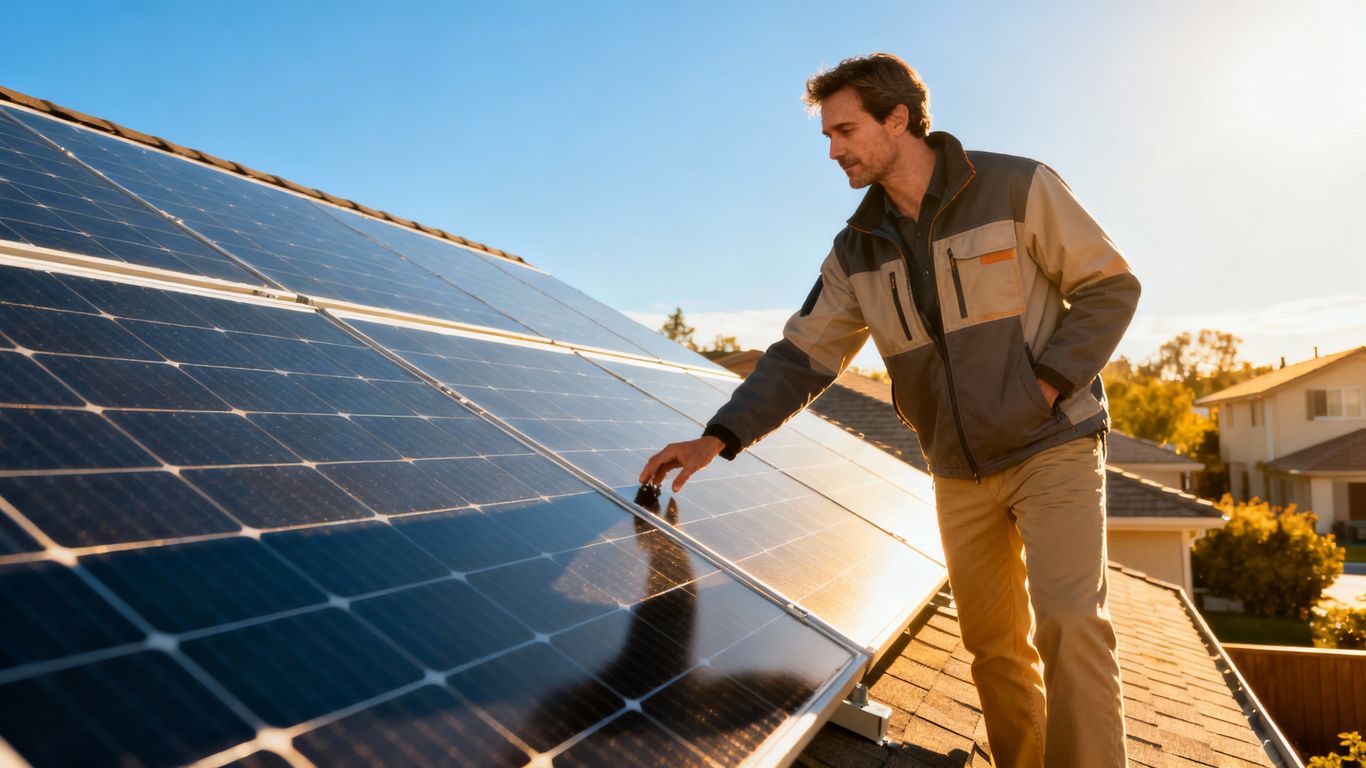
Are you considering installing solar panels but don’t know where to start? Quentin Moreau shares his advice to help you see things more clearly. He covers the major steps, selection criteria, and tips to optimize your solar project. No complicated jargon here: just practical advice drawn from his hands-on experience. Whether you’re a novice or already well-informed, you’ll find plenty here to move forward confidently with your project.
Key Points to Remember
- Support from an expert like Quentin Moreau simplifies every stage of your solar project.
- Choosing the right power and technology for your solar panels is essential to meet your needs.
- Selecting a certified RGE installer ensures a reliable and compliant installation.
- Financial incentives are available in France to help reduce the cost of your solar installation.
- Regular maintenance and a few simple steps can extend the life of your solar panels.
Quentin Moreau: The Importance of Expertise for Your Solar Project
Personalized Guidance in Selecting Equipment
Having solar panels installed is a real project. It’s far from just choosing equipment from a catalog. Tailored support helps you avoid common mistakes and target the installation that truly meets your needs. Quentin Moreau recommends a personalized approach where every detail matters:
- Analysis of your actual and future consumption (new appliances, electric car, etc.)
- Assessment of your roof (orientation, tilt, available space)
- Selection of inverters and panels suitable for your home
- Study of storage possibilities, if needed
This follow-up allows the proposed solution to be adapted, optimizes purchase costs, and ensures your comfort over the long term.
Technical and Economic Feasibility Assessment
One of the first roles of a professional like Quentin Moreau is to check which solutions can be applied to your situation. Beyond the roof area, he considers the sunlight in your region, the sturdiness of the framework, and even regulatory constraints.
Here are the points typically studied in a feasibility study:
| Criterion | Why It Matters |
|---|---|
| Roof orientation | The more south-facing, the better |
| Tilt | Impacts annual output |
| Shadows and obstacles | Reduce efficiency |
| Budget and incentives | Influence the model selected |
Often, projects are never profitable due to lack of an honest initial analysis. An expert’s insight prevents this kind of disappointment.
The Expert’s Role in Optimizing Profitability
You might think that producing your own electricity guarantees savings, but it’s not automatic. Quentin Moreau emphasizes proper sizing, which is crucial to making the most of your installation. If it’s too small, you won’t maximize your potential; if it’s too large, your investment takes longer to pay off.
Here’s how the expert maximizes the profitability of the project:
- Precisely calculates the right number of panels
- Suggests partial or total self-consumption solutions, or resale options tailored to your usage
- Looks up all accessible financial aids
- Adjusts the model based on energy price changes and your habits
Professional guidance from the beginning means greater peace of mind and fewer unexpected setbacks — leading to a solar installation that is truly suitable, profitable, and reliable over time.
The Essential Criteria for Selecting Solar Panels, According to Quentin Moreau
Choosing the right solar panels is a crucial step for a reliable and profitable long-term installation. Quentin Moreau recommends evaluating several key points that will really affect the efficiency and safety of your solar project, taking into account your home’s specific features and energy needs.
Power and Efficiency Adapted to Your Consumption
The power of your panels must match both your daily needs and your roof’s potential. For this, Quentin Moreau always suggests starting with a precise analysis of your annual energy consumption. Here’s a summary table of the required surfaces and number of panels according to the desired capacity:
| Total Power | Number of panels (approx.) | Roof surface area |
|---|---|---|
| 3 kWc | 8 | 15 m² |
| 6 kWc | 16 | 30 m² |
| 9 kWc | 24 | 48 m² |
But surface area isn’t everything: roof orientation and tilt, as well as shading, are just as important for final efficiency.
- Estimate your annual output according to regional sunlight exposure.
- Avoid any persistent shaded areas, which could significantly lower electricity production.
- Allow some headroom for consumption peaks or future needs.
Choosing the Right Photovoltaic Technology
There are several technologies for photovoltaic panels, each with its strengths.
- Monocrystalline silicon: high efficiency, ideal for small surfaces.
- Polycrystalline silicon: moderate cost, a good compromise for larger areas.
- Thin-film panels: less expensive, but lower efficiency and more sensitive to orientation.
Your choice depends on your priorities: available area, initial investment budget, or maximum performance goals.
For a small or less sunny roof, opt for monocrystalline if possible—even though it’s more expensive to buy, it will give you better performance.
The Importance of Certification and Manufacturer Warranties
Never neglect warranties and certified quality—they’re what will protect you from bad surprises over the long run. Quentin Moreau always emphasizes:
- Check that the panels carry a European certification (IEC, EN, ISO…)
- Favor a product warranty of at least 10 years
- Also ask for a linear performance warranty (often 25 years)
Strong warranties and a reputable brand minimize risks and secure your solar investment.
Tip: Don’t hesitate to compare warranties between brands—they aren’t all at the same level.
Key Steps for a Successful Installation with Quentin Moreau
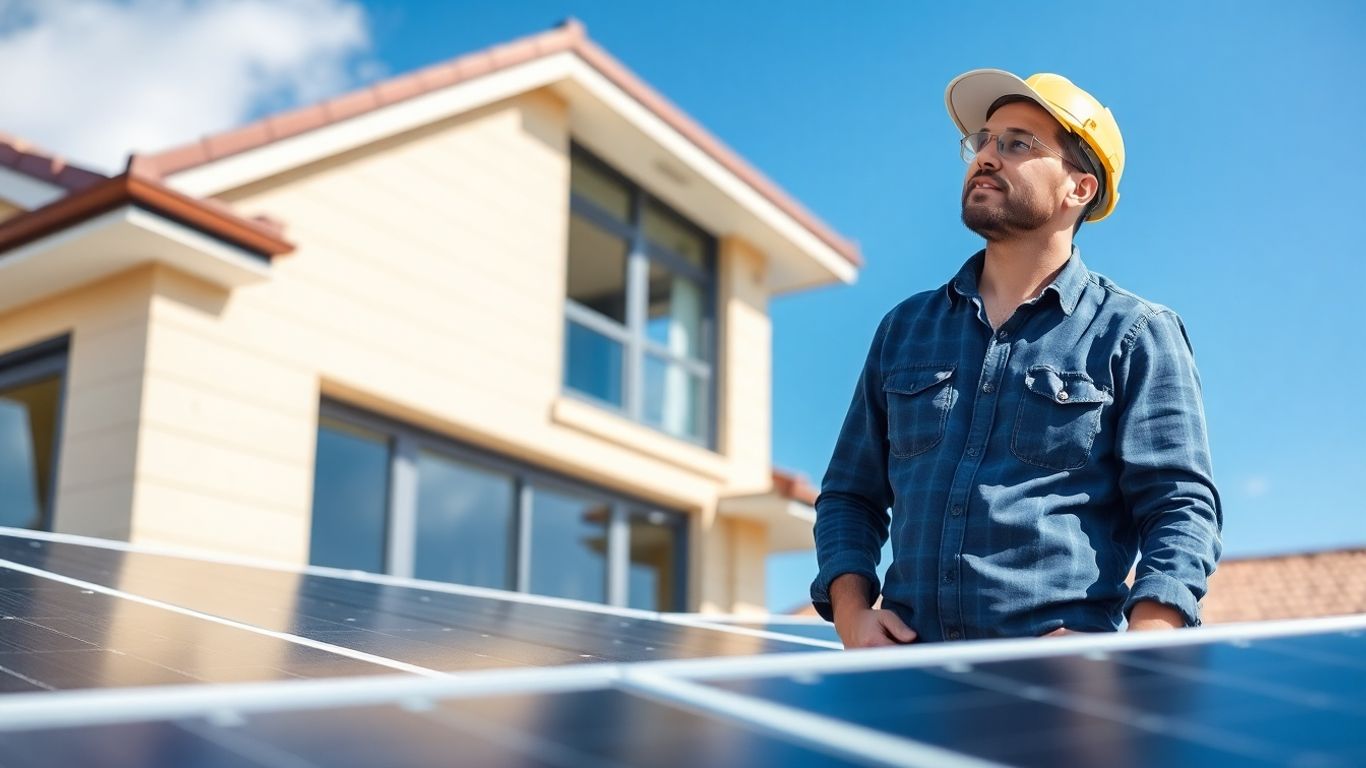
Any solar project can seem complicated without guidance. With Quentin Moreau at your side, you’ll make the right decisions and avoid wasting time—or money—on poor technical choices.
The Preliminary Study and Administrative Declaration
Before installing anything, you need a personalized study. The optimal location is evaluated, the ideal panel capacity is calculated according to your consumption, and your roof’s constraints are identified. At this stage, you also define the use mode (self-consumption or resale).
- Placement and tilt of selected panels according to your roof’s configuration.
- Return-on-investment estimate based on your usage patterns.
- Preparation of the initial declaration file to submit to the municipality, including detailed plans and diagrams.
Entrusting these steps to a professional ensures everything is done correctly and without error.
Selecting an RGE Certified Installer
The installer’s choice directly impacts the safety and profitability of your future equipment. Quentin Moreau always recommends choosing a craftsman with the RGE (Recognized Environmental Guarantor) qualification. This guarantees compliance with standards, the safety of your system, and eligibility for government incentives.
Checklist for finding the right professional:
- Request the RGE certificate and proof of ten-year insurance.
- Compare several detailed quotes.
- Check the clarity of the warranties on panels and installation.
- Prefer craftsmen who conduct an on-site technical visit.
The Installation Process and Grid Connection
Once you have administrative approval and have chosen your installer, work can begin. The panels are mounted on the roof, the inverter (or micro-inverters) is installed, and the system is connected to your home’s network.
Process summary:
- Physical installation of the panels (often overlaid on the roof covering).
- Connection to your existing electrical panel.
- Installation of the inverter to convert the energy produced.
- Application to Enedis for approval and connection to the public grid.
| Step | Average lead time | Who handles it |
|---|---|---|
| Panel installation | 0.5 to 1 day | RGE installer |
| Grid connection | 2-4 weeks | Enedis/Installer |
| Consuel certification | A few days | Installer |
| Commissioning | 1 day (often remote) | Enedis |
A well-managed installation allows you to quickly benefit from your panels, with no surprises and the assurance of optimal long-term performance.
Optimizing the Profitability of Your Solar Investment According to Quentin Moreau
Key Payback Factors in a Photovoltaic Project
To get the best return on your solar project, it’s wise to analyze several factors even before installation. Here’s what really affects your payback:
- Your household’s electricity consumption and how it may evolve.
- The home’s level of insulation and surface area.
- Installed capacity and panel orientation.
- Local sunlight and possible shading.
- Purchase and installation costs of equipment.
- How you use your system: total resale, partial resale, or self-consumption.
For reference, here’s a table summarizing the most common capacities for a house and the required surfaces:
| Installed capacity (kWc) | Number of panels | Required surface (m²) |
|---|---|---|
| 3 | 8 | 15 |
| 6 | 16 | 30 |
| 9 | 24 | 48 |
Before starting your project, take the time to review your consumption habits and identify major annual peaks. This simple step helps you choose the most profitable installation size.
Financial Incentives Available in France
In France, several measures have been introduced to lower the initial cost of your solar installation:
- The self-consumption bonus (decreasing payments depending on installed capacity).
- Feed-in tariffs for unused electric power, set by the government.
- Reduced VAT (10%) on installations under 3 kWc.
- Various local or regional aids, specific to certain towns or departments.
It’s crucial to submit every support application on time, and to keep all documents related to the work. Consulting with a professional will ensure you claim all the support you’re entitled to.
The Evolution of Resale Tariffs and Self-Consumption
Depending on how you plan to use your solar output, the financial impact will differ:
- With self-consumption and selling the surplus, you benefit directly from savings on your electricity bills, while selling any extra you produce.
- With total resale, all production goes to the grid at a guaranteed tariff for twenty years.
- As of July 1, 2025, resale tariffs for installations up to 9 kWc average around €0.13/kWh. This figure is revised regularly.
Self-consumption, combined with good usage management, can significantly cut your energy costs. This is often the recommended option for individuals seeking increasing energy independence.
Quentin Moreau’s Tips for Maintaining and Extending Panel Lifespan
The Importance of Periodic Maintenance by a Professional
Careful maintenance plays a crucial role in the life of your solar panels. It’s not enough to simply install them and hope they keep working efficiently for decades. Regular maintenance by a specialist minimizes breakdown risk and ensures optimal output. In France, it’s standard practice to have a professional visit every year or two to check modules, electronics (inverters or micro-inverters), and connections. The service cost is around €150 to €200, including thorough cleaning and a technical inspection, according to maintenance recommendations. It’s a small price compared to the security of long-term production.
Never skip a maintenance visit, even if everything appears to be working. A hidden issue can quickly affect your installation’s profitability and cost more than a simple preventive check.
Warning Signs to Watch For
Even without technical skills, you can spot signs that something’s wrong with your solar setup. Check these things regularly:
- Sudden drop in electricity production shown on your monitor or app.
- Panels with unusual marks: cracks, black spots, damaged glass.
- Warning signals on the inverter or frequent system shutdowns.
If you notice any of these signs, immediately contact a certified installer qualified for photovoltaic systems (a directory of RGE-certified professionals is also available to find an installer in your area).
Maximizing Lifespan Through Good Practices
A well-maintained solar panel often lasts up to 30 years. A few simple steps can help you reach this performance:
- Clean modules once or twice a year, avoiding harsh products. Use demineralized water and a soft cloth instead.
- Watch for new shading (branches, buildings) as shade reduces output.
- Check cables and fixings regularly to catch wear before it leads to trouble.
- Schedule a preventive technical check every two years by a professional.
| Recommended frequency | Action |
|---|---|
| 1-2 times/year | Panel cleaning |
| Every 2 years | General inspection by a pro |
| Each season | Quick visual check |
Following these tips from Quentin Moreau, you increase your chances of enjoying solar energy year after year, while avoiding costly surprises.
Innovative and Alternative Solutions Recommended by Quentin Moreau
Plug & Play Solar Kits for a Simple Installation
Want to produce your own electricity without major renovation? Plug & play solar kits are a truly accessible option. These pre-assembled systems plug directly into a standard outlet. Installation often takes less than an hour and requires no advanced knowledge or costly professional intervention.
- Quick setup: unpack, place, plug in.
- Flexibility: move or expand units as needed.
- Instantly profitable for partial self-consumption.
Plug & play kits are a step forward in making solar more accessible, especially in urban spaces where space is tight and energy demand is moderate.
Hybrid Systems: Producing Electricity and Heat
Hybrid solutions allow you to produce both electricity and heat, delivering overall efficiency above standard systems. A hybrid panel combines photovoltaic cells with thermal collectors, recovering generated heat. This gives you two uses from the same surface area.
| System type | Electricity production | Heat production |
|---|---|---|
| Photovoltaic | Yes | No |
| Solar thermal | No | Yes |
| Hybrid system | Yes | Yes |
This kind of installation is perfect for households looking to maximize the profitability of their roof or a small available area.
Alternatives for Unsuitable Roofs
Shaded roofs, fragile supports, or unfavorable orientation—there are alternative solutions to equip your home despite these limitations. Quentin Moreau suggests:
- Solar canopies for parking areas or gardens.
- Ground installations on lightweight frames, if you have space.
- Photovoltaic façades, suitable for buildings with south-facing exposure.
For your project to be solid, it’s best to call on an experienced professional, like those you can find through the selection of qualified solar installers.
Never consider any space lost: a personalized analysis will often reveal unexpected solar potential.
The Environmental Impact of Solar Installations, Analyzed by Quentin Moreau
Lowering CO2 Emissions and Advancing the Energy Transition
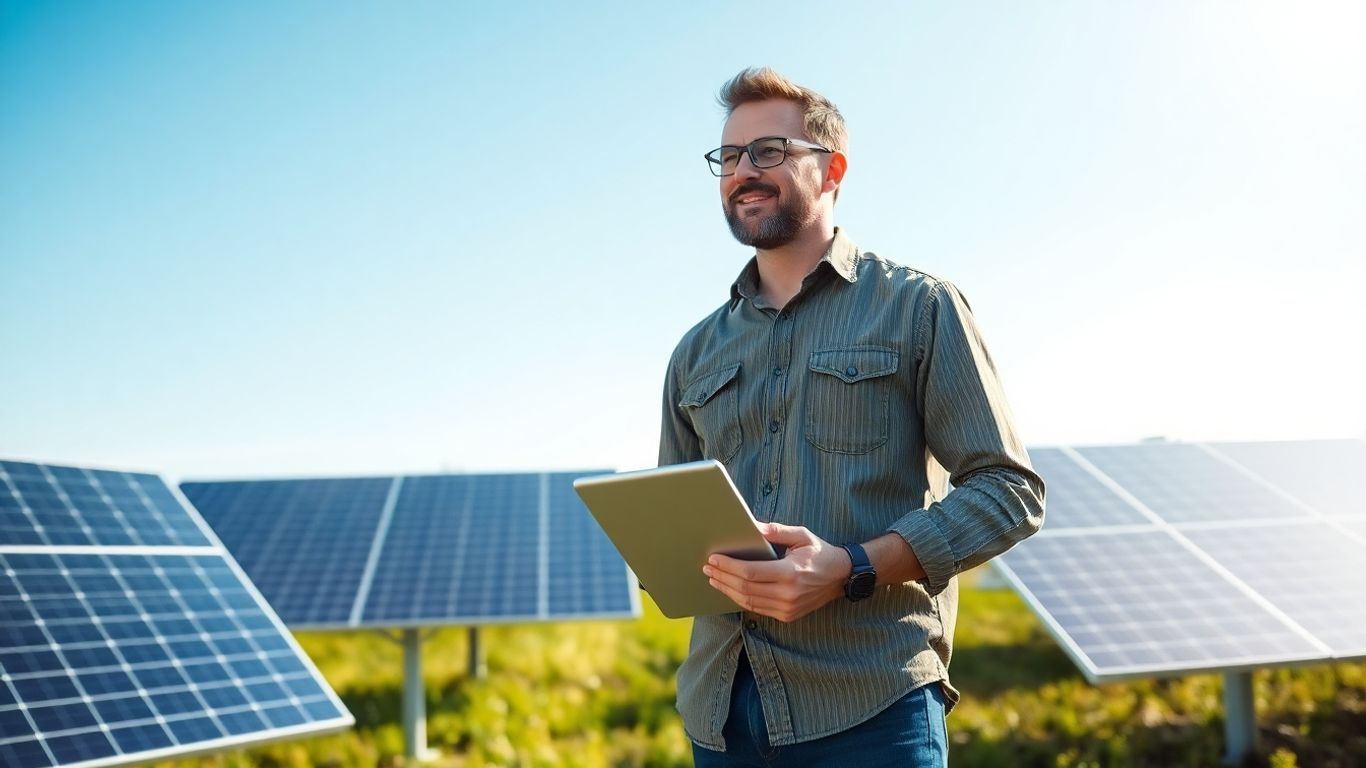
By choosing to install solar panels, you’re taking a concrete step towards reducing your carbon footprint. Solar energy produces zero direct CO2 emissions during use, unlike traditional fossil sources. The electricity generated replaces part of the supply from nuclear or coal sources, thus helping the French energy transition. According to recent studies, installing a 3 kWc residential photovoltaic system avoids emitting an average of about 900 kg of CO2 per year over the panels’ lifespan.
| Energy Source | CO2 Emissions (g/kWh) |
|---|---|
| Photovoltaic solar | 40 |
| Coal | 820 |
| Natural gas | 490 |
| Nuclear | 12 |
With solar, every household directly contributes to cleaner consumption, as long as the installation is sized for actual needs.
Recycling and Second Life for Photovoltaic Panels
At the end of their life, your solar panels are not destined for landfill. The industry has set up a dedicated recycling stream. Currently, more than 95% of a panel’s materials can be recycled: the glass, aluminum, and certain silicon cells are recovered. Here’s what typically happens to panels at the end of their life:
- Recycling the glass and aluminum for other industries.
- Reuse of silicon cells, after purification, to manufacture new modules.
- Some parts are reused on second-hand modules.
In all cases, by entrusting your panels to an approved recycling provider, you ensure they continue to serve the environmental cause.
Complying with Environmental and Thermal Regulations (RE 2020)
Installing solar panels also means complying with current regulatory frameworks. RE 2020 introduces precise requirements for energy performance and environmental impact for new constructions. Here’s what to remember:
- Greenhouse gas emissions over the building’s lifecycle are now included in compliance calculations.
- Electricity produced by self-consumption is counted in the energy performance assessment.
- The quality of the architectural integration of the panels is also monitored.
Complying with these standards ensures your project will contribute to more sustainable living and will meet new climate challenges in the long term.
Conclusion
To sum up, you now have an overview of the essential points to know before embarking on solar energy. It’s not always easy to navigate the incentives, procedures, and technical choices, but you now have all the tools you need to move forward. Don’t hesitate to seek advice from a certified professional, especially if you have doubts or specific questions. Solar energy moves fast, and there are always new solutions to discover. Take your time comparing and learning, and above all, move at your own pace. Your solar project is worth careful thought and can truly make a difference to your bills and the environment. If you want to go further, consider requesting a quote or consulting an expert for personalized support.
Frequently Asked Questions
What are the advantages of installing solar panels at home?
With solar panels, you produce your own electricity, letting you reduce your energy bills. It’s also good for the planet, since you cut CO2 emissions. Plus, you’re less dependent on rising electricity prices.
Can you install solar panels yourself?
Yes, there are DIY solar kits. They’re simple to set up and plug in. However, if you install them yourself, you won’t be able to claim government financial support. For more safety and warranties, it’s best to call a certified professional.
What financial incentives exist for installing solar panels?
Several incentives are available in France. You can get the self-consumption bonus, a reduced VAT rate, payment for the electricity you produce, and sometimes local incentives as well. These supports make the project more affordable.
How do I choose the right power for my solar panels?
The ideal power depends on your electricity consumption. Check your bills to know your yearly usage. A professional can also help you calculate the right system size, considering your roof and the available sunlight.
Do solar panels need regular maintenance?
Yes, it’s important to have your system checked every two years by a professional. This ensures everything works well and catches any issues early. Good maintenance helps keep your system’s efficiency high over the long term.
What if my roof is not suitable for solar panels?
If your roof isn’t suitable, there are alternative solutions. You can install panels on a carport, pergola, wall, or even on the ground. There are also plug-in solar kits you can connect directly to an outlet, letting you benefit from solar even without an ideal roof.