Looking to charge your electric vehicle without exploding your electricity bill? A solar charging station is probably the simplest and most logical solution today. Imagine: you plug your car in at home, and the sun does the rest. No more monitoring kWh prices or depending on the grid. This increasingly common system allows you to use solar energy captured by panels on your roof to directly power your car, day or night thanks to storage batteries. In this article, you’ll discover how a solar charging station works, why it’s attracting so many households, and how to choose the solution best suited to your needs.
Key points to remember
- The solar charging station allows you to charge your vehicle at home using only the energy from the sun.
- Installing this system significantly reduces your fuel and electricity expenses in the long run.
- Thanks to storage batteries, you can charge your vehicle even at night or on cloudy days.
- The initial investment can be reduced thanks to various financial aid and tax incentives.
- A well-sized installation increases your independence, decreases your environmental impact, and enhances your home’s value.
How a Solar Charging Station Works for Vehicles
Transforming Solar Energy into Usable Electricity
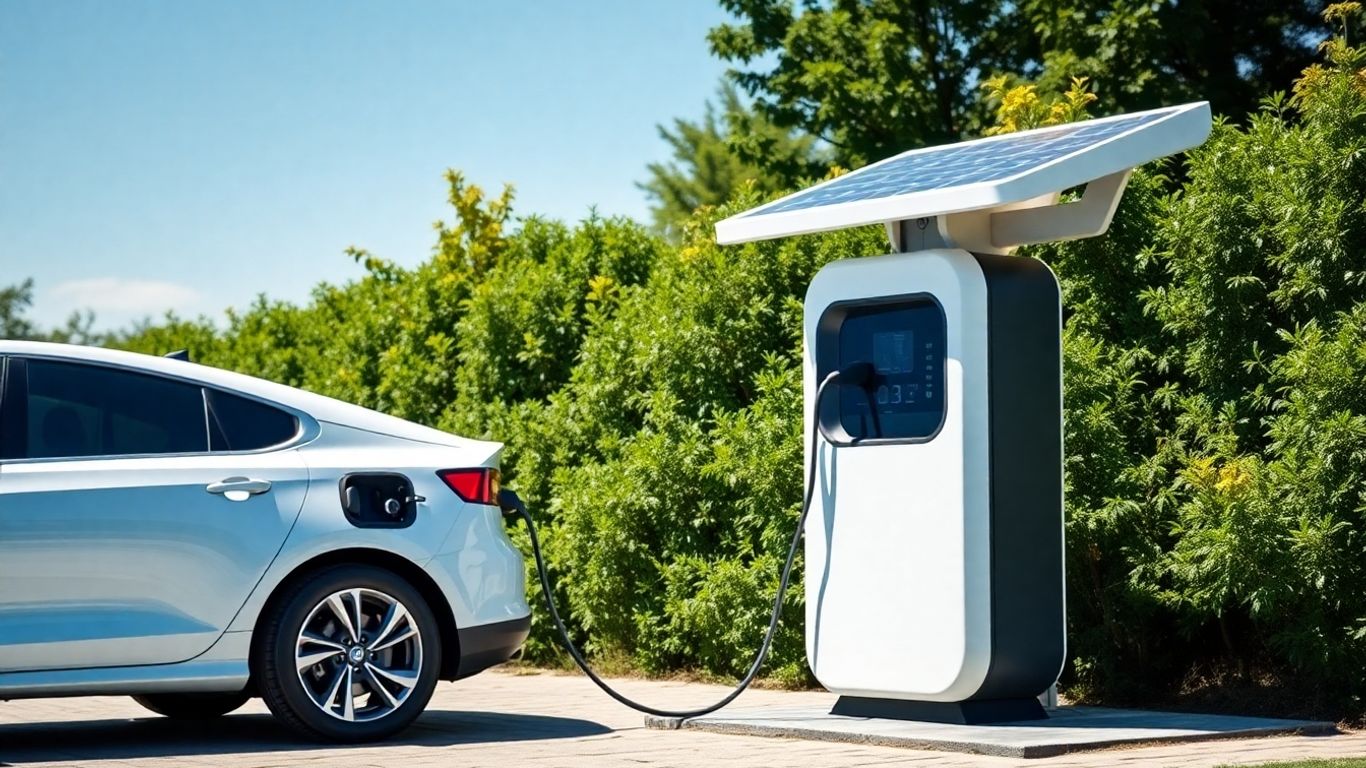
When you charge your electric vehicle at home with a solar station, everything starts with capturing sunlight through photovoltaic panels. These convert solar energy into direct current (DC). This electricity is not directly compatible with your home appliances or the charging station. Thanks to an inverter, the DC current is converted into alternating current (AC), which can then power the charging station and the rest of your house with clean energy. Self-production is thus the key to the daily operation of your solar station.
- Solar panels capture solar photons.
- DC current is converted to AC by the inverter.
- This energy is routed to the charging station and the house.
At home, you’re not just using grid electricity anymore: every sunbeam becomes a source of eco-friendly mobility.
Role of the Hybrid Inverter and Storage Batteries
The hybrid inverter acts as the conductor in your installation. It manages solar energy distribution in real time, prioritizing direct vehicle charging if production permits. When there is a surplus of solar production, this surplus is stored in a home battery, making it available to charge the vehicle at night or on cloudy days. This ensures optimal self-consumption while reducing grid feed-in.
Summary table of component roles:
| Component | Main function |
|---|---|
| Hybrid inverter | DC/AC conversion, distribution management |
| Storage battery | Storage and restitution of excess solar energy |
| Charging station | Efficient powering of the electric vehicle |
Solar-powered charging stations clearly show the benefits of such a system: optimized production and better return on investment.
Managing Charging with Self-consumption
Self-consumption means using your own solar energy as it is produced. Smart charging management allows you to synchronize your vehicle’s energy needs with solar production. With connected systems, you can configure charging to occur when your panels are producing the most, thus limiting reliance on the electrical grid. Here are a few key points:
- Charging scheduled during solar production peaks
- Priority use of energy stored in the battery
- Possibility to supplement charging from the grid only if needed
This results in efficient use of every solar kWh, lower costs, and real independence from fluctuations in the public grid.
Economic Advantages of Charging with a Solar Charging Station
You’re probably wondering if investing in a solar charging station is really worth it financially. The answer is clear: charging your vehicle with the sun can transform your mobility budget, especially with the expected rise in electricity prices.
Reducing Costs Related to Electric Mobility
Every kilowatt hour produced by your solar panels means free electricity for charging your vehicle. Over a year, it is common to save between €500 and €1,000 on charging costs, depending on your mileage and the model of your car. Don’t overlook:
- No unexpected increase in grid tariffs
- Solar electricity available “at home”
- A significant reduction in long-term fuel expenses
With a well-designed installation, many users cover up to 80% of their annual charging needs with solar energy, significantly limiting their dependence on the grid.
Long-term Return on Investment
The cost of a solar kit with a charging station and, if applicable, a battery storage system, is generally paid off in 7 to 9 years. After that period, electricity becomes almost free for the charging station, knowing that a photovoltaic installation usually lasts more than 20 years.
| Scenario | Initial investment | Annual savings | Payback |
|---|---|---|---|
| Home without battery | €7,000 | €700 | 10 years |
| Home with battery | €9,000 | €900 | 8 years |
For those who drive a lot, or live in very sunny regions, the return on investment is even greater.
Available Financial Aid and Tax Incentives
Take advantage of several schemes to lighten your initial expense:
- Energy transition tax credit
- Self-consumption bonus
- Regional or municipal aid depending on your area
The sum of these financial incentives can represent 20 to 30% of the purchase price, accelerating your transition to solar.
Switching to a solar charging station isn’t just an ecological choice, it’s also a smart financial move for those watching their budget and environmental impact closely.
Energy Independence and Environmental Impact of Solar Charging Stations
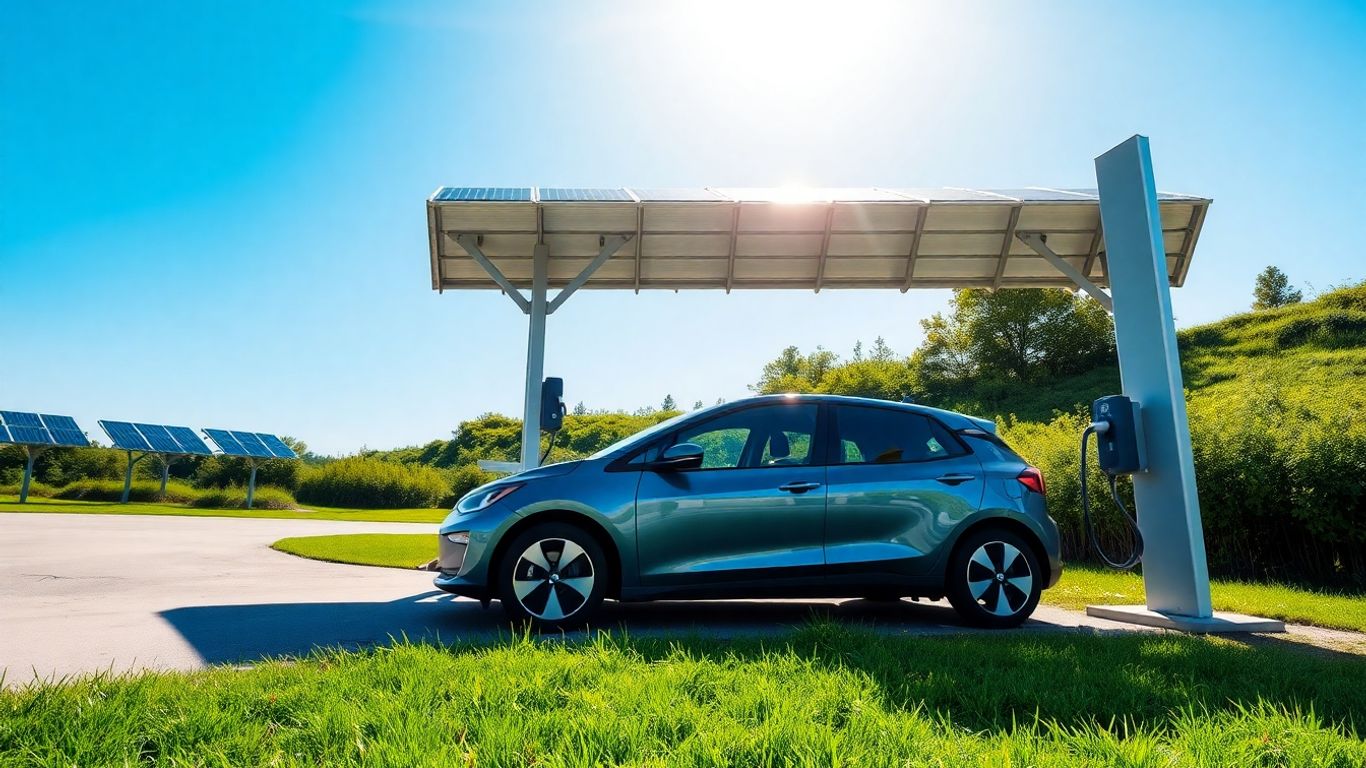
Independence from the Electrical Grid
When you install a solar charging station at home, you instantly reduce your dependence on the traditional grid. By producing and using your own energy, you protect yourself from price hikes and occasional outages. In good weather, it’s possible to cover up to 80% of your annual electric vehicle charging needs with a suitable installation, even without a storage battery.
- Lower electricity bills from the first year
- Use of renewable energy produced on-site
- Resilience to grid outages
You have more autonomy at home, using clean energy that no longer directly depends on the national electricity system.
For more details on the immediate financial impact, know that a well-designed solar installation can generate between 30 and 60% savings in the first year (reduce your electricity bill).
Significant Reduction in Carbon Footprint
Choosing a solar charging station means actively lowering your environmental impact. Charging your car with sunlight means zero direct emissions. Even if the rest of the house still uses some traditional electricity, most of your trips truly become “green.”
| Energy used for charging | CO₂ emissions | % of needs covered by solar |
|---|---|---|
| 100% grid | Very high | 0% |
| Solar without battery | Low | 50–70% |
| Solar with battery | Very low | 70–90% |
This notably improves your home’s ecological footprint, especially for electric vehicles used regularly.
Sustainable Driving and Housing, Property Value Enhancement
Adopting solar charging at home also increases your property’s value. Homes equipped with solar solutions, charging stations, and batteries are increasingly attractive to environmentally conscious buyers looking for long-term savings.
- Potential increase in your property’s resale value
- Image of a future-proof, eco-responsible home
- Infrastructure ready for sustainable mobility
In summary, installing a solar charging station is a step toward greater independence, less pollution, and a home already suited for future energy challenges.
Essential Components of a Solar Charging Station Installation
When you’re considering installing a solar charging station at home, it’s important to understand the key elements of the system. It’s not just about putting a few panels on your roof—a number of components need to work together to ensure reliable and efficient charging of your vehicle.
Choosing the Right Solar Panels for Vehicle Charging
The starting point is the solar panel. Your selection needs to match your driving habits and your vehicle’s energy consumption. Typically, consider:
- Kit power: someone driving less than 10,000 km/year can use a kit around 3 kWp (about 8 panels). Someone driving between 10,000 and 20,000 km/year should opt for 5 to 6 kWp (around 12 panels).
- Roof configuration (orientation, tilt, shading)
- Expected performance according to the seasons
| Annual mileage | Recommended power | Approximate number of panels |
|---|---|---|
| < 10,000 km | 3 kWp | 8 |
| 10-20,000 km | 5-6 kWp | 12 |
The Importance of Battery Storage for Efficiency
Energy storage is often the step that is overlooked. As long as the sun shines while you’re charging, the system works in real time. But to gain comfort and independence, a home battery lets you:
- Keep excess energy generated during the day to charge your vehicle at night
- Reduce dependence on the external grid
- Secure your charging during solar production dips
Choosing a battery isn’t mandatory, but it gives you real flexibility in managing your charges, especially if your vehicle use doesn’t coincide with solar production times.
Specifics of the AC Charger for Electric Vehicles
The charging station, also called an AC charger, must be compatible with your installation and your electric vehicle. A few things to watch for:
- Power accepted by the charger (usually 7 to 22 kW for a residential station)
- Compatibility with the hybrid inverter that converts the direct current (from the panels) to alternating current
- Energy flow management to prioritize solar self-consumption
A smart charger can even adjust charging speed according to available solar production or the state of the home battery.
In summary, the overall performance of your installation relies on the balance between these three elements: panels, storage battery, charging station. Have the configuration validated by a professional to avoid surprises.
Sizing and Configuring Your Home Solar Installation
Installing a home solar charging station requires careful consideration of your needs and the configuration suited to your home. Properly sizing your system is the best way to ensure efficient charging and optimize self-consumption. Here you will learn how to make the right choices for your daily needs, avoid unnecessary expenses, and enjoy your electric vehicle without hassle.
Identifying Your Energy Needs Based on Vehicle Use
Before installing anything, take the time to analyze your use:
- Calculate the number of kilometers driven per month.
- Estimate your vehicle’s energy consumption per 100 km (often between 13 and 18 kWh).
- Add your specific needs (heating, home, other appliances).
For example, for 15,000 km/year and a consumption of 15 kWh/100 km:
| Distance traveled | Estimated consumption (kWh/year) |
|---|---|
| 10,000 km | 1,500 |
| 15,000 km | 2,250 |
| 20,000 km | 3,000 |
Don’t forget to consider actual solar production, which can vary depending on your region and roof angle.
Concrete Examples of Kits and Real Charging Scenarios
A few typical setups:
- 3 kWp kit (8 panels) for limited use (10,000 km/year)
- 5-6 kWp kit (12 panels) for 15,000–20,000 km/year use
- 9 kWp kit (with battery) recommended above 20,000 km/year or for nearly full coverage
Excessive power doesn’t always bring more advantages. An overly large kit is unnecessarily expensive. It’s better to match the system to your real consumption and available roof space.
Managing Charging in Winter and Low Sunshine
In winter, solar production drops sharply (sometimes by 40 to 60%). Nonetheless, it’s still possible to cover a significant part of your needs. To maximize efficiency:
- Prioritize charging the car when the panels are producing (during the day).
- Consider adding a battery to store surplus generated during the day.
- Use the electric grid as backup during long periods without sunshine.
In practice, a well-thought-out installation can cover between 50% and 80% of the annual needs of an electric vehicle, even in less sunny regions.
With a good estimate of your needs and a careful kit selection, you can quickly pay off your investment while gaining comfort and independence.
Technologies and Innovations for Home Solar Charging Stations
The world of solar charging for electric vehicles is evolving quickly. At home, new solutions emerge each year to make your installation more efficient, more flexible, and better tailored to your needs.
Development of Smart Energy Management Solutions
Smart energy management is the key to optimized home charging. You enjoy tools to monitor and control, in real time, solar production and your vehicle’s charging demand. Here’s what’s now available on the market:
- Charge scheduling based on solar peaks to maximize self-consumption
- Prioritizing charging according to your use (home or vehicle)
- Automatic shut-off features in case of household over-consumption
- Predictive algorithms that adapt charging cycles to weather or your habits
Thanks to these technologies, you can truly adapt solar charging to your lifestyle and priorities, without complex everyday actions.
Integration of Home Automation Systems and Mobile Apps
Modern installations allow you to control your solar charging station via your smartphone or smart home hub. Usability is improving:
- Mobile app to monitor solar production, battery level, state of charge
- Automatic activation scenarios (e.g., start charging only when excess energy is available)
- Real-time notifications on charging progress or incidents
It’s becoming easy to adjust charging from anywhere, while keeping an eye on your energy use.
Future Trends in Residential Solar Infrastructures
The next few years will bring innovations that continue to transform daily life:
- Bifacial solar panels, more efficient even when the sun isn’t overhead
- Home batteries that are more compact and modular
- Bidirectional charging stations, capable of feeding energy stored in your car back into the house (V2H, or Vehicle to Home)
| Technology | Main advantage | Already widely available |
|---|---|---|
| Smart management | Optimizes solar consumption | Yes |
| App control | Monitors and controls remotely | Yes |
| Bidirectional V2H | Supports the home when needed | Being rolled out |
In summary, these developments make home solar charging more accessible and flexible. You can
get the most out of your investment and prepare your home for tomorrow’s energy challenges.
Selection Criteria and Recommendations for Installing a Solar Charging Station
Selecting Providers and Installation Quality
The professional you choose for your solar charging station installation has a serious impact on the safety and performance of the entire setup.
- Always check the installer’s references and certifications (IRVE certification is essential for certain financial aid).
- Favor local specialists familiar with regional climate constraints, such as roof orientation or snow load.
- Request a personalized energy report to accurately size the required power.
A compliant installation by a qualified professional protects you from defects while optimizing your access to financial aid.
Also note that installation by an IRVE-qualified electrician allows you to benefit from a reduced VAT of 5.5%. Practical information is available on checking your eligibility for aid.
Maintenance, Warranties, and Equipment Durability
Be sure of the quality of the proposed components—panels, batteries, inverters, charging stations. Long warranties (up to 25 years for the panels) provide long-term peace of mind.
Good maintenance includes:
- Regular maintenance visits
- Cleaning of panels and checking the connections
- Updating energy management software
Here’s a summary table of typical warranty periods:
| Equipment | Standard Warranty |
|---|---|
| Solar panels | 20 to 25 years |
| Hybrid inverter | 7 to 12 years |
| Storage battery | 5 to 10 years |
| Charging station | 2 to 5 years |
After-sales support quality also matters: ask about the provider’s responsiveness before signing.
Personalization and Regional Adaptation of Solutions
Every region has its own solar challenges and opportunities, so you must tailor the solution to your specific situation:
- Roof orientation and tilt: optimal exposure maximizes annual production.
- Getting the most energy requires anticipating shade (trees, neighboring buildings) and planning for seasonal changes, especially in regions with harsh winters.
- The installation can be designed to evolve (adding panels or batteries later), based on your changing needs: new car, increased mileage, home resale.
Choosing a solar charging station tailored to your region ensures you cover more of your year-round energy needs, while enhancing your property value and energy independence.
Conclusion
In summary, installing a home solar charging station is a simple solution to charge your vehicle while taking advantage of solar energy. You gain independence, reduce your electricity bills, and make a concrete gesture for the environment. Of course, the initial investment may seem significant, but over time, the savings and peace of mind are well worth it. You are no longer dependent on price increases or power outages. Ultimately, charging your car with the sun is moving toward cleaner mobility, without unnecessary complications. If you’re still hesitating, take the time to compare offers and get advice from a professional. You’ll see, the sun has a lot to offer your daily life.
Frequently Asked Questions
How many solar panels are needed to charge an electric car at home?
In general, you’ll need between 8 and 12 solar panels (a 3 to 5 kWp kit) to cover the charging of an electric vehicle for daily use. The exact number depends on your car’s consumption and your region’s sunlight.
Can you charge your car using only the sun, even in winter?
Yes, it’s possible in summer because solar production is high. In winter, production drops, so solar usually covers part of your charging, but rarely all of it. With a storage battery, you can use solar energy produced during the day to charge your car in the evening or at night.
How much does it cost to install a solar charging station at home?
The price varies depending on the kit size and whether a battery is included. Expect between €5,000 for a small system and up to €12,000 for a complete kit with battery. Financial aids exist to lower the initial cost, and the investment is usually paid back in 7 to 9 years.
Is it necessary to install a storage battery with a solar charging station?
The battery is not mandatory but offers more convenience. Without a battery, you need to charge the car during the day when the panels produce. With a battery, you can charge at any time, even at night, using the stored energy.
What financial aids are available to install a solar charging station?
You can get several aids: tax credit, self-consumption bonuses, reduced VAT, and sometimes local subsidies. These aids make installation more accessible and speed up your project’s profitability.
Does solar charging increase my home’s value?
Yes, a house equipped with solar panels and a charging station is more attractive. It consumes less grid energy, which appeals to buyers interested in savings and the environment. So, it can increase your property value.