Thinking about recharging your electric car using energy from your solar panels? A photovoltaic charging station is a bit like installing a small gas station at home, but powered by the sun. Many homeowners are interested in the idea, especially with rising electricity prices. This system lets you use your excess solar energy directly for your vehicle, without going through the grid. It’s not rocket science, but there are still a few things to know before you get started. Let’s look together at how it works, why it’s an attractive solution, and what to check before making your choice.
Key Points to Remember
- The photovoltaic charging station allows you to use your excess solar power to charge your car, without depending on the grid.
- A well-designed system combines solar panels, inverter, and smart charger to control charging based on production and your needs.
- You can choose between different charging modes: 100% solar, mixed, or scheduled, to maximize your energy use.
- Choosing the right charger means checking compatibility with your installation, suitable power, and smart surplus management.
- By installing a photovoltaic charger, you save money on your bills and reduce the environmental impact of your travel.
Understanding How a Photovoltaic Charging Station Works
Transforming Solar Energy into Usable Electricity
The foundation of this system relies on the ability of photovoltaic panels to convert sunlight into direct current (DC). This energy, once generated, can go directly to your home or be stored for later use. For vehicle charging, this DC current is then transformed into alternating current (AC) via an inverter, to power the charging station and, ultimately, your vehicle’s battery.
- The panels only produce electricity when the sun is shining.
- Production is never constant; it depends on the weather, season, and orientation of the panels.
- Sometimes production exceeds household consumption, generating a surplus that’s ideal for charging your electric vehicle (learn how solar electricity is produced).
Using surplus energy to charge your vehicle makes the most of every kilowatt-hour you produce for free.
Role of Inverters and Monitoring
The inverter converts DC into AC so the electricity is compatible with your home network and charger. But its role goes further: modern inverters have built-in monitoring features that measure real-time solar production, household consumption, and available surplus.
A well-configured solution allows for:
- Optimizing energy allocation to the vehicle when surplus is available.
- Automatically switching to the grid when solar production drops or using a feature like « Boost mode » (the Boost function for efficient charging).
- Managing the power output to avoid overloads.
Interaction Between Charger, Panels, and Electric Vehicle
This is how the operation chain is organized:
- The photovoltaic panels produce electricity as soon as the sun rises.
- The inverter converts this energy so it’s accessible for the charger.
- The charging station, thanks to smart algorithms, adapts the charge power according to the available surplus.
- The vehicle absorbs the energy while plugged in, mainly from solar production.
| Component | Main role |
|---|---|
| PV Panels | Production of solar electricity |
| Inverter | DC/AC conversion and smart management |
| Charger | Charge adjustment and communication |
| EV | Storing electricity in the battery |
The ideal setup is to adjust the vehicle’s charge to your solar production to maximize self-consumption and limit electricity purchases from the grid.
Maximizing Self-Consumption by Charging with Solar Surplus
Charging your electric vehicle with solar surplus is simpler than it looks. The idea is to use the energy you produce but don’t immediately use at home. This way, you get the most out of every kilowatt-hour generated, without relying on the grid.
Managing Photovoltaic Surplus for Charging
The key is to synchronize your car charging with moments when your panels are producing more than your household needs. Here are some practical examples:
- Start charging while your other appliances are already running (washing machine, water heater, etc.).
- Adjust charging start times to sunlight conditions, using a smart system.
- See in real-time how much solar energy is available with monitoring tools.
| Time of day | Solar production | Home consumption | Available surplus |
|---|---|---|---|
| Morning (8am-10am) | Low | Medium | Low |
| Noon (12pm-3pm) | High | Medium | High |
| Evening (6pm-8pm) | Low | High | None |
Charging during sunny hours means maximizing both savings and efficiency, without wasting anything.
Reducing Your Dependence on the Power Grid
When you charge your vehicle with your own electricity, you reduce the need to buy expensive energy, especially during peak pricing periods. This also:
- Minimizes the impact of rising grid prices.
- Increases your energy independence, especially in summer.
- Avoids feeding your surplus to the grid at unattractive buyback rates.
- To learn how this approach cuts energy costs, see Install a solar charging station at home.
Impact on Household Self-Consumption Rate
Your self-consumption rate is the portion of your solar production you consume directly. By charging your vehicle during this surplus period, you can raise this rate. It’s a highly profitable strategy in the medium term.
A higher self-consumption rate means:
- Less dependence on electricity market fluctuations.
- Faster return on your photovoltaic investment.
- Greater control of your energy expenses.
Try to schedule high-energy-consuming activities during sunny windows, so every ray counts and benefits both your home and your mobility.
Technical Criteria for Choosing a Photovoltaic Charging Station
Compatibility with Existing Solar System
Before selecting a photovoltaic charging station, you must first check if it will work with your existing solar setup. If your panels have been installed for several years, make sure the charger can communicate smoothly with the inverter and other electrical components at home. Some modern chargers connect directly to the inverter, simplifying system integration.
- Check the voltage (single-phase or three-phase) of your system.
- Confirm software compatibility (especially for remote monitoring).
- Consider your panels’ average production capacity: too little power will limit solar-based charging.
To make full use of the energy you produce, choose a charger that communicates directly with your solar system and adjusts the charge according to available surplus.
Charging Power Suited to Your Needs
The right power isn’t the same for every household. For an individual, a single-phase charger with 7 kW to 7.4 kW will meet most daily needs. For bigger needs—multiple vehicles, fast charging, or large homes—a three-phase 22 kW charger is more suitable. Your choice should be based on both your electrical system size and your charging speed expectations.
| Use Case | Recommended Power | User Profile Example |
|---|---|---|
| Residential use (1 vehicle) | 7 to 7.4 kW | Single-family home, daytime charging |
| Heavy use (multiple vehicles) | 11-22 kW | Business, condo, professional fleet |
- Consider the maximum power allowed by your meter.
- Match the charging power with your solar production capacity.
- A good compromise maximizes surplus charging, especially when solar generation peaks, as mentioned on maximizing energy self-consumption.
Integrating a Smart Charger for Surplus Management
Choosing a smart charger isn’t just a luxury: it radically changes day-to-day energy management. These chargers automatically adjust charging power based on solar production and household consumption. With a connected charger, it becomes easier to schedule charging cycles just with energy surplus—you configure once, then forget about it.
Key features to look for:
- Dynamic control: automatic adjustment based on solar energy availability.
- Remote scheduling via a mobile app.
- Usage statistics and charge history available on your smartphone.
A smart system truly supports energy independence, while saving on electricity bills.
By checking each criteria carefully, you’ll select equipment that best makes use of every solar kWh generated at home, without unnecessary complexity.
Available Charging Modes to Optimize Solar Use
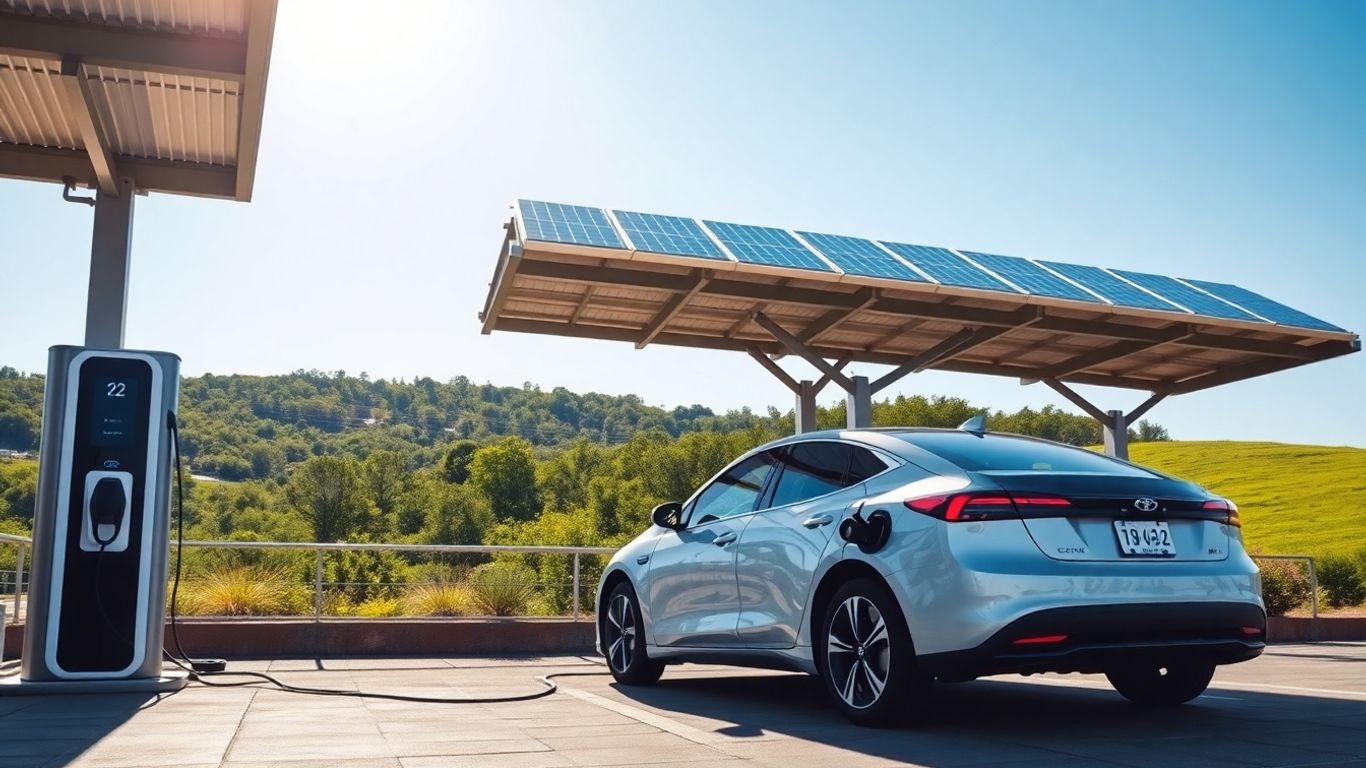
Learning about different ways to charge your electric vehicle means gaining the choice between energy independence, savings, and flexible use. With a well-configured photovoltaic charging station, it’s possible to use solar energy to the fullest every day—all from home.
Eco Mode: 100% Green Energy Charging
In this mode, the charger uses only the available solar surplus to charge your car. You enjoy truly eco-friendly charging, without drawing from the grid. For best results, plug the vehicle in during periods when your panels produce the most, generally between 11am and 3pm.
- All surplus PV energy is used first
- No draw from the grid
- Charge cost is nearly zero
Using eco mode means powering your mobility with free, local energy, while helping the environment.
Mixed and Scheduled Modes for Maximum Flexibility
This mode combines available solar electricity and, if needed, electricity from the grid. For example, if your battery needs a quick charge or it’s a low-sun period, the station intelligently supplements with public grid energy. Scheduled mode also lets you set specific times—very useful if you can take advantage of lower rates at certain hours.
| Advantage | Benefit |
|---|---|
| Faster charging | Assured productivity |
| Less dependent on sun | Charge even in winter |
| Cost control | Optimized by time of day |
For versatile use, this mode makes no compromises on vehicle availability.
Dynamic Control Based on Solar Production and Demand
The latest charging stations include dynamic control systems. They adapt in real time to your panels’ output and home usage. This mode is ideal to avoid any overloads and benefit from every cent of solar kilowatt-hours produced. Some stations even offer remote tracking via mobile apps.
- Automatic power adjustment
- Optimization of instant surplus
- Smart prioritization of household uses
Flexibility and intelligence in these charging systems make managing energy seamless, intuitive, and perfectly suited to your real daily consumption. Charging your vehicle becomes as natural and effective as any other routine—especially when you plug in during sunny hours (see more on solar charging).
Economic and Environmental Benefits of a Photovoltaic Charging Station
Lower Charging Costs and Return on Investment
Plugging your electric vehicle directly into solar production turns every mile into real savings. The initial investment may seem high, but it pays back over time, since every self-generated kWh doesn’t impact your electricity bill. Here’s how this looks in practice:
| Expense item | Grid only | With solar surplus |
|---|---|---|
| Electricity for EV | Full kWh price | Free or nearly free |
| Annual bill | Variable but high | Significantly reduced |
| Price increase impact | Highly impacted | Very limited |
When you add in available incentives*, the payback period shortens. You’re far less exposed to market price volatility.
Reducing the Carbon Footprint of Personal Transport
You charge your vehicle from a renewable source. Each session reduces the need for coal or gas plants. Your carbon footprint for every trip is reduced. This is a collective effort to cut transport-related emissions.
- Less CO₂ emitted per mile traveled.
- Better use of clean energy for daily trips.
- Supporting the “decarbonization” of the transport sector.
By charging with solar power, you actively support the energy transition while keeping your mobility budget under control.
Enhancing Locally Produced Renewable Energy
Not only do you produce your own electricity, but you also use most of it for your own needs. Charging your vehicle with solar surplus means:
- Reducing waste of surplus sent to the grid.
- Increasing your self-consumption rate, which boosts your energy independence.
- Enhancing your solar installation’s value if you later sell your property.
With a smart charger, every solar watt first goes toward your needs before feeding back to the grid.
In short, a photovoltaic charging station is an investment that makes total sense over the long term, for both your finances and the planet.
Installation and Usage Specifics for Residential and Commercial Photovoltaic Charging Stations
Technical Studies and Administrative Procedures
Before installing a photovoltaic charging station, you need a thorough analysis of your electrical infrastructure and the solar panel setup. You’ll need to:
- Conduct a feasibility study considering your panels’ output and the capacity of your home or business power network.
- Obtain, when required, various administrative permits from your municipality or grid manager.
- Check compliance with current safety standards.
Without careful planning, the risk of error or unexpected costs rises quickly.
| Step | Responsible party | Required documents |
|---|---|---|
| Feasibility study | Engineer/Contractor | Grid connection, plans |
| Administrative request | You/Installer | CERFA, plot plan |
| Commissioning | Qualified electrician | Installation report |
For peace of mind, it’s wise to hire an experienced professional to anticipate both regulatory and technical requirements.
Integration Within the Mobility Orientation Law (LOM)
The Mobility Orientation Law (LOM) imposes evolving requirements, especially for businesses equipping parking lots, but also individuals. Key points to consider:
- Requirement for certain new or renovated buildings to pre-equip parking lots for electric vehicle charging.
- Compliance with equipped space quotas for companies (based on the total number of spaces).
- Meeting technical standards to ensure the charging stations are interoperable with any compatible vehicle.
The LOM’s purpose is to structure access to charging and encourage choices favorable to renewable energy.
Professional Support for Individuals and Businesses
Installing a solar-powered charger takes coordination and expertise. Some installers provide end-to-end support, from initial contact to maintenance:
- On-site personalized audit
- Proposal adapted to the location’s setup (single-phase/three-phase)
- Handling administrative procedures and tax incentive applications
- Secure installation by a certified electrician, guaranteeing IRVE compliance
- Maintenance and periodic checks post-commissioning
There are also financial support and tax breaks that can reduce project costs, as described in the benefits of solar installation for electric vehicles.
In summary, installing a photovoltaic charging station for home or business demands careful administration, technical qualification, and forward-thinking about future regulations. By working with experts, you turn this energy transition into a safe, profitable, and sustainable step.
Smart Technologies and Innovations in Photovoltaic Charging Stations
Monitoring Systems and Automated Power Management
When you choose a photovoltaic charger, smart management starts with monitoring. At any time, you can check solar production, your home’s consumption, and vehicle charge level from a simple interface. This way, you control electricity distribution based on your real-time priorities, without wasting your solar surplus. Automated management adjusts the charging power in real time: if your panels produce more, the charger ramps up; if production drops, it slows down—all without your intervention.
- Real-time tracking via apps or web dashboards
- Weekly alerts and performance reports
- Automatic optimization to avoid overloads or unnecessary power spikes
This approach truly puts you in control of your energy, while removing daily technical hassles.
Interoperability with Other Household Electrical Equipment
Modern charging stations no longer work in isolation. They communicate with other household devices to better allocate available solar energy. Water heaters, heat pumps, and even batteries can all interact with the charger to prioritize each use according to your preferences or the weather.
Some use cases for an interoperable charger:
- Automatically shedding charging load if another appliance needs the solar surplus
- Planning charging times to take advantage of off-peak pricing or a solar production spike
- Coordination between charging station and home battery storage
| Connected device | Automatic prioritization | Manual mode available |
|---|---|---|
| Water heater | Yes | Yes |
| Home battery | Yes | Yes |
| Heat pump | Yes | No |
Recent Developments in Connected Charging Stations
The most notable advances relate to accessibility and frequent addition of new features via software updates. In 2025, many chargers will have WiFi or Bluetooth letting you, with a simple app, change settings remotely, schedule a charge, or review usage history.
- Automatic or manual power and time slot adjustment
- Compatibility with voice assistants (Google Home, Alexa)
- Online weather data retrieval to anticipate solar production
All these aim to make your charging smart, controllable, and perfectly connected to your home’s full range of electrical uses.
Conclusion
To sum up, using a photovoltaic charging station for your electric vehicle is a simple, logical choice. You take advantage of the energy you already produce, without wasting it or selling it cheaply. It takes a little organization up front, but once installed, everything happens automatically. You charge your car when the sun shines, trim down your bills, and reduce your dependence on the grid. It’s also a concrete way to support the energy transition, without changing your everyday habits. If you’re still unsure, know that more and more solutions exist, adapted to every need and every budget. In short, recharging with your solar surplus moves you toward greater autonomy and savings while driving cleaner.
Frequently Asked Questions
What is a photovoltaic charging station and how does it work?
A photovoltaic charging station is a device that allows you to charge your electric car using electricity generated by your solar panels. The sun’s energy is captured by the panels, converted into usable electricity by an inverter, then sent to the charging station to power your vehicle.
What are the benefits of using solar surplus to charge my car?
Using solar surplus lets you consume your own electricity instead of selling it cheaply to the grid. It reduces your electricity bills, increases your independence, and makes your charging greener.
Do I need a special charger to use my solar surplus?
Yes, it’s recommended to install a smart charging station that can automatically detect your solar energy surplus and use it to charge your vehicle. Some standard chargers can’t handle this type of charging.
How do I know if my charger is compatible with my solar installation?
To check compatibility, make sure the station can communicate with your solar system and allows dynamic control based on production. A professional can help you choose the right model for your setup.
Is it possible to charge only with solar energy, without using the grid?
Yes, some stations offer an “eco” mode that lets you charge the car only when there’s a solar energy surplus. However, if the sun isn’t shining, charging will be slower or stop until production picks up again.
What are the environmental benefits of a photovoltaic charging station?
By using solar energy, you reduce CO2 emissions related to charging your car. This helps protect the planet by reducing the use of electricity from polluting sources.