Considering replacing your old hot water production system? A thermodynamic water heater, especially those with a performance coefficient (COP) of 5, represents an interesting solution for reducing your energy bills while doing your part for the environment. But concretely, what does this mean for your budget and your comfort? We’ve analyzed the potential savings over a five-year period and examined the return on investment to help you see more clearly.
Key Takeaways
- A thermodynamic water heater with a COP of 5 uses a reduced amount of electricity to heat water, generating significant savings on your hot water bill.
- Over a five-year period, savings can reach several hundred, or even over a thousand euros, depending on your household size and consumption.
- The return on investment is generally between 4 and 6 years, a period that can be shortened thanks to various available financial aid programs.
- Programs like MaPrimeRénov’, Energy Savings Certificates (CEE), and reduced VAT rates help offset the initial installation cost.
- Beyond financial savings, opting for a thermodynamic water heater contributes to reducing CO₂ emissions and is part of a sustainable energy renovation initiative.
Understanding the Thermodynamic Water Heater and its Efficiency
Faced with rising energy costs, it’s natural to look for more efficient solutions for your hot water production. The thermodynamic water heater stands out as a particularly attractive option. It uses a technology that may seem complex at first glance, but its principle is quite simple and, above all, highly effective. Understanding how it works and its efficiency is the first step in evaluating its benefits.
Unlike a conventional electric water heater that heats water directly with a heating element, a thermodynamic water heater works a bit like a refrigerator, but in reverse. It captures the heat present in the ambient air (or outside air) to heat the water stored in its tank. Here’s how it works in a few steps:
- Air Intake: A fan draws in air from the room where the unit is installed, or outside air if the model is designed for it.
- Heat Extraction: This air passes over an evaporator where a refrigerant fluid captures the heat contained in the air. This fluid then turns into a gas.
- Temperature Increase: The gas is then compressed by a compressor, which significantly raises its temperature.
- Heat Transfer: This hot gas circulates through a condenser and transfers its heat to the water in the tank. The fluid turns back into a liquid, and the cycle restarts.
Electricity is therefore primarily used to operate the fan and compressor, not to directly heat the water. This is what explains its high energy efficiency.
A thermodynamic water heater is a solution that relies on the principles of thermodynamics to produce hot water. It utilizes free and renewable energy: the heat present in the air.
To measure the performance of a thermodynamic water heater, the Performance Coefficient, or COP, is used. This is a figure that tells you how many kWh of heat the unit can produce for each kWh of electricity it consumes. For example, a COP of 3 means that for 1 kWh of electricity used, the unit delivers 3 kWh of heat. The higher this number, the more efficient the unit is, and the greater your energy savings will be. A thermodynamic water heater generally has a COP between 2 and 3.5, or even higher for the latest models. For comparison, an electric water heater has a COP of 1, as it directly converts electricity into heat with no gain.
| Type of Unit | Average COP | Estimated Savings Compared to Electric |
|---|---|---|
| Electric Water Heater | 1 | 0 % |
| Thermodynamic Water Heater | 2 to 3.5 | Up to 70 % |
The efficiency of your thermodynamic water heater will also depend on how it captures heat from the air. There are several main configurations:
- Ambient Air Installation: The unit captures heat from the room where it is installed (often a laundry room or garage). This solution is simple, but the room must have sufficient volume (at least 20 m³) to avoid excessive cooling. Efficiency can be affected by room temperature.
- Outdoor Air Installation: The unit draws air from outside via a duct, which prevents impacting indoor temperature. It then expels the cooled air outside. This method offers more consistent performance, as even low outdoor temperatures contain heat.
- Split System Installation: The heat pump is located outdoors (like air conditioning), while the tank remains indoors. This optimizes indoor space and can improve efficiency.
- Installation with an HRV (Heat Recovery Ventilation) System: Some models can be coupled with a single-flow Mechanical Ventilation Unit (VMC). The unit recovers heat from the air extracted by the VMC, leading to energy savings for both hot water and heating of incoming air.
The choice of heat capture method should be adapted to your home, its layout, and its insulation. A professional can advise you on the best option to maximize your system’s efficiency.
Analysis of Savings Over Five Years
After installing your thermodynamic water heater, the question of savings naturally arises. It’s important to understand how these savings materialize and what impact they will have on your budget in the medium term. Switching to a thermodynamic water heater represents an initial investment, but the savings over time can be substantial.
Estimated Annual Savings by Household Size
The savings you can achieve depend on several factors, including the size of your household and thus your hot water consumption, as well as the unit’s efficiency (its COP). Here’s an estimate for the year 2025:
| Household Size | Estimated Annual DHW Consumption | Estimated Annual Savings |
|---|---|---|
| 1 to 2 people | 1,000 – 1,500 kWh | €150 to €250 |
| 3 to 4 people | 2,000 – 3,000 kWh | €300 to €450 |
| 5 people and more | 3,500 – 4,500 kWh | €500 to €650 |
These figures are based on an average electricity price and may vary. The important point is that the higher your consumption, the greater the potential for savings. Over a five-year period, these amounts add up to a significant sum.
Impact of Hot Water Consumption on Profitability
Your hot water consumption is the main driver of your savings. A household that uses a lot of hot water (long showers, frequent baths, use of dishwashers and washing machines at high temperatures) will see its thermodynamic water heater work harder, but also achieve greater savings compared to an old system. It is therefore essential to properly size your unit to your actual needs. An undersized unit will not be able to meet demand, while an oversized unit will consume more than necessary. A good match between your consumption and the unit’s capacity is key to optimized profitability.
The efficiency of your thermodynamic water heater is directly linked to how you use hot water. Conserving water, combined with an efficient unit, maximizes the return on investment.
Comparison of Savings Compared to an Electric Water Heater
The most significant difference is compared to a conventional electric water heater. The latter heats water by directly using electricity, which is an energy-intensive process. The thermodynamic water heater, on the other hand, uses a heat pump to capture heat from the air. It therefore consumes much less electricity to produce the same amount of hot water. It is estimated that a thermodynamic water heater can reduce your hot water bill by up to 75% compared to an electric model. Over five years, this can represent several thousand euros in savings, making the initial investment very attractive. The Performance Coefficient (COP) is the indicator that quantifies this advantage: a COP of 3 means that for 1 kWh of electricity consumed, the unit delivers 3 kWh of heat. It is this efficiency that directly translates into savings on your bills.
Return on Investment: An Essential Calculation
Investing in a thermodynamic water heater involves an initial cost, that’s true. But the question is: when does this investment actually start to pay off? Analyzing the return on investment (ROI) is a key step in understanding the profitability of your choice in the long term, and particularly over a five-year period as suggested by our article title.
Factors Influencing Amortization Time
Several elements will influence how long it takes you to recoup your initial outlay. It’s not just about the purchase price of the unit, but also its efficiency and the aid you can obtain. Here are the points to consider:
- Acquisition and Installation Cost: The price varies by brand, capacity, and type of air capture (ambient air, outdoor air, extracted air). Don’t forget to include the installation costs by a qualified professional, which are often mandatory for aid.
- Energy Savings Achieved: This is the core of the matter. Your hot water consumption, your unit’s COP, and the price of electricity directly influence the amount of your annual savings.
- Financial Aid and Subsidies: MaPrimeRénov’, Energy Savings Certificates (CEE), reduced VAT… These programs can significantly reduce your net investment.
- Unit Lifespan: A well-maintained thermodynamic water heater can last 15 to 20 years, leaving ample time to amortize the initial cost.
The return on investment calculation should not be done on a case-by-case basis. Savings should be projected over several years, taking into account potential changes in energy prices and available aid.
Concrete Examples of Profitability After 5 Years
To illustrate, let’s take an example. An average household, with a thermodynamic water heater costing €3,000 including installation, may see its net investment reduced to around €1,500 after deducting aid like MaPrimeRénov’ and CEE. If this unit saves €200 per year on the electricity bill compared to an old system, the return on investment would be achieved in 7.5 years (€1,500 / €200 per year). However, with higher hot water consumption or a more efficient unit, this period can be closer to 5 years. The goal is to achieve your savings in less than 5 years.
| Expense / Saving Item | Amount (€) | Notes |
|---|---|---|
| Initial Installation Cost | 3,000 | Installation included |
| Financial Aid (estimated) | – 1,500 | MaPrimeRénov’, CEE, Reduced VAT |
| Net Investment | 1,500 | After deducting aid |
| Annual Savings | 200 | Based on consumption and COP |
| Payback Period (theoretical) | 7.5 years | 1500 / 200 |
The Importance of Financial Aid in ROI Calculation
It’s impossible to discuss return on investment without mentioning aid. They radically change the calculation. Without them, a unit costing €3,000 and saving €200 per year would take 15 years to pay for itself. With aid reducing the net investment to €1,500, the period drops to 7.5 years. If the aid amounts to €2,000 (reducing the net investment to €1,000), the return on investment drops to 5 years. This is why it’s essential to thoroughly research the available programs before proceeding.
Financial Aid and Incentives for Installation
Installing a thermodynamic water heater may seem like a significant investment at first glance. Fortunately, numerous financial aid programs are available to support you and make this energy transition more accessible. These programs aim to encourage the adoption of more environmentally friendly technologies and reduce your out-of-pocket expenses.
MaPrimeRénov’ is one of the main aids for installing your thermodynamic water heater. Its amount varies based on your income and the type of work. For a simple gesture installation, aid can reach up to €1,200 for low-income households (blue profile) and up to €800 for middle-income households (yellow profile). Higher-income households are generally not eligible for this type of simple gesture installation. If your project is part of a comprehensive renovation, the amounts can be higher, with aid up to €2,000 plus a global renovation bonus. To be eligible, your home must be over two years old, and the installation must be carried out by an RGE (Reconnu Garant de l’Environnement – Recognized Guarantor of the Environment) certified professional. The unit’s performance coefficient (COP) must also be at least 2.5 and listed on the product sheet. You must not have received other aid for the same type of work. You can find more information on specific conditions and updated amounts on the official MaPrimeRénov’ website.
Energy Savings Certificates (CEE)
The Energy Savings Certificates (CEE) program complements MaPrimeRénov’ by rewarding the energy savings achieved through your new equipment. This aid is available to all households, regardless of income, provided you choose eligible equipment and use an installer who has signed a CEE charter. The amount of the CEE premium depends on several factors, including the type of installation (indoor air, outdoor air, extracted air), the volume of water heated, and your home’s climate zone. On average, for a 200 to 300-liter thermodynamic water heater, you can expect a CEE premium between €400 and €700 in 2025. The major advantage of CEE is that it can be combined with MaPrimeRénov’, provided you submit your applications separately.
Reduced VAT and Zero-Interest Eco-Loan
Beyond direct subsidies, other financial programs can significantly reduce your initial investment. Thus, the installation of your thermodynamic water heater benefits from a reduced VAT rate of 5.5% instead of the usual 20%. This measure applies if the installation is carried out by an RGE professional in a home completed over two years ago. Furthermore, the Zero-Interest Eco-Loan (Éco-PTZ) can allow you to finance part of your project without paying interest. This loan can cover up to €15,000 for energy efficiency improvements carried out as simple gestures, or up to €50,000 as part of a comprehensive renovation including the replacement of your hot water production system. Don’t forget to also inquire about local or regional aid, as some local authorities offer complementary subsidies that can further reduce your budget.
Durability and Maintenance of the Thermodynamic Water Heater
A thermodynamic water heater is designed to last. Its average lifespan is generally between 15 and 20 years. It’s an investment that, with proper maintenance, will serve you for many years. To ensure this longevity and maintain its optimal performance, regular maintenance is necessary. These are not complex tasks, but rather a series of simple actions that make a big difference.
As mentioned, these units are built to be robust. The 15 to 20-year lifespan is an average that can vary depending on the quality of the initial installation, the water quality, and, of course, the frequency and quality of maintenance. A well-maintained unit can even exceed this estimate. Think of it like a car: regular maintenance helps prevent breakdowns and ensures smooth operation over the long term.
To ensure your thermodynamic water heater operates at its best for years to come, here are some key points to monitor, ideally once a year:
- Clean the Air Filter: This is the key component for air capture. A clogged filter reduces the unit’s efficiency and increases its consumption. Often, it just needs to be rinsed or dusted.
- Check the Safety Group: This protects your tank from overpressure. Ensure it is functioning correctly and there are no leaks.
- Inspect Condensate Drainage: The unit produces water during operation. Make sure the drainage system is not blocked.
- Descale the Tank: Depending on your water hardness, descaling may be necessary to prevent limescale buildup, which impairs heating efficiency and can damage the unit.
The maintenance of a thermodynamic water heater is generally inexpensive, especially when compared to the energy savings it provides. Cleaning the filter, for example, is a task you can often do yourself. For more technical interventions such as descaling or checking the refrigerant circuit, it is recommended to use a qualified professional. These interventions, performed annually or every two years according to the manufacturer’s recommendations, represent a reasonable cost compared to the equipment’s lifespan and the generated savings. Investing in maintenance ensures peace of mind and lasting performance.
It is important to note that to benefit from financial aid during installation, you must use an RGE (Reconnu Garant de l’Environnement) certified professional. This same professional can advise you on the most suitable maintenance contract for your model and situation.
Environmental Impact and Regulatory Compliance
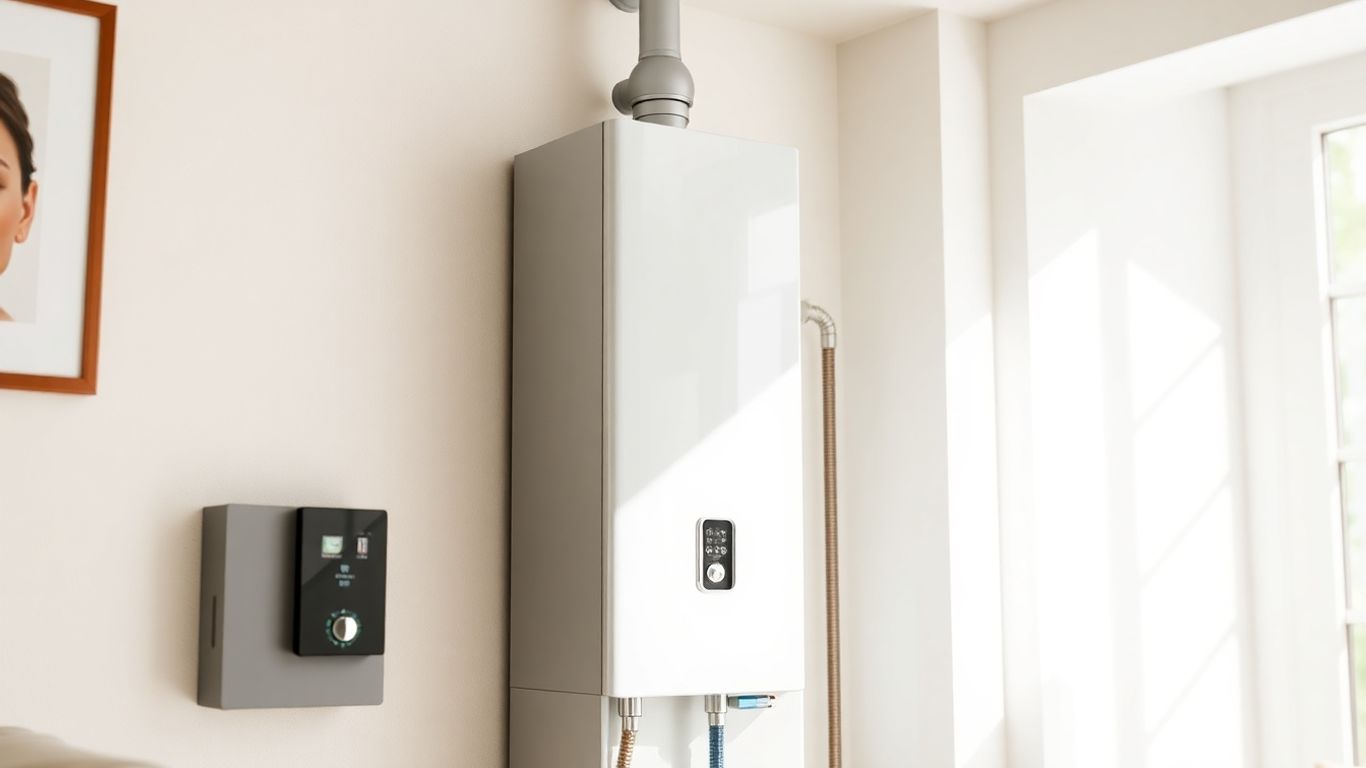
Significant Reduction in CO₂ Emissions
Adopting a thermodynamic water heater is a significant step towards reducing your carbon footprint. Unlike traditional systems that rely directly on the combustion of fossil fuels or raw electricity consumption, the thermodynamic water heater uses heat from the air. This low-carbon technology considerably reduces greenhouse gas emissions associated with domestic hot water production. On average, you can reduce your CO₂ emissions by over 70% compared to a conventional electric water heater. This ecological performance is a major asset for households concerned about their environmental impact.
Adaptation to RE2020 Requirements
The Environmental Regulation 2020 (RE2020) imposes stricter energy and environmental performance standards for new constructions and major renovations. The thermodynamic water heater fits perfectly into this approach. Its high performance coefficient (COP) and low energy consumption make it an ideal piece of equipment to meet RE2020 requirements, particularly regarding the building’s primary energy needs. Installing this type of unit thus contributes to the valuation of your property and its compliance with current standards.
Ecological Benefits of Low-Carbon Technology
Beyond simply reducing CO₂ emissions, the thermodynamic water heater offers other notable ecological benefits. It contributes to the energy transition by promoting the use of renewable energy (heat from the air). Furthermore, it helps reduce overall electricity demand, especially during peak consumption periods, which is beneficial for the stability of the national electricity grid. Using this system aligns with a more responsible and sustainable consumption approach.
Here’s an overview of the ecological benefits:
- Reduction of Greenhouse Gas Emissions: Less CO₂ released into the atmosphere.
- Use of Renewable Energy: Exploitation of free heat from the air.
- Reduced Electricity Consumption: Less strain on the grid, especially during peak times.
- Contribution to the Building’s Overall Energy Performance: Helps meet RE2020 objectives.
Integrating a thermodynamic water heater into your home is a decision that combines environmental responsibility with optimized energy consumption. It’s a wise choice for the future of your home and the planet.
A Positive Balance After Five Years of Use
After five years of using your thermodynamic water heater, it’s clear that the initial investment, while more substantial than a conventional electric model, is fully justified. You have seen notable savings on your hot water bills, often significantly reduced, confirming the unit’s profitability potential. State financial aid, such as MaPrimeRénov’ and reduced VAT, played an important role in amortizing your expense. Furthermore, the ecological aspect is not negligible, with a reduction in your carbon footprint. Although adjustments may have been necessary, particularly regarding the ideal location for optimal efficiency, the overall assessment is very satisfactory. You have made a wise choice for your comfort, your wallet, and the planet.
Frequently Asked Questions
How does a thermodynamic water heater work?
Imagine a small heat pump, but for your hot water! This unit captures the heat present in the air (from your home, outside, or even expelled by your VMC) and uses it to heat the water in your tank. It’s a bit like a refrigerator working in reverse: instead of cooling, it heats, but by using free energy from the air.
What is COP and why is it important?
COP, or Coefficient of Performance, is like the ‘score’ for your water heater’s efficiency. It tells you how much heat the unit produces compared to the electricity it consumes. A COP of 5, for example, means it produces 5 times more energy than it uses. The higher this number, the more economical and ecological your unit is!
How much can I save with a thermodynamic water heater?
The savings can be really significant! Generally, you can reduce your hot water bill by 60% to 70% compared to an old electric water heater. For a family of 4, this can mean several hundred euros in savings each year. It’s a good calculation over time.
How long does it take for this investment to pay for itself?
The time to recoup your investment, known as the ‘return on investment,’ varies. But on average, it takes between 4 and 6 years. This depends on the purchase price, the aid you receive, and your hot water consumption. If you’re replacing an old electric water heater, you’ll recoup your investment faster!
What financial aid can I get for my installation?
Good news: the government offers significant support for this type of equipment! You can benefit from MaPrimeRénov’, reduced VAT (5.5%), and sometimes other aid like Energy Savings Certificates (CEE). These aids can considerably reduce the initial cost.
Is a thermodynamic water heater noisy?
Recent models are increasingly quiet. However, because there’s a compressor (the part that operates the heat pump), it does emit some noise, similar to a refrigerator. Therefore, it’s advisable to install it in a room somewhat out of the way, like a garage or laundry room, to avoid being disturbed.