Considering installing a monobloc air conditioner to cool your home, especially if you live in an apartment or an area with strict architectural constraints? It’s a practical solution that avoids an outdoor unit. However, it’s easy to fall into certain traps that turn this appliance into an energy hog or a source of noise. This article will guide you to avoid the drawbacks of a monobloc air conditioner and make the right choices.
Key Takeaways
- Understanding the specific constraints of a monobloc air conditioner, particularly for apartments and exterior aesthetics, is the first step to avoiding disappointment.
- Incorrect sizing, whether insufficient or excessive, leads to increased electricity consumption, premature wear of the unit, and degraded thermal comfort.
- Careful technical installation, including precise core drilling, proper condensate drainage, and respect for airflow, is essential for proper functioning.
- Regular filter maintenance is crucial to maintain the unit’s efficiency, reduce noise, and ensure good indoor air quality.
- Good home insulation and thoughtful use, especially by avoiding extreme settings and closing openings, optimize performance and reduce consumption.
Understanding the Drawbacks of a Monobloc Air Conditioner
The monobloc air conditioner, often presented as the ideal solution for apartments or condominiums where installing an outdoor unit is impossible, nevertheless has some disadvantages that are important to know before making your choice. It is an all-in-one appliance, combining the compressor and evaporator in a single unit, generally requiring two ducts through the wall for heat exchange.
Definition and Operating Principle
A monobloc air conditioner is a compact air conditioning system that does not require a separate outdoor unit. Its operation relies on a thermodynamic cycle where the refrigerant absorbs heat from the indoor air and releases it outside via ducts. These ducts, often two in number, are the main characteristic of this type of appliance and require drilling through the wall. Hot air is expelled, while cool air is distributed into the room. It often uses ecological gases like R290, which is a positive point for the environment.
Specific Constraints for Apartments and Condominiums
One of the main attractions of the monobloc is its ability to adapt to the architectural constraints of multi-unit buildings. The absence of an outdoor unit avoids neighbor disputes and condominium rejections. However, this configuration imposes technical constraints: wall drilling is mandatory, which can be problematic in some older buildings or if the condominium rules prohibit it. Furthermore, the exterior aesthetics can be affected by the presence of the two exhaust grilles, even if it is less visible than a complete outdoor unit. It should also be considered that these units can be noisier than split systems, with sometimes high noise levels [827b].
Impact on Exterior Aesthetics
Although the monobloc air conditioner avoids the installation of a bulky outdoor unit, it is not entirely invisible from the outside. Two holes must be drilled in the wall, usually equipped with grilles. While these elements are discreet, they nevertheless alter the appearance of the facade. In areas subject to strict urban planning regulations or in historic buildings, this can pose an aesthetic problem. It is therefore important to carefully consider the placement of these ducts to minimize their visual impact. Careful installation is essential to preserve the architectural harmony of your home.
Pitfalls Related to Sizing and Power
Choosing the right power for your monobloc air conditioner is a fundamental step. An incorrectly sized unit, whether too small or too large, can quickly turn your quest for comfort into a source of frustration and unnecessary expense. It is therefore essential to fully understand the implications of each scenario.
The Error of Undersizing and Its Consequences
Opting for an air conditioner with insufficient power for the size of your room is a common mistake. In this case, the unit will be constantly stressed, running at full capacity without ever reaching the desired temperature. This leads to increased electricity consumption, as the motor runs continuously, and premature wear of the equipment. Furthermore, the promised comfort is not achieved, leaving your space too warm.
The Impact of Excessive Power on Comfort and Consumption
Conversely, an overpowered air conditioner might seem like a good idea for quick cooling, but its effects are also negative. Overly rapid and intense cooling prevents the unit from properly dehumidifying the air. You will then find yourself with air that is cool but potentially humid and unpleasant. This excess power also translates into higher energy consumption than necessary, as the unit frequently starts and stops, which is less efficient than regulated operation. It is important to find a balance for optimal comfort and controlled consumption.
Calculating the Right Power for Your Space
To avoid these pitfalls, an accurate calculation of the required cooling capacity is essential. Several factors must be taken into account: the area of the room, its ceiling height, the volume to be cooled, sun exposure, the number of windows, and even the insulation level of your home. A common estimate suggests planning for 100 to 130 Watts per square meter. For rooms located under the roof or those with strong sun exposure, it is advisable to add a power margin, often around 20%. Do not hesitate to use online calculators or consult a professional for an accurate assessment. Properly calculated power is the key to lasting comfort and a reasonable electricity bill.
The choice of power should not be left to chance. It determines not only your thermal comfort but also the longevity of your unit and your energy budget. A careful study of your environment is therefore essential before any purchase.
Technical Installation Errors to Avoid
The installation of a monobloc air conditioner, while simpler than a split system, has its own technical subtleties. Neglecting these aspects can quickly turn your comfort solution into a source of problems. It is therefore crucial to pay particular attention to how the unit is installed.
The Importance of Precise Core Drilling and Duct Inclination
Contrary to popular belief, a fixed monobloc air conditioner requires wall intervention. The wall must be drilled to pass the two air exhaust and intake ducts. Poorly executed core drilling, too large or misplaced, can lead to thermal losses and water infiltration. It is essential that this drilling is done precisely, respecting the diameter of the ducts. Furthermore, the ducts should be slightly inclined outwards to facilitate the natural drainage of condensate. Incorrect inclination can cause water to accumulate inside the unit or the wall, which is detrimental in the long run.
Ensuring Proper Condensate Drainage
The water produced by air dehumidification must be effectively drained. For a monobloc, this is usually done via one of the two ducts, thanks to the previously mentioned inclination, or via a small dedicated pipe. If this drainage is not properly ensured, water can accumulate in the unit, cause leaks, or even damage the system. It is necessary to ensure that the condensate outlet is clear and that water can flow freely, away from foundations or sensitive areas. Remember to check that the condensate collector is not obstructed.
Respecting Airflow Spaces
A monobloc air conditioner needs sufficient space around it to operate optimally. Manufacturers generally recommend leaving a clearance of at least 15 centimeters around the unit. This space allows for good airflow, which is essential for the proper functioning of the compressor and heat exchange. An unit that is too recessed or obstructed by furniture or curtains will have to work harder, consume more energy, and its performance will decrease. This detail may seem trivial, but it has a direct impact on the efficiency and longevity of your equipment.
Maintenance: A Key Factor for Performance and Quiet Operation
Your monobloc air conditioner, although it may seem self-sufficient, requires regular attention to operate optimally and discreetly. Neglecting its maintenance means risking reduced performance, increased energy consumption, and even generating unpleasant noise nuisances.
The Impact of Clogged Filters on Efficiency
Filters are the guardians of your unit. They trap dust, pollen, and other particles present in the air. When these filters are saturated, air circulation is poor. This forces the motor to work harder to reach the desired temperature, resulting in increased electricity consumption and reduced cooling or heating efficiency. Furthermore, air that struggles to pass through can carry allergens and bad odors into your home.
Noise Nuisances Related to Lack of Maintenance
A well-maintained unit is a quiet unit. Unusual noises, such as creaks or hums, are often a sign of a problem. Lack of cleaning can lead to dirt accumulation on the fan blades, unbalancing its rotation. Similarly, poorly lubricated or dirty components can generate vibrations and, consequently, noise. It is therefore important to regularly check the overall condition of your air conditioner.
Good Cleaning and Maintenance Practices
To ensure the longevity and performance of your monobloc air conditioner, adopt these simple steps:
- Filter Cleaning: This is the most frequent and important step. Depending on usage, it is recommended to clean them every two to four weeks. A simple wash with soapy water is often sufficient, followed by complete drying before reinstallation. For more detailed cleaning information, you can consult maintenance recommendations.
- Exterior Cleaning: Regularly dust the unit’s casing, including the air intake and outlet grilles, with a soft, dry cloth.
- Visual Inspection: Periodically check that no obstacles are hindering airflow around the outdoor unit.
- Professional Maintenance: It is advisable to call a professional for a complete overhaul once a year. They will check the refrigeration circuit, the condition of electrical components, and ensure optimal condensate drainage.
Regular maintenance is not just a matter of cleanliness; it is a direct investment in the performance, durability, and acoustic comfort of your unit. Think of it as a check-up for your car: prevention is better than cure.
Managing Insulation and Thermal Bridges
Even the most efficient monobloc air conditioner cannot compensate for poor insulation. Think of it like trying to fill a sieve: water (or in our case, coolness) escapes through all the holes. It is therefore essential to ensure that your home is well-sealed for your unit to work effectively.
The Importance of Good Sealing of Core Drilling Joints
When your monobloc air conditioner is installed, holes are drilled in the wall to allow the air exhaust and intake ducts to pass through. These passage points are critical areas for insulation. If the seals around these core drillings are not perfectly caulked, hot outside air will easily infiltrate your home, negating some of your air conditioner’s efforts. Therefore, it is necessary to ensure that these seals are well-secured, without any cracks or gaps.
Preventing Infiltration of Hot Outside Air
Beyond the core drilling seals, the overall airtightness of your home must be considered. If your unit is not equipped with efficient non-return valves on its external grilles, hot air can enter the interior as soon as the unit stops. This is a significant loss of energy and comfort. Consider checking this point, especially if you live in an area with significant temperature variations.
The Role of General Home Insulation
Your monobloc air conditioner is designed to cool a given volume of air. If your home is poorly insulated (walls, windows, roof), the cool air produced by the unit will tend to escape quickly, while outside heat will infiltrate just as quickly. This forces your air conditioner to run constantly and at maximum power to try to maintain the desired temperature. The consequences are twofold: soaring electricity consumption and premature wear of the unit. Good insulation is the foundation for your air conditioner to perform at its full potential without excessive effort.
High-performance insulation is not just a matter of comfort; it is also an economic strategy. It allows your monobloc air conditioner to operate under optimal conditions, thereby reducing its energy consumption and extending its lifespan. Never neglect this fundamental step.
Optimizing Usage for Controlled Consumption
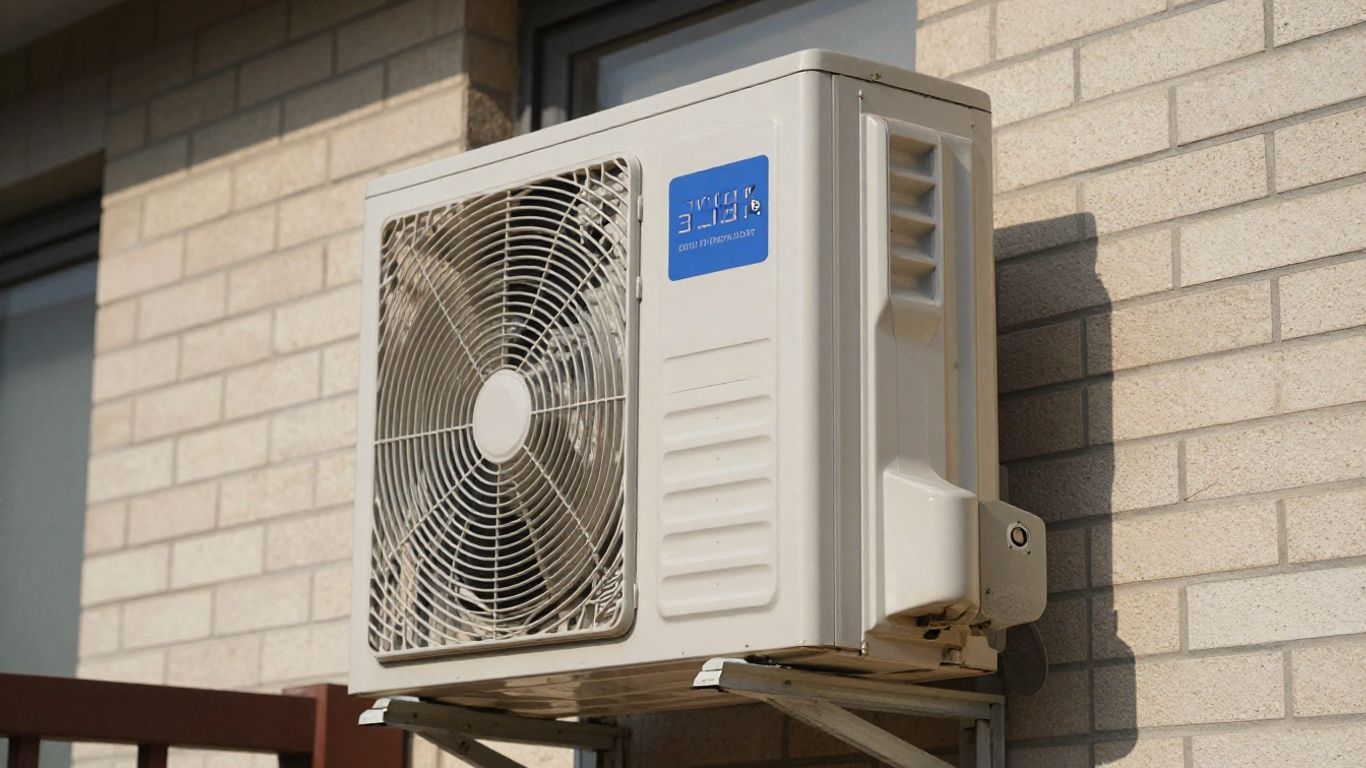
Once your monobloc air conditioner is installed, its daily use is key to avoiding extra costs and ensuring your comfort. It’s not just about turning it on and forgetting about it; attentive management can make a real difference to your electricity bill.
Avoid Over-Setting the Temperature
The temptation is great, on a scorching day, to set the thermostat as low as possible. However, maintaining a reasonable difference between indoor and outdoor temperatures is crucial. Aim for a difference of about 7°C. For example, if it’s 32°C outside, setting your unit to 25°C is a good compromise. Going lower forces the system to work unnecessarily, increasing consumption without a proportional gain in comfort, and can even prematurely wear out your equipment. Consider using specific modes like ‘Eco’ mode when available; it adjusts the power to meet your actual needs without excess, thus reducing consumption while maintaining satisfactory thermal comfort.
The Impact of Closing Openings
This is a point often overlooked, yet fundamental. When your air conditioner is running, it is imperative to keep doors and windows closed. Every opening lets out the cool air you paid to produce, forcing the unit to work twice as hard. Consider also closing shutters or curtains during the hottest hours of the day. This blocks sunlight and limits overheating of your interior, making your air conditioning more effective. This is a simple measure that greatly contributes to limiting conditioned air loss and reducing overall consumption.
Benefits of Smart Scheduling
Modern air conditioners, especially connected ones, offer advanced scheduling capabilities. Using these features allows you to adapt the unit’s operation to your lifestyle. You can thus program time slots when the unit operates at full power, others when it goes into standby, or even turns off when you are away. The ‘Night’ mode is also very useful: it gradually adjusts the temperature for optimal comfort during sleep while reducing consumption. Using modes like dehumidification only or ventilation allows for optimized comfort without overconsumption. Remote management via a mobile app is a major asset for adjusting settings even when you are not at home, ensuring you don’t waste energy unnecessarily. Explore your unit’s options for more fine-tuned management.
Here are some good practices to adopt:
- Ventilate your home during the coolest hours (early morning or late evening).
- Use the fan-only mode (FAN) to simply circulate air without a thermal effect, which consumes very little.
- When you are away for an extended period, remember to turn off the unit completely or program it to shut down.
Hidden Costs and Energy Efficiency
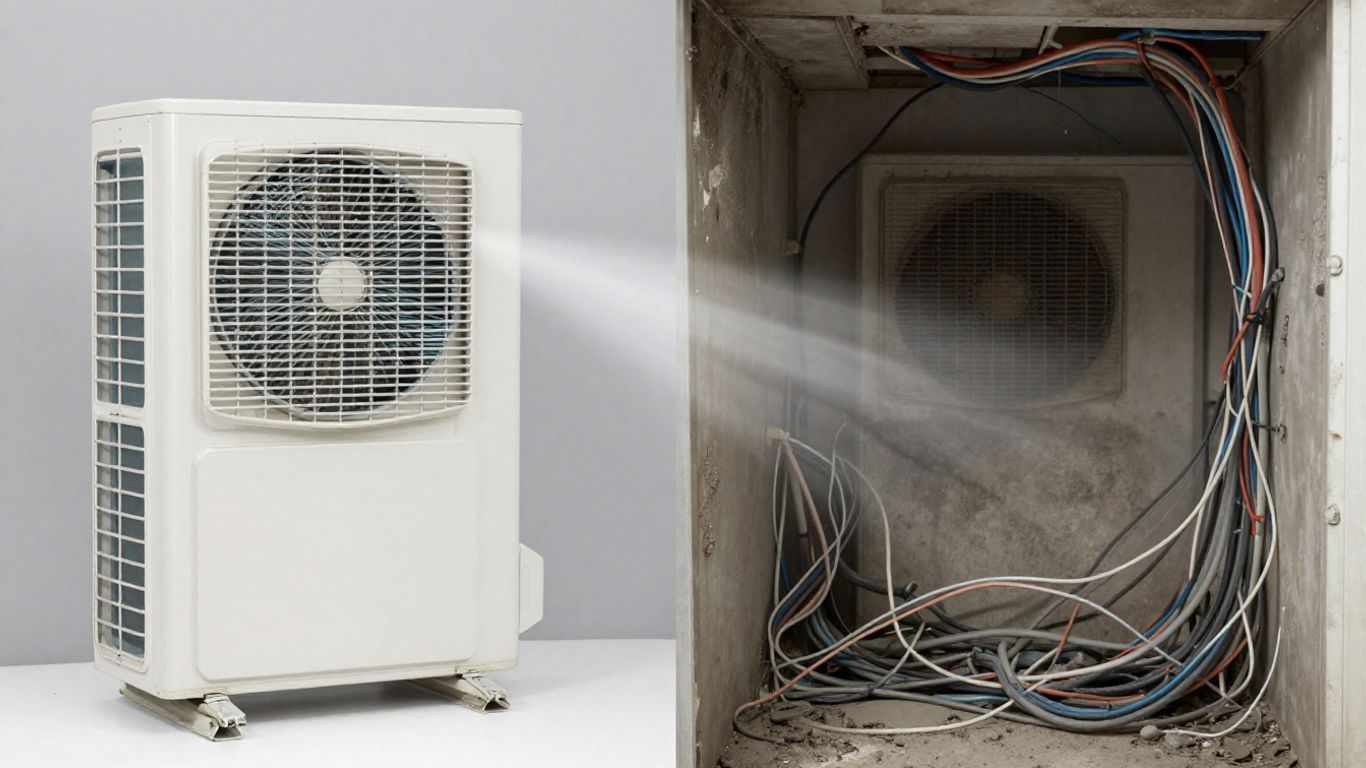
It’s not enough to choose a monobloc air conditioner to be worry-free. You also need to look closely at what this unit will cost you over time, not just at the purchase. Energy efficiency, for example, is a bit like a car engine: it makes all the difference at the pump.
Don’t Overlook Energy Efficiency (SEER, SCOP)
When you look at the technical data sheets, you will often see acronyms like SEER and SCOP. SEER (Seasonal Energy Efficiency Ratio) gives you an idea of your unit’s efficiency in cooling mode over a season. The higher this number, the better, as it means the unit consumes less electricity to produce the same cooling effect. On the other hand, SCOP (Seasonal Coefficient Of Performance) does the same thing, but for heating mode (if your unit is reversible). A high SEER and a high SCOP are therefore key indicators for controlling your electricity bill. Don’t just look at the advertised power; look at these indices. They tell you directly about the unit’s actual consumption under various usage conditions.
Consider Installation and Maintenance Costs
The purchase of the air conditioner is just the beginning. Installation, especially for a monobloc that requires wall drilling, can represent a significant cost. A qualified professional is needed to do this properly and avoid sealing or performance issues. Then there is maintenance. Filters need to be cleaned regularly, and an annual check by a professional is often recommended to ensure everything is working correctly and that the unit is not losing efficiency. These costs, although sometimes forgotten, are added to the purchase price and electricity consumption.
Compare Energy Performance Indices
To make the right choice, you need to compare. Don’t settle for the first offer you find. Take the time to look at the energy labels of different models. They are there for a reason! You will find the energy class (ranging from A+++ to D, for example), which gives a general indication of consumption. But most importantly, look at the SEER and SCOP values mentioned. A unit with a SEER of 7 will be more economical than a unit with a SEER of 5, even if they have the same nominal power. By comparing these figures, you can estimate the actual annual consumption and therefore the cost over several years. Think of it as an investment: a unit that is slightly more expensive to buy but more energy-efficient will save you money in the long run.
Conclusion: Controlled Comfort
In summary, installing a monobloc air conditioner can truly transform your summer, especially if you live in an apartment or a house with aesthetic restrictions. But as you’ve seen, there are a few points to watch out for to avoid falling into traps. Choosing the right power, ensuring correct installation, considering regular filter maintenance, and setting the temperature intelligently are key steps. By following these tips, you will enjoy cool air without skyrocketing your electricity bill or prematurely wearing out your unit. It’s a matter of common sense and a few simple actions for lasting comfort.
Frequently Asked Questions
What is a monobloc air conditioner and why is it different from others?
A monobloc air conditioner is an air conditioning solution that combines all its essential components (like the cooling motor) into a single unit. Unlike ‘split’ systems that have an outdoor and an indoor unit, the monobloc is placed entirely indoors and only requires two small holes in the wall to circulate air. This is practical because it doesn’t alter the exterior appearance of your house or building.
Why is it so important to choose the right power for my monobloc air conditioner?
Choosing too little power is like trying to heat a large house with a small radiator: the unit will run non-stop, consume a lot of electricity, and never really cool the room. Conversely, an overpowered unit will cool too quickly without properly removing humidity from the air, which is uncomfortable and wears out the unit faster. Therefore, it’s important to find the right balance for your space.
What are the risks if the monobloc air conditioner installation is not perfect?
A poor installation can cause several problems. If the pipes passing through the wall are not properly inclined, the water that forms (condensate) could leak inside your home or not drain correctly. It is also crucial to leave enough space around the unit for air to circulate properly, otherwise it will not function efficiently.
How can monobloc air conditioner maintenance affect its operation and noise?
Your air conditioner’s filters trap dust. If they are dirty, the unit has more difficulty circulating air, consumes more energy, and can become noisier. Regular cleaning, for example every two weeks, helps keep the unit efficient, quiet, and extends its lifespan.
Why is my home’s insulation important for the efficiency of my monobloc air conditioner?
Even the best air conditioner can’t work miracles if your house lets in a lot of heat through windows, walls, or doors. If hot outside air enters easily, your air conditioner will have to work much harder to cool the room. Therefore, it is essential that your home is well-insulated for the air conditioner to do its job effectively and without excessive consumption.
How can I use my monobloc air conditioner without spending too much on electricity?
To save energy, avoid setting your air conditioner to a temperature that is too low, like 18°C. This doesn’t cool faster but forces the unit to consume a lot. It is advisable to maintain a reasonable difference with the outside temperature, for example 7°C less. Also, remember to close doors and windows when it’s running and use timer programs if your unit has them.