Considering installing a domestic wind turbine to supplement your solar energy production? It’s an interesting idea that can improve your energy independence. However, it’s important to fully understand the specifics of this technology. This article guides you through the essential aspects to consider for a successful installation, covering complementarity with solar, different types of wind turbines, technical, financial, regulatory, and maintenance considerations. The goal is to give you the keys to evaluate the relevance of a self-consumption wind turbine in your project.
Key Takeaways
- Combining a domestic wind turbine with a solar photovoltaic installation can offer continuous energy production, as wind is often more present in winter when sunlight is weaker, and vice versa in summer. This is an interesting synergy for self-consumption.
- There are two main types of domestic wind turbines: horizontal-axis wind turbines, generally more efficient but more expensive, and vertical-axis wind turbines, more affordable and efficient in low winds.
- The performance of a wind turbine strongly depends on its height and wind speed. A high installation is often necessary to capture optimal wind, and a minimum wind speed is required to start production.
- The initial investment for a domestic wind turbine is often higher than for a solar photovoltaic installation, and profitability can be harder to achieve, particularly due to installation and maintenance costs and dependence on weather conditions.
- The installation of a domestic wind turbine is subject to strict municipal regulations regarding height, noise, and location. Furthermore, regular maintenance is necessary to ensure its longevity, estimated between 25 and 30 years, with a slight annual decrease in productivity.
Complementarity Between Solar and Wind for Self-Consumption
Seasonal Synergy of Renewable Energies
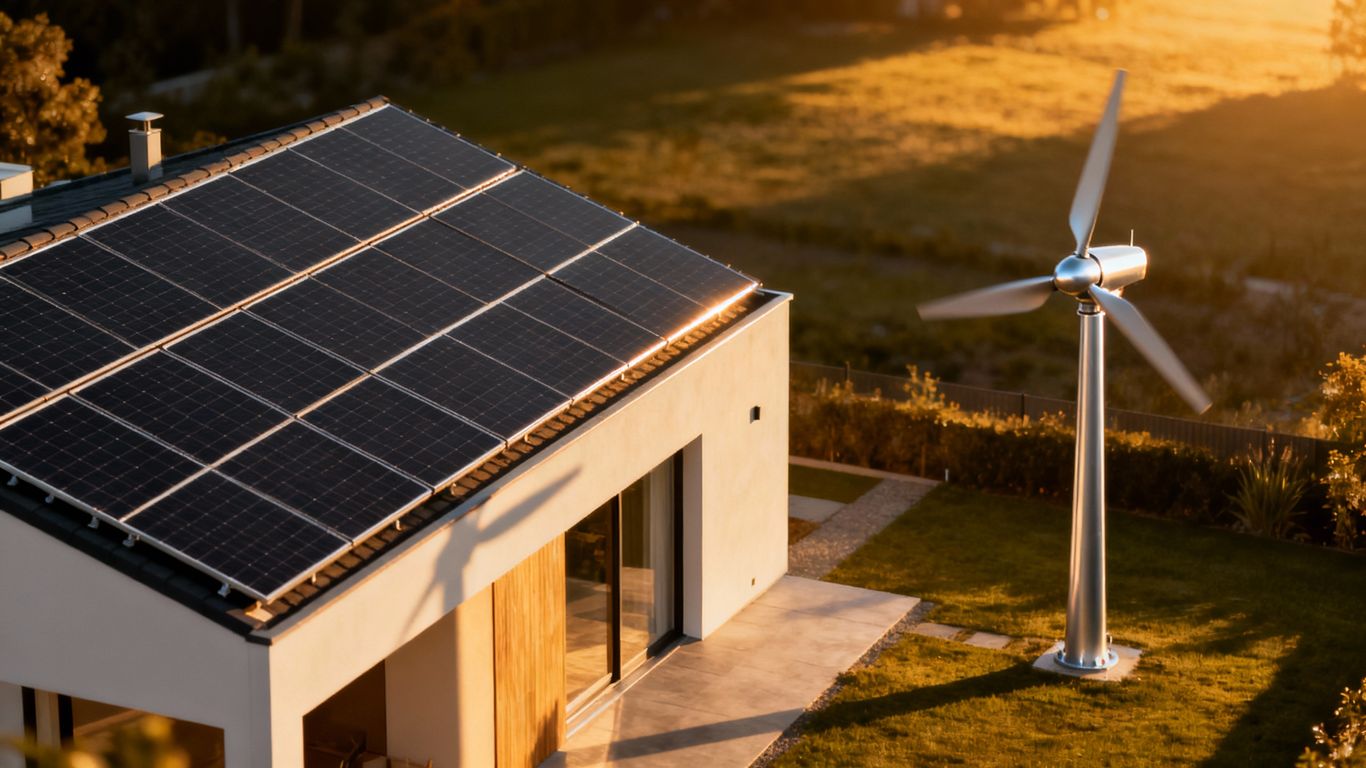
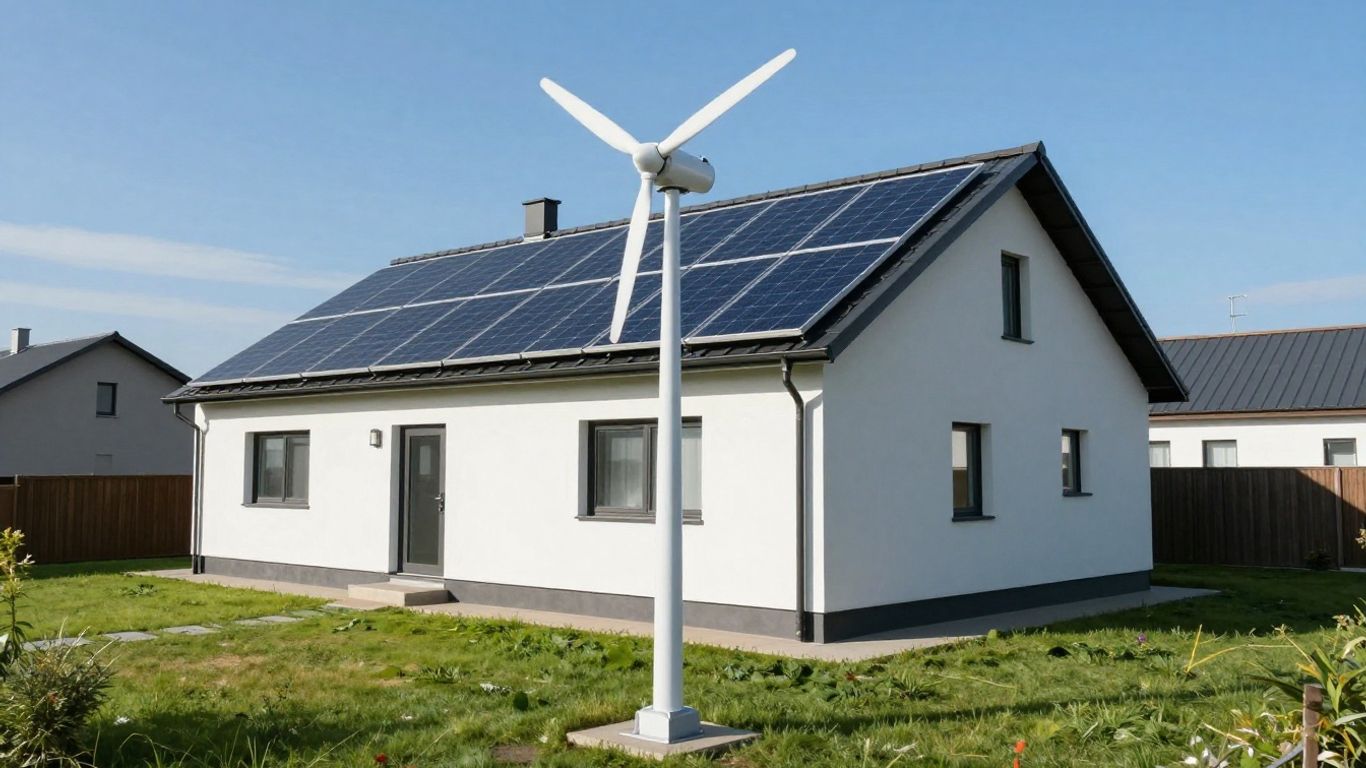
Considering installing a domestic wind turbine to supplement your solar system? It’s an excellent idea, as these two renewable energy sources often complement each other remarkably well. While the sun shines generously in summer, favoring photovoltaic production, the wind tends to be more present during the winter months. This seasonal complementarity allows for more consistent electricity production throughout the year. By combining these two technologies, you reduce your dependence on a single energy source and increase your energy independence.
Benefits of Hybridization for Continuous Production
The main advantage of coupling a wind turbine with your solar installation lies in creating a hybrid system. This type of installation aims to smooth out the production variations inherent to each technology. For example, if the sky is overcast on a summer day, your wind turbine could compensate for the lack of sunlight. Conversely, a windless winter night with a clear sky will allow your solar panels to continue producing, even if at a reduced rate. Modern systems can even integrate energy storage devices, such as batteries, to store surplus electricity produced during peak production and release it when demand is high or weather conditions are unfavorable. This allows for smarter management and more efficient use of the electricity produced.
The Wind Turbine as a Solution for Low Sunlight Conditions
It’s true that solar energy is often more predictable and stable, especially during sunny days. However, domestic wind turbines can play a crucial role when sunlight is lacking. Thick foggy days, heavy rain, or simply short winter days can significantly reduce the production of your solar panels. In these conditions, a well-sized wind turbine can take over and continue to generate electricity. It is entirely possible to couple a wind turbine for individuals with solar panels to benefit from both these renewable energies simultaneously. Hybrid wind-solar kits typically consist of a photovoltaic solar panel, a wind turbine, a charge controller, an inverter, and a solar battery. This combination offers increased resilience to your self-consumption installation, ensuring a more reliable power supply even in bad weather.
The combination of solar and wind allows for optimization of the available space on your site. Areas less suitable for solar panel installation can be used for the wind turbine, and vice versa. This diversification of energy sources strengthens the resilience of your energy system and reduces your dependence on a single source, while contributing to the reduction of greenhouse gas emissions.
Different Types of Domestic Wind Turbines and Their Characteristics
Horizontal-Axis Wind Turbines: Efficiency and Cost
Horizontal-axis wind turbines (HAWTs) are the ones we see most often. They resemble large industrial wind turbines, with their blades rotating around an axis parallel to the ground. Their main advantage lies in their efficiency: they are generally more effective at capturing wind energy and converting it into electricity. This is why they are often preferred when the goal is to maximize production.
However, this efficiency comes at a cost. HAWTs are often more expensive to purchase than their vertical-axis counterparts. Furthermore, they require open space and a certain height to operate optimally, as the wind is more regular and less turbulent there. Installation may therefore involve additional work to erect a sufficiently high mast.
| Characteristic | Description |
|---|---|
| Axis Type | Horizontal |
| Efficiency | Generally higher |
| Cost | Often higher |
| Installation | Requires open space and significant height |
| Minimum Wind Speed | Variable, but often higher for optimal startup |
Vertical-Axis Wind Turbines: Accessibility and Performance in Low Winds
Vertical-axis wind turbines (VAWTs) are distinguished by their axis of rotation perpendicular to the ground. They have the advantage of being more accessible in terms of installation, as they can often be mounted on the roof of a building or on a lower mast. This can simplify administrative procedures and reduce installation costs.
Another strong point of VAWTs is their ability to operate effectively even in low or variable winds. They are less sensitive to wind direction and can start rotating more easily. This can be an advantage in areas where the wind is not constant or in urban environments where turbulence is more frequent.
Although their overall efficiency may be lower than that of horizontal-axis wind turbines in ideal wind conditions, their versatility and ease of installation make them an interesting option for many households, especially if wind is a present but irregular resource.
Power Ratings and Applications of Small Wind Turbines
Domestic wind turbines, also known as small wind turbines, cover a fairly wide range of power ratings, from a few hundred watts to several tens of kilowatts. The choice of power will directly depend on your electricity needs and your geographical location.
- Micro-wind turbines (20 W to 500 W): Ideal for very specific uses such as charging batteries for boats, RVs, or powering small outdoor electronic devices. They will not be sufficient for an entire house.
- Small-power wind turbines (1 kW to 10 kW): This is the most common category for residential self-consumption. They can cover a significant portion, if not all, of a house’s needs, depending on consumption and wind production.
- Medium-power wind turbines (10 kW to 36 kW): These models are larger and target higher consumption, such as small farms, workshops, or collective buildings. Their installation is more complex and subject to stricter regulations.
It is important to note that the actual production of a wind turbine depends heavily on wind speed. A 5 kW wind turbine, for example, will not produce 5 kW continuously. It will reach its maximum power at a given wind speed (often around 12-15 m/s), but will produce much less in low winds and may even shut down in very strong winds to protect itself.
Technical Considerations for a Domestic Wind Turbine Installation
Importance of Height for Optimal Wind
For a domestic wind turbine to operate at its best, it needs to capture steady, smooth wind. This type of wind is generally found at higher altitudes, often well above trees and buildings. This is why it is strongly recommended to place your wind turbine on a sufficiently high mast. Think about it, a wind turbine installed too close to the ground is likely to encounter turbulence that will reduce its electricity production and could even damage it in the long run. The ideal height will depend on your immediate surroundings, but you should aim to clear surrounding obstacles. A preliminary wind study can help you determine the most relevant height for your situation.
Minimum and Maximum Wind Speeds for Production
Each wind turbine has its own specifications regarding wind speed. There is a startup speed, called the cut-in speed, below which the turbine will not rotate and therefore will not produce electricity. On the other hand, there is also a maximum wind speed for which the turbine is designed. Beyond this limit, safety systems are activated to protect the machine, often by orienting the blades to reduce wind capture or by braking them. It is therefore important to choose a wind turbine adapted to the average wind speed of your region. Here is an indicative table of operating ranges for different types of wind turbines:
| Wind Turbine Type | Cut-in Speed (km/h) | Rated Speed (km/h) | Cut-out Speed (km/h) |
|---|---|---|---|
| Small horizontal-axis wind turbine | 10-15 | 35-45 | 150-200 |
| Small vertical-axis wind turbine | 8-12 | 30-40 | 120-180 |
Sizing the Wind Turbine According to Consumption Needs
Choosing the right power for your domestic wind turbine is a key step. It’s not just about getting the most powerful model available. First, you need to estimate your average annual electricity consumption. This will give you an idea of how much energy you want to produce. Then, you need to cross-reference this information with the wind potential of your site. A 1 kW wind turbine will not produce the same amount of electricity in Paris as in Brest. It is often difficult to precisely size a wind turbine to cover 100% of your needs, especially if you are connected to the grid. The goal is often to supplement your solar production or reduce your dependence on the grid. Don’t forget that a wind turbine’s production varies greatly depending on the season and weather conditions. It is therefore wise to consult the annual production data provided by the manufacturer for the average wind in your area. Before you start, be sure to check local regulations, as some municipalities may have specific restrictions on the installation of these devices [7478].
The installation of a domestic wind turbine requires in-depth technical analysis. Height, wind speed, and sizing relative to your needs are determining factors for efficient and sustainable electricity production. Ignoring these aspects could lead to an underperforming installation, or one that is costly to maintain.
Cost and Profitability Analysis of a Domestic Wind Turbine
Comparison of Initial Investments with Solar Photovoltaics
When we think about renewable energy at home, solar panels often come to mind first. This is understandable, as their cost has decreased significantly in recent years. But how does a domestic wind turbine compare in terms of budget? Well, to be frank, a wind turbine often represents a more substantial initial investment. For example, a small 1 kW wind turbine can cost around €10,000, including installation. If you aim for a larger size, say 5 kW, you’re easily looking at €25,000, or even €40,000 for 10 kW. In comparison, a solar photovoltaic installation of comparable power (e.g., 3 kWp) would typically cost between €6,000 and €10,500. Even for 9 kWp, it generally stays below €24,000. It is therefore clear that, on paper, solar photovoltaics are often more affordable to purchase.
Electricity Grid Connection Costs
Beyond the equipment and installation, you also need to consider grid connection. For a wind turbine, this can add between €1,000 and €3,000 to the bill. For solar, this cost is generally lower, or even zero in some cases, ranging from €0 to €2,350.
Factors Influencing the Profitability of a Wind Installation
The profitability of a domestic wind turbine is a complex matter. Several elements come into play and can significantly vary the return on investment. It’s not enough to just look at the purchase price.
- The wind, of course: This is the most obvious factor. Without sufficient and regular wind, your wind turbine will not produce much. A thorough study of your site is needed to assess the real wind potential. A wind turbine installed too low, near obstacles, will not be efficient.
- The power of the wind turbine: You need to choose a machine suited to your needs. You can’t always size a wind turbine as you wish; you often choose from models available on the market. You therefore need to estimate its annual production and see if it matches your consumption.
- Maintenance: Wind turbines require regular maintenance. This is a cost that should not be overlooked over the lifespan of the installation.
- Financial aid: Although less common for domestic wind power than for solar, some local subsidies or incentives may exist and improve profitability.
- Lifespan: A wind turbine has an estimated lifespan, and its productivity may decrease over time. This must be taken into account in the calculation.
It is important to note that in many regions, particularly those already well-served by hydroelectric power grids, the financial profitability of a grid-connected domestic wind turbine can be very low, or even zero. The objective then becomes more ecological than purely economic.
Regulatory Framework and Administrative Constraints
Before embarking on the installation of a domestic wind turbine, it is essential to look into the regulatory and administrative aspects. These steps can sometimes seem complex, but they are necessary for a legal and peaceful installation.
Checking Municipal Regulations
Each municipality has its own rules regarding wind turbine installations. Some municipalities may have strict restrictions, or even prohibit their installation outright for aesthetic, noise, or safety reasons. Others, on the contrary, may encourage this type of installation through local schemes. It is therefore essential to contact your local town hall to find out the specific rules for your place of residence. A simple discussion with your municipality’s urban planning department can save you a lot of trouble.
Administrative Procedures for Installation
Once you have verified regulatory feasibility, you will generally need to submit a building permit application or a prior declaration of works, depending on the size and height of the wind turbine. This application often needs to include detailed installation plans, impact studies (noise, visual), and technical information about the equipment. Processing times can vary. It is advisable to prepare your application thoroughly to speed up the process.
Wind Energy Development Zones (ZDE) and Electricity Buyback
It is important to know that the buyback of electricity produced by your domestic wind turbine is not automatic. In France, for example, EDF Obligation d’Achat (OA) may be required to buy back your surplus electricity, but this often depends on the location of your installation. Wind Energy Development Zones (ZDE) are defined areas where wind energy development is encouraged, and your eligibility for a guaranteed buyback rate may be linked to them. Inquire about the support schemes and buyback conditions in effect in your region, as they can influence the overall profitability of your project.
Maintenance and Longevity of Domestic Wind Systems
Once your domestic wind turbine is installed, it’s important to think about its maintenance so that it functions well and lasts a long time. It’s a bit like a car; you need to check it from time to time.
Need for Regular Maintenance
Regular maintenance is key to avoiding unpleasant surprises. It ensures that everything is working as it should and prevents costly breakdowns. Think of it as a doctor’s visit for your wind turbine. You need to check moving parts, fastenings, and ensure there is no corrosion or damage caused by the weather. A small check can prevent a big problem.
- Visual inspection: Check the general condition of the blades, mast, and cables. Look for signs of cracks, deformation, or corrosion.
- Tightening bolts: Make sure all fastenings are tight, as vibrations can loosen them over time.
- Lubrication: Some mechanical parts may require periodic lubrication to operate smoothly.
- Cleaning: Dust and debris can accumulate and affect performance. Regular cleaning is therefore recommended.
Estimated Lifespan of Wind Turbines
The lifespan of a domestic wind turbine varies depending on its quality, maintenance, and the weather conditions it is exposed to. In general, a well-maintained wind turbine can be expected to have a lifespan of about 15 to 20 years. Some parts, such as bearings or the controller, may need to be replaced before the end of the system’s life. It is therefore wise to budget for these potential replacements. For a better idea of longevity, consult the manufacturer’s documentation for your specific model. The goal is to maximize renewable energy production over the long term.
Productivity Evolution Over Time
Over the years, it is normal for your wind turbine’s productivity to decrease slightly. This is a natural phenomenon related to component wear. However, adequate maintenance helps slow down this decline and maintain a satisfactory level of production. If you notice a significant drop in production, it may indicate a problem requiring more in-depth intervention. It is important to monitor your wind turbine’s production to quickly detect any anomalies. A well-maintained wind turbine can continue to provide a significant amount of electricity for many years, thus contributing to your energy independence.
Investing in a domestic wind turbine doesn’t stop at purchase and installation. Planning for future maintenance and repairs is necessary to ensure reliable energy production and long-term profitability.
Advantages and Disadvantages of Wind Power for Self-Consumption
Renewable Electricity Production Day and Night
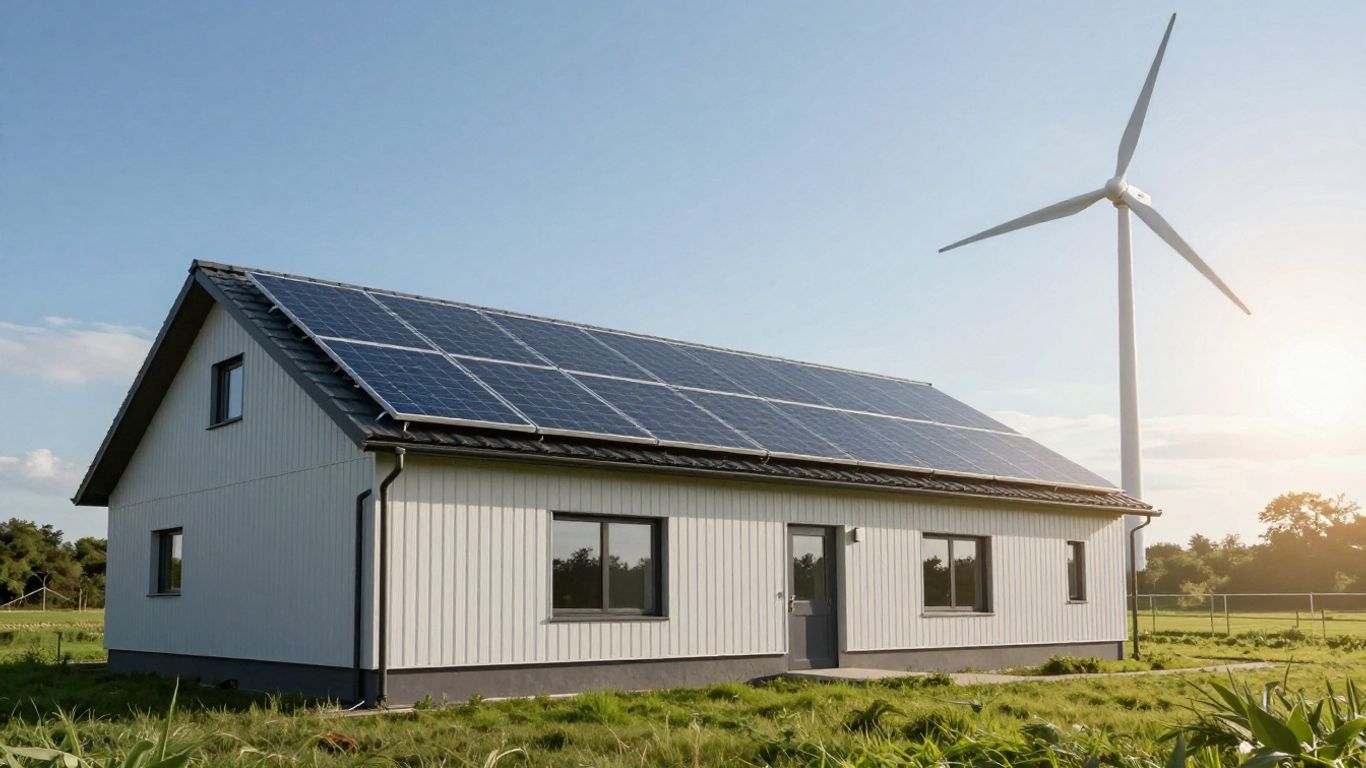
One of the major attractions of a domestic wind turbine is its ability to produce electricity at any time. Unlike solar panels that depend on daylight, a wind turbine can operate day and night, as long as wind conditions are favorable. This means a potentially more constant energy source, especially if you live in a region where the wind blows regularly, including during the winter months when sunlight is weaker. This continuous production can truly make a difference for your energy independence.
Dependence on Weather Conditions
However, let’s be realistic: the wind turbine is entirely subject to the whims of the weather. If the wind is too weak, your electricity production will be minimal, or even zero. Conversely, wind that is too strong may require the wind turbine to be shut down for safety reasons. This intermittency, although different from solar’s, remains a constraint. It is therefore often recommended to combine a wind turbine with another energy source, such as solar photovoltaics, to smooth out production.
Potential Noise and Visual Nuisances
The issue of nuisances should not be overlooked either. Wind turbines, even domestic models, can generate a certain operating noise, often described as a whistling or rustling sound. Furthermore, their physical presence in your environment can be perceived as a visual disturbance, especially if you live in a natural or residential setting where aesthetics are important. Before you start, it is essential to check local regulations regarding the height, noise, and location of wind turbines to avoid any neighborly disputes or administrative problems.
Conclusion: The Wind Turbine, an Asset Under Conditions
In summary, if the idea of adding a wind turbine to your solar installation appeals to you, it’s important to weigh the pros and cons. While wind can complement solar, especially in winter, the practical reality presents challenges. Regulations, potential noise, and the need for regular maintenance are points to consider seriously. Furthermore, unlike solar, where sizing is more flexible, you will have to choose from existing models and estimate their production. If you live in a particularly windy region and administrative procedures don’t daunt you, an in-depth wind study by a professional could provide clarity. But for the majority of households, a solar installation often remains the simplest and most predictable solution for green energy production.
Frequently Asked Questions
Why combine a wind turbine with solar panels?
The idea is to take advantage of the wind when there is little sun, and vice versa. For example, in winter, there is often more wind but less sun. A wind turbine can therefore help produce electricity when your solar panels produce less. It’s a way to have a more constant energy source throughout the year.
What are the different types of domestic wind turbines?
There are mainly two types: horizontal-axis wind turbines, which resemble large wind turbines and are more efficient but also more expensive, and vertical-axis wind turbines. The latter are often less expensive and can better capture low winds, but they are generally less efficient.
Where should a wind turbine be installed to produce well?
For a wind turbine to work best, it needs to be placed where the wind blows strongly and without too many obstacles. Often, this means placing it at a height, on a fairly tall mast, away from trees or buildings that could obstruct the wind.
Is a domestic wind turbine expensive to install and operate?
Yes, the purchase and installation of a domestic wind turbine represent a significant investment, often higher than for solar panels. In addition, regular maintenance costs must be factored in to keep it in good condition and continue producing electricity.
Do I need permits to install a wind turbine at my home?
Absolutely. Before installing a wind turbine, you must check your municipality’s rules, as there are often restrictions on height, noise, or location. You also need to complete the necessary administrative procedures to obtain permits.
Is a domestic wind turbine noisy and does it last a long time?
Some wind turbines can produce operating noise that may be bothersome to you or your neighbors. As for their lifespan, they can operate for about 25 to 30 years, but their ability to produce electricity decreases slightly each year.