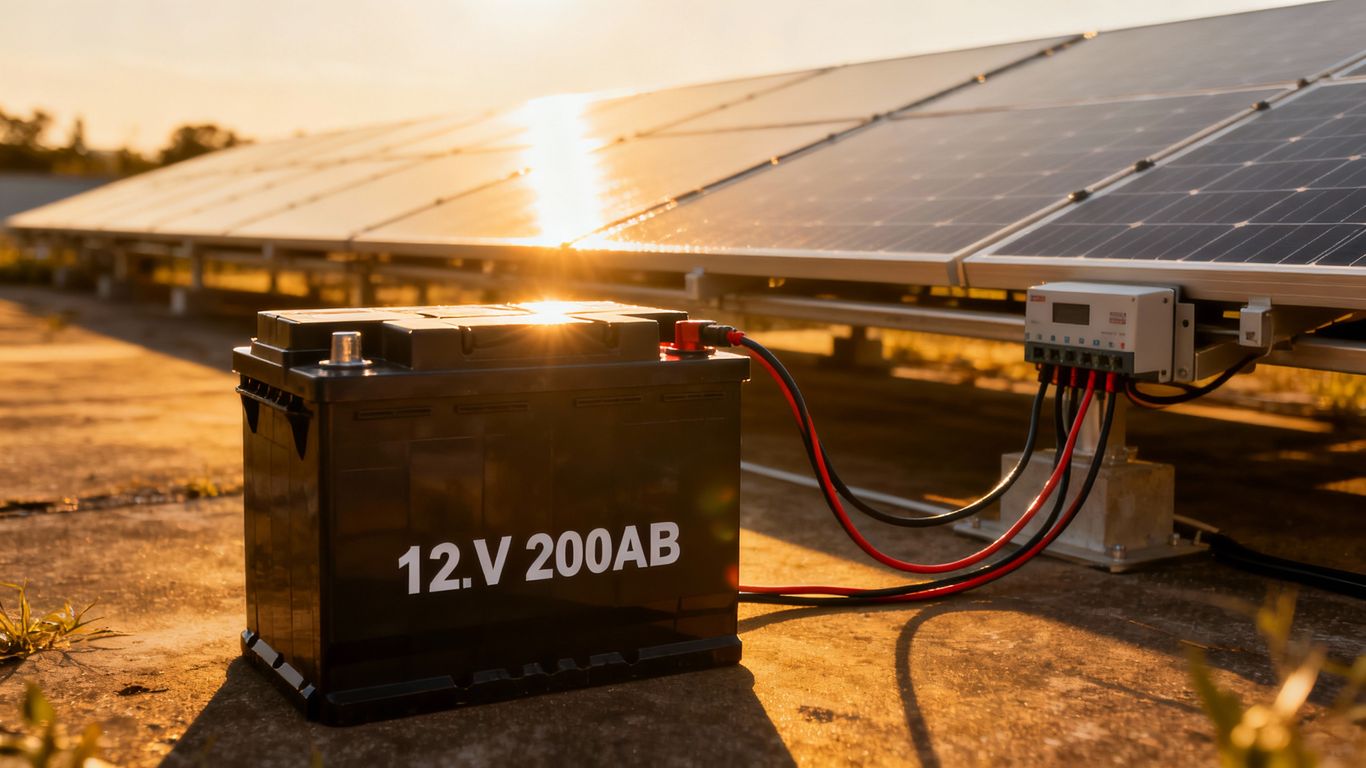
You want to install a solar kit for your 12V 200Ah battery and are wondering which solar panel to choose to recharge this 12V 200Ah battery? This is an excellent step towards gaining autonomy. But for your installation to work well, it needs to be properly sized. Don’t panic, we’ll guide you step by step. We’ll look together at how to calculate the necessary solar panel power, how to choose it, and some tips to make everything go as smoothly as possible.
Key Points to Remember
- To choose the right solar panel, you must first calculate your daily consumption in watt-hours (Wh), then convert it to ampere-hours (Ah) for your 12V battery.
- Estimate the number of optimal sunshine hours in your region to determine the peak wattage (Wp) of your solar panel.
- Take into account system efficiency losses (around 20-25%) to adjust the solar panel’s power and ensure efficient charging.
- For a 12V 200Ah battery, a solar panel with a slightly higher nominal voltage (around 14V) and power suited to your consumption is ideal. An MPPT charge controller is highly recommended.
- The orientation, panel tilt, shading, and weather all influence production. A slight oversizing can be wise to ensure good autonomy, especially in winter.
Understanding Energy Needs for Your 12V 200Ah Battery
Before embarking on the installation of your solar kit, it is essential to clearly understand your needs. A 12V 200Ah battery represents a significant storage capacity, but its effectiveness will depend on the match between its power and your actual consumption. Ignoring this step risks ending up with an undersized system, unable to meet your expectations, or conversely, an oversized one, representing an unnecessary investment.
Calculating Total Capacity in Watt-hours
The first step is to convert your battery’s capacity into watt-hours (Wh). This is the most telling unit of measurement for quantifying stored energy. The formula is simple: Voltage (V) multiplied by capacity (Ah) gives you energy in Wh. For a 12V 200Ah battery, this represents 12V * 200Ah = 2400Wh. This is the maximum amount of energy your battery can hold. It’s important to know that this value represents the total capacity, not the usable capacity, as it is not recommended to completely discharge a battery.
Determining Daily Consumption in Ampere-hours
To know how long your battery can power your devices, you need to estimate your daily energy consumption. List all the devices you plan to connect to your solar system, note their power (in Watts), and their daily usage time. Multiply each device’s power by its usage time to get its consumption in Wh. Then, add all these values together to get your total daily consumption in Wh. To convert this consumption to ampere-hours (Ah) at 12V, simply divide the total in Wh by 12. For example, if your daily consumption is 1000Wh, this is equivalent to approximately 83Ah (1000Wh / 12V). This data is essential for calculating the total capacity needed for your system.
Identifying Power-Consuming Devices and Their Usage Time
It is crucial to be precise in your inventory of devices. Do not overlook any consumers, even those that seem insignificant. Consider lighting, electronic devices (phone, laptop), pumps, refrigerators, fans, etc. For each device, note its rated power and estimate its daily usage time as accurately as possible. A table can greatly facilitate this task:
| Device | Power (W) | Usage Time (h/day) | Consumption (Wh/day) |
|---|---|---|---|
| LED Lamp | 5 | 4 | 20 |
| Refrigerator | 50 | 8 | 400 |
| USB Charger | 10 | 3 | 30 |
| Water Pump | 75 | 0.5 | 37.5 |
| Total | 487.5 |
A realistic estimate of your consumption is the key to successful sizing. It’s better to overestimate slightly than to underestimate your needs to avoid any unpleasant surprises.
Sizing the Necessary Solar Panel Power
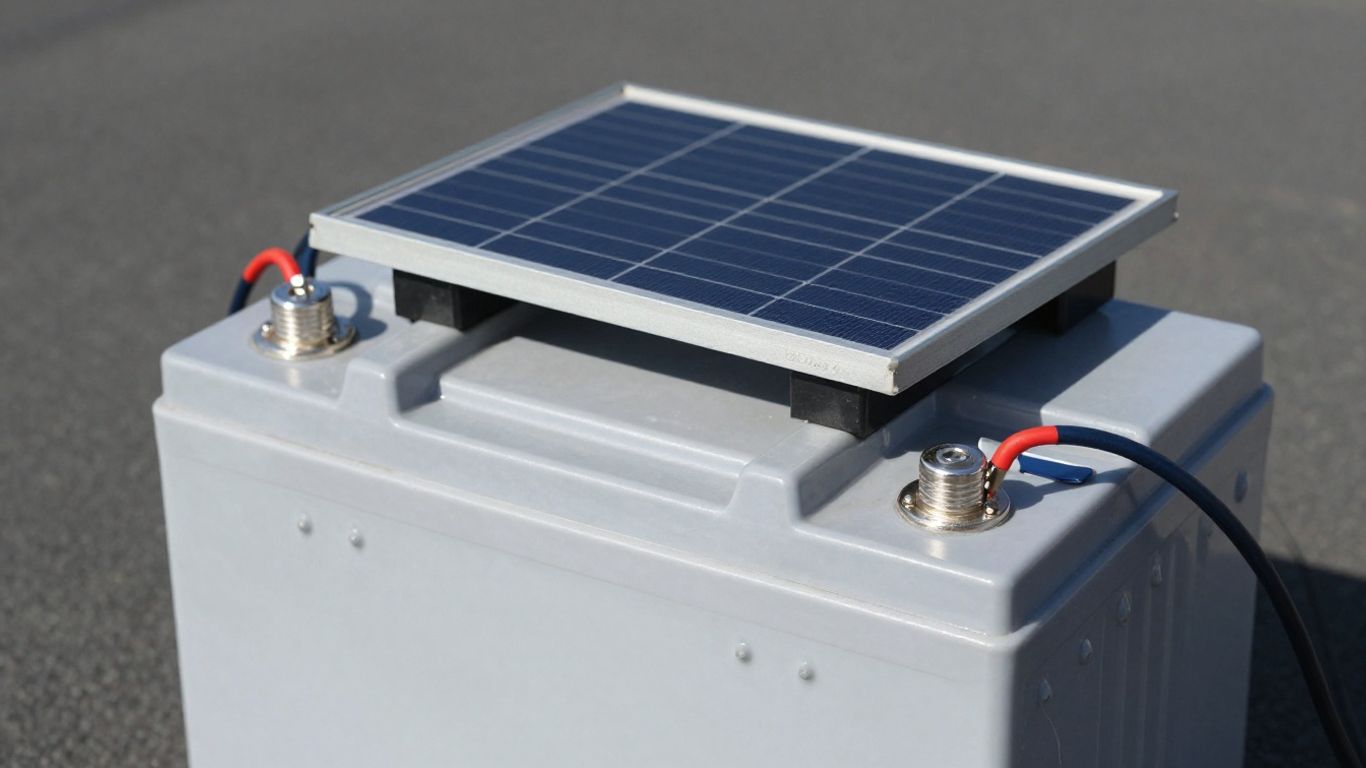
For your 12V 200Ah battery to be properly recharged, you need to choose the right power for your solar panels. It’s not just about raw power, but rather about ensuring the panel can provide enough energy under real-world conditions.
Assessing Optimal Sunshine Hours
It’s important to know how many hours of *effective* sunshine you can expect in your region. Ideal conditions, those used to test panels in a lab (1000W/m², 25°C), are rarely achieved in everyday life. Therefore, you need to rely on the average number of *optimal* sunshine hours per day, which is generally lower. This figure varies greatly depending on the season and your geographical location. For example, a sunny summer day offers more useful sunshine hours than a winter day, even if the sun is shining.
Calculating Required Peak Wattage (Wp)
Once you have an idea of your daily consumption in watt-hours (Wh) and the number of optimal sunshine hours, you can estimate the minimum power of your panels. The basic formula is: Panel Power (Wp) = Daily Consumption (Wh) / Optimal Sunshine Hours (h).
However, you need to add a safety margin. It is often recommended to increase this value by 20 to 25%. This margin compensates for losses due to panel tilt, dirt, temperature variations, and the fact that the panel doesn’t always operate at its maximum power. Also, consider adding an extra margin for less sunny days or if you plan to add more devices later.
| Loss Factor | Estimated Percentage |
|---|---|
| Panel Temperature | 10-15% |
| Dirt and Dust | 3-5% |
| Tilt and Orientation | 5-10% |
| Charge Controller Efficiency | 5-10% |
| Panel Aging | 0.5-1% per year |
Taking System Efficiency Losses into Account
The theoretical calculation of the required power is not enough. You must consider that your solar system will never operate at 100% of its potential. Several factors reduce efficiency: panel temperature (which decreases their effectiveness when they heat up), soiling, orientation and tilt that are not always perfect, and losses in the wiring and charge controller. It is therefore prudent to plan for a higher panel power than initially calculated to compensate for these losses. A well-sized system with a safety margin will prevent disappointments and extend your battery’s lifespan.
It is often wiser to slightly oversize your solar installation rather than risk undersizing it. Excess power allows the battery to charge faster and ensures better autonomy, even in less favorable weather. It also prevents overstressing the battery, which is beneficial for its longevity.
Choosing the Right Solar Panel for a 12V Battery
Once you have a clear idea of your energy needs and the required solar panel power, it’s time to select the panel itself. For a 12V battery, certain points need careful consideration to ensure optimal compatibility and efficiency.
Matching Panel Nominal Voltage to Battery Voltage
This is a fundamental step. For a solar panel to effectively recharge a 12V battery, its nominal voltage must be at least equal to that of the battery. Ideally, it’s best to choose a panel with a voltage that is slightly higher, about 10% to 20% more. For example, for a 12V battery, a panel with a nominal voltage between 12V and 14V is generally a good choice. This margin helps compensate for voltage drops in the cables and charge controller, and ensures the battery receives sufficient voltage to be charged correctly, even in less ideal conditions.
Determining Maximum Acceptable Charging Current
Each battery has a limit on the current it can accept for charging without risk of damage. This limit is often expressed by the battery’s « C rating, » which indicates the maximum charging current as a percentage of its capacity. For example, a 200Ah battery with a 0.1C rating can accept a maximum charging current of 20A (0.1 * 200Ah). It is therefore important to check the specifications of your 12V 200Ah battery to know its maximum charging current. The current delivered by your solar panel, once regulated, must not exceed this value. Too high a charging current can damage the battery and reduce its lifespan.
Selecting Maximum Solar Panel Power
The maximum power of the solar panel (expressed in peak watts, Wp) should be chosen considering the battery’s capacity and the maximum charging current. The relationship is simple: Power (W) = Voltage (V) * Current (A). If your 12V battery accepts a maximum current of 20A, and considering a charging voltage of about 14V, the maximum solar panel power should not exceed 14V * 20A = 280W. It is often advisable to aim for a power slightly below this calculated limit to avoid any risks, or to ensure that the charge controller will limit the current if the panel is more powerful. Remember that the previous calculations to determine the nominal panel power (considering sunshine and losses) already give you a good indication of the target power.
It is important to note that most solar panels designed for 12V systems have an open-circuit voltage (Voc) and a maximum power voltage (Vmp) higher than the battery’s nominal voltage. The charge controller ensures that the voltage and current sent to the battery are appropriate.
Here is a summary table to help you:
| Battery Characteristic | Typical Value for 12V 200Ah |
|---|---|
| Nominal Voltage | 12V |
| Capacity | 200 Ah |
| Max Charging Current (e.g., 0.1C) | 20 A |
| Charging Voltage | ~14.4V (varies by type and state) |
| Recommended Max Panel Power | ~280 Wp (to respect max current) |
Optimizing Charging for Your 12V 200Ah Battery
For your solar kit to work best with your 12V 200Ah battery, you need to consider a few important details. It’s not just a matter of plugging in a panel and hoping for the best. It requires a bit of strategy.
The Importance of the MPPT Charge Controller
The charge controller is like the conductor of your system. It protects your battery from overcharging and deep discharging, which is vital for its longevity. For a 12V 200Ah battery, an MPPT (Maximum Power Point Tracking) charge controller is often recommended. Why? Because it is more efficient than a classic PWM controller, especially when sunshine conditions are not perfect. It manages to extract more energy from your solar panels, even on cloudy days or when the battery is not completely empty. This is an investment that is justified by better charging and a longer lifespan for your battery.
Understanding the Battery’s ‘C Rating’
The ‘C rating’ gives you an idea of the charging and discharging current your battery can handle without risk. For a 200Ah battery, a ‘C rating’ of 0.5C means it can be charged or discharged at a maximum current of 100A (200Ah * 0.5). If the ‘C rating’ is 1C, the maximum current would be 200A. It is generally advised not to exceed a certain threshold, often around 0.2C to 0.5C for lead-acid batteries, to avoid damaging it and to preserve its capacity over the long term. Always check your battery model’s specifications.
Anticipating Seasonal Sunshine Variations
Sunshine changes throughout the seasons, and this directly impacts the amount of energy your solar panels can produce. In winter, days are shorter and the sun is less intense. If you use your system year-round, you need to account for this when sizing. It is wise to slightly oversize your solar panel array to compensate for the drop in winter production, or to accept reduced autonomy during this period. Good planning helps avoid unpleasant surprises when the sun is scarcer.
Considering the shoulder seasons and winter is an often-overlooked step. A fully charged battery in summer may not be enough if the decrease in solar production in autumn and winter has not been anticipated. Therefore, you need to adjust either the size of your solar array or your consumption habits.
Factors Influencing Solar Sizing
Panel Orientation and Tilt
Where you place your solar panels is critically important. To capture the maximum amount of solar energy, the ideal is to orient them due south. If this is not possible, a southeast or southwest orientation is still perfectly acceptable. Tilt also matters: an inclination of about 30 to 35 degrees is often recommended in mainland France to optimize annual production. Too flat, and the panel doesn’t capture the sun well in winter; too steep, and it loses its effectiveness in summer. You need to find the right balance, or consider an adjustable tilt system if you have the option.
Impact of Shading on Production
Beware of shadows! Even a small shadow on a part of a panel can significantly reduce the production of the entire system, especially if your panels are connected in series. A tree, a neighboring building, a chimney… anything that can cast a shadow, even temporarily, must be taken into account. It is preferable to have an unobstructed exposure as much as possible. If shadows are unavoidable, it may be wise to use power optimizers or micro-inverters to limit the impact on overall production.
Influence of Weather on Performance
Of course, weather plays a major role. Sunny days are perfect, but you also need to consider cloudy, rainy, or foggy days. Energy production will be lower then. This is why it’s important not to size your system solely based on the best conditions. You need to plan for a margin to compensate for these less productive days. Consider your battery’s depth of discharge: if you discharge it too often to 100%, its lifespan will be shortened. A well-sized system helps limit this excessive strain, even in gloomy weather.
Considerations on Lifespan and Autonomy
Desired Autonomy and Days Without Sun
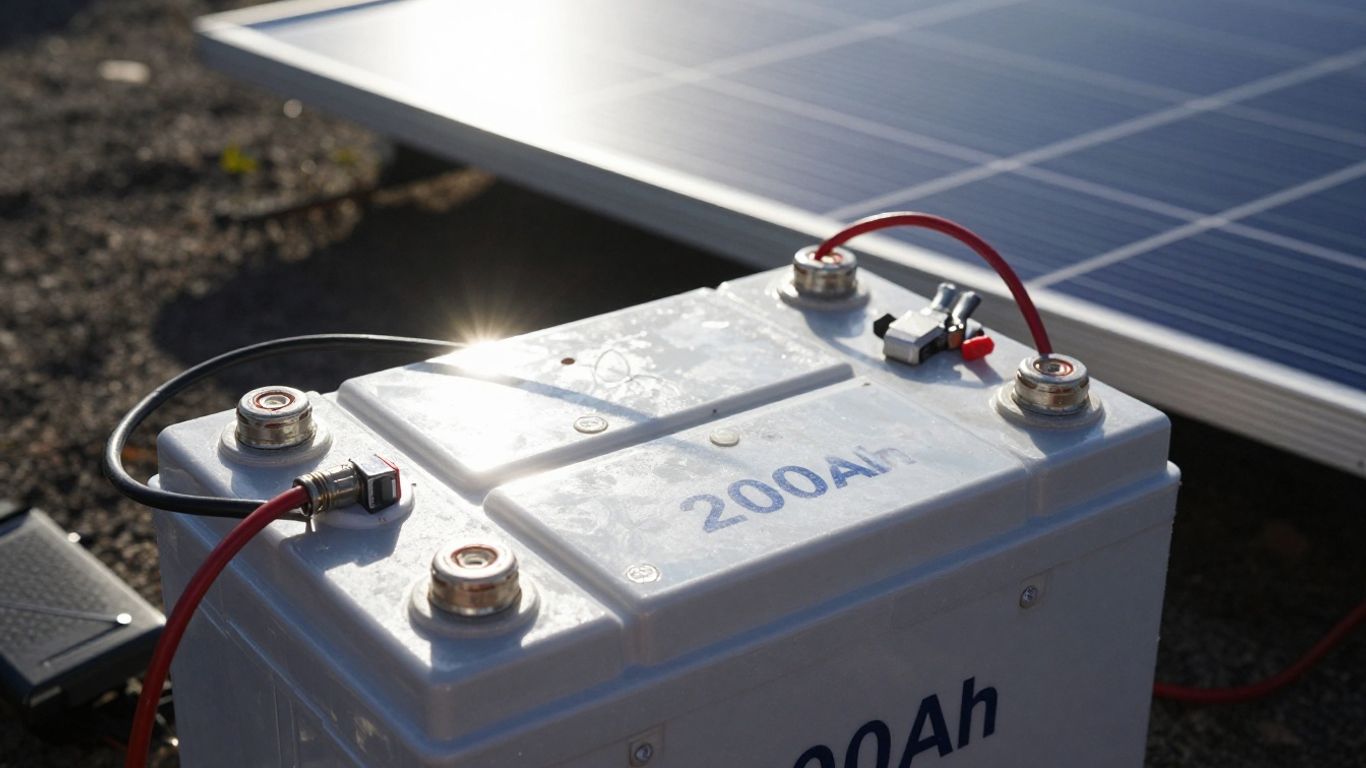
When designing your solar system, it’s important to think about how long you want your battery to last without being recharged. This depends on your usual consumption and also on the weather. If you live in a region where sunshine is not always reliable, or if you want peace of mind for several days, you’ll need to plan for a battery with a larger capacity. Think about how many days of autonomy you truly desire. For example, wanting to last 3 days without sun requires a much larger capacity than just one day. It’s a bit like stocking up for winter, but for energy.
Depth of Discharge and Battery Lifecycles
A battery’s lifespan is not just counted in years, but primarily in charge and discharge cycles. Each time you use the stored energy, it’s a cycle. The depth of discharge (DoD) indicates what portion of the battery’s total capacity you can use without damaging it. Lead-acid batteries, for example, do not tolerate being completely emptied, and it’s recommended not to exceed 50% of their capacity. Lithium batteries, on the other hand, are more tolerant and can often go up to 80% or even 90%. Using a battery beyond its recommended depth of discharge will significantly reduce its total number of cycles and thus its lifespan. For a 12V 200Ah battery, if you never go below 50% charge, it will last longer than if you regularly drain it to 10%. Therefore, you need to find the right balance so that your system is efficient without prematurely wearing out your equipment. A quality lithium battery can achieve several thousand cycles, which is a definite advantage for the longevity of your installation.
Risks of Undersizing or Oversizing
Choosing the right size for your battery is essential. If you undersize it, meaning it’s too small for your needs, you risk draining it too often and too deeply. This will wear it out faster and may force you to buy electricity from the grid, which goes against the goal of a solar installation. On the other hand, an oversized battery represents a higher initial investment for a capacity that will not always be used to its full potential. It might also struggle to recharge completely, which is not ideal either. When in doubt, it is often better to choose a slightly larger battery than strictly necessary. This helps avoid frequent deep discharges and can contribute to better overall autonomy, even if the initial cost is a bit higher.
It is important to accurately calculate your real energy needs and consider days with low solar production. A well-sized battery that respects its maximum depth of discharge will guarantee better autonomy and a longer lifespan, thus optimizing your investment in the long term.
In Summary: Your Custom Solar Kit
There you have it, we’ve reached the end of our guide. You now have the keys to properly choose the power of your solar panel and size your kit for a 12V 200Ah battery. Remember that these calculations are estimates. Actual sunshine, panel orientation, and maintenance play an important role. Don’t hesitate to seek advice from professionals to refine your project. A well-thought-out system guarantees reliable energy and better autonomy.
Frequently Asked Questions
How do I know what size solar panel I need for my 12V 200Ah battery?
To choose the right size solar panel, you first need to calculate the energy your battery needs in watt-hours (Wh). Multiply your battery’s voltage (12V) by its capacity (200Ah) to get 2400Wh. Then, estimate how many hours of good sunshine you get per day in your region, say 5 hours. Divide the Wh by the number of sunshine hours to find the required power: 2400Wh / 5h = 480Wp. Don’t forget to add a safety margin (about 25%) to compensate for losses, which gives about 600Wp. A solar panel of this power should recharge your battery well.
What is a battery’s ‘C rating’ and why is it important?
The ‘C rating’ indicates the maximum current your battery can accept without risk of damage. For a 200Ah battery, a ‘C rating’ of 0.5C means it can receive up to 100 Amps (200Ah x 0.5). A ‘C rating’ of 1C allows up to 200 Amps. Respecting this maximum current is crucial to avoid wearing out your battery too quickly and to ensure its longevity. Always check the manufacturer’s recommendations.
What is the difference between an MPPT and a PWM charge controller?
Both types of controllers protect your battery from overcharging. The PWM controller is simpler and cheaper, but it is less efficient, especially when the solar panel’s voltage is much higher than the battery’s. The MPPT (Maximum Power Point Tracking) controller is smarter and more expensive. It optimizes your solar panel’s output, even in cloudy weather or when the battery is almost full, allowing you to recover more energy and recharge your battery faster.
How long does it take to fully recharge my 12V 200Ah battery?
The charging time depends on several factors: the power of your solar panel, your battery’s capacity, the amount of sunshine, and your system’s efficiency. Using our previous example with a 600Wp panel and 5 hours of sunshine per day, the production would be about 3000Wh (600Wp x 5h x 0.75 for losses). Your 2400Wh battery (12V x 200Ah) would therefore be recharged in a little less than a day of good sunshine. On less sunny days, it will take longer.
What are the risks if I undersize or oversize my solar kit?
If your kit is too small (undersized), your battery will not always be fully charged, especially in winter or on cloudy days. You risk running out of power and having to use the grid, which goes against the goal of autonomy. If your kit is too large (oversized), you have paid more than necessary, and the excess energy is not always fully utilized, which can also reduce the battery’s lifespan if it is constantly fully charged without discharging. You need to find the right balance.
How do panel orientation and tilt affect my battery charging?
Orientation and tilt are very important for capturing maximum sunlight. Ideally, your panels should face south (in the Northern Hemisphere) and be tilted at an angle that corresponds to your latitude, often around 30 degrees. Incorrect orientation or tilt, or shading from trees or buildings, will reduce the amount of energy produced by your panels, which will slow down the charging of your 12V 200Ah battery and could even prevent it from reaching full charge.