Are you wondering who to sell your solar panel-generated electricity to? Many individuals ask themselves this question, especially with rising energy prices. Setting up the sale of your photovoltaic electricity might seem complicated at first, but once you understand the steps and options, it becomes clearer. Here’s a simple and concrete overview to help you see things more clearly.
Key Takeaways
- Before selling your solar electricity, you must connect your installation to the public grid and obtain Consuel certification.
- Two options exist for selling: going through the obligated buyer (like EDF OA) or choosing an alternative supplier.
- The obligation to purchase contract sets the sales conditions and generally lasts for 20 years, with state-regulated rates.
- Purchase rates change quarterly and depend on your installation’s power and the type of sale (total or surplus).
- Self-consumption with surplus sale, supported by a bonus, is currently the most popular strategy to optimize your solar income.
Essential Steps to Sell Your Solar Electricity
To sell the electricity produced by your photovoltaic panels, several strict steps are required. Here’s how to proceed, step by step.
Connecting Your Installation to the Public Grid
Your first mandatory step: connect your solar panels to the public grid through the local grid operator, usually Enedis. This connection allows your electricity to be injected into the national grid.
Things to prepare:
- Provide supporting documents (planning permission, installer certification, etc.).
- Submit the connection request online or via a paper application.
- Await validation by the grid operator, who will set the technical specifications.
A compliant connection avoids many complications during the sale.
Obtaining Consuel Compliance Certificate
It’s impossible to sell your production without this document. The Consuel certificate, issued by a specialized organization, confirms that your installation meets current safety standards.
To obtain it, you will need to:
- Schedule an appointment with a Consuel inspector.
- Present your equipment for inspection.
- Correct any reported anomalies.
Without this certificate, no electricity sale is legal.
Carefully check your installation’s compliance before the Consuel inspection to speed up the process.
Signing the Purchase Obligation Contract
After connection and obtaining Consuel certification, all that remains is to sign a purchase obligation (OA) contract. This contract binds you to an entity (EDF OA, ELD, or alternative supplier) that will buy back the energy produced at a fixed or negotiated rate.
Key steps:
- Choose between total sale or surplus sale.
- Fill out the supplier’s specific forms.
- Provide the CRAE number (Connection, Access, and Operation Contract).
- Create an account on the dedicated platform for recurring billing.
Signing the OA contract formalizes your status as an electricity producer-seller.
The process may seem long, but each step is essential to start selling your solar production with peace of mind.
The Different Buyers for Your Photovoltaic Production
Once your solar panels are producing electricity, you have the option to sell it. But who should you contact? In France, two main categories of buyers are available for your surplus production or all of your electricity.
Selling to the Obligated Buyer (EDF OA, ELD)
The obligated buyer is an entity designated by law to purchase electricity from renewable energy sources. In most cases, this is EDF Obligation d’Achat (EDF OA). Local Distribution Companies (ELDs) also play this role in certain geographical areas. When you choose this option, you sign a twenty-year contract. This contract guarantees a fixed purchase rate, set by the state and revised quarterly. This is a formula that offers great long-term financial security, as the selling price is known in advance.
- Rate security for 20 years.
- Rates set by the Energy Regulatory Commission (CRE).
- Simplified management, the contract is standardized.
The Purchase Obligation contract is the most common route for individuals wishing to sell their production. It ensures income stability and simplifies administrative procedures thanks to well-established processes.
Selling to an Alternative Energy Supplier
Beyond the obligated buyer, the energy market has opened up. You can therefore choose to sell your electricity to an alternative energy supplier, different from EDF OA or your ELD. In this case, the purchase price is not set by law but is subject to direct negotiation between you and the supplier. This approach may seem attractive as it offers greater flexibility and potentially better rates if you manage to negotiate a favorable agreement. However, it often involves more active management on your part. You may need to install a specific meter to accurately measure your production and manage billing yourself. The commitment period is generally shorter, or even non-existent, but monitoring your production and the commercial relationship rests more on your shoulders.
- Negotiation of the purchase rate.
- Contractual flexibility (duration, conditions).
- Need for more autonomous management of production and billing.
The choice between these two options will depend on your priority: do you prefer the security and simplicity of a long-term contract with a guaranteed rate, or are you looking for greater flexibility and the possibility of negotiating a better price, even if it means taking on more direct management of your production?
Understanding the Purchase Obligation Contract
When you decide to sell the electricity produced by your solar panels, you will need to sign a contract. Most often, this is a purchase obligation contract. This document, which may seem a bit technical at first glance, is nevertheless key to understanding how your production will be compensated. It establishes the rules of the game between you, the producer, and the buyer of your electricity.
Contractual and Technical Conditions
This contract, which is a form of Power Purchase Agreement, specifies the terms of your agreement. It first details the rate at which your electricity will be purchased. This rate is set by the state and can vary depending on several factors, such as the power of your installation or the commissioning date. It is important to understand how this rate is calculated and whether it is likely to change. Beyond the price, the contract also addresses technical aspects. It may specify requirements regarding the quality of electricity injected into the grid, or the methods for measuring your production. You must ensure that your installation meets these criteria to avoid any problems.
Contract Commitment Period
One of the most important points to consider is the commitment period of this contract. Generally, a purchase obligation contract binds you for a period of 20 years. This is a long-term commitment that ensures a certain stability in the compensation for your surplus electricity. However, it’s good to know that termination clauses exist. If you sell your home, for example, the contract can be transferred to the new owners. In other cases, early termination may result in penalties. It is therefore advisable to read all clauses carefully before signing, in order to anticipate future possibilities and make an informed choice about your sales strategy.
Photovoltaic Electricity Purchase Rates
Understanding how your solar electricity surplus will be compensated is a key step. The rates at which you can resell your production are not random; they are set by the state. These rates are revised quarterly, after consultation with the Energy Regulatory Commission (CRE). It is therefore useless to try to negotiate, as these prices apply to both buyers and you, the producer.
State-Set Rates Revised Quarterly
Purchase rates are determined by ministerial decrees and published by the CRE. They are updated every three months to take into account market developments and renewable energy development goals. It is therefore important to inquire about the rates in effect at the time of your connection request.
Criteria Influencing the Purchase Price
Several factors influence the price at which your electricity will be purchased:
- Your installation’s power: Rates can vary depending on whether you have a small domestic installation (up to 9 kWp) or a larger one.
- The type of sale: The applied rate differs if you sell all of your production or only the unused surplus.
- The date of the connection request: Rates are fixed for a given period from your complete connection request.
- Building integration: In some cases, technical or aesthetic specificities may influence the rate.
Here is an overview of surplus sale rates for the period of April 1 to July 1, 2026, as an example:
| Power (kWp) | Self-consumption Bonus (04/01/2026 – 07/01/2026) | Surplus Sale Rate (c€/kWh) |
|---|---|---|
| 0 to 9 | €0.08/Wp (e.g., €240 for 3 kWp) | 4.00 |
| 9 to 36 | €0.12/Wp (up to €4,320 for 36 kWp) | 4.73 |
| 36 to 100 | €0.06/Wp (up to €6,000 for 100 kWp) | 4.73 |
| 100 to 500 | €0 (subject to simplified tender) | Rate subject to a simplified tender |
Historical Evolution of Sale Rates
It is interesting to note that photovoltaic electricity purchase rates have seen a significant downward trend over the years. For example, rates for total sale for installations under 9 kWp were 10.31 c€/kWh between November 1, 2024, and March 26, 2025, and dropped to 0 c€/kWh for the same power range between March 27, 2025, and June 30, 2025. This evolution partly explains the massive shift towards self-consumption with surplus sale, a strategy that allows for better valorization of one’s production by consuming it first.
The continuous decrease in purchase rates for electricity sold on the grid is increasingly prompting individuals and companies to favor self-consumption. The idea is to directly consume the electricity produced by their solar panels to reduce their bills, and only sell the surplus, often at a less advantageous rate than before.
The Self-Consumption Bonus: An Interesting Complement
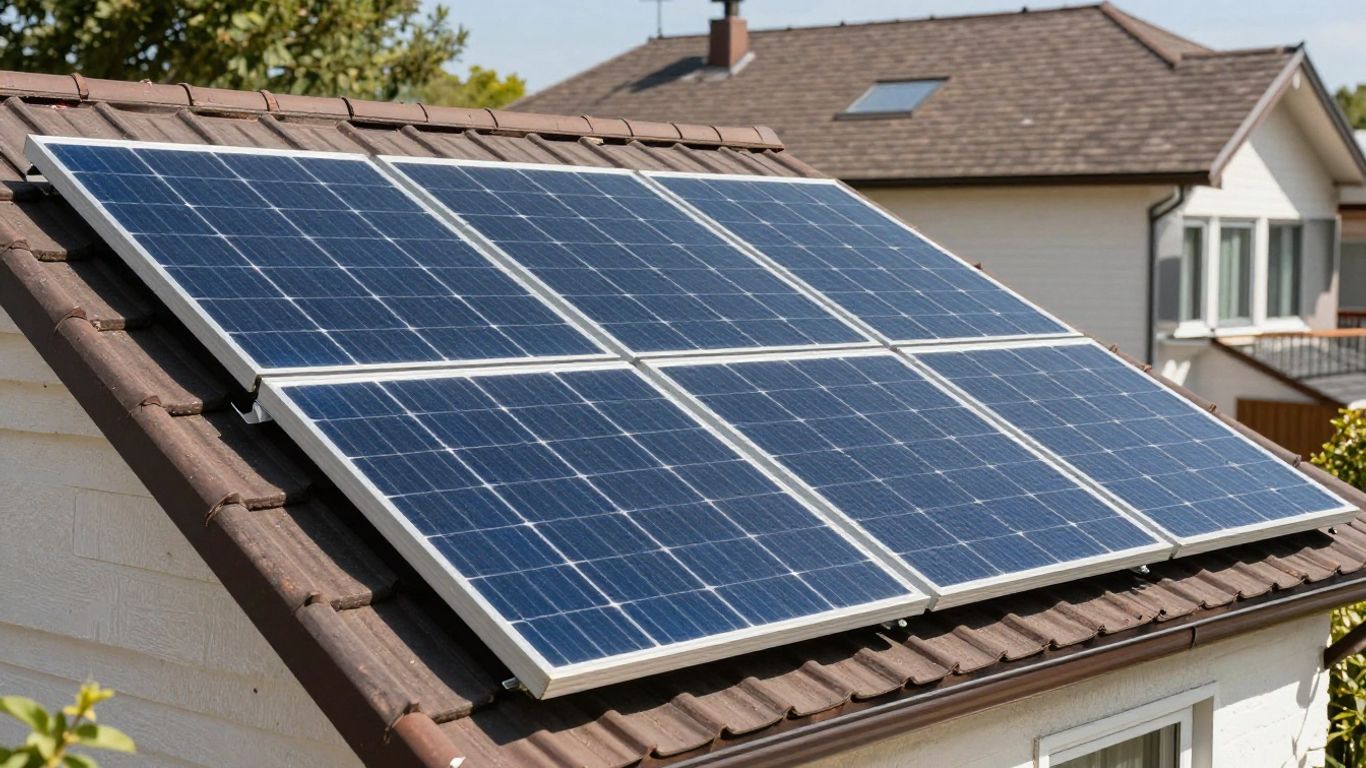
Beyond simply selling your surplus electricity, there is a system designed to encourage the installation of solar panels: the self-consumption bonus. This financial boost can make your project even more attractive. Let’s see how it works and if you are eligible.
Eligibility for the Bonus
To benefit from this bonus, your installation must meet several criteria. It must be carried out by a qualified professional, thus guaranteeing the quality and safety of the installation. Furthermore, the bonus is specifically intended for self-consumption installations with surplus sale. This means you consume part of the electricity produced and sell the rest. The installation must also comply with certain technical standards and be connected to the public grid. Eligibility also depends on the power of your installation, generally between 3 kWp and 100 kWp for individuals and small businesses. It is important to note that this bonus is subject to evolving tariff decrees. To ensure you meet current conditions, it is advisable to consult official texts or seek assistance from a certified installer who is familiar with the procedures for solar installation.
Calculation and Payment of the Bonus
The amount of the self-consumption bonus is calculated in euros per installed kilowatt-peak (€/Wp). This amount varies depending on the total power of your photovoltaic installation. Power ranges are defined by regulations, and rates are revised periodically, often quarterly. For example, for a 3 kWp installation, the bonus can amount to several hundred euros, while for a 9 kWp installation, it will be more substantial. This bonus is generally paid in a single installment, shortly after your installation is commissioned. The precise details of the calculation and payment schedule are specified in the tariff decree in effect at the time of your connection request.
Here is an overview of the amounts for the period of April 1 to July 1, 2026:
| Power (kWp) | Self-consumption Bonus (€/Wp) | Amount for a 3 kWp Installation |
|---|---|---|
| 0 to 9 kWp | €0.08/Wp | €240 |
| 9 to 36 kWp | €0.12/Wp | Up to €4,320 for 36 kWp |
| 36 to 100 kWp | €0.06/Wp | Up to €6,000 for 100 kWp |
Impact of the Bonus on Profitability
The self-consumption bonus has a direct and positive impact on the overall profitability of your solar project. By reducing the initial cost of your installation, it shortens the time needed to reach the break-even point. This means you start generating profit more quickly. Furthermore, this bonus can be combined with the purchase rate for surplus electricity, maximizing your potential income. It is therefore important to take this scheme into account when doing your financial simulations. A well-designed installation, benefiting from the bonus and a good surplus sale strategy, can become a significant source of income and contribute to your energy independence.
Total Sale or Surplus Sale: Which Strategy to Adopt?
Once your photovoltaic installation is operational and connected, an important decision arises: how will you sell the electricity you produce? You primarily have two options: sell all of your production or opt for selling the surplus. Each of these strategies has advantages and disadvantages that are worth considering carefully to optimize the profitability of your solar project.
Advantages and Disadvantages of Total Sale
Selling the total production involves reselling all the electricity generated by your solar panels to a single buyer, usually EDF Obligation d’Achat (EDF OA) or a Local Distribution Company (ELD), under a 20-year purchase contract. The purchase rate is set by the state and revised quarterly. This option offers appreciable administrative simplicity, as you do not have to manage your household’s instantaneous consumption. The generated income is predictable and stable over the contract duration.
However, this approach deprives you of the possibility of directly consuming your own production. If your household consumes electricity from the grid while your panels are producing, you pay for this electricity at the supplier’s rate, while reselling it at a potentially lower rate. The main advantage lies in the guarantee of regular income, but at the expense of self-consumption.
Advantages and Disadvantages of Surplus Sale
Self-consumption with surplus sale has become an increasingly popular option. Here, you first consume the electricity produced by your panels for your own needs. When your production exceeds your consumption at a given moment, the excess is then sold to an authorized buyer. This strategy aims to maximize the use of your solar energy by prioritizing it to reduce your electricity bill, while valorizing the unused kWh.
One of the main advantages is the double saving: you reduce your electricity bill by consuming your production and you receive income from selling the surplus. Additionally, an investment bonus can complement this strategy, paid over the first five years of the installation (or in a single payment for installations < 9 kWp since 2023). The main disadvantage lies in the management complexity: you need to be able to monitor your production and consumption to optimize surplus sales. Furthermore, the purchase rate for the surplus is generally lower than that for total sale. For example, for a given quarter, the surplus purchase rate may be 4 c€/kWh for installations up to 9 kWp, while the price of electricity purchased from the grid may be around 19 c€/kWh.
The Rise of Self-Consumption with Surplus Sale
Given the evolution of rates and the desire to maximize the use of solar energy, self-consumption with surplus sale is becoming increasingly sensible. The growing difference between the cost of electricity purchased from the grid and the surplus purchase rate makes self-consumption directly more advantageous. Installing storage solutions, such as physical or virtual batteries, further optimizes this strategy by smoothing out production and consumption.
The decision between total sale and surplus sale will depend on your priorities: do you prioritize income security with total sale, or optimizing your consumption and potential bill reduction with surplus sale, supplemented by a bonus?
Here is a simplified comparison table of surplus purchase rates for the 2nd quarter of 2026 (period from April 1 to July 1, 2026):
| Installation Power | Surplus Purchase Rate (c€/kWh) |
|---|---|
| Less than or equal to 9 kWp | 4.00 |
| Between 9 and 100 kWp | 5.36 |
It is important to note that these rates are revised quarterly and that the self-consumption bonus is added to this income for eligible installations.
Your Solar Electricity Resale Process
You now have a better idea of the steps to follow to resell the electricity produced by your solar panels. Remember that purchase rates evolve, and it is important to fully understand the proposed contracts. Whether you choose total sale or surplus sale, each option has its advantages. Take the time to compare offers and inquire about available aid to optimize your photovoltaic project. This is an important step to best valorize your installation.
Frequently Asked Questions
What are the first steps to sell my solar electricity?
To start selling your solar electricity, you must first have your installation connected to the electrical grid. Then, you need to obtain a compliance certificate, often called Consuel, which proves that your installation is safe. Finally, you will sign a contract with a buyer, such as EDF OA, to define the sales conditions.
Who can buy my photovoltaic electricity?
You have a choice between two main types of buyers. Firstly, there are the ‘obligated buyers’ like EDF OA or local electricity distribution companies. Secondly, you can also sell your production to alternative energy suppliers. The choice will depend on the contract terms offered.
What is a purchase obligation contract and how long does it last?
The purchase obligation contract is an official agreement that binds you to a buyer for selling your electricity. It sets the price at which your electricity will be purchased and the technical rules to follow. These contracts are generally signed for a duration of 20 years, which ensures a certain stability.
How are the purchase prices for my solar electricity determined?
The prices at which your electricity is purchased are set by the state and are reviewed every three months. They depend on several factors, such as the power of your solar installation and whether you sell all of your production or only what you don’t consume. These rates are the same for everyone; there is no room for negotiation.
What is the self-consumption bonus and how does it work?
The self-consumption bonus is a financial aid if you consume part of the electricity you produce yourself and only sell the surplus. This bonus is paid over the first five years, and its amount depends on the power of your installation. It is paid at the same time as the money from selling your surplus.
Is it better to sell all of my production or only the surplus?
Selling all of your production might seem simple, but purchase rates have dropped significantly in recent years. Selling only the surplus, meaning the electricity you don’t consume, has become more advantageous, especially if you use part of your production at home. This is the self-consumption with surplus sale strategy, which is increasingly popular.