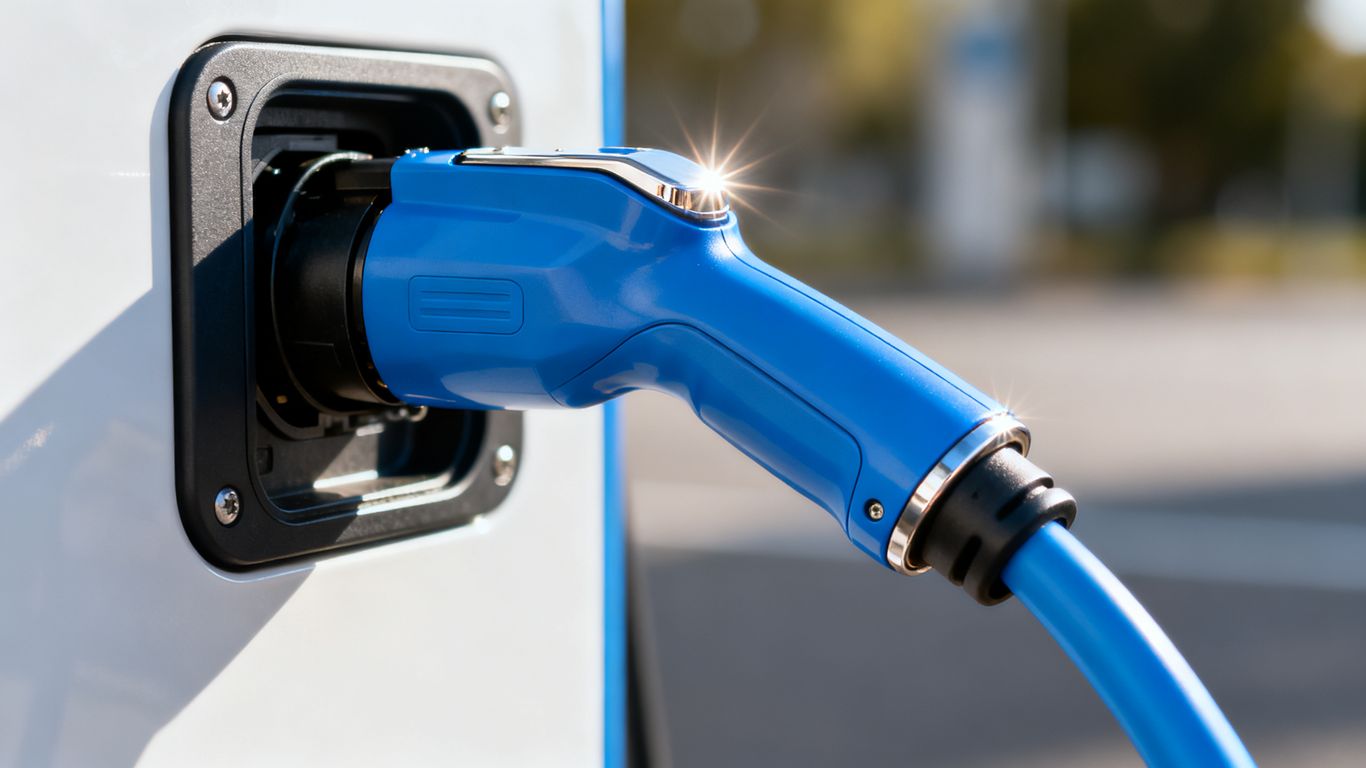
For a successful electric car charging installation, keep these essential points in mind. They will help you avoid common pitfalls and ensure the safety and compliance of your installation.
Key Points to Remember
- A detailed installation diagram is essential for safe charging.
- Strictly adhere to the French standard NF C 15-100 for all electrical installations.
- Call an IRVE certified professional for installations with a power greater than 3.7 kW.
- The reinforced socket (Green’up type) and the wall-mounted charging station have distinct uses and performances.
- Do not underestimate electrical protection: circuit breakers and residual current devices are crucial.
Understanding the Basics of an Electric Car Socket Installation Diagram
Before you begin installing your electric vehicle charging point, it is absolutely necessary to fully understand the fundamentals of an installation diagram. This document is not just a formality; it is the roadmap that ensures the safety of your installation and the protection of your home. Without a clear plan, you risk serious problems, ranging from cable overheating to nuisance tripping of your main circuit breaker, not to mention potential damage to your car’s battery.
The Importance of a Detailed Plan for Safe Charging
An installation diagram is like an architect’s blueprint for a house. It details each component: the power source (your electrical panel), protections (circuit breakers, residual current devices), cables (their cross-section and length), and finally the receiver (the reinforced socket or wall-mounted charging station). It uses standardized symbols so that any electrician can quickly understand the configuration. This document is the guarantee of a compliant and safe electrical installation. It helps prevent overloads on your existing network by providing a dedicated circuit, which is essential for calm and efficient charging. Think of it as an initial investment to avoid many future headaches.
The Risks of a Non-Compliant Electrical Setup
Installing a charging socket or station without adhering to standards can have serious consequences. This includes fire risks due to cable overheating, electric shocks, or malfunctions of your home’s electrical system. Furthermore, in the event of an incident, your insurance may refuse to cover damages if the installation is not compliant. It is therefore crucial to ensure that everything is done according to best practices. A non-compliant setup can also lead to fines, which are never pleasant.
Differentiating Between a Reinforced Socket and a Wall-Mounted Charging Station
It is important to know that there are several solutions for charging your vehicle at home. The reinforced socket, often called Green’up, is a simpler and generally less expensive option. It is designed to handle higher loads than a standard household socket. The wall-mounted charging station, on the other hand, is a more powerful solution, offering higher charging powers and often connected features (scheduling, consumption monitoring, etc.). The choice between the two will depend on your daily mileage needs, your car’s battery capacity, and your budget. For a 7.4 kW installation, for example, a 40-amp circuit breaker with a C curve is required, as recommended by the standard for a 7.4 kW installation.
A clear installation diagram is the first step towards safe and reliable electric vehicle charging at home. It allows for proper sizing of all components and avoids costly mistakes.
Technical Prerequisites Before Installation
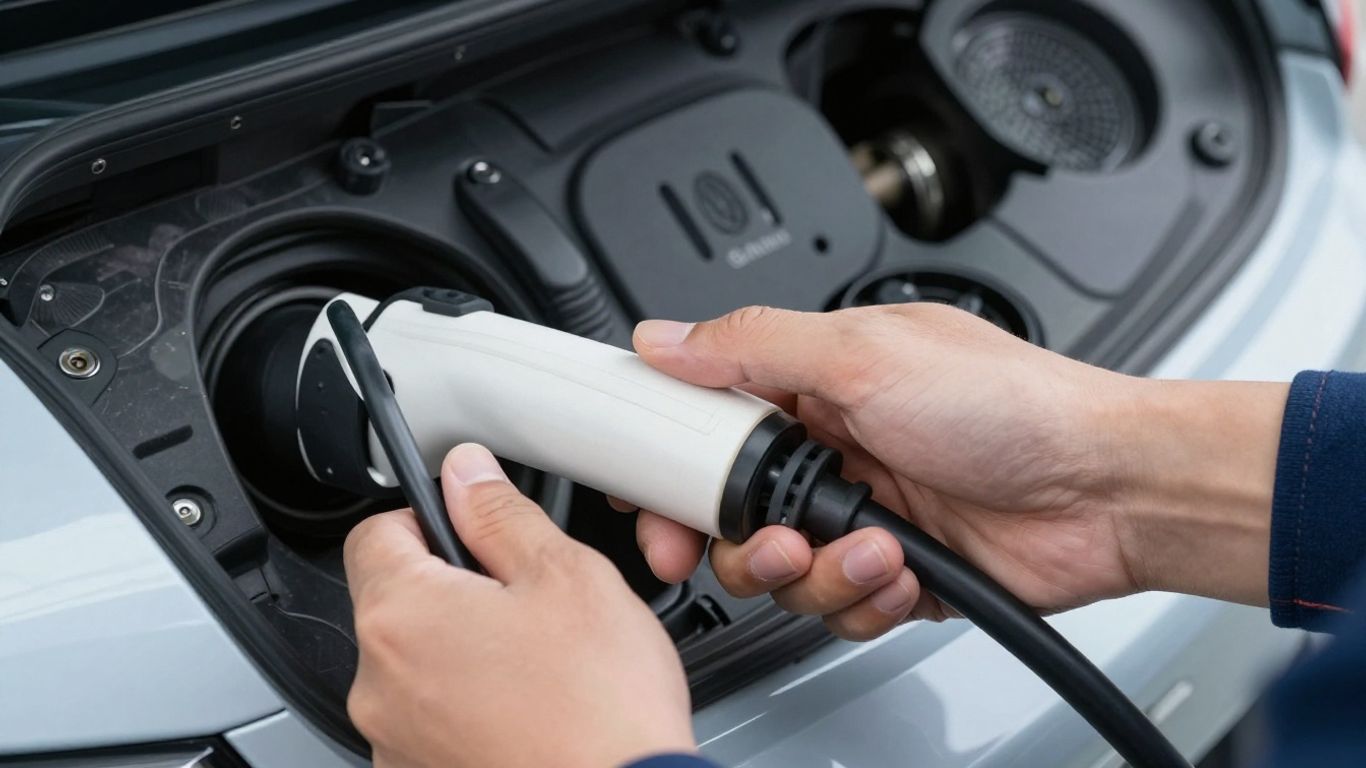
Before you start installing your electric car socket, it is essential to ensure that your current electrical system is ready to handle this new load. Neglecting this step could lead to malfunctions or even safety risks.
The first thing to do is to check what your electrical grid can support. An electric car consumes a significant amount of energy, especially during charging. Therefore, you need to verify if your current installation is robust enough. An assessment by a professional is highly recommended to avoid any unpleasant surprises. This diagnosis ensures that your system is not already overloaded and can handle the additional demand without issues. This includes checking the total power of your meter and how electricity is distributed in your home. A good understanding of your grid is the foundation for a successful installation.
Your electrical panel is the nerve center of your installation. It must be in good condition and, above all, compliant with current standards. For an electric vehicle charging socket, it is often necessary to add dedicated protection. This generally means installing a new circuit breaker and a specific residual current device. The NF C 15-100 standard, for example, imposes strict rules for this type of installation to ensure safety. You need to make sure there is enough space in the panel for these new components and that the existing wiring is in good condition. If your panel is old or overloaded, an upgrade may be necessary before you can install your charging point. Consider consulting essential French standards to better understand the requirements.
The charging power you need will depend on several factors, including the type of vehicle you own and how often you use it. Electric cars have varied needs. A small city car will not have the same requirements as a family sedan. You also need to consider the desired charging speed. Do you want to be able to fully charge your car overnight, or is a partial charge sufficient?
Here are some examples of common power levels:
- Reinforced socket (Green’up type): Generally limited to 3.7 kW (single-phase 16A). Ideal for slow charging, for example, overnight.
- Wall-mounted charging station (Wallbox): Can range from 7.4 kW (single-phase 32A) to 22 kW (three-phase 32A), or even higher. Allows for faster charging.
The choice of power will directly impact the type of cable to be used, the necessary protections in your electrical panel, and, of course, the installation cost. It is therefore important to carefully consider your needs before making your choice. Remember that the installation of a charging station with a power greater than 3.7 kW must be carried out by an IRVE certified professional.
Key Steps for a Compliant Installation
Once you have a good understanding of the basics and have checked your existing installation, it’s time to move on to implementation. Carrying out an electrical installation for your electric car according to regulations is absolutely essential for your safety and that of your home. This requires a precise, step-by-step methodology.
Securing the Electrical Panel and Installing Protections
The first thing to do is to cut off the main power supply to your home. This is a crucial safety measure to avoid any risk of electrocution. Once the power is off, you can work on your electrical panel. You need to install the necessary protections there. This includes a dedicated circuit breaker for the charging circuit, the rating of which will be chosen based on the power of your future charging point. For example, for a 7.4 kW charging station, a 32A circuit breaker with a D curve is often recommended. You also need to install a Type F residual current device with a sensitivity of 30 mA. This type of residual current device is specifically designed for electric vehicle charging equipment, as it is less sensitive to leakage currents generated by power electronics, thus preventing nuisance tripping. Adherence to the NF C 15-100 standard is fundamental here.
Running and Connecting the Dedicated Cable to the Charging Point
Next, you need to run a specific electrical cable from your panel to the location of your charging socket or station. The cross-section of this cable is very important and must be adapted to the power of the equipment and the distance separating it from the panel. For a power of 7.4 kW, a cross-section of 6 mm² is generally the minimum required, but this cross-section must be increased if the distance is significant, for example, beyond 25 meters. It is advisable to run this cable in a protective conduit to protect it from physical damage and weather, especially if it is installed outdoors. Secure it properly along its entire path to prevent it from sagging or being damaged. Once it reaches its destination, carefully strip the wires for connection.
Fixing and Connecting the Charging Socket or Station
The final step is to securely fix your reinforced socket or wall-mounted charging station in its final location. Ensure that the mounting is robust, especially if the equipment is exposed to the elements. Then, connect the wires of the power cable to the terminals of the device, strictly observing the polarity: phase, neutral, and ground. It is imperative to tighten the connections properly, as a poor connection can lead to dangerous overheating. For outdoor installations, check the equipment’s IP (Ingress Protection) rating to ensure its watertightness. Once everything is connected, you can proceed to power it up and perform a charging test. It is strongly recommended to have these works carried out by an IRVE certified professional, especially for installations with a power greater than 3.7 kW, to ensure a compliant and safe installation, and to be eligible for available financial aid for the installation of a domestic charging station.
Complying with Regulations for a Long-Lasting Installation
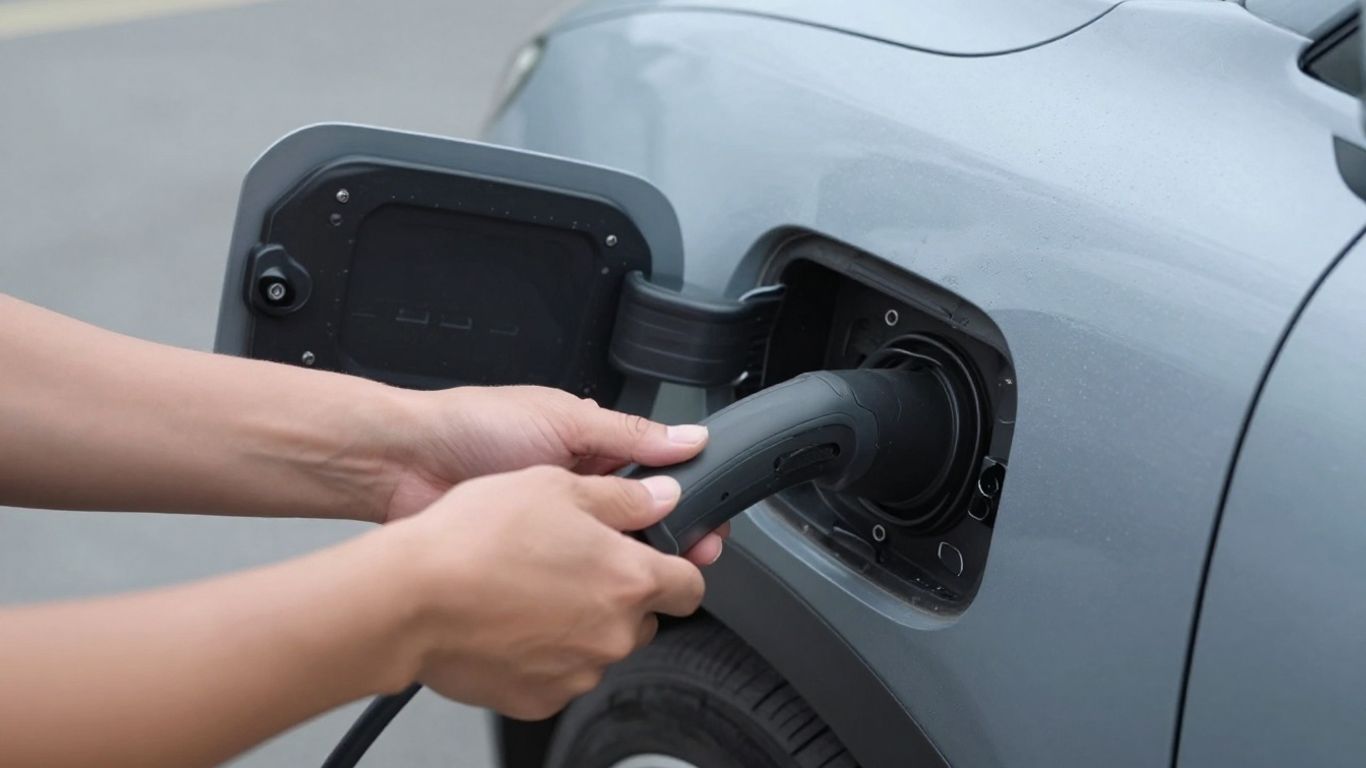
For your electric vehicle charging installation to be not only functional but also safe and long-lasting, it is imperative to comply with current regulations. Ignoring these rules can lead to major risks, both for your safety and your wallet. This is a step that allows for no approximations.
Essential French Standards (NF C 15-100)
The French standard NF C 15-100 is the absolute reference for any electrical installation in a dwelling, including for electric vehicle charging. It has been amended (notably with amendment A5 of 2015) to incorporate the specificities of these new infrastructures. This standard details the requirements for wiring, residual current protection, and grounding. For example, it mandates the use of a Type F residual current circuit breaker (30 mA) on the circuit dedicated to charging. Non-compliance with these provisions can lead to an increased electrical risk and, in the event of a claim, the nullification of your insurance coverage.
The Obligation to Use an IRVE Certified Professional
For installations with a charging power exceeding 3.7 kW, the law is very clear: you must use a qualified professional. This is an electrician who has obtained the IRVE (Infrastructure de Recharge pour Véhicules Électriques – Electric Vehicle Charging Infrastructure) certification. This certification attests that the installer possesses the necessary technical skills to carry out work compliant with current standards, such as NF C 15-100 and the European standard IEC 61851. Using a certified professional is a guarantee of safety and ensures that your installation will be correctly sized and protected. It is also an essential condition for benefiting from certain financial aid. If you are looking for an installer, you can consult directories of IRVE certified professionals.
The Consuel Certificate: Proof of Compliance
Once the work is completed by your IRVE certified electrician, the next step is to obtain the Consuel certificate. Consuel (Comité National pour la Sécurité des Usagers de l’Électricité – National Committee for the Safety of Electricity Users) is an organization that issues a certificate of conformity after verifying that your installation complies with all current standards. Your installer usually handles this process. A Consuel inspector may be assigned to inspect your installation. If everything is in order, you will receive this certificate. This document is very important: it proves that your installation complies with safety regulations and is often required by your insurer in case of a claim. Without this certificate, your home insurance may refuse any coverage. Furthermore, non-compliance with regulations can lead to fines, and makes you ineligible for financial aid such as that offered by the Advenir program.
Choosing the Right Equipment for Your Home Charging
To charge your electric car at home, you primarily have two options: the reinforced socket and the wall-mounted charging station. Each has its specificities, advantages, and disadvantages. It is important to understand them well to make the choice best suited to your needs and budget.
Specifics of the Reinforced Socket (Green’up)
The reinforced socket, often called Green’up (a Legrand brand), is a more economical and simpler solution to install than a wall-mounted charging station. It allows for safe charging up to 3.7 kW in single-phase. This is a significant improvement over a standard household socket, which is not designed to withstand the continuous and intense load required by an electric vehicle. The reinforced socket is ideal for users who drive few kilometers each day, such as owners of plug-in hybrid vehicles or low-mileage drivers. Its installation is relatively straightforward, and it can even be installed by a competent individual, provided that the standards are strictly followed, particularly by installing a dedicated circuit with a circuit breaker and a Type F residual current device. « Ready-to-Install » kits exist to simplify the installation.
Advantages of a Connected Wall-Mounted Charging Station
The wall-mounted charging station, or Wallbox, is the most powerful and versatile solution. It offers higher charging powers, ranging from 7.4 kW to 22 kW, in single-phase or three-phase. This significantly reduces charging time, a major advantage for high-mileage drivers or those who need to charge their vehicle quickly. Modern charging stations are often « connected, » meaning they can be controlled via a mobile app. You can therefore schedule your charging during off-peak hours to reduce your costs, monitor your energy consumption, and even, for some models, optimize charging based on your solar panel production. The installation of a wall-mounted charging station is more complex and requires the intervention of an IRVE (Infrastructure de Recharge pour Véhicules Électriques) certified professional, especially for powers greater than 3.7 kW. It is a more significant investment, but it offers unparalleled ease of use and efficiency in the long run. You can find a wide range of charging solutions on specialized websites like Mister EV.
Selection Criteria: Power, Features, and Budget
The choice between a reinforced socket and a wall-mounted charging station will depend on several factors: your driving habits (daily mileage), your electric car’s battery capacity, the power your electrical system can support, and, of course, your budget. Here is a comparison table to help you see more clearly:
| Characteristic | Reinforced Socket (Mode 2) | Connected Wall-Mounted Charging Station (Mode 3) |
|---|---|---|
| Maximum Power | 3.7 kW (16A single-phase) | 7.4 kW to 22 kW (single/three-phase) |
| Acquisition Cost | Low to moderate | High |
| Installation Complexity | Simple (if dedicated circuit) | Complex (IRVE professional) |
| Features | Basic (safe charging) | Advanced (app, scheduling) |
| Target Audience | Low-mileage drivers, hybrids | High-mileage drivers, intensive use |
It is essential not to underestimate the required power. Too low a power will result in very long charging times, while too high a power could overload your electrical system if it is not adapted. A professional can help you assess the ideal power based on your vehicle and your overall electricity consumption.
In summary, if your budget is limited and you do not have significant needs for fast charging, the reinforced socket may suffice. For more intensive use, a desire for comfort, and cost optimization, the wall-mounted charging station is a more judicious investment. Remember that the choice of equipment must always be validated by a professional to ensure the safety and compliance of your installation.
Common Mistakes to Avoid During Installation
Even with the best intentions, it’s easy to make mistakes when installing your electric vehicle charging socket or station. These missteps can not only compromise the safety of your installation but also lead to additional costs or problems with your insurance. It is therefore essential to be aware of the pitfalls to avoid.
Ignoring Cable Cross-Section and Distance to the Panel
One of the most frequent errors concerns the sizing of the electrical cable. The cable’s cross-section (its thickness) must be adapted to the power of the charging station or socket, but also to the distance separating it from your electrical panel. An undersized cable, especially over a long distance, can overheat. This represents a significant fire risk. You should also not underestimate voltage drop, which can affect charging performance. For a 7.4 kW charging station, for example, a 6 mm² cross-section is often recommended, but this value may need to be increased if the cable runs more than 25 meters. It is always best to consult the manufacturer’s specifications for your equipment and, if possible, have a professional calculate the appropriate cable cross-section.
Using Standard Household Sockets That Are Not Suitable
It may be tempting to use a standard electrical socket to charge your vehicle, especially for occasional use. However, standard household sockets (Type E/F) are generally not designed to withstand the continuous and intense load required for electric vehicle charging. They risk overheating, premature wear, or even causing a fire. For safe charging at home, you must opt for either a reinforced socket (like the Green’up) or a dedicated wall-mounted charging station. These devices are specifically designed for this purpose and incorporate the necessary protections.
Not Respecting Required Residual Current Protections
Electrical safety is paramount, and this requires the installation of adequate protections in your electrical panel. The NF C 15-100 standard, amendment A5, mandates specific protections for electric vehicle charging circuits. In particular, a dedicated circuit breaker adapted to the power of the charging station must be installed, and, most importantly, a Type F (or Type B) residual current device at 30 mA. This type of residual current device is designed to handle the DC fault currents generated by EV chargers, unlike a Type A or AC device which could trip unnecessarily or, worse, fail to react in case of a fault. Not respecting these protections exposes you to serious electrical risks and could invalidate your insurance in case of a claim. Using an IRVE certified professional is the best way to ensure all standards are met, which is mandatory for installations with a power greater than 3.7 kW. You can find out about regulatory obligations to avoid these costly mistakes.
Conclusion
Installing a socket to charge your electric car at home is an important step towards sustainable mobility. A well-thought-out installation diagram, compliance with current standards, and the choice of appropriate equipment are the keys to a safe and efficient installation. Remember that using an IRVE certified professional is often mandatory and always recommended to ensure compliance and your peace of mind. By following these tips, you ensure a hassle-free home charging experience.
Frequently Asked Questions
Why do I need a diagram to install my electric car socket?
The diagram is like the construction plan for your socket. It tells the electrician exactly how everything should be connected to work properly and, most importantly, safely. Without this plan, there’s a risk of making mistakes that could cause electrical problems, or even a fire.
Can I use any electrical outlet in my home to charge my car?
Absolutely not! Normal outlets, the ones you use for your lamp or phone, are not made for this. They cannot handle the power required by a car and risk overheating. You need a special, reinforced socket, or a charging station.
What is the difference between a reinforced socket and a wall-mounted charging station?
Imagine the reinforced socket as a slightly sturdier version of a normal outlet, which charges your car faster. The wall-mounted charging station is the top-of-the-line option: it charges even faster, can have smart features (like starting charging when electricity is cheaper), and is often more robust, especially if it’s outdoors.
Do I absolutely have to hire an electrician to install my socket?
If the charging power is low (up to 3.7 kW), you could technically do it yourself if you are very comfortable with electricity. But be careful, the standards are strict! For higher power levels, it is mandatory to use a certified IRVE professional. And even for low power levels, it’s safer to ask for help to avoid problems.
What is Consuel and why is it important?
Consuel is like an electrical safety inspector. When significant work is done on a home’s electrical system, like installing a charging station, they come to verify that everything is done according to the rules. Having their certificate is proof that everything is up to standard and may be required by your insurance.
What are the essential electrical protections?
You absolutely need a dedicated circuit breaker for your charging socket or station, and a residual current device. The circuit breaker protects against overloads and short circuits, while the residual current device ensures there are no dangerous current leaks. It’s like a double safety system.