Are you preparing for your next caravan getaway and want to optimize your vehicle? Integrating modular systems can transform your experience. Whether for energy, interior layout, security, or connectivity, there are solutions tailored to your needs. This article guides you in choosing and comparing the best options to make your caravan more efficient and comfortable.
Key Takeaways
- For increased energy autonomy, precisely calculate your power needs, size your batteries and solar production, and check voltage compatibility with your existing setup. Caravan solar panel installation should be planned in advance.
- The discreet integration of solar technologies, such as photovoltaic cells in windows or flexible panels, helps preserve your caravan’s aesthetics while ensuring reliable energy production. The strength of the fixings is paramount.
- Modular interior design offers practical solutions like retractable kitchens and clever storage. Choosing durable materials and an anti-moisture design contributes to the comfort and longevity of your living space.
- Vehicle security relies on effective surveillance devices and anti-theft systems. Comparing different options will help you choose the most suitable protection to deter intrusions and safeguard your investment.
- Mobile connectivity, thanks to 4G/5G routers and booster antennas, allows you to stay in touch even in remote areas. Adapt your technological choices to your budget and needs for an uninterrupted travel experience.
Optimizing Your Caravan’s Energy Autonomy
To fully enjoy your caravan getaways without constantly relying on campsites, it’s essential to carefully consider your energy system. This begins with an accurate assessment of your needs.
Assessing the Power Needed for Your Equipment
Before diving into purchasing equipment, take the time to list all the appliances you plan to use. Think about your refrigerator, heating system, lighting, outlets for charging your electronic devices, and any other specific equipment you might have (like a television or an electric water pump). You need to estimate the consumption of each of these appliances, often indicated in Watts (W) or Ampere-hours (Ah). Multiply this consumption by the number of hours of use planned per day. This will give you an idea of your caravan’s total energy demand. A good estimate will prevent you from investing in an undersized or, conversely, oversized and therefore costly system.
Sizing Battery Capacity and Solar Production
Once you have an idea of your daily consumption, you need to choose your battery capacity. Lithium batteries are generally preferred for their lightness and lifespan, but they represent a more significant investment. It’s important that the total capacity of your batteries (expressed in Ampere-hours, Ah) is sufficient to cover your needs, even on cloudy days. Then, you need to size your solar production system. The available roof space on your caravan is a limiting factor. Solar panels, whether rigid or flexible, must be capable of recharging your batteries during daylight hours. An imbalance between solar production and consumption can quickly drain your batteries and reduce their lifespan. Therefore, finding the right balance is crucial.
Choosing the Right Voltage for Your Existing Setup
The voltage of your electrical system is another point to consider. Most caravans are equipped with a 12 Volt (V) system. If you plan to add equipment that already runs on 12V, staying with this voltage will greatly simplify installation and avoid the addition of costly converters. However, for higher energy needs or to power more powerful appliances, a 24V system may be more suitable, as it can carry more power with less amperage, thus reducing cable losses. It’s important to verify the compatibility of your future equipment with the chosen voltage. A well-thought-out installation is the key to successful energy autonomy.
Discreet Integration of Solar Technologies
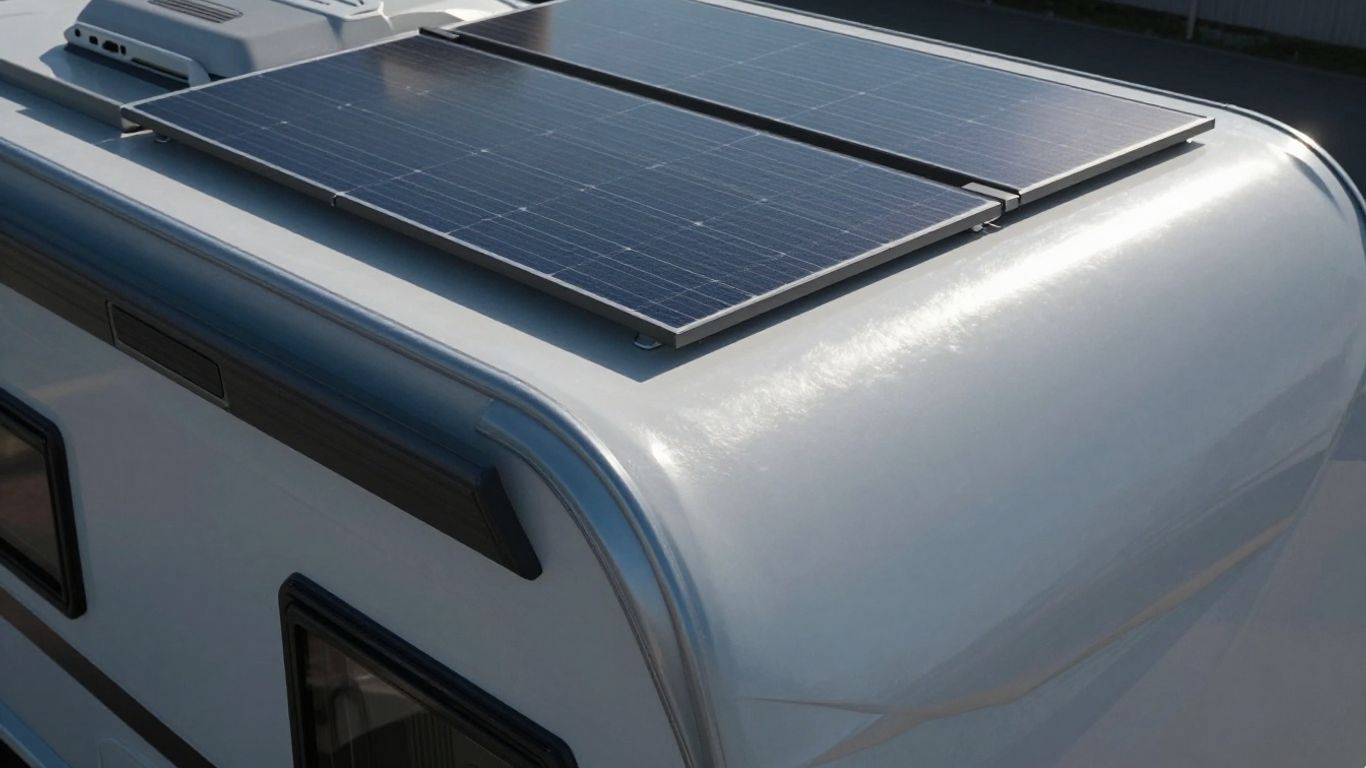
Integrating solar panels onto your caravan doesn’t have to compromise your vehicle’s aesthetics. Nowadays, several solutions make this technology more discreet, even invisible. For example, you could consider photovoltaic solutions integrated directly into your caravan’s windows. These transparent or semi-transparent panels perform their energy production function while allowing light to pass through, thus preserving interior brightness. This approach helps maintain the overall design of your vehicle, which is often important for owners.
Photovoltaic Solutions Integrated into Windows
These technologies, some still under development, offer an interesting alternative to traditional panels. They can be applied to side windows, the windshield, or even the sunroof. The main advantage is their discretion: they blend into the surroundings, unlike classic black panels that can stand out. It’s important to note that their efficiency can sometimes be slightly lower than that of opaque panels, but for everyday use, this is often sufficient. Consider checking compatibility with your existing windows and local regulations.
Preserving Design with Discreet Cells
Beyond windows, there are solar cells designed to be less visible. Some are available in various colors, including white, to better match your caravan’s color. Others are very thin and can be directly adhered to the roof, giving a smoother appearance. The goal is to benefit from solar energy without transforming your vehicle into an ostentatious technological platform. There are even solar panels with a white floral design, more pleasing to the eye than the usual black panels discreet solar panels.
Importance of Robust Fixings
Regardless of the chosen solution, safety and durability are paramount. Constant vibrations during travel, bad weather, and temperature variations can put a strain on the fixings. Therefore, it’s essential to choose robust and proven mounting systems. A well-executed installation ensures that your panels will remain securely in place for many years. Poor fixing can not only damage the panels but also pose a danger to you and other road users. Thus, particular attention must be paid to the quality of materials and the installation method, even if it means calling a professional if you have any doubts.
Here are some points to consider for fixing:
- Roof Type: The material and structure of your roof will influence the most suitable type of fixing.
- Panel Weight: Heavier panels will require stronger fixings.
- Weather Conditions: If you travel in windy or hail-prone areas, reinforced fixing is recommended.
- Maintenance: Ensure that the fixings allow easy access for cleaning the panels.
Modular Solutions for Interior Design
Retractable Kitchens and Optimized Storage
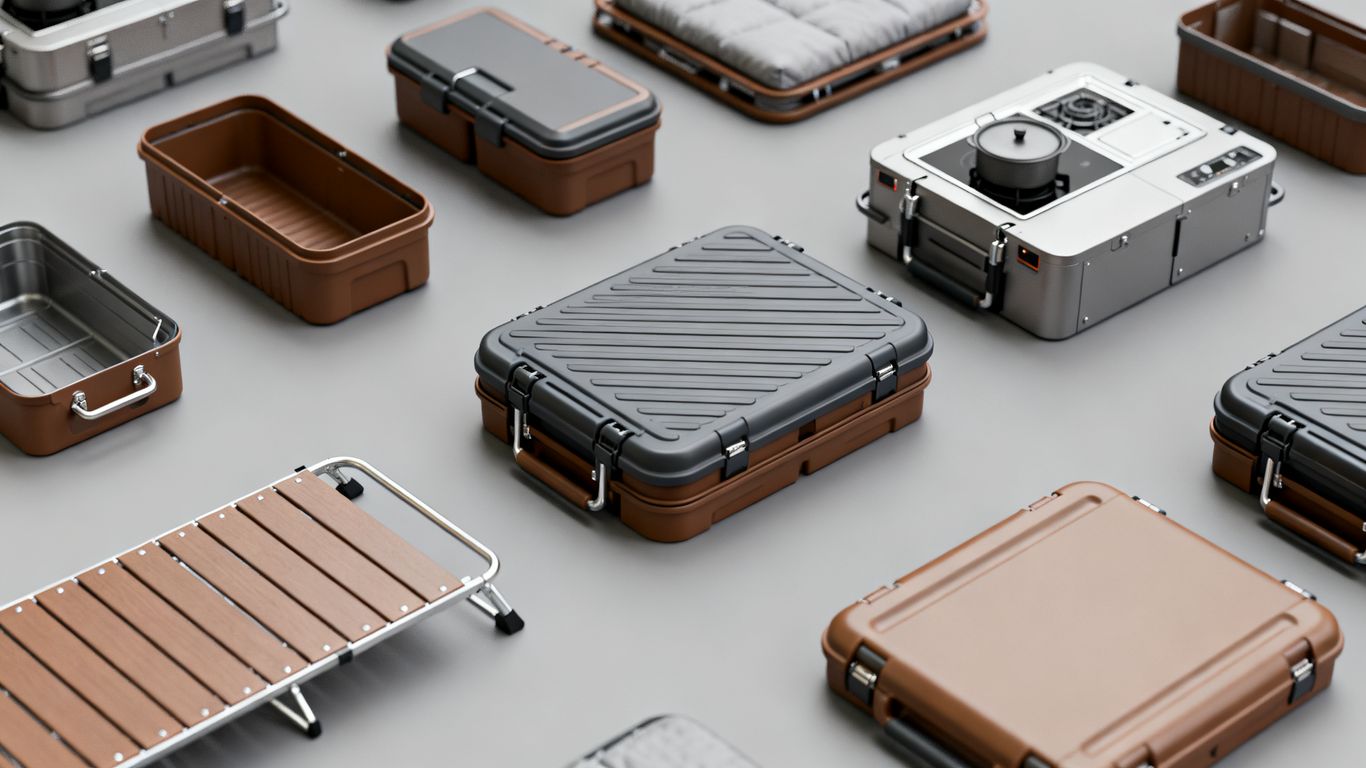
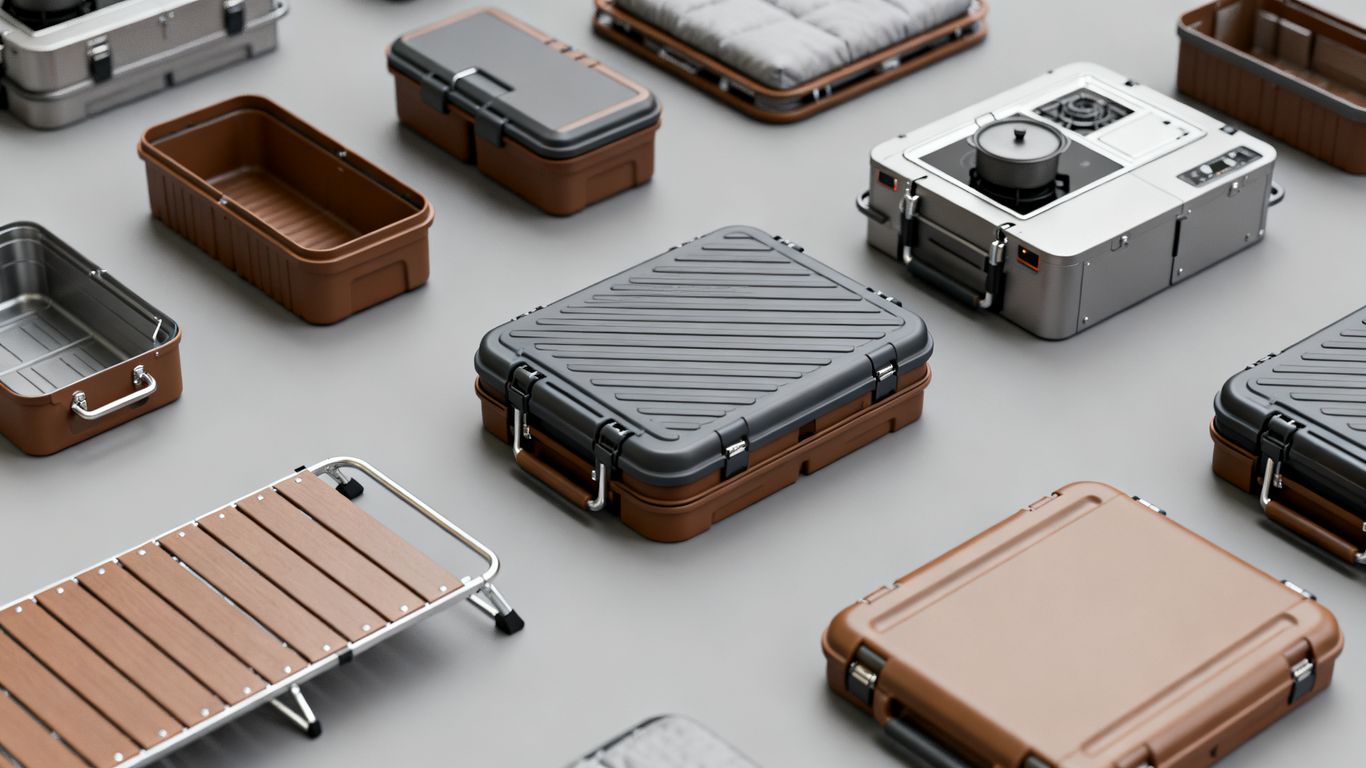
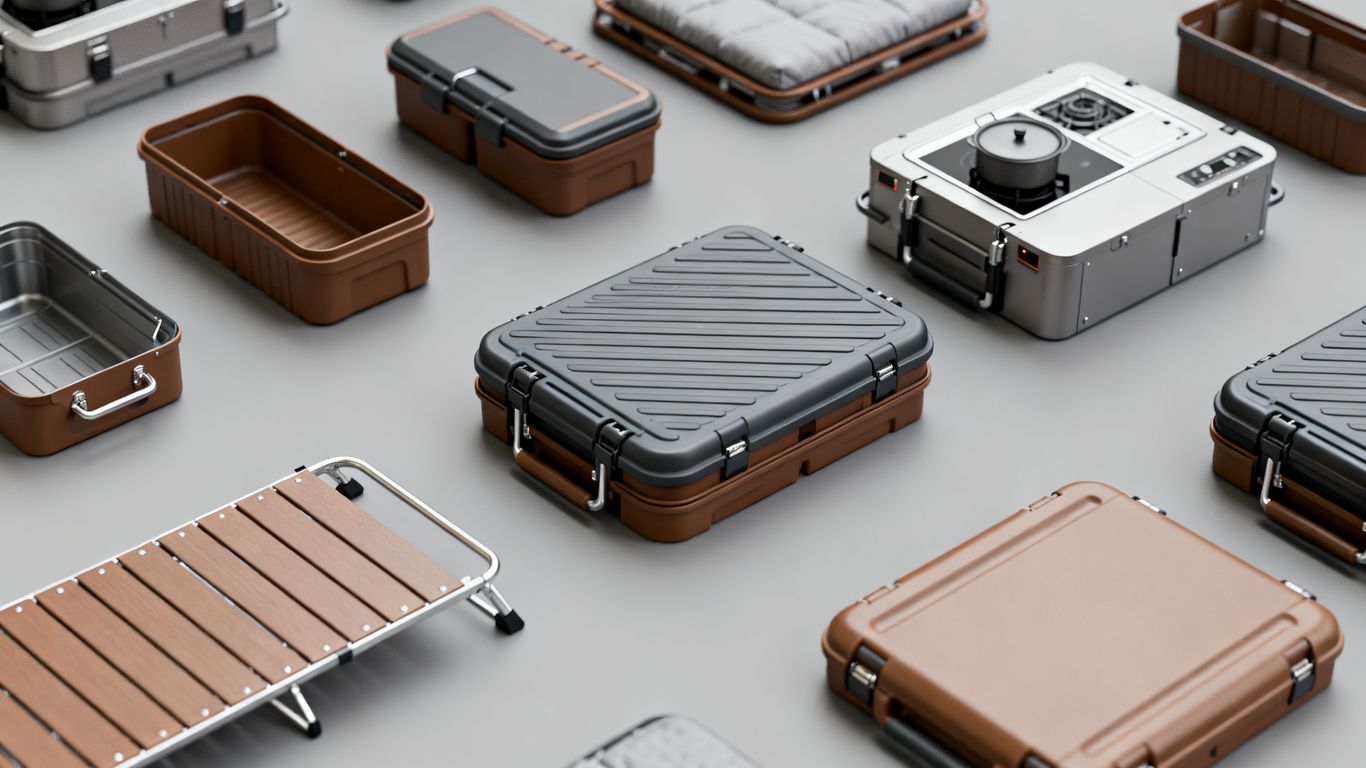
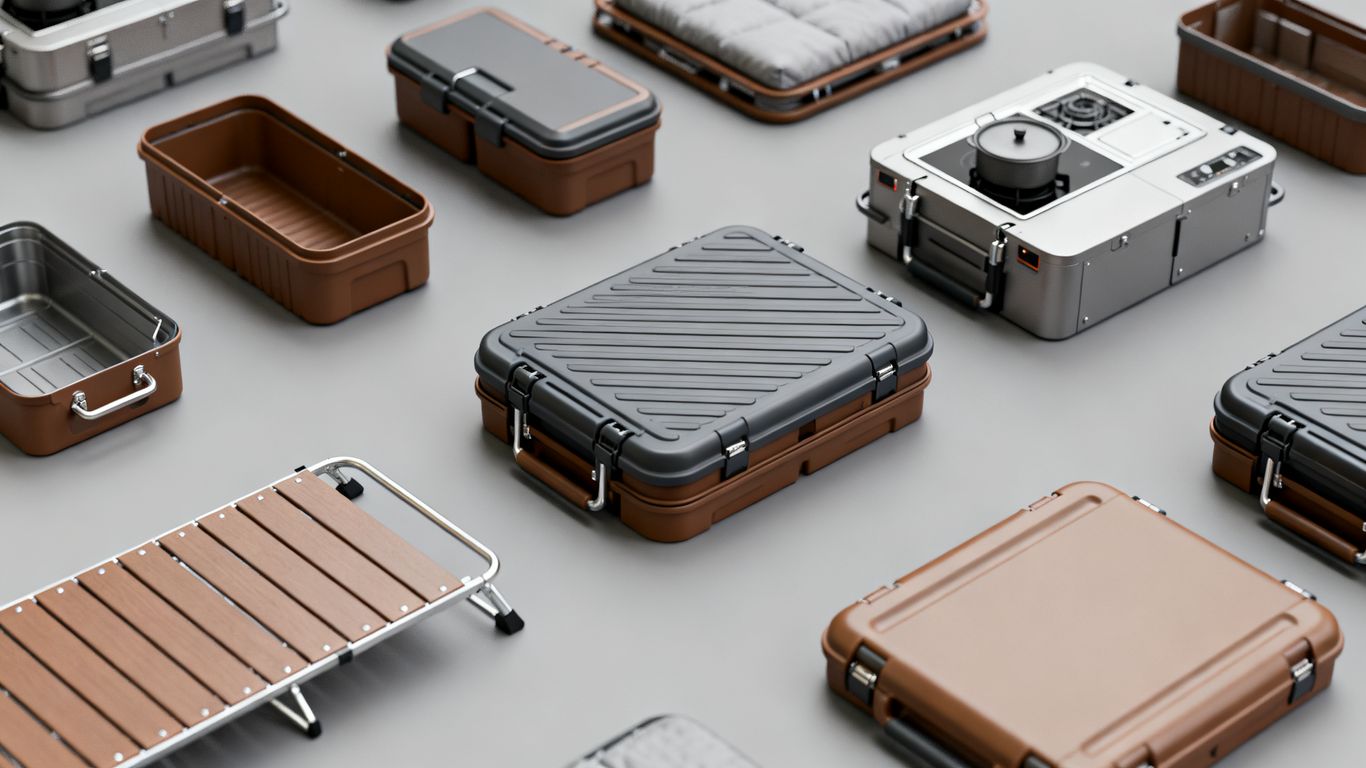
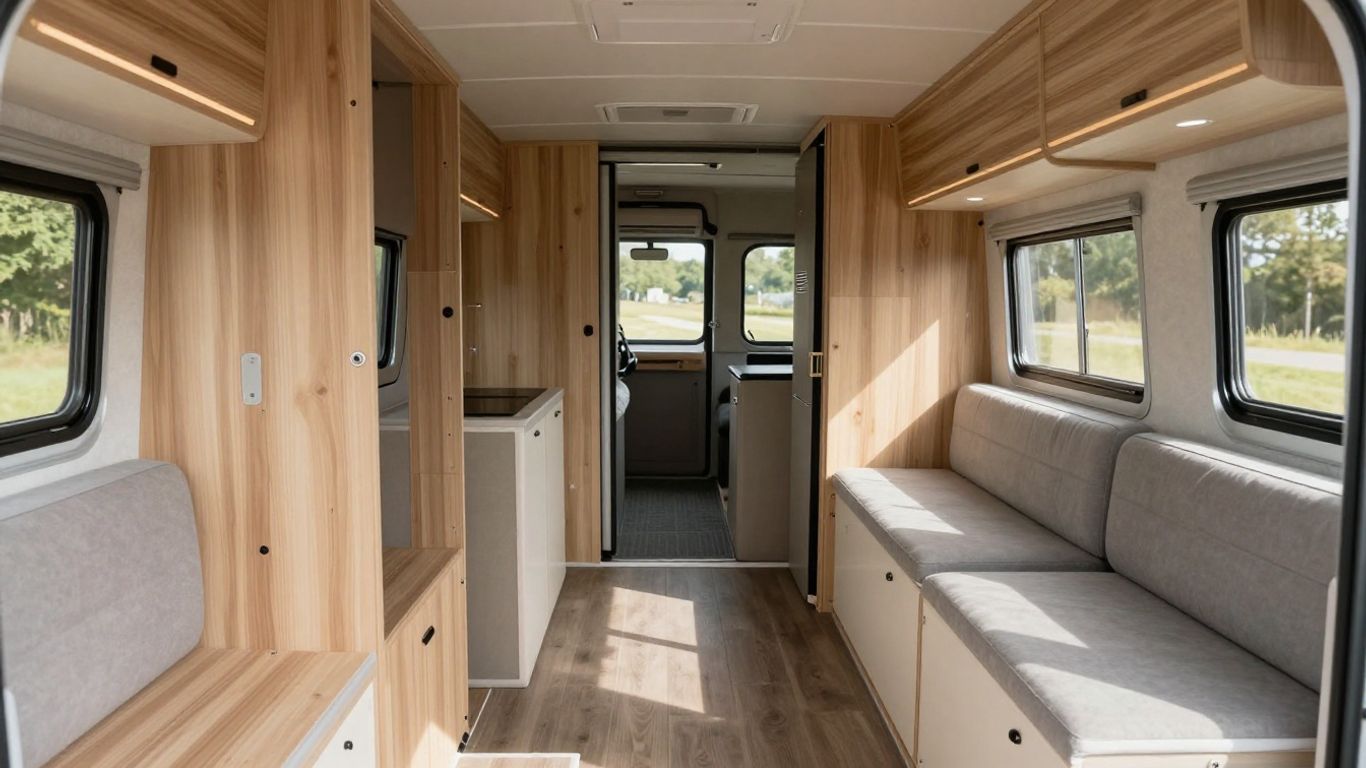
When designing your caravan, space is often the most precious commodity. Consider solutions that discreetly disappear when you don’t need them. A retractable kitchen, for example, can fold away to free up space for your lounge area or bed. This allows you to fully enjoy your space, whether you’re cooking or relaxing. Modular drawer and cabinet systems are also very practical. They help you organize your belongings and keep them within reach without obstructing passage. The trick is to choose storage that adapts to the shape of your vehicle, thus utilizing every available corner.
Comfortable and Functional Sleeping Systems
Sleep is important, especially when traveling. Modular beds can transform. For example, a bed that folds against the wall during the day to enlarge the living space, or a bed that lowers from the ceiling. There are also benches that easily convert into sleeping areas. The idea is to have a space that serves multiple purposes. Think about good quality mattresses, even if they are on a folding frame. A good mattress is key to recovering well after a day of driving or sightseeing. Ease of transformation is also a point to consider; you don’t want to spend hours setting up or taking down your bed every day.
Durable Materials and Anti-Moisture Design
For the interior of your caravan, material choice is important. They need to be strong to withstand vibrations and movement. Quality marine poplar wood, for example, is a good option because it is light and resistant. It’s also good to consider moisture. Caravans can be prone to humidity, especially if you travel in varied climates. Choosing breathable materials or those with integrated ventilation systems helps keep the air fresh and prevent mold. Good anti-moisture design preserves your vehicle’s structure and your comfort.
Here are some points to consider for materials:
- Wear Resistance: Surfaces must withstand frequent use.
- Weight: Opt for lightweight materials to avoid overloading your caravan.
- Maintenance: Choose surfaces that are easy to clean.
- Moisture Management: Ventilated panels or water-repellent finishes are a plus.
The interior design of your caravan should primarily meet your needs for comfort and practicality. Modular solutions allow you to adapt your space at any time of the day, transforming your vehicle into a functional and pleasant living space.
Vehicle Security and Protection
Your caravan is a valuable investment, and protecting it against theft and incidents is a priority. It’s not just about your belongings, but also about your peace of mind while traveling. Fortunately, there are several solutions to enhance your vehicle’s security.
Surveillance and Active Deterrence Devices
To start, consider systems that alert in case of intrusion. Volumetric alarms detect movement inside, while contact sensors signal the opening of doors or windows. Some more advanced systems can even send notifications directly to your phone. These technologies act as a first line of defense, deterring potential intruders. It’s also possible to install GPS trackers that allow you to locate your caravan if it were stolen. Their effectiveness will depend on the discretion of their installation and the quality of the signal received.
Comparison of Anti-Theft Systems and Their Effectiveness
There is a variety of anti-theft devices, each with its advantages. Here’s an overview to help you choose:
- Steering Wheel and Pedal Locks: These are fairly visible physical solutions that make driving impossible. They are generally affordable and provide a simple barrier.
- Anti-Theft Bars: Similar to locks, they often attach to the steering wheel and are known for their effectiveness.
- Alarms: As mentioned, they can be audible, but also discreet with remote alerts.
- Kill Switches: These devices cut off the electrical supply or fuel, preventing the engine from starting.
- GPS Trackers: Essential for post-theft location.
The choice will depend on your budget and the level of security you wish to achieve. A combination of several systems often offers the best protection.
It’s important to note that even the most sophisticated systems are not foolproof. The best strategy is a combination of physical deterrence, electronic alerts, and common sense, such as not leaving valuables in plain sight.
Importance of Protecting the Chassis and Hitches
Beyond theft, the physical protection of your caravan is also to be considered, especially if you plan to travel on difficult roads or tow equipment. The chassis can be vulnerable to impacts and corrosion. Specific protections, such as plates under the vehicle, can prevent damage from obstacles. If you use a bike rack or a trailer, ensure that the hitch system is in good condition and suitable for your caravan. Regular checks of these components are recommended to avoid any unpleasant surprises on the road.
Repair and Maintenance Systems
All-in-One Kits for Common Repairs
Faced with an unforeseen event on the road, having the right tools at hand can make all the difference. Modular repair kits designed for caravans include the essentials for minor issues. Consider a system that covers the repair of fabrics, plastics, or even small dents on the bodywork. These kits, often presented in robust cases, save you from having to carry a multitude of separate tools. They are designed to be practical and effective, allowing you to get back on the road quickly.
Air Purification and Plastic Welding Systems
Beyond mechanical repairs, caravan maintenance also concerns interior comfort and material durability. An air purification system, for example, can greatly improve the quality of life on board, eliminating persistent odors or allergens. This is often overlooked but contributes to well-being during long stays. Similarly, for plastic components, whether it’s a bumper or an interior accessory, a plastic welding system offers a durable and clean repair solution, much more effective than simple gluing. These specific technologies allow you to keep your vehicle in perfect condition.
Predictive Maintenance with Smart Sensors
Caravan maintenance is no longer limited to corrective interventions. The era of smart sensors opens the door to predictive maintenance. Imagine systems that monitor the condition of your batteries, the level of your tanks, or even the proper functioning of your heating system in real-time. These devices alert you before a breakdown occurs, allowing you to plan your interventions calmly. This avoids unpleasant surprises and extends the lifespan of your equipment. It’s a proactive approach that ensures greater reliability and peace of mind while traveling.
Here’s an overview of the types of systems you might find:
- Textile and Velvet Repair Kits: Ideal for seats and interior upholstery.
- Plastic and Vinyl Repair Systems: Useful for bumpers, dashboards, and other components.
- Air Purifiers (Ozone): For a healthy indoor environment.
- Plastic Welding Systems: For strong repairs on various components.
Adopting these modern maintenance and repair systems transforms caravan management. It shifts from a reactive approach to a proactive strategy, ensuring more comfort and safety on the road.
Connectivity and Mobile Technologies
Staying connected, even in the middle of nature, is no longer reserved for well-equipped adventurers. Today, there are many solutions to ensure a stable connection while traveling in a caravan, adapted to all needs.
Solutions for Staying Connected in Remote Areas
It’s possible to work, communicate, or simply entertain yourself, even far from areas covered by the traditional network. Several options are available:
- Mobile satellite systems for the most isolated connections
- Travel-adapted LTE/4G/5G modems
- Multi-operator SIM cards to avoid dead zones
Opting for a reliable connection transforms the stay: no more need to search for the slightest signal, everything becomes simpler and safer.
4G/5G Routers and Booster Antennas
The choice of router and antennas makes all the difference when the mobile signal weakens. Manufacturers now offer compact equipment adapted for mobile use, taking into account space and power consumption:
| Equipment | Max. Speed | Power Type | Network Compatibility |
|---|---|---|---|
| Classic 4G Router | 150 Mb/s | 12V/USB | 4G/LTE |
| Compact 5G Router | 1200 Mb/s | Battery or 12V | 5G/4G/LTE |
| Booster Antenna | Depends on router | Passive (None) | 3G/4G/5G |
A few points to consider:
- Ease of installation in the caravan
- Actual signal boost power in isolated situations
- Battery life if the equipment runs on an integrated battery
Choosing Equipment Based on Budget and Needs
Before investing, it’s important to precisely identify the intended use:
- For simple internet access (emails, social media): a basic 4G router is sufficient.
- For remote work, video conferencing, or streaming: opt for a 5G model with an external antenna.
- If security or remote monitoring is important, ensure a solution that can function even with a weak signal.
Finally, there’s no need to aim for the most expensive models if your usage is occasional. Prefer simplicity and robustness to avoid any unpleasant surprises.
Everyone will find the solution adapted to their needs, without compromising the pleasure of travel.
Concluding Your Renovation Project
After exploring the various options for equipping your caravan, you now have a better idea of the modular systems available to you. Whether you’re looking to optimize interior space with retractable solutions, enhance your vehicle’s security with modern devices, or improve your autonomy with reliable energy systems, the choice will depend on your specific needs and budget. Don’t forget that the quality of components and ease of use are key factors for fully enjoying your travels. Take the time to compare offers and, if necessary, seek advice from professionals to make the best choices. Your next adventure awaits, and with the right equipment, it promises to be even more enjoyable.
Frequently Asked Questions
How can I know what electrical power I need for my caravan?
To determine the necessary power, you first need to list all the appliances you plan to use (refrigerator, lights, kitchen appliances, etc.). Then, add up the consumption of each of these appliances. Don’t forget to include a buffer for appliances that consume more power at startup. This will give you an idea of the total power your system must be able to provide.
What are the advantages of solar systems integrated into caravan windows?
Solar panels integrated into windows offer a significant aesthetic advantage, as they blend into your caravan’s design without altering it. They also allow you to produce electricity while enjoying natural light, which is ideal for preserving your vehicle’s appearance.
Is it possible to make the interior of my caravan more functional with modular solutions?
Absolutely! Modular systems are perfect for this. You can opt for kitchens that store away easily, beds that transform or fold up, and clever furniture that optimizes every square inch. The idea is to have a space that adapts to your needs, whether for cooking, sleeping, or simply relaxing.
What are the most effective devices for securing my caravan against theft?
For good protection, it’s advisable to combine several systems. A steering wheel lock or anti-theft bars are a first visible barrier. A GPS tracker can help locate your vehicle if it’s stolen. Don’t forget alarms that can deter thieves in case of an attempted break-in.
Are there kits for performing common repairs on my caravan?
Yes, there are very practical all-in-one kits that contain the essentials for minor repairs. These kits can include products for repairing bodywork, windows, or even systems for air purification or plastic welding. It’s a good way to be prepared for unforeseen issues.
How can I stay connected to the internet when traveling in isolated areas with my caravan?
To stay connected, you can use solutions like 4G or 5G routers, often accompanied by booster antennas to capture the best possible signal, even far from cities. There are also satellite systems for the most remote locations. The choice will depend on your budget and how you intend to use this connection.