Considering installing a plug-and-play solar panel kit with a battery to reduce your electricity bills and help the planet? That’s an excellent idea! These systems, designed for easy installation, are gaining popularity. But is it really as simple as it seems, and more importantly, is it cost-effective? In this article, we’ll explore the price, installation, and profitability of these kits to help you get a clearer picture.
Key Takeaways
- A plug-and-play solar panel kit with a battery combines solar energy production with storage, offering greater energy independence.
- The cost of such a kit varies, but it is generally more affordable than a complete traditional photovoltaic installation.
- Installation is simplified thanks to the ‘plug and play’ concept, reducing the need for complex work, although battery integration requires special attention.
- Profitability depends on several factors, including initial cost, energy savings achieved, electricity price trends, and equipment lifespan.
- While there are often no direct financial aids for plug-and-play kits, their simplicity and lower initial cost make them an attractive option for starting with self-consumption.
Understanding the Plug-and-Play Solar Panel Kit with Battery
Definition and Components of a Ready-to-Plug Solar Kit
A plug-and-play solar panel kit with a battery is like a simplified version of a traditional solar installation. The idea is to allow you to produce your own electricity without major renovations. You receive a set of components, and the goal is to be able to assemble and connect them fairly easily. Generally, these kits are designed to be connected directly to a standard electrical outlet in your home. This is what’s called ‘plug and play’: you plug it in, and it produces energy. It’s an approach that aims to make solar energy more accessible.
The typical composition of such a kit includes:
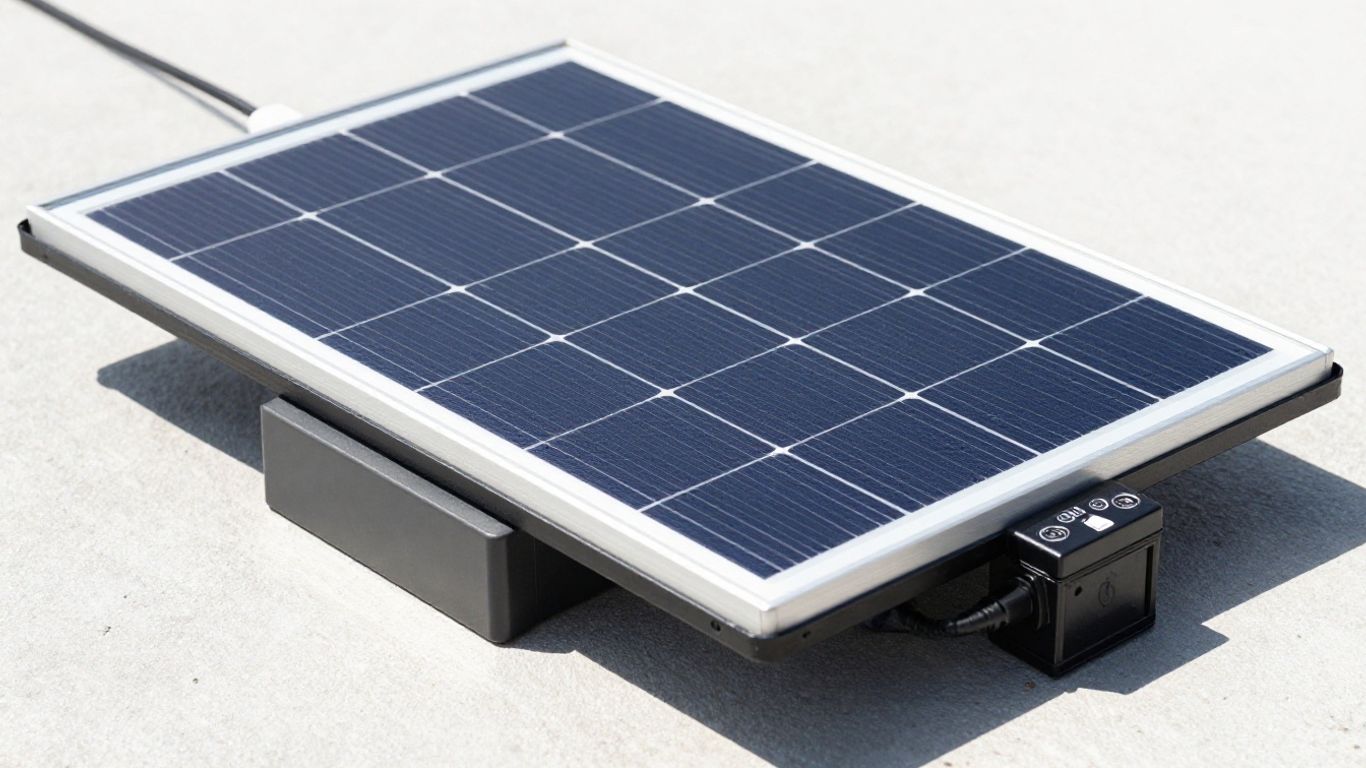
- One or more solar panels, often small in size for easier handling.
- A micro-inverter, which converts the direct current produced by the panels into alternating current usable by your appliances.
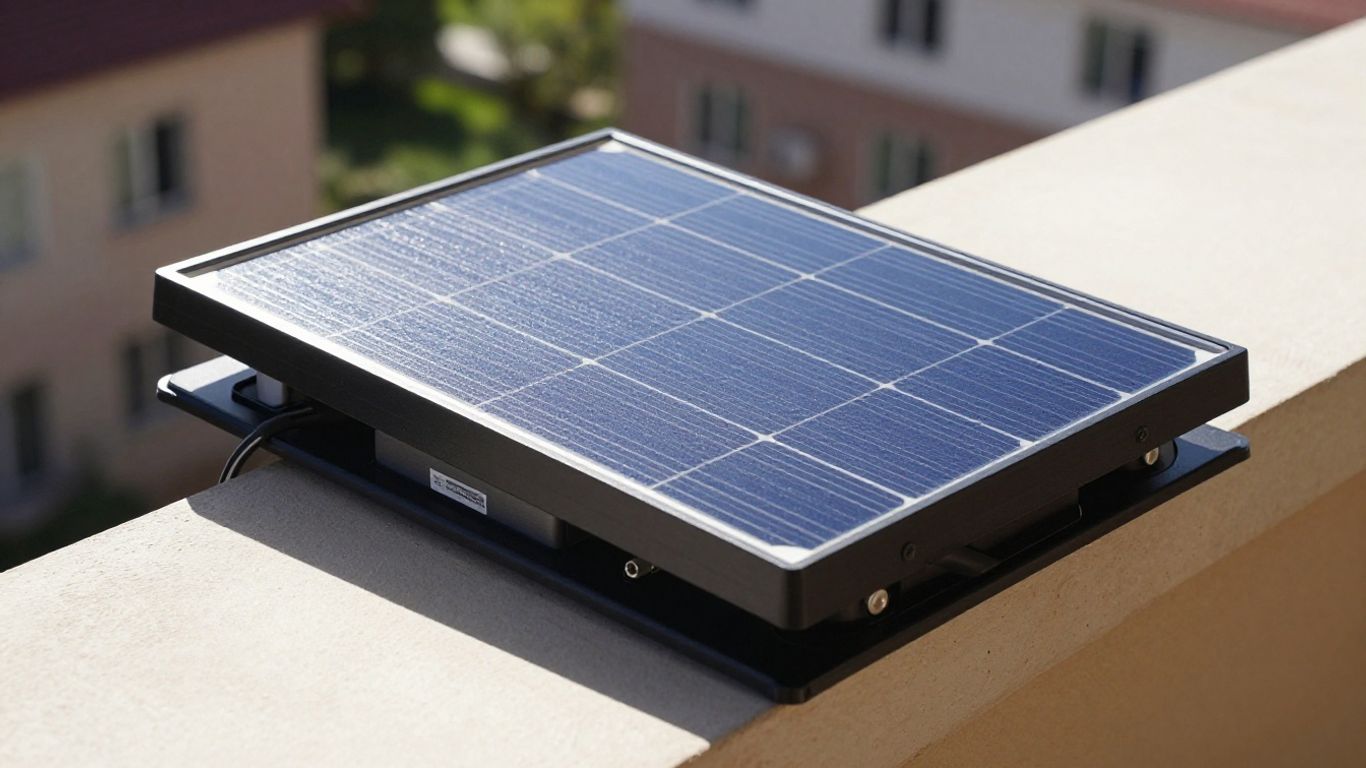
- A mounting system, suitable for a balcony, wall, or ground installation.
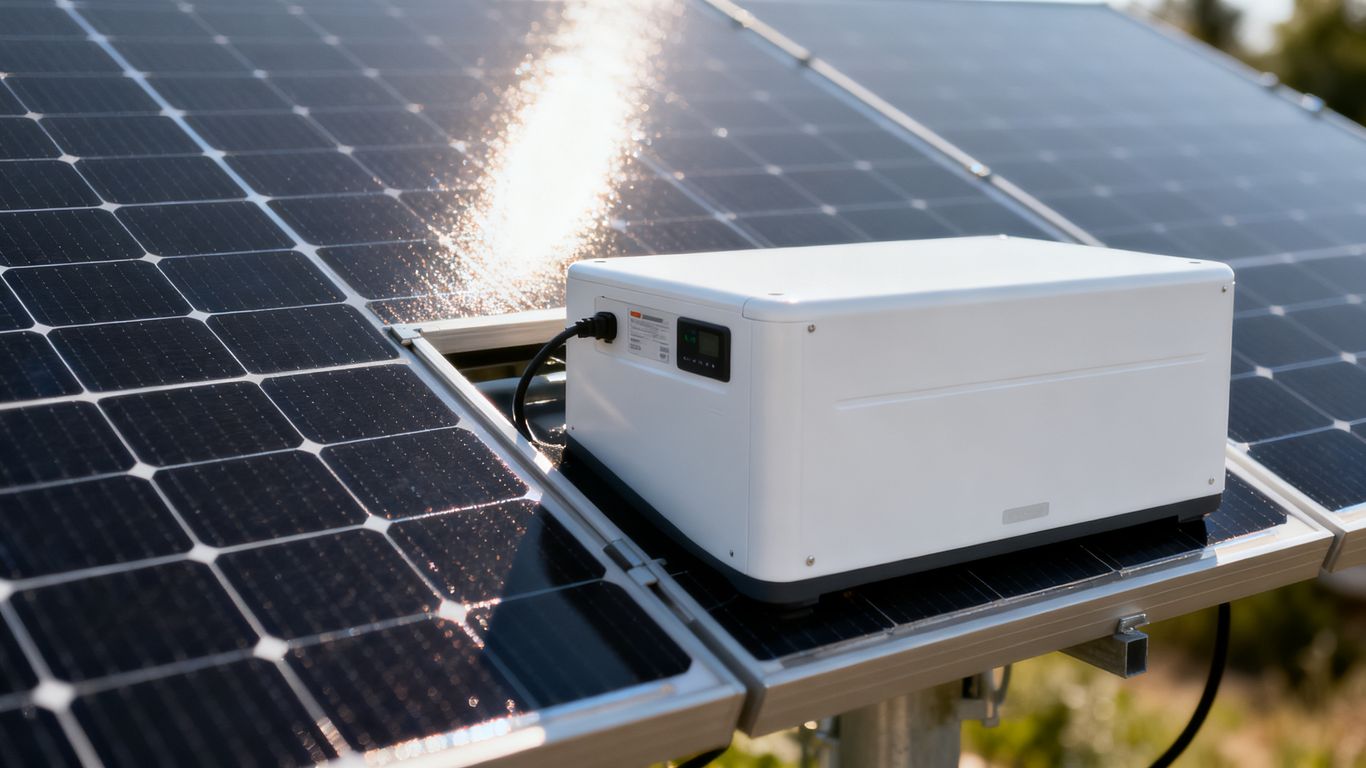
- And of course, the battery, which is the key element for storing the energy produced.
The goal is to be able to use solar electricity even when the sun isn’t shining.
Advantages of a Plug-and-Play Solar Kit
The main appeal of these kits lies in their simplicity. You don’t need to be a DIY expert to install them. This is a big plus if you’re a renter or if you don’t want to undertake major renovations. Furthermore, it allows you to start reducing your electricity bill and your environmental impact without a colossal initial investment. It’s a concrete way to participate in the energy transition on your scale. Installation can often be done in less than an hour, which is quite impressive when you think about traditional installations. You can thus start enjoying the benefits of solar energy quickly. It’s a flexible solution that can adapt to different types of housing, whether it’s a house or an apartment. You can even dismantle and reassemble it if you move.
The Role of the Battery in a Solar Kit
The battery changes the game in a plug-and-play solar kit. Without it, the electricity produced by the panels can only be used when the sun is shining. If you produce more than you consume at that moment, the excess is lost (or fed back into the grid, depending on the configuration, but that’s not the main purpose here). The battery allows you to store this excess energy. You can then use it later, for example in the evening when you turn on your lights, or during less sunny days. This significantly increases your self-consumption rate, which is the portion of the electricity you produce and consume yourself. It’s an essential element for maximizing savings and gaining energy independence. The battery’s capacity, measured in kilowatt-hours (kWh), will determine the amount of energy you can store. There are batteries of different sizes to suit your needs. Adding a battery makes the system more complete and more efficient for daily use. It’s a bit like having your own small solar energy reserve for optimal use.
Analysis of Price and Initial Investment
Average Cost of a Plug-and-Play Solar Panel Kit with Battery
Acquiring a plug-and-play solar panel kit with a battery represents a significant initial investment. In 2025, you should generally budget between €14,000 and €19,000 for a 6 kWp installation, including panels, a storage battery, a hybrid inverter, and installation costs. This amount can vary depending on the quality of the components chosen and the complexity of the installation. It is therefore essential to compare offers carefully to find the best value for money.
Factors Influencing the Purchase Price
Several elements influence the cost of your solar kit with battery:
- Kit Power: A more powerful system, capable of producing and storing more energy, will logically be more expensive.
- Battery Capacity: Measured in kWh, it determines the amount of energy you can store. A larger capacity means a higher cost.
- Component Technology: The quality of the solar panels, the hybrid inverter, and especially the battery (lithium-ion often preferred for its longevity) directly impacts the price.
- Installation Costs: Although designed to be simple, some kits require professional intervention for optimal integration, especially for the battery.
- Potential Financial Aid: Subsidies and reduced VAT rates can significantly lower your final bill. It is therefore important to inquire about current schemes to reduce the initial cost.
Comparison with a Traditional Photovoltaic Installation
It’s true that a plug-and-play kit with a battery represents a larger initial investment than a solar installation without storage. However, the addition of the battery allows for increased self-consumption, thus further reducing your dependence on the electrical grid. This increased autonomy can translate into greater long-term savings, making the return on investment potentially faster, especially if electricity prices continue to rise. Consider comparing solar kit offers to evaluate the relevance of each solution according to your situation.
Investing in a solar kit with a battery should be seen as a long-term strategy to control your energy expenses and contribute to the ecological transition. Although the initial cost may seem high, the cumulative savings and the added value to your home can fully justify this expense.
Installation and Implementation of the Solar Kit
One of the major attractions of plug-and-play solar kits lies in their ease of installation. Unlike traditional photovoltaic systems that often require professional intervention and significant administrative procedures, these kits are designed to be implemented by the user themselves, quickly and without heavy work.
Simplicity and Speed of Plug-and-Play Installation
The installation of a ready-to-plug solar kit is designed to be as straightforward as possible. The principle is to be able to connect it directly to a standard electrical outlet in your home. This means you don’t need to significantly modify your existing electrical system. Most kits come with suitable mounts for ground installation, on a balcony, or even fixed to a sunny wall. The installation time is generally very short, often achievable in less than an hour once you have chosen the ideal location. Simply follow the provided instructions, assemble the structure, fix the panel, connect it to the inverter, and then plug the inverter into your outlet. It’s a solution that allows you to start producing your own electricity almost immediately after unpacking. You can find kits designed for easy installation on specialized websites.
Technical Considerations for Battery Integration
If your kit includes a battery, a few additional technical points need to be considered. The battery is used to store excess electricity produced during the day for later use, for example in the evening or during less sunny days. Its integration generally does not overly complicate the process, as batteries for plug-and-play kits are often designed to be as easy to connect as the panel itself. However, you need to provide adequate space for the battery, which should be a dry, ventilated area, protected from extreme temperatures. The connection between the panel, inverter, and battery is usually simplified by pre-wired cables and specific connectors. It is important to check the compatibility between the panel, inverter, and battery, although most kits are sold as a coherent package.
Required Administrative Procedures
One of the major advantages of plug-and-play solar kits is the drastic reduction in administrative procedures compared to a classic photovoltaic installation. For kits with limited power (often around 300 to 600 Wp, depending on local regulations), there are generally no complex work declarations to be made to your municipality. In many cases, a simple end-of-work declaration to your electricity distributor is sufficient to inform them of your new production source. This administrative simplicity is a key factor that makes these kits accessible and quick to implement. However, it is always advisable to check with your municipality and your electricity provider for local specifics, as regulations can vary. The absence of heavy procedures is a major asset for those who want a quick and hassle-free solution to start with self-consumption.
Evaluation of Profitability and Return on Investment
Now that you have a clearer idea of what a plug-and-play solar kit with a battery is and how it’s installed, it’s time to talk about what interests everyone: is it financially worth it? Let’s take a closer look.
Calculating Potential Energy Savings
The main goal of a solar kit with a battery is to reduce your electricity bill. Specifically, this is done in two ways:
- Direct Self-Consumption: The electricity produced by your panels during the day is immediately consumed by your appliances. This is the most ‘free’ energy you can use.
- Storage and Reuse: The excess energy produced is stored in the battery to be used later, in the evening, at night, or when the sun isn’t shining. This allows you to buy less electricity from the grid.
The amount of your savings will depend on several factors: the amount of energy your panels produce, your battery’s capacity, and most importantly, your consumption pattern. If you consume a lot of electricity when the sun is shining, or if you use stored energy in the evening, your savings will be higher. It is estimated that annual savings can range from €1,200 to €1,500, depending on your installation and usage.
Payback Period for a Solar Kit with Battery
The payback period is the time it will take for the savings generated by your solar kit to equal the initial investment cost. For a traditional photovoltaic installation, we generally talk about 8 to 12 years. Adding a battery can extend this period by an additional 1 to 3 years. This is due to the additional cost of the battery itself. However, it should be seen as an investment for greater autonomy. The more electricity prices rise, the faster your solar kit with a battery becomes profitable. It’s a bit like buying gasoline when the price is low to use it when it’s expensive. The basic calculation is simple: Total installation cost / Annual savings = Payback period.
Impact of Energy Price Trends
This is an absolutely key point. Electricity prices tend to increase over the long term. By producing your own electricity and storing it, you protect yourself against these increases. Every kilowatt-hour (kWh) you don’t have to buy from the energy provider represents a saving that becomes increasingly significant over time. Think about it: if the price of a kWh doubles, your savings double too! This is why self-consumption with storage is an interesting strategy for managing your energy budget over several years. The evolution of electricity prices makes investing in a battery increasingly relevant for improving your energy independence.
Integrating a battery into your plug-and-play solar kit is a determining factor for your return on investment. Although the initial cost is higher, the increased self-consumption capacity and protection against future electricity price hikes often justify this additional investment. It is therefore essential to carefully assess your consumption and price projections before making your decision.
Optimizing Performance and Durability
For your plug-and-play solar panel kit with a battery to continue functioning optimally and over time, a few points need to be considered. It’s not enough to install it and forget about it; a little attention allows you to maximize the benefits.
Importance of Regular Maintenance
Maintenance is a bit like going to the doctor for your installation. It helps prevent problems before they become serious. Cleaning the solar panels, for example, is essential. Dust, leaves, or even bird droppings can reduce the amount of sunlight captured, and thus electricity production. Simple cleaning, done carefully, can give your system a boost. You also need to check that all connections are tight and that there are no signs of corrosion. For the battery, even though they are designed to last, monitoring their health is recommended. Regular maintenance is key to ensuring optimal energy production and extending the lifespan of your equipment.
Here are some maintenance tasks not to neglect:
- Cleaning Solar Panels: To be done at least once a year, ideally in spring or autumn.
- Visual Inspection of Cables and Connections: Check for any damage or disconnections.
- Performance Monitoring via App: Monitor production and consumption to detect any anomalies.
- Battery Health Check: Consult charge and health indicators if available.
Technological Improvements and Updates
The world of solar energy evolves rapidly. What was cutting-edge a few years ago may be outdated today. It is therefore wise to keep an eye on new technologies. Sometimes, a small update can make a big difference. For example, if your inverter starts showing signs of weakness or if a new battery technology offers better storage capacity for a reasonable price, it might be worth considering a replacement or addition. Think of it as an evolution of your system to keep it performing well. The idea is to ensure that your installation remains competitive and continues to provide you with maximum savings in the long term. A well-designed installation can be updated, which is a significant advantage for a sustainable investment. Plug-and-play solar kits with batteries are designed to be scalable, allowing you to adapt your system to your changing needs. These solar kits offer appreciable flexibility.
Smart Energy Management
To truly get the most out of your solar kit with a battery, smart energy management is a major asset. This means using an app or system that helps you understand when you’re producing the most electricity, when you’re consuming the most, and how to best store or use your battery’s energy. For example, you could schedule your high-consumption appliances to run during peak solar production hours. Or, ensure the battery is fully charged before nightfall to minimize your reliance on the grid. It’s a bit like having an orchestra conductor for your energy. This not only maximizes your savings but also reduces your carbon footprint. Good management can make the difference between a simply adequate installation and a truly high-performing one. The goal is to consume as much of the energy you produce yourself as possible, thereby reducing your electricity bill and your dependence on traditional suppliers. Self-consumption is key, and the battery helps you optimize it. Solar kits with batteries are an excellent foundation for this.
Proactive management of your solar installation, combining regular maintenance and adaptation to technological advancements, is the best way to ensure its long-term profitability and maximize your energy independence.
Financial Aid and Regulatory Aspects
Eligibility for Subsidies and Government Aid
It’s important to know that « plug-and-play » solar kits, due to their self-installation and non-connection to the public electricity grid, are generally not eligible for state aid. This is a major distinction compared to more traditional photovoltaic installations, which can benefit from various schemes. This means that the profitability of your kit relies primarily on its initial purchase cost and the direct savings you will achieve on your electricity bill.
However, there are exceptions and nuances to consider. For example, if you decide to integrate a battery into your installation, some local or regional aid might potentially apply, although this is less common. It is therefore always advisable to inquire with your municipality or department to find out about specific schemes in your geographical area. Additionally, a reduced VAT rate may sometimes apply to the purchase of equipment, which already slightly reduces the bill.
Taxation Applicable to Solar Kits
The taxation concerning plug-and-play solar kits with batteries is relatively simple. As mentioned earlier, if you install the kit yourself and it is not connected to the grid, any income generated from selling surplus electricity (which is rare without connection) is generally not taxable. The main objective of these kits is self-consumption, so you do not declare any specific income.
However, it is essential to keep all purchase invoices for the equipment. In case of selling a portion of the produced energy, which is more common with grid-connected installations, tax rules may change. For a simple plug-and-play installation, the absence of income declaration is the norm.
Regulation on Self-Consumption
The regulation surrounding self-consumption, even with a plug-and-play kit, aims to govern the production and consumption of electricity by individuals. For kits that are not connected to the grid, the regulation is more flexible because you do not directly interact with the public electricity distribution. You produce and consume your own energy, and the surplus is either stored in your battery or lost if it exceeds the storage capacity and you have no injection point.
Self-consumption with a plug-and-play solar kit and a battery offers you increased energy independence. You control your consumption and reduce your dependence on traditional energy suppliers. It is a step that fits into a logic of personal energy transition.
If your kit is connected to the grid, even in a simplified manner, administrative procedures are required with Enedis. You generally need to submit a connection request and comply with certain technical standards to ensure grid safety. Self-consumption with surplus sales, for example, involves a specific contract. For non-connected kits, these constraints are removed, greatly simplifying the process.
In Summary: Your Verdict on the Plug-and-Play Solar Kit with Battery
There you have it, you now know the essentials about plug-and-play solar kits with batteries. It’s a solution that has the merit of being simple and accessible for those who want to take a first step towards solar energy. Don’t forget that its profitability will depend on your consumption, the sunshine in your region, and the price of electricity. If you’re looking to reduce your bill and make a gesture for the planet, it’s an avenue worth serious consideration. Weigh the pros and cons carefully, and go for it if it meets your expectations.
Frequently Asked Questions
What is a plug-and-play solar panel kit with a battery?
It’s a simple-to-install kit that includes a solar panel to produce electricity from the sun, and a battery to store this energy. You can plug it directly into a power outlet, much like a household appliance. It’s a practical solution to start producing your own energy without complicated work.
How much does such a kit cost and when will it be profitable?
The price of a kit with a battery can vary, but expect a higher initial investment than a simple panel without a battery. For a basic kit, count between 500 and 700 euros, but with a battery, the price will be higher. The time to recoup your investment, i.e., the payback period, is generally between 4 and 6 years, or even a bit more if you include a high-performance battery. This depends heavily on the kit’s power and your electricity consumption.
Is the installation really as simple as they say?
Yes, the installation is designed to be very easy. You receive the panel, its support, and the necessary cables. You just need to place it in the sun, unfold it if necessary, and plug it into an electrical outlet. It’s often a matter of a few minutes to get it running, without needing to call a professional for the main connection.
What is the difference between a plug-and-play kit and a classic rooftop solar installation?
The main difference lies in power and complexity. A plug-and-play kit is smaller, less powerful, and requires no work. It’s mainly used to reduce a portion of your bill, especially for powering a few appliances. A rooftop installation is larger, more powerful, requires professional intervention, and can cover a larger part of your electricity needs, or even allow you to sell surplus energy.
Can I truly become electricity independent with this type of kit?
A plug-and-play kit, even with a battery, is primarily a tool to reduce your expenses. It will not completely replace grid electricity, especially for high-consumption appliances or at night. The battery allows you to store energy produced during the day for later use, which increases your autonomy, but complete independence is difficult to achieve with this system alone.
Are there any financial aids for purchasing a plug-and-play solar panel kit with a battery?
In general, plug-and-play solar kits, being considered simple installations without work, do not benefit from the same financial aids as large photovoltaic installations installed by professionals. It is therefore important to carefully calculate profitability based on the purchase price and the electricity savings you will achieve.