In a world where energy is at the heart of our concerns, understanding the price of kWh has become essential. You may be wondering how different European countries, and even beyond, stack up on this issue? This article offers a comparison of kWh prices, highlighting the key takeaways. Prepare to discover what influences these rates and how they vary from one nation to another.
Key Takeaways
- Germany has significantly higher kWh prices for residential and non-residential consumers compared to France.
- France benefits from a competitive advantage due to more controlled electricity prices than in most other European Union countries.
- The United States benefits from lower energy prices, notably due to shale gas, giving them an advantage over European industries.
- Italy and Belgium have electricity prices significantly higher than those in France for households.
- The cost of producing photovoltaic electricity has considerably decreased, making it increasingly competitive against other energy sources.
1. Germany
Germany stands out with one of the highest electricity kWh prices in Europe. This cost, which includes all taxes, reaches approximately €0.3835.
Several factors explain this situation. Historically, Germany has heavily supported its energy-intensive industry, notably through exemptions from the Renewable Energy Act (EEG). This effort, which burdens other consumers, has contributed to driving up prices for individuals. Furthermore, the country has implemented flexibility remuneration mechanisms, rewarding consumers who demonstrate flexibility or maintain a steady power demand. This approach aims to stabilize the grid and production, recognizing that a consumer with more predictable needs should pay less.
The significant development of renewable energies, while beneficial for the ecological transition, has also had consequences on wholesale prices. Overcapacity in production and incentives to produce even without immediate demand have sometimes led to low, or even negative, market prices. This makes wholesale prices less representative of actual costs, which can affect supply security. To address this, discussions are underway, particularly with France, on implementing capacity markets, aiming to value power rather than just energy, to guarantee the long-term investments necessary for the stability of the electricity grid. Germany has indeed published a green paper on this subject.
It is interesting to note that Germany also uses carbon offsetting, a measure permitted by a European directive, to modulate electricity prices. Unlike France, which has chosen to allocate carbon auction revenues to housing improvements, Germany applies this compensation. Moreover, the remuneration for demand response, which involves temporarily reducing consumption, is much more developed in Germany than in France, where it struggles to be valued. These differences show distinct approaches in managing costs and incentives for electricity consumers. The kWh price in Germany is therefore the result of a complex combination of support policies for renewables, market mechanisms, and specific regulations, placing it among the most expensive in Europe [2b5a].
2. France
In France, the price of a kilowatt-hour (kWh) for residential consumers stood at €0.2016 in May 2026.
This rate is slightly below the European average, which is €0.207/kWh including all taxes. The French electricity grid is historically well-developed, with an architecture optimized to minimize losses. Interconnection with the European grid brings considerable benefits in terms of stability and electricity cost, thanks to the diversity of production and consumption. However, France faces a major challenge: peak demand. The high proportion of electric heating in French households makes the country particularly sensitive to demand spikes, raising concerns about future supply security.
To manage these variations, France has good control over demand response mechanisms, such as EJP tariffs, off-peak hours, or the Tempo system. Active consumer participation is an essential condition for the energy transition, providing the necessary flexibility to cope with the intermittency of renewable energies. The capacity mechanism, currently being deployed, aims to value the availability of electricity production and could encourage significant demand response development, potentially beyond the levels observed before the market opened to competition. In the United States, for example, similar mechanisms have generated demand response reaching 10% to 15% of peak capacity.
It is interesting to note that French expertise in smart grids is sometimes more recognized abroad than in France itself. French researchers and industrialists have made notable advancements, with a significant portion of this sector already oriented towards exports. This demonstrates a certain potential, even if internal recognition could be strengthened. The structure of wholesale market prices is formed by the stacking of marginal costs of different technologies. The increasing integration of renewable energies, which have very low variable costs, tends to push out the most expensive power plants, resulting in a decrease in the overall electricity price. This dynamic is promising for the future of electricity tariffs in France.
Here are some key points regarding the kWh price in France:
- The average price is €0.2016 in May 2026.
- This price is lower than the European average.
- The grid is robust, but peak demand represents a challenge.
- Demand response mechanisms and consumer participation are major assets.
- French expertise in smart grids is internationally recognized.
Demand management and grid optimization are crucial aspects for maintaining competitive prices and ensuring the reliability of electricity supply in the current context of energy transition. The kWh price is therefore influenced by a combination of structural factors and active policies.
3. United States
In the United States, the cost of electricity for individuals averages around €0.179 per kilowatt-hour (kWh). This rate, compared to that of some of our European neighbors, may seem more affordable. However, it is important to note that this price is already higher than that in Canada, for example. This price difference is due to many factors, ranging from the energy market structure to local regulations.
The American energy market is quite fragmented, with production and distribution often managed by private entities. This can lead to significant price variations depending on the region and the supplier. It is therefore essential to compare available offers carefully to find the most advantageous rate.
Here are some points to consider regarding the kWh price in the United States:
- Regional Variability: Prices can change considerably from one state to another, or even from one city to another, depending on supply sources (coal, gas, nuclear, renewables) and transportation costs.
- Cost Structure: The cost of electricity production has seen notable changes. For example, ‘Production Cost’ has decreased in recent years, from 3.4 US cents/kWh in 1987 to about 1.6 US cents/kWh in 2002. This decrease is due to both lower fuel costs and direct operating expenses.
- Energy Policies: Political and regulatory decisions, such as those by the NRC (Nuclear Regulatory Commission) which may have imposed plant shutdowns, directly influence the availability and therefore the cost of energy.
It is interesting to note that for large energy consumers, the cost is generally higher in Europe than in the United States. This situation can encourage some industries to relocate to American regions with lower rates, such as Texas.
Compared to France, where nuclear power accounts for a very significant portion of electricity production (around 77%), American power plants tend to produce at their maximum capacity. This is possible because the share of nuclear power in total production is lower (around 20%), allowing production to be adjusted to needs without being constrained by grid load management. This difference in *utilization factor* can impact overall costs. The average prices observed in the United States are around 0.160 euros per kWh, which is significantly cheaper than in Europe [d2bd].
4. Spain
In Spain, the price of a kilowatt-hour (kWh) of electricity has seen a notable evolution. In June 2024, the domestic tariff was €0.1841 before taxes, reaching €0.2436 once VAT and other taxes were included. This trend shows a decrease compared to previous months, particularly compared to December 2023 when the price was €0.2068 (€0.2347 including VAT) and June 2023 (€0.2165 / €0.2454 including VAT). It is interesting to note that the price in December 2022 was significantly higher, standing at €0.2966 (€0.3350 including VAT).
Comparatively, the price of electricity before taxes in Spain for the first half of 2025 is slightly lower than in France, at €0.1807 per kWh compared to €0.1897 in France. This difference can be explained by several factors specific to the Spanish market.
It should be noted that the electricity market has been open to competition for several years, but tariff structures vary considerably from one country to another within the European Union. Spain, like Portugal or Greece, has experienced significant tariff deficits, often linked to economic conditions. These deficits represent the gap between the actual production costs and the retail prices charged to consumers.
Spain has implemented measures to try to control price evolution, particularly concerning electricity taxes. These measures aim to improve competitiveness and prevent the relocation of industrial activities.
It should also be highlighted that Spain has developed electrical interconnections with its neighbors, notably France, within the framework of coordinated European supervision. These projects aim to ensure the stability and security of electricity supply on a continental scale, thus contributing to better management of energy flows between countries. The goal is to maintain a certain visibility and tariff stability for consumers, including energy-intensive industries energy-intensive.
Here is an overview of the average kWh prices in Spain:
| Period | Price before tax (€/kWh) | Price including tax (€/kWh) |
|---|---|---|
| June 2024 | 0.1841 | 0.2436 |
| December 2023 | 0.2068 | 0.2347 |
| June 2023 | 0.2165 | 0.2454 |
| December 2022 | 0.2966 | 0.3350 |
5. Italy
In Italy, the price of a kilowatt-hour (kWh) of electricity has recently shown a downward trend. In June 2024, the average cost for households was approximately €0.2451 before taxes. It is interesting to note that, despite this decrease, the price of electricity in Italy generally remains higher than in other European countries, such as France.
Several factors explain these tariff differences. One of the key elements lies in the cost structure and the taxes applied. For example, once taxes and fees were included, the price of a kWh in Italy could reach €0.3274 in June 2024. This situation contrasts with other nations where energy policies or market structures result in more competitive rates for the end consumer.
Here is an overview of the average kWh prices before taxes in some European countries, based on recent data:
| Country | Average kWh price (before tax) |
|---|---|
| Czech Republic | €0.2404 |
| Italy | €0.2458 |
| Austria | €0.2578 |
| Germany | €0.2598 |
It is important to understand that these figures can vary depending on suppliers and specific contracts. The trend observed in Italy shows improvement, but the path to tariff parity with some of its European neighbors is still long. The evolution of energy policies and market structure will continue to play a decisive role in the coming years for Italian consumers. The price of electricity in Italy, although decreasing, remains a concern for many households and businesses looking to control their energy expenses. The price of electricity is a significant expense for household budgets.
6. Belgium
In Belgium, the price of a kWh of electricity before taxes is among the highest in Europe, just behind Ireland and Luxembourg. You might be surprised to learn that the pre-tax cost is approximately €0.2758 per kWh. This position in the ranking can vary considerably once taxes are included, making direct comparison a bit more complex than it initially appears.
The Belgian energy landscape is marked by constant debates surrounding nuclear power. Historically, a law stipulated the closure of plants reaching 40 years of age. However, successive agreements have led to life extensions for some plants, such as Doel 1 and 2, and Tihange 1. These decisions are often made for reasons of supply security, but they also raise economic questions, particularly concerning the taxes imposed on operators. The idea of extending the life of plants is seen by some as a profitable investment, similar to what happened in Germany before its decision to phase out nuclear power.
The management of electricity tariffs in Belgium, as in other European countries, is a delicate balancing act. It requires reconciling the actual costs of production and distribution with the final prices paid by consumers, while taking into account national energy policies and European regulations. Tariff deficits, which represent the gap between these costs and retail prices, are an important indicator of this complexity.
It is also important to consider the market structure and consumer protection. The issue of ‘orphan customers,’ meaning those who might be abandoned by suppliers in case of economic difficulties, is a concern. Mechanisms such as the supplier of last resort are being discussed, but their implementation and financing remain subjects of debate. Belgium had a system for compensating non-payments, but it is currently under review.
Finally, the stability of electricity supply is a major issue. The shutdown of certain reactors for safety reasons can create market tensions. This highlights the importance of rigorous investment planning and European coordination, even if energy sovereignty remains a sensitive point for many member states. Belgium, like France, must contend with these realities to ensure a reliable supply at a reasonable *price* for its citizens.
7. Photovoltaics
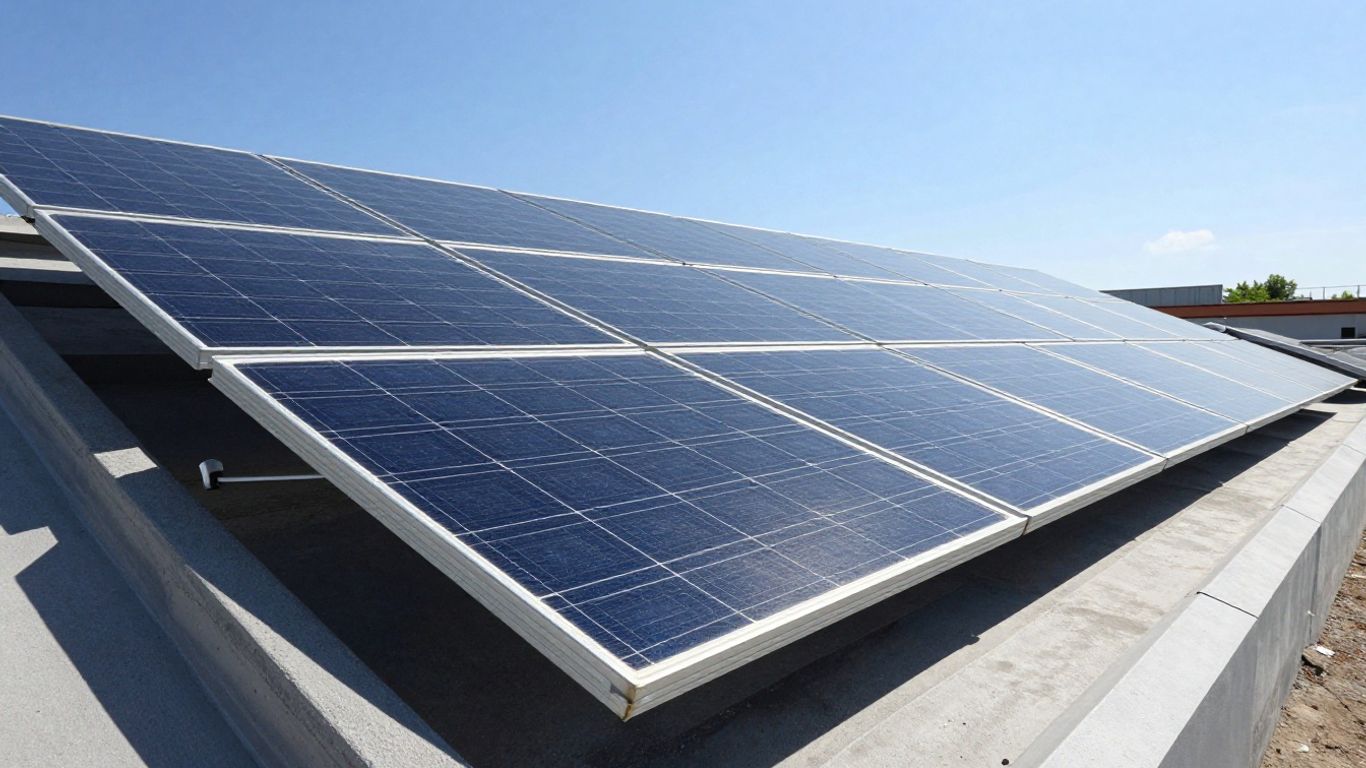
The cost of photovoltaic electricity has seen a significant decrease in recent years. In 2022, for installations over 36 kWp, the cost was already much lower than that of gas power plants. Residential installations, even the smallest ones, have become competitive compared to the average household electricity price. Self-consumption with solar panels is therefore becoming an increasingly attractive option.
Here are some figures to illustrate this cost evolution (€/MWh in 2022):
- 3 kWp rooftop self-consumption: €202/MWh
- 9 kWp rooftop self-consumption: €134/MWh
- 36 to 100 kWp total injection: €91/MWh
- Over 500 kWp ground-mounted total injection: €70/MWh
These figures show a clear trend: the larger the installation, the lower the cost of electricity production. It is important to note that the cost of solar panels themselves varies by manufacturer, with notable differences between panels of Chinese origin and those manufactured in Europe, for example the cost of solar panels varies by manufacturer.
The continuous decrease in the cost of photovoltaic equipment makes this technology increasingly accessible and competitive against traditional energy sources. The evolution of the LCOE (Levelized Cost of Energy) over the period 2009-2021 confirms this global trend.
It is also interesting to look at the evolution of prices in the context of tenders. For example, for power plants over 100 kWp, average prices have fallen sharply between 2011 and 2019. This increased competitiveness opens up interesting prospects for the future of electricity production, even if the average price of electricity in the European Union remains around €0.20/kWh the average price of electricity in the EU.
Conclusion: What You Need to Remember
Ultimately, after examining kWh prices across Europe, it’s clear that things are not simple. The differences between countries are significant, whether for households or businesses. We’ve seen that some countries fare better than others, often thanks to political choices or more open markets. It’s clear that there isn’t a single solution that works for everyone. What you need to remember is that understanding these variations helps you better grasp the energy market. Think about it the next time you look at your bill.
Frequently Asked Questions
Why is electricity more expensive in Europe than in the United States?
Europe pays more for its electricity than the United States, partly due to higher production costs and differences in energy markets. The United States, for example, benefits from shale gas, which makes its natural gas and electricity cheaper. Furthermore, Europe has less interconnected grids, which can limit access to the cheapest available energy in neighboring countries.
Does France have cheaper electricity than its European neighbors?
Yes, generally, households and businesses in France pay less for their electricity than in most other European Union countries, such as Germany or Belgium. This is partly due to France’s energy policy choices and the performance of its electricity industry.
What is photovoltaics and why is its cost decreasing?
Photovoltaics is the technology that converts sunlight into electricity. Its cost has decreased significantly in recent years, mainly due to the drop in the price of materials needed for its production. This is why it is becoming increasingly attractive for electricity generation.
What are the benefits of competition in the energy market?
Competition in the energy market can lead to lower prices for consumers. It also encourages more responsible consumption, which is good for the environment. Additionally, it offers development opportunities for businesses, including those operating abroad.
Why is it important to have good interconnections between European countries for energy?
Strong interconnections between European countries allow for better electricity sharing. If one country needs electricity and a neighboring country produces it at a low price, it can import it more easily. This helps to have cheaper and more reliable energy for everyone.
What are the challenges for companies that consume a lot of electricity in Europe?
Companies that consume a lot of electricity, known as ‘energy-intensive,’ face higher energy costs in Europe compared to other regions of the world. This can make them less competitive and encourage them to invest elsewhere, where energy is cheaper, such as in the United States or China.