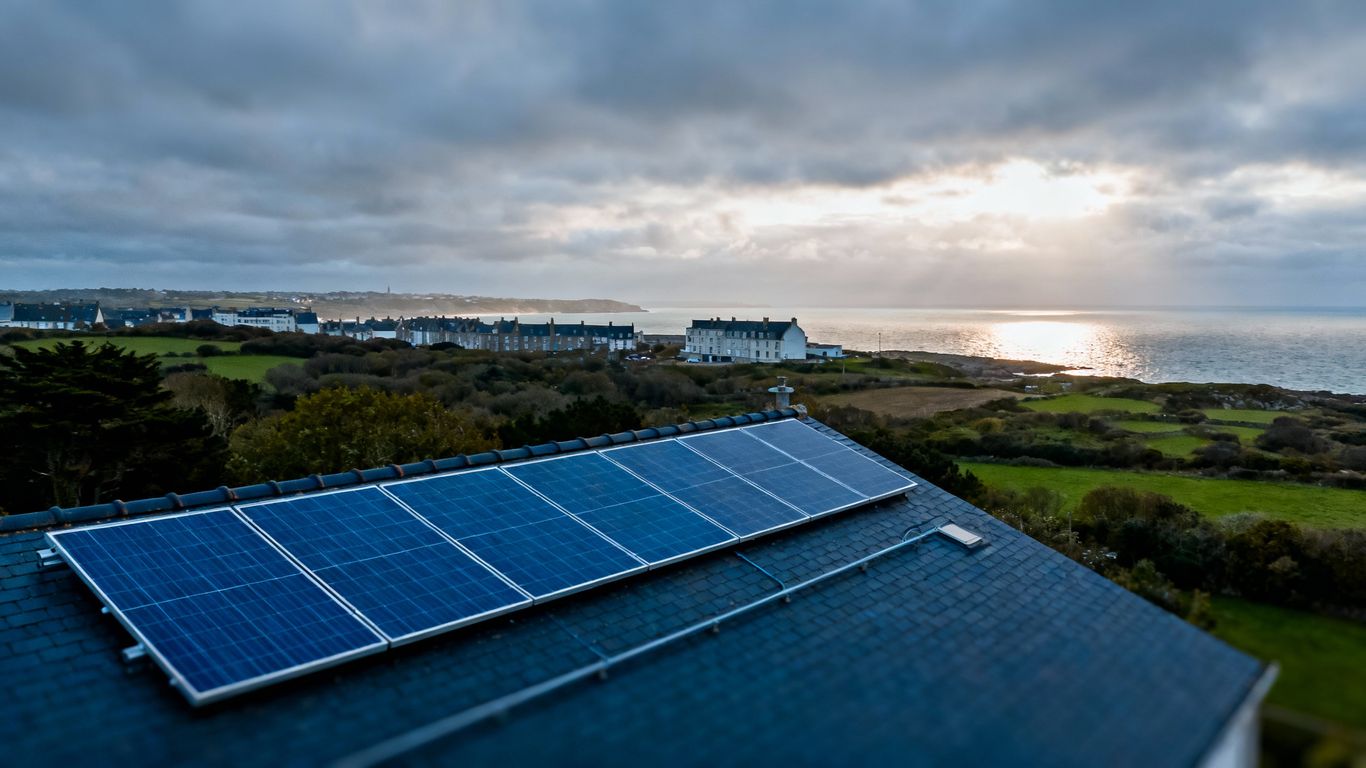
Are you wondering if a solar panel in Brest is really worthwhile? Many people hesitate because of the Breton climate, known for its clouds and showers. However, even under the changing skies of Finistère, installing solar panels remains a serious option to reduce your bills and gain autonomy. Between the hours of sunlight, available financial aids, and the decrease in installation prices, it’s worth considering—even if the weather doesn’t always cooperate.
Key Points to Remember
- Sunlight in Brest is sufficient to produce electricity with solar panels, even though the city is less sunny than other French regions.
- On average, it takes between 12 and 15 years to recoup the cost of a solar panel in Brest, depending on the system’s power and your consumption habits.
- Numerous financial aids, such as self-consumption incentives and reduced VAT, exist to lower installation costs.
- Your choice of panel type (photovoltaic or thermal) should depend on your needs and the local climate.
- Hiring a certified installer with RGE QualiPV certification is essential to access incentives and ensure the quality of your installation.
Analysis of Sunlight and Solar Potential in Brest and Finistère
Meteorological Data and Annual Sunshine Duration
In Brest and throughout Finistère, sunshine doesn’t have a reputation for being generous, but it’s still sufficient for a home solar installation. In 2023, Brest recorded around 1,612 hours of sunshine, while Finistère showed about 1,657 hours. This natural light, even if only partial, is enough for panels to work properly, as they need photons rather than heat to produce energy.
| City | Sunshine hours/year |
|---|---|
| Brest | 1,612 |
| Quimper | 1,772 |
| National average | 2,021 |
The distribution of sunshine hours by season is quite marked: spring and summer are brighter, while winter and autumn each bring about 200 hours of sunshine.
Comparison with the National Average and Local Impacts
Comparing Brest or Quimper to other French cities, there is clearly a gap with the south, but it isn’t a major obstacle. Brittany, with its 1,600 to 1,800 hours of sun, remains on the lower average. Nevertheless, several factors influence this potential:
- The orientation and slope of your roof
- Any shading (trees, buildings)
- The presence of clouds and rain, which are typical in the region
Using the local solar cadastre allows you to accurately estimate the solar energy potential of your roof.
Impact of Brest’s Weather on Solar Production
Admittedly, the climate in Brest can be unpredictable: all four seasons may occur in a single day. This does not nullify the benefits of a solar installation. In fact, panels are effective even under overcast skies because they harvest diffuse light, not just direct sunlight.
- Annual production mainly depends on total sunlight and not on heat.
- Production peaks occur in spring and summer, but the installation keeps working all year round.
- Cloudy weather slows down efficiency but does not eliminate it: a well-sized system helps recoup the investment over time.
In summary, even if Brest has lower sunshine figures than the French average, you can still realistically consider producing your own solar electricity. It’s not southern heat that matters, but the regular capture of natural, even diffuse, light.
Profitability of Solar Panels in Brest: Economic Outlook
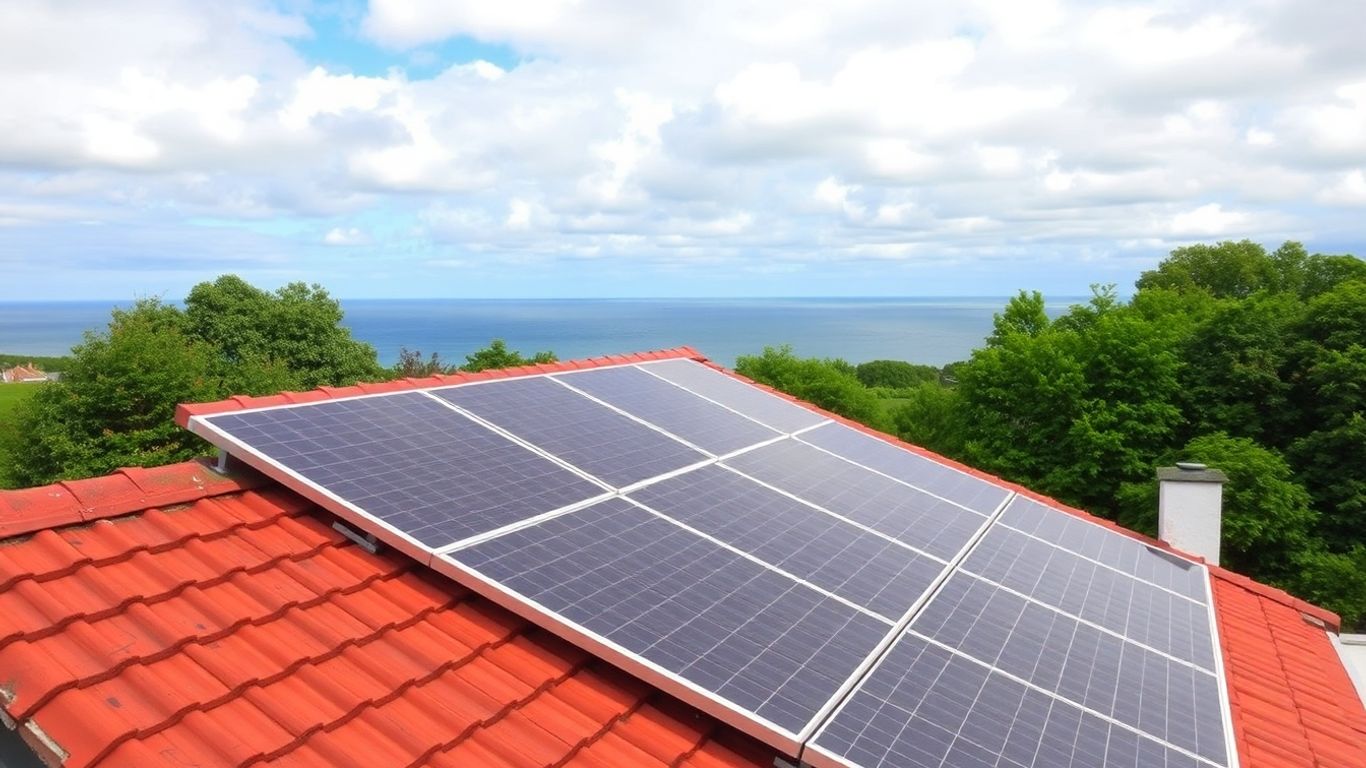
Calculating Return on Investment for a Typical Household
In Brest, installing solar panels represents an average investment of about €8,375 for a 3 kWc system. Considering estimated annual solar energy production of 3,200 to 3,362 kWh, the savings generated generally allow you to offset the initial investment in 12 to 15 years.
| Power (kWc) | Average cost (€) | Annual production (kWh) | Estimated payback time |
|---|---|---|---|
| 3 | 8,375 | 3,200 to 3,362 | 12 to 15 years |
With a 25 to 30-year lifespan for the panels, you have plenty of time to profit after recouping your installation costs.
Factors Affecting the Payback Period of an Installation
Several factors impact your solar project’s performance:
- The orientation and tilt of the panels,
- The local sunlight rate (about 1,547 hours in Brest),
- The cost of electricity in the coming years,
- Possible changes in incentives and subsidies,
- Costs related to maintenance and possible inverter replacement.
The steady rise in electricity prices also tends to shorten the payback period, making solar energy more attractive throughout Finistère.
Financial Benefits of Self-Consumption and Selling Surplus Power
Brest is not France’s sunniest region, but self-consumption combined with surplus resale offers real financial advantages. Reducing your dependence on the grid remains the most profitable approach for households in Brest.
Here are the main benefits of this model:
- Significantly lowering your monthly electricity bill,
- Benefitting from a self-consumption incentive,
- Enjoying preferential rates for selling unused electricity,
- Maintaining your home’s value as energy prices rise,
- Highlighting an environmental choice appreciated across the region.
Based on experience with the profitability of green investments, a photovoltaic installation producing clean energy in Brest now offers solid guarantees—both financially and ecologically—especially with the currently available incentives. The long-term outlook is clearly positive, particularly if you consume most of your solar output daily.
Cost of a Solar Panel Installation in Brest and Associated Variables
Average Price of Residential Installations in the Brest Area
The price of a solar panel installation in Brest depends mainly on the desired output and your roof’s configuration. In 2025, for a turnkey 3 kWc installation in Brest, the average budget is around €8,375, but this can rise to €13,000 for some projects, depending on requirements. Packages usually include equipment, installation, and connection. If you want a more personalized estimate, it’s best to use a dedicated tool or contact a local professional such as Heol Breizh 29 for a free estimate.
| Power (kWc) | Price range (including installation) |
|---|---|
| 3 kWc | €7,500 to €13,000 |
| 6 kWc | €13,000 to €18,000 |
A properly sized installation ensures efficiency and long-term savings, even if the initial figures seem high.
Differences Between Materials, Models, and Installation Types
The final cost also depends on the materials and integration method you choose. Here’s what can impact the final price:
- Type of cells: polycrystalline or monocrystalline (more expensive but higher yield).
- Mounted above roof (less expensive) or integrated into the building (more complex and therefore pricier).
- The use of optimizers or microinverters to maximize production on partially shaded roofs.
Every choice affects the total cost. Your decision should really be based on your energy context and your initial budget.
How Prices Change with Power and Energy Needs
The more powerful your installation, the higher the price—but the cost per kWc often drops for larger systems thanks to economies of scale. For an average household:
- 3 kWc covers most needs for a standard-size household.
- 6 kWc targets larger households or those wanting high self-consumption.
- Options such as storage (batteries) and smart home integration add to the base price.
Proper sizing depends on your annual needs. Taking the time to compare quotes helps prevent unpleasant surprises and choose a solution suited to your actual consumption.
Whether you want a moderate installation or a more ambitious setup, switching to solar remains attractive in Brest thanks to falling prices and accessible custom solutions.
Financial Aids and Support Measures for Solar Installations in Finistère
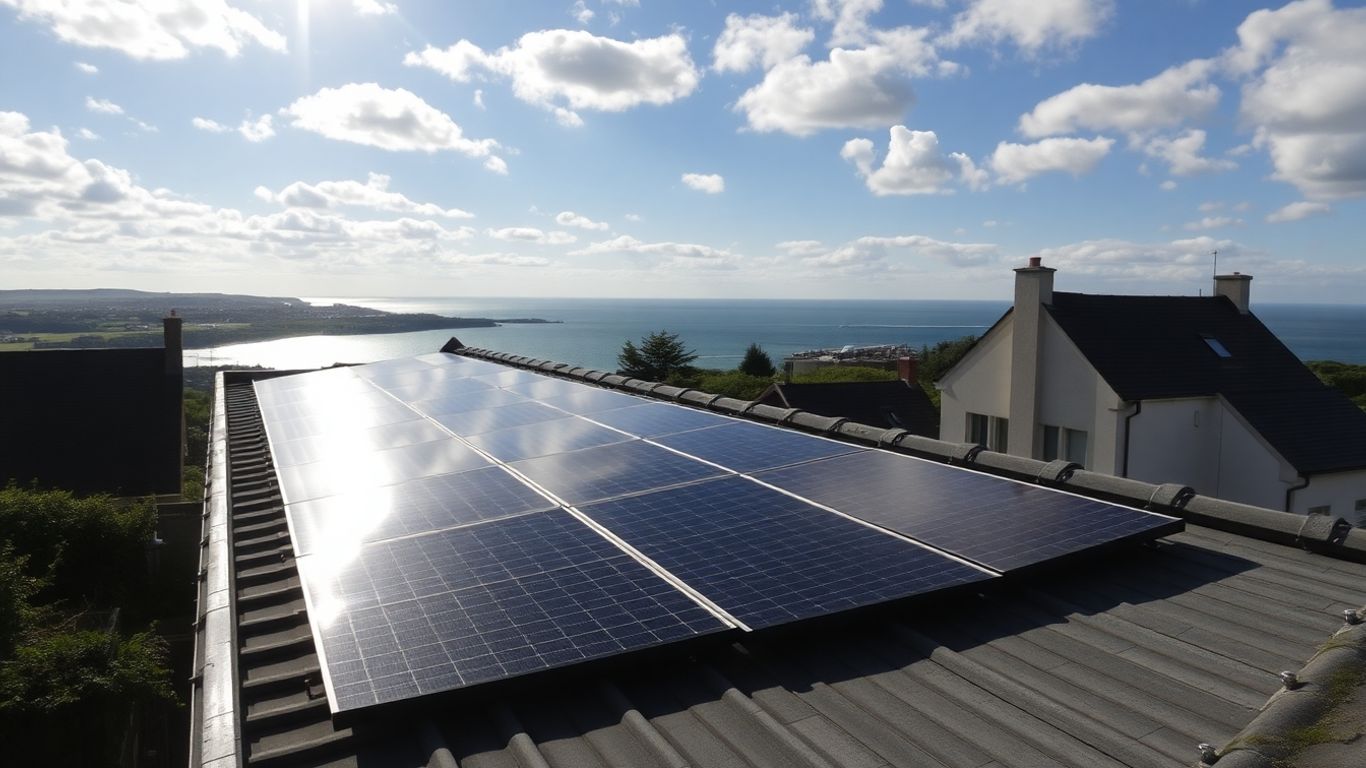
Installing solar panels in Finistère might seem like a major investment, but there are several public supports to help lessen the load. The self-consumption incentive remains the main national support, available to all households installing panels for self-consumption with surplus sold to the grid. The amount depends on installed power, with specific thresholds:
| Installation power | Incentive (€/kWc) |
|---|---|
| Up to 3 kWc | 320 |
| 3 to 9 kWc | 190 |
| 9 to 36 kWc | 90 |
Locally, the Brittany region also offers specific initiatives,
for example, regional supports to promote solar innovation in Quimperlé.
- Self-consumption incentive
- Support from local authorities (municipality, community of communes)
- Guaranteed fixed purchase rate for surplus resale
The combination of these financial supports reduces initial investment, making solar more accessible in Finistère, even with sometimes unpredictable weather.
Eligibility Criteria and Administrative Steps
To take advantage of these measures, you must meet certain conditions.
- The installation must be performed by an RGE (Recognized Environmental Guarantor) professional.
- The panels must have a power less than or equal to 100 kWc to qualify for subsidy and purchase rate systems.
- Connection to the public electricity network (ENEDIS) is mandatory if selling surplus output.
The application steps generally go as follows:
- Put together a file with quotes, supporting documents, and technical information supplied by your installer.
- Submit your application to the relevant authority (online portal for incentive, local council for local aids, etc.).
- Check eligibility and wait for acceptance before work begins in order to receive the aid.
Tax Implications and Reduced VAT for Households
Solar panel installations in Brest benefit from tax advantages for individuals. For installations up to 3 kWc, electricity sold to EDF is exempt from tax: no income tax or social contributions. Also, VAT on the installation is reduced to 10% (instead of 20%) if mounted on a residential building.
Main tax benefits:
- 10% VAT for residential installations
- Exemption from taxes on sales if output ≤ 3 kWc
- No additional property tax required
By combining these programs, you invest in solar while limiting your financial risk, and can enjoy the benefits over the long term.
Regulatory Constraints and Administrative Procedures in Brest
Before launching your solar panel project in Brest, you must comply with local rules set by the Local Urban Plan (PLU). The PLU establishes requirements regarding building appearance and neighborhood architectural harmony. In particular, it may dictate:
- Limits on the height of installations
- The obligation to integrate panels into the roof rather than mount above it
- Restrictions for properties located in historic or protected areas
Always ensure your project complies with Brest’s PLU regulations, as non-compliance can lead to permit refusal.
Prior Declaration and Building Permits
Any installation greater than 3 kWc requires an appropriate planning permit from the municipality. Based on surface area, type of work, and location, you may need either a prior declaration or a building permit. For example, protected zones increase the requirements set by the municipality.
Summary table of usual procedures:
| Type of work | Power or location | Required procedure |
|---|---|---|
| Roof-mounted installation | ≤ 3 kWc | Prior declaration with the town hall |
| Installation > 3 kWc or protected site | > 3 kWc or heritage area | Specific building permit required |
| Ground-mounted installation | — | Building permit or declaration depending on area |
For more about these procedures, visit the page on local planning authorizations.
Specifics for Protected and Heritage Sites
Installing panels near a historical monument or in a protected sector in Brest often makes procedures more complex. The Architect of French Buildings (ABF) may be consulted:
- The location and visibility of the panels are controlled.
- In some cases, installation may be prohibited or must be adapted to blend into the environment.
- You should expect additional processing delays to receive necessary approvals.
In Brest, part of the city center and several coastal areas have these special statuses. Inquiring ahead helps avoid pitfalls when planning your project.
In conclusion, don’t neglect the administrative phase. Assistance from a certified local professional ensures a compliant and optimized application for Brest’s regulations.
Choosing the Right Type of Solar Panel for Brest’s Climate
Brest’s climate, with its often overcast sky and frequent rainfall, raises real questions about the efficiency of different solar panels. However, technical solutions exist today: it all comes down to choosing the right equipment and technology based on your goals. Selecting the optimal type of panel ensures satisfactory energy production despite sometimes variable weather.
Differences Between Photovoltaic and Thermal Panels
In Finistère, two main categories of solar panels stand out:
- Photovoltaic panels: These convert sunlight into electricity. Great for powering your appliances and lowering your bill.
- Solar thermal panels: These models heat domestic water or central heating systems by capturing solar heat. Ideal if your main goal is reducing energy needs for water heating or home heating.
| Panel type | Expected production | Main use | Adaptation to Brest’s climate |
|---|---|---|---|
| Photovoltaic | 3,200-3,400 kWh/year (3 kWc) | Electricity | Very good |
| Solar thermal | 40-70% of annual needs | Hot water/heating | Good |
Choose based on the roof area you have and the balance you want between electricity and hot water savings.
Selecting Technology According to Local Sunlight
In a region with moderate sunlight, some panels perform better than others:
- Monocrystalline panels offer high efficiency even in overcast conditions.
- Multicrystalline panels also perform well but are slightly less efficient.
- For hot water, flat-plate collectors are generally sufficient for this latitude.
The limited sunlight in Finistère means you should focus on quality panels, designed to maximize output even in diffuse light. Your equipment should emphasize efficiency and reliability above all else.
Performance and Durability Criteria for Finistère
Here are the key points to check before any purchase:
- High efficiency in low-light conditions
- Long manufacturer warranty (usually 20 to 25 years for panels)
- Resistance to humidity and wind (IEC standards)
- RGE QualiPV certification for the installer (100% renewable electricity possible on some projects)
- Compatibility with the tilt and orientation of your Brest roof
Before signing, make sure your installer advises you on the installation type best suited to your real needs—a custom solution, not a one-size-fits-all, will really make a difference to your bills over time.
Selecting and Certifying Solar Panel Installers in Brest
Finding a reliable professional for your solar panel installation in Brest is not to be taken lightly. A properly done installation guarantees you safety, performance, and peace of mind for years to come. Here’s how to make the right choice.
Importance of RGE QualiPV Certification for Accessing Incentives
RGE QualiPV certification is the mandatory condition for obtaining public grants. Without this certification, you can’t get state or local funding for your project. This label certifies that your contractor complies with current standards and has the specific skills needed for solar installation.
Before signing, demand an up-to-date RGE QualiPV certificate from your installer, as many display it without keeping their credentials current.
Comparing Quotes and Reviewing Proposed Guarantees
Comparing several quotes is essential to avoid surprises. Here’s what you should always check:
- The brands and types of panels offered (origin, technology, warranties)
- The duration and scope of guarantees (labor, equipment, performance)
- Maintenance and post-installation support terms
- The total and itemized cost of services
| Quote item | What to compare |
|---|---|
| Panel brand | Reliability, performance, lifespan |
| Warranty duration | At least 10 years on equipment, 20 years on output |
| After-sales service | Quick response, hotline, follow-up |
| Total cost (tax included) | Transparency, are incentives already deducted? |
Also make sure you’ve received clear explanations about the process, the timeframe, and the connection to the Enedis grid.
Reliability and Experience Criteria for the Best Choice
Choosing a local installer not only supports Brest’s economy—it improves follow-up on your installation. Here are some criteria to fine-tune your selection:
- Proven experience in solar (number of projects completed in Brest and nearby)
- Recent, easily accessible client reviews (web, word-of-mouth)
- Transparency regarding any subcontractors used
- Custom proposals adapted to local weather and your roof
Don’t ignore first impressions: a serious professional will always take the time to visit your home and explain every step of the project.
In short, a certified, transparent, and experienced installer is the key to a successful solar experience in Brest. Never accept a rushed quote or unclear pitch; it’s better to take a few days to decide than to regret your choice for years.
Conclusion
In conclusion, you can see that installing solar panels in Brest remains an attractive option—even if the sun doesn’t always shine in Finistère. The figures show that electricity production is decent and that profitability is achievable, often in around fifteen years. You also benefit from financial aids that reduce upfront costs. Of course, it’s important to take time selecting a trustworthy installer and to verify administrative requirements. If you want to lower your energy bills and help the environment, solar panels are a solution worth considering—even under Brest’s sky. Don’t hesitate to request quotes and compare offers so you can move forward with confidence.
Frequently Asked Questions
Are solar panels effective in Brest despite the climate?
Yes! Even though Brest is not the sunniest city in France, there’s enough natural light for solar panels to generate electricity. With around 1,600 hours of sunshine a year, your system can work properly and help you save money.
How long does it take to recoup the cost of a solar installation in Brest?
Generally, it takes between 12 and 15 years for your investment to pay off in Brest. After that, the electricity you generate either earns you money or significantly reduces your bills.
What financial aid can I get to install solar panels in Finistère?
You can benefit from several aids: the self-consumption incentive, reduced 10% VAT, and sometimes grants from the region or your local municipality. To qualify, you’ll usually need to work with an RGE-certified installer.
Do I need to get permission to install solar panels in Brest?
Yes, you’ll need to file a prior declaration with the city hall. If your house is in a protected or classified area, special regulations may apply. Be sure to check the Local Urban Plan (PLU) before starting work.
What is the difference between photovoltaic and thermal solar panels?
Photovoltaic panels convert sunlight into electricity, while thermal solar panels are used to heat water or your home. The choice depends on your needs and budget.
How do I choose a good solar panel installer in Brest?
Choose an RGE QualiPV certified professional. Compare several quotes, look at the guarantees offered, and check feedback from other clients. This will help you find a reliable and skilled installer.