Key Points
Optimizing your pool’s operation with solar energy allows for sustainable reduction of your current energy costs. Here are the crucial elements for a successful project:
- Direct valorization of self-consumption through renewable solar energy.
- Importance of rigorous sizing based on your pump’s power.
- Predominant role of orientation to maximize annual yield.
- Need for preventive maintenance to ensure equipment longevity.
- Thorough analysis of return on investment before any financial commitment.
How a Solar Kit for a Filtration Pump Works
The Basics of Photovoltaic Self-Consumption
Self-consumption involves using the energy produced locally by your panels to cover the priority electrical needs of your pool equipment. By converting sunlight into usable current, you drastically reduce the amount of electricity purchased from the grid. This approach transforms a constant expense into an efficient solution, enjoy your pool longer with clean power.
Difference Between a Classic Pump and a Dedicated Solar Pump
A traditional filtration pump is designed to operate with standard alternating current, while solar-dedicated systems often include inverters that allow continuous adaptation to available production. Using a well-proportioned solar panel for a pool pump ensures stable filtration as long as the sun is present, unlike the classic model which rigidly depends on the grid.
Managing Direct and Alternating Current Power
The conversion of direct current generated by the panels to the alternating current needed for motors requires rigorous conversion via micro-inverters or specific inverters. Poor management of these flows can lead to significant efficiency losses, which Millennium Digital’s data analysis methods can help audit to ensure optimal performance, just as you can discover the potential of a complete self-consumption solar kit suitable for high power.
Analysis of Initial Investment Costs
Components Needed for a Complete Installation
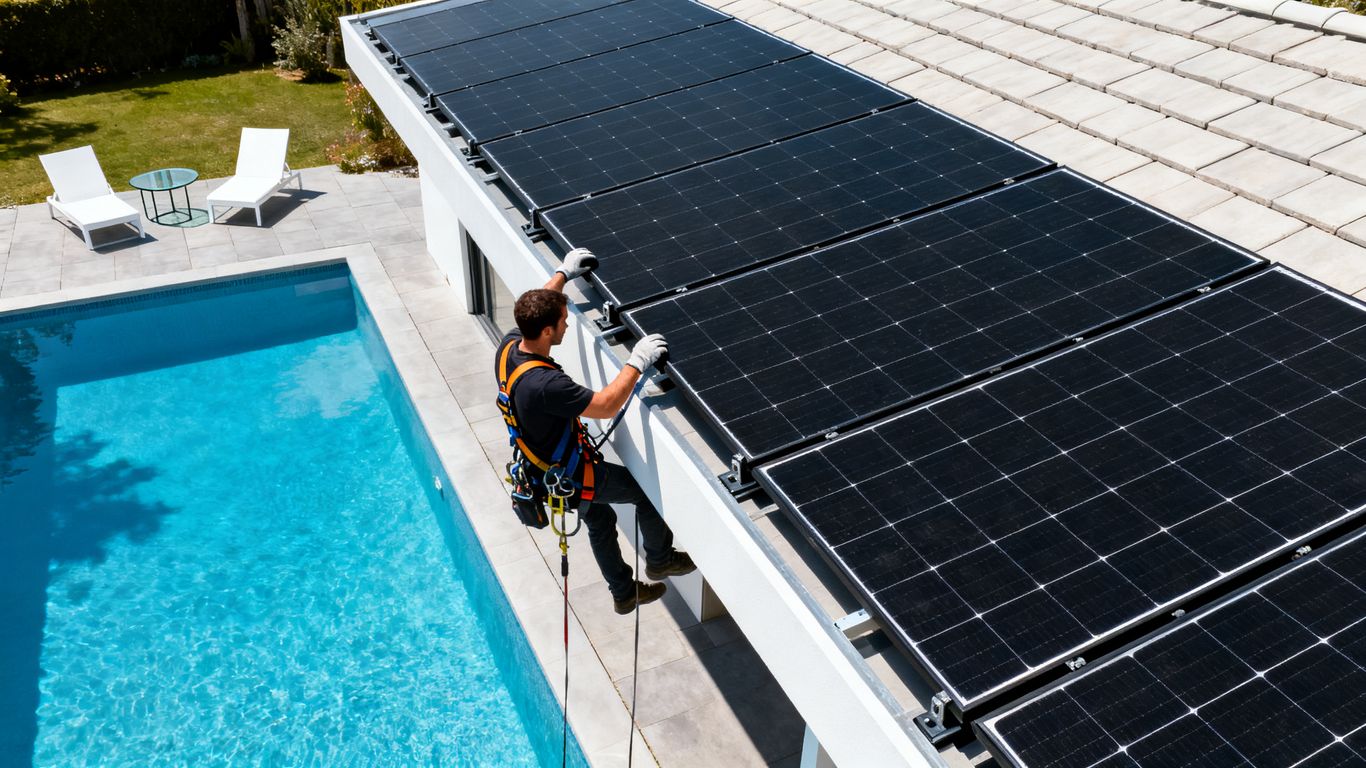
The overall investment includes photovoltaic modules, the mounting system, the protective electrical panel, and wiring. To secure this foundation, it is recommended to rely on robust equipment, such as the Flash 500 solar panel which optimizes every installed square meter. Here is a simplified estimate of cost distribution for a typical installation:
| Expense Item | Budget Share | Impact on Performance |
|---|---|---|
| Solar Panels | 50% | Determining |
| Inverters and Wiring | 30% | Critical |
| Structure and Installation | 20% | Low |
Comparison Between Professional Intervention and DIY Installation
Hiring a qualified professional guarantees compliance with current standards and the electrical safety of your installation. While DIY installation may seem attractive from a cost perspective, technical expertise during connection remains a major strategic decision to ensure the system’s longevity and the equipment’s warranty.
Available Aid and Subsidies for Solar
The energy transition is supported by various national and local programs that can lower the initial cost of your project. Before finalizing your budget, inquire about programs like MaPrimeRénov’ and Certificates, which can significantly reduce the financial burden.
Profitability Calculation and Return on Investment
Estimating Annual Savings on Electricity Bills
Profitability directly depends on the annual filtration volume and your local cost per kilowatt-hour. A well-sized installation can cover most of the swimming season with clean energy, offering immediate savings from the first year of operation.
Factors Influencing Financial Amortization Period
The amortization period varies depending on the sunshine in your region and the accuracy of your initial technical study. By working with experts like Millennium Digital to refine your forecasts, you gain a clear understanding of future benefits and can better comprehend testimonials on solar self-consumption gathered in user reviews.
Analysis of Equipment’s Projected Lifespan
Modern photovoltaic equipment often has a lifespan exceeding twenty-five years, well beyond that of a standard filtration pump. To maximize profitability, ensure you choose components known for their robustness and follow a structured maintenance strategy by Millennium Digital to avoid any loss of efficiency due to premature wear.
Key Criteria for Equipment Selection
Calculating the Peak Power Required by the Filtration System
The installed power must match your pump’s needs during the brightest hours of the day. Undersizing would limit filtration hours, while unnecessary oversizing would increase the return on investment time without real gain.
Technical Compatibility Between Panels and Existing Pump
It is imperative to check if your current pump accepts voltage variations from solar power or if a specific control box needs to be installed. Many solutions, such as today’s technological innovations, ensure full compatibility without needing to replace your entire existing hydraulic circuit.
Importance of Panel Orientation and Tilt
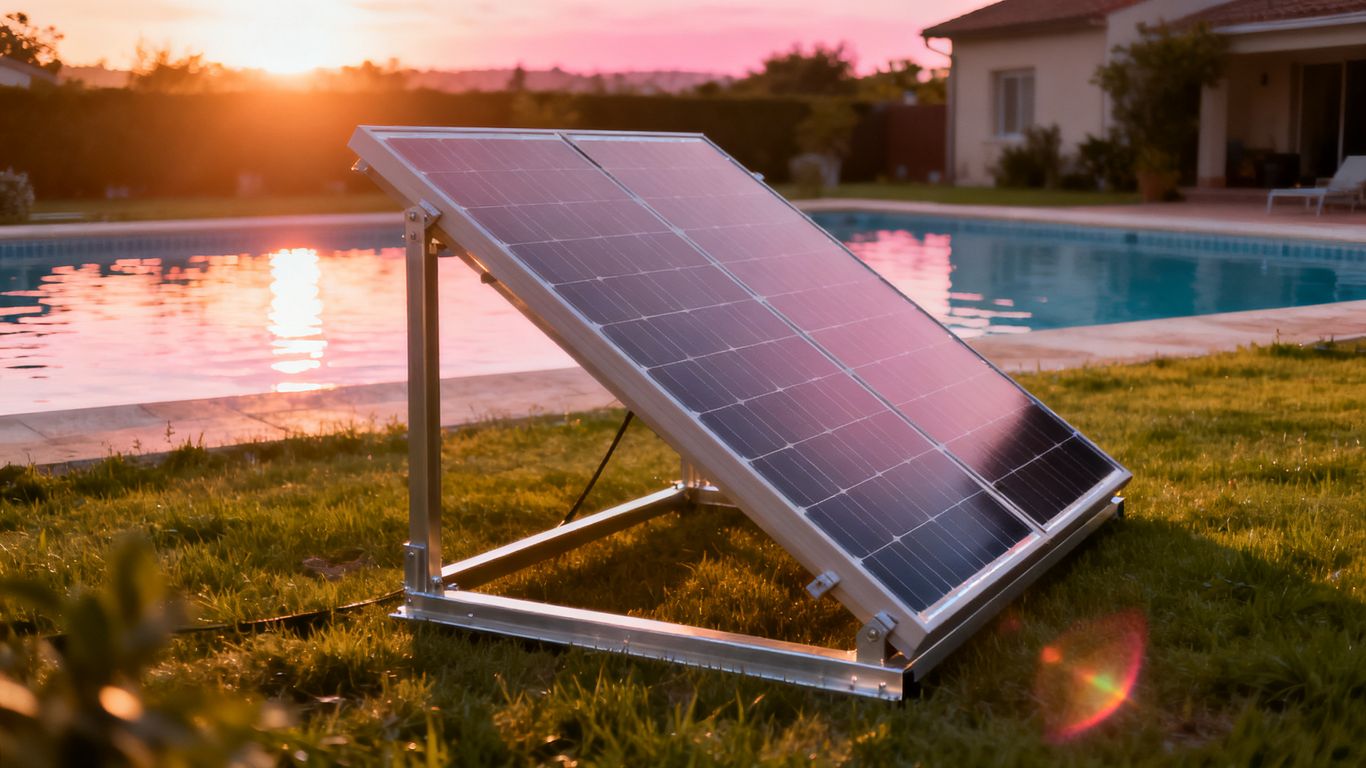
Energy efficiency depends on capturing maximum sunlight throughout the day, requiring precise tilt according to your latitude. Here are the key points for effective sensor positioning:
- South-facing exposure to maximize daily production.
- Optimal tilt between 30 and 35 degrees in most regions.
- Complete absence of shade from trees or chimneys.
- Rigid mounting capable of withstanding local winds.
Steps and Principles of Physical Installation
Optimal Sizing of the Solar Panel Array
The number of panels is calculated by adding the pump’s instantaneous consumption and the losses related to the conversion system. A precise study ensures that your installation produces enough energy even on days with variable light, thus avoiding too frequent reliance on the grid.
Secure Connection to the Filtration Box
The AC box provides differential protection and the disconnection necessary for any installation compliant with safety standards. This point is crucial for protecting your equipment against voltage spikes while allowing for quick power-off during extended winter periods.
Compliance with Current Electrical Standards
Adhering to local regulations is essential for validating your insurance and ensuring the safety of people around the pool. Make sure every step, from component selection to final wiring, meets the requirements of the certified installer who will validate your entire photovoltaic installation.
Tips for Optimizing System Performance
Regular Maintenance and Cleaning of Solar Modules
Dust, pollen, and debris accumulated on the cells can reduce production by 5 to 10%. Simple cleaning with clear water, twice a year, helps maintain optimal conversion efficiency for your filtration system.
Smart Filtration Cycle Programming Strategies
Controlling filtration during peak sunlight hours ensures direct use of produced energy without going through losses related to virtual storage.
This simple synchronization between your filtration timer and the solar production curve drastically reduces your actual energy footprint.
Using Monitoring Accessories for Performance Tracking
Modern monitoring solutions allow real-time visualization of your pump’s production and consumption. With this data, you can adjust your filtration habits and anticipate future needs related to changes in your water quality.
Conclusion
Installing a solar system to power your pool pump is a profitable decision that combines direct savings and environmental respect. By adhering to the principles of sizing, electrical safety, and maintenance, you ensure the longevity of your investment while gaining peace of mind regarding electricity price increases.
Frequently Asked Questions
What are the main advantages of a solar pump?
A solar pump significantly reduces your electricity bill by using a free energy source while improving your energy independence.
What panel power is needed for a standard pump?
This essentially depends on your pump’s wattage consumption; it’s generally necessary to plan for a safety margin of 20% above its nominal power.
Can I install the panels myself?
It is technically possible to mount certain structures, but it is strongly recommended to use a professional for the connection and electrical compliance.
Are batteries mandatory for a pool?
No, they are generally not necessary because filtration is mainly useful when the sun is shining, allowing for direct self-consumption.
How do I maintain my solar panels?
Cleaning with clear water is sufficient to remove light dirt and ensure that rays penetrate the photovoltaic cells properly.
Is a solar installation profitable?
With rising electricity prices, profitability is becoming faster, and the return on investment is often calculated over just a few years.
Do I need special authorization for the panels?
In most cases, a prior declaration to the town hall is required for any visible modification to your roof or garden.