Dreaming of enjoying your pool for longer, without skyrocketing your energy bills? Does the idea of heating your pool for free, thanks to the sun, sound appealing? It’s entirely possible with a solar panel for your pool. This article will guide you through understanding how these systems work, how to choose the best one for your pool, and how to make the most of them for extended, eco-friendly swims.
Key Takeaways
- A solar panel for your pool captures the sun’s energy to heat your pool water, offering an eco-friendly and economical solution.
- The choice of solar system depends on your pool size: solar mats for small pools, thermal or photovoltaic panels for larger ones.
- Proper placement, tilt, and orientation of the collectors are essential to maximize heat production.
- Installing a solar panel for your pool reduces your carbon footprint and leads to significant savings on your energy expenses.
- Whether you opt for professional installation or a DIY kit, regular maintenance and winterization are important for the system’s longevity.
Understanding How Pool Solar Panels Work
The Basic Principles of Solar Water Heating
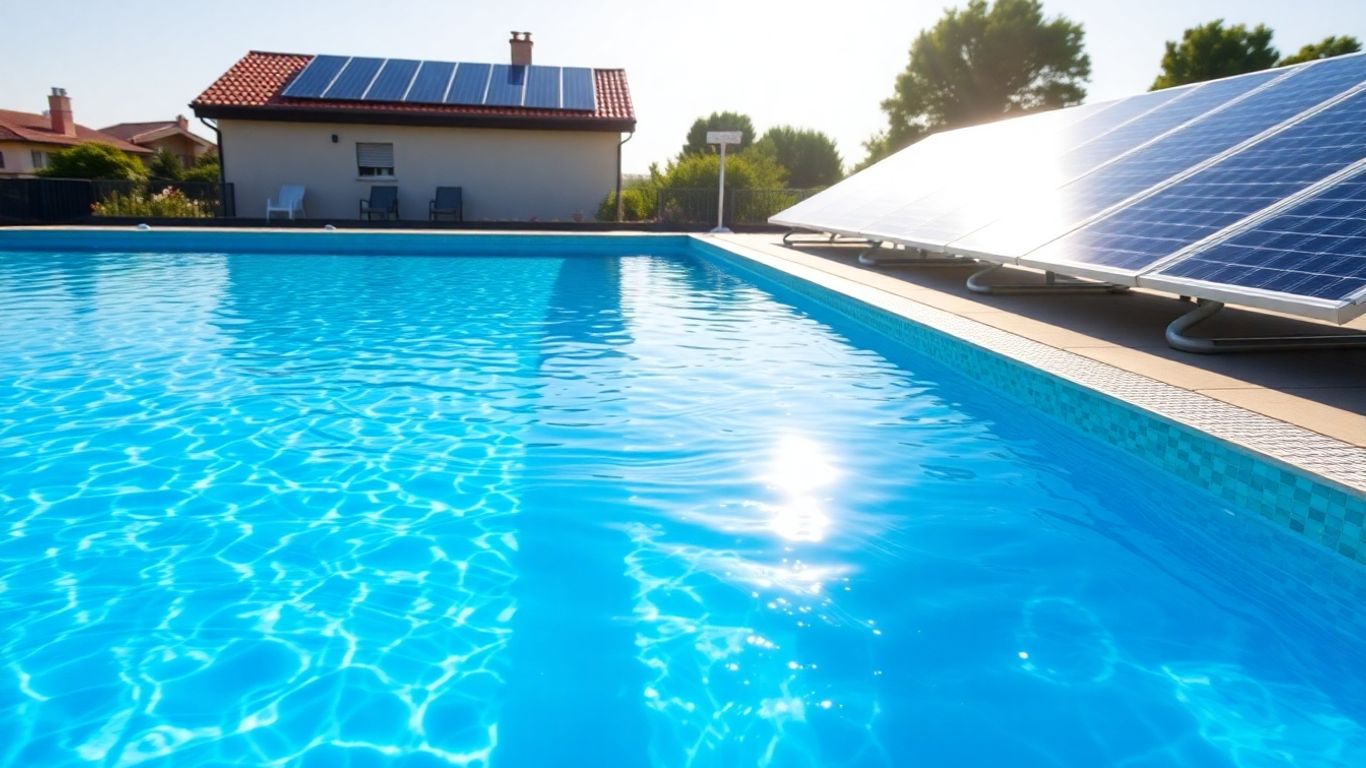
Pool solar heating is based on a simple principle: using the sun’s free energy to warm your pool. There are several ways to achieve this, but the core of the system lies in capturing solar rays and transferring them to your pool water. The goal is to extend the swimming season without causing your electricity or gas bills to skyrocket. It’s an eco-friendly solution that aligns with sustainable development. The sun is an inexhaustible and clean energy source.
Converting Solar Energy into Heat for Your Pool
The most common systems for heating a pool with the sun are solar covers, solar mats, solar domes, and solar thermal panels. Solar covers, often with bubbles, capture the sun’s heat and transfer it to the water while limiting evaporation. Solar mats, on the other hand, are mats of black pipes that, when connected to the filtration system, circulate pool water through them to heat it. Solar domes work on a similar principle, with a pipe coiled under a transparent dome to create a greenhouse effect. Solar thermal panels, more sophisticated, are designed for more direct conversion of solar energy into heat. They are often used for water heating and can even be coupled with your home heating system.
The Role of the Pump and Piping System
Regardless of the chosen technology, a pump is essential for circulating your pool water. This water is pumped from the pool, passes through the solar collection system (cover, mat, dome, or panel) where it heats up, and is then returned to the pool. The piping system ensures this connection between the pool, pump, and solar heating device. The size and configuration of this network, as well as the pump’s power, are important for ensuring efficient water circulation and good heat transfer. It’s also possible to install these systems on the ground, near the pool, which can simplify installation and optimize orientation for maximum sun exposure.
Choosing the Right Solar Heating System for Your Pool
To heat your pool for free all summer, the choice of solar system will primarily depend on the size of your pool and your specific needs. There are several solutions, each with its own advantages.
Solutions for Small Above-Ground Pools
For small pools, such as above-ground models, a simple and economical solution is often sufficient. This typically involves solar mats or solar carpets. These devices are easy to install and move. They work by capturing the sun’s heat and transferring it directly to the pool water that circulates through them. A solar mat can typically raise the temperature of a 5 to 10 m³ pool by a few degrees, which is often enough to extend the swimming season.
Options for Medium-Sized Pools
If your pool has a capacity between 20 and 60 m³, you will need a slightly more powerful solution. You can opt for several connected solar mats, or switch to solar domes. These are more compact and sometimes more efficient than flat mats. Another option is to install small solar thermal panels specifically designed for water heating. These systems begin to offer more significant heating capacity.
Recommended Systems for Large Pools
For pools over 60 m³, or if you aim for a higher and more constant water temperature, it is advisable to turn to more robust systems. Solar thermal panels are the preferred solution here. They are designed to capture maximum solar energy and efficiently transfer it to your pool water via a dedicated circuit. In some cases, photovoltaic solar panels can also be considered, not to heat the water directly, but to produce electricity that will then power an electric heater or a pool heat pump, thus reducing your overall electricity bill. Installing thermal panels is often more complex but offers the best performance for large water volumes.
It is important to note that calculating the required collector surface area is a key step. A general rule suggests planning for 0.25 to 0.3 m² of solar panel per m³ of water. For example, for a 100 m³ pool, this would mean about 25 to 30 m² of solar collectors, or 14 to 17 standard panels.
Optimizing Your Pool Solar Panel Installation
For your pool’s solar heating system to function optimally, the placement and configuration of your collectors are paramount. A well-thought-out installation will ensure pleasantly warm water throughout the season, with no extra effort.
Selection Criteria for Collector Placement
Choosing the location for your solar panels is a key step. Ideally, they should be installed in a well-sun-exposed area, free from shade, for most of the day. Common options include your house roof, a garden shed, a garage, or even a ground installation immediately adjacent to the pool. Ground installation has the advantage of reducing pipe length and facilitating precise collector orientation for maximum solar radiation capture. Also, consider ease of access for future maintenance.
Calculating the Required Collector Surface Area
The amount of solar collectors you will need depends on several factors, including your pool’s volume, the desired temperature, and your region’s sunshine. A general rule of thumb suggests planning for 0.25 to 0.3 m² of collector per cubic meter of water. For example, for a 50 m³ pool, you would aim for a collector surface area of approximately 12.5 to 15 m². It’s always better to slightly oversize your system to ensure a comfortable temperature even on less sunny days.
| Pool Volume (m³) | Recommended Collector Surface Area (m²) |
|---|---|
| 20 | 5 – 6 |
| 50 | 12.5 – 15 |
| 80 | 20 – 24 |
Importance of Tilt and Orientation
The ideal orientation for your solar panels is due south. If this is not possible, a southeast or southwest orientation remains very effective. Regarding the tilt, it should be optimized to maximize solar exposure throughout the year. A tilt of about 30 to 45 degrees is often recommended, but this can vary depending on your latitude. Too shallow a tilt could limit performance at the beginning and end of the season, while too steep a tilt could reduce direct light capture in summer. The goal is to find the right balance to enjoy your pool for as long as possible.
A well-oriented and tilted solar installation can significantly increase your pool water temperature, thus extending your swimming season without additional energy costs. It is therefore wise to dedicate time to planning this aspect.
The Ecological and Economic Advantages of Solar Heating
Reducing Your Pool’s Carbon Footprint
Opting for a solar heating system for your pool is a concrete action for the planet. Unlike traditional heating systems that consume fossil fuels or electricity often produced from these same sources, solar heating uses a renewable and clean energy: the sun. By harnessing this inexhaustible resource, you significantly reduce the carbon footprint associated with maintaining your pool. This means fewer greenhouse gas emissions to enjoy your pool, a responsible choice that contributes to a healthier environment.
Significant Reduction in Energy Bills
One of the major attractions of solar pool heating lies in its economic benefits. Once your system is installed, solar energy is free. This translates into a notable reduction, or even elimination, of water heating costs. If you already have a conventional heating system (electric, gas), coupling it with solar panels can drastically reduce your electricity or gas consumption. Imagine being able to extend your swimming season without seeing your energy bills soar; this is the promise of a well-designed solar solution.
Long-Term Investment Payback
Although the initial installation of a solar pool heating system represents an investment, it proves to be very profitable over time. The savings realized on your energy bills, combined with free solar energy, allow you to recoup the purchase and installation costs in just a few years. Furthermore, the durability and low maintenance of solar panels ensure consistent performance over many years, thus guaranteeing a sustainable return on investment. It’s a smart strategy to enjoy your pool longer while controlling your budget.
Here’s an overview of potential savings:
| Type of Heating System | Average Annual Cost (Estimate) | Potential Savings with Solar (Estimate) |
|---|---|---|
| Electric Heater | €800 – €1500 | 70% – 90% |
| Heat Pump | €400 – €800 | 30% – 50% |
| Solar Heater | €50 – €150 (Maintenance) | €0 (Energy) |
Adopting solar heating for your pool is not just about comfort; it’s also a strategic choice that combines environmental respect with budget optimization. Transitioning to clean energy to heat your pool is both an ecological and economically sound move.
Installation and Maintenance of Your Pool Solar System
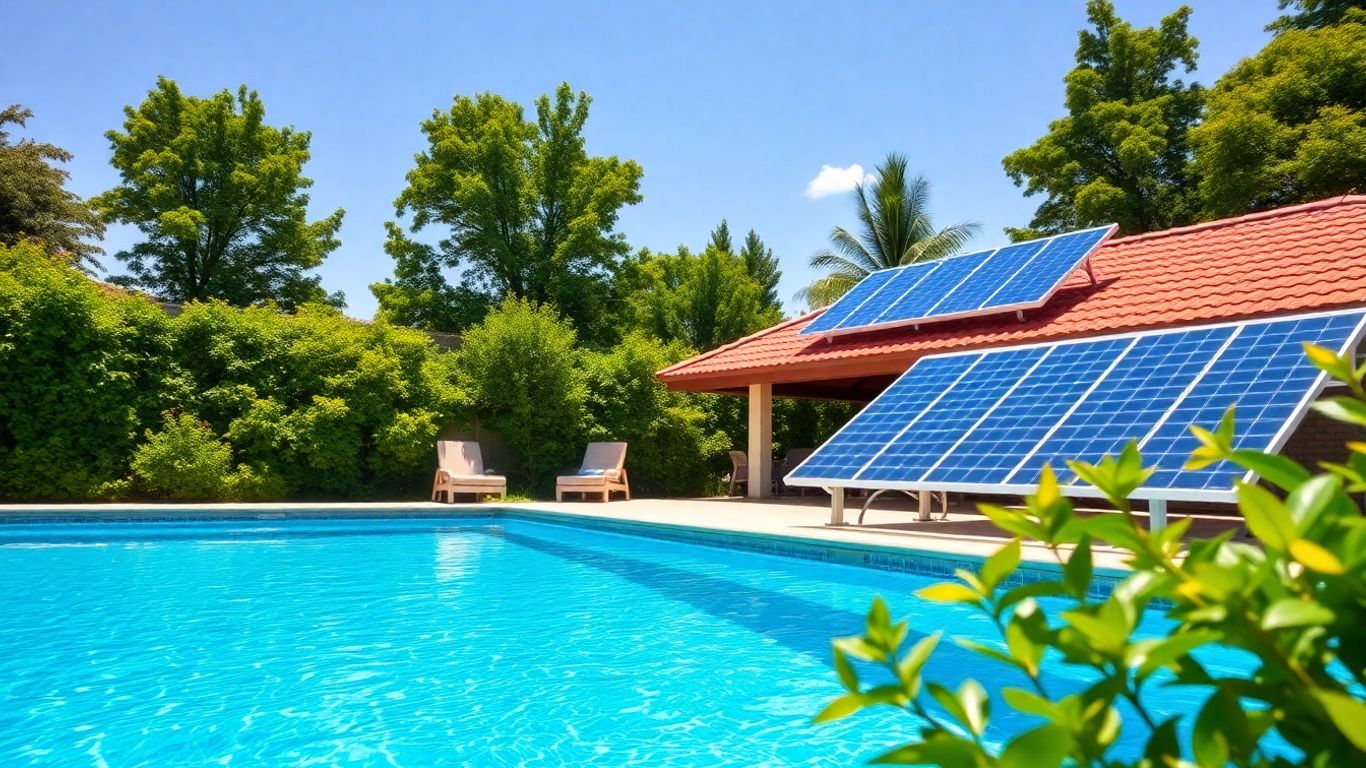
Once you’ve chosen the ideal solar heating system for your pool, the next step is to set it up and ensure its proper functioning over time. Installation may seem complex, but it’s often simpler than it appears, especially if you follow the right steps.
Key Steps for Professional Installation
For a hassle-free installation, it’s often recommended to hire professionals. They will ensure everything is correctly connected and optimized for your specific situation. Here are the general steps an installer takes:
- Needs Assessment: First and foremost, a professional will determine the size of the solar system needed. This includes calculating the required collector surface area based on your pool size and geographic location. It’s also important to assess your overall energy needs, which is a crucial step in choosing the right system configuration [9fca].
- Location Selection: The place where the collectors will be installed is paramount. You should favor a well-sun-exposed area, free from shade, and ideally close to the pool to minimize heat loss in the pipes.
- Hydraulic Connection: Solar collectors are connected to your pool’s filtration system. Pool water circulates through the collectors, where it is heated by the sun before returning to the pool. It’s important to maintain an adequate water flow rate, generally around 2 m³/h per panel, for optimal efficiency [9c6b].
- Electrical Connection (if necessary): If your system includes an auxiliary pump or a control system, an electrical connection will be made.
- Testing and Commissioning: Once the installation is complete, everything is checked to ensure proper operation and the absence of leaks.
Possibility of DIY Installation
If you’re handy and comfortable with manual work, it’s entirely possible to install your solar heating system yourself, especially if you opt for a ready-to-use kit. This can represent significant savings. However, be aware that it requires time, precision, and sometimes specific skills, particularly for connections. It’s always good to check local regulations, such as the need to declare work to the town hall if the installation is on the roof.
Tips for Winterization and Maintenance
For your solar system to continue functioning effectively year after year, regular maintenance is necessary. Winterization is a key step to protect your installation during the cold months.
- Drainage of Collectors: Before the first frost, it is essential to completely drain all water from the solar collectors to prevent it from freezing and damaging the equipment.
- Cleaning: Take advantage of the end of the season to clean the surface of the collectors. Dust, leaves, or other debris can reduce their efficiency. Simple cleaning with clear water is often sufficient.
- Connection Check: Before restarting in the spring, inspect all connections and pipes for any signs of wear or leaks.
- Flow Monitoring: Ensure that the water flow through the collectors is still correct once the system is restarted.
Regular maintenance and careful winterization are the guarantees of your pool solar heating system’s longevity and performance. Do not neglect these steps to fully enjoy your pool heated for free all summer long.
Compatibility and Integration with Other Pool Equipment
Installing solar panels to heat your pool doesn’t mean you have to give up your other equipment. On the contrary, good integration can even optimize their operation and reduce your overall expenses.
Coupling Solar Panels with Filtration Systems
The solar pool heating system is designed to work in conjunction with your existing filtration pump. Your pool water is pumped, passes through the filtration system, and is then directed to the solar collectors to be heated before returning to the pool. This synergy allows you to use the energy from your filtration pump without requiring additional equipment for water circulation. It’s important to verify that your pump has sufficient flow for the chosen solar system. For example, a solar pool heater requires a minimum flow rate to operate effectively.
Using Photovoltaic Panels to Power Equipment
Beyond simply heating the water, photovoltaic solar panels can produce electricity. This electricity can be used to directly power other pool equipment, such as the filtration pump itself, lighting, or even a water treatment system. This represents an opportunity to significantly reduce your overall electricity bill related to pool maintenance.
Synergy with Existing Heating Systems
If you already have a heating system for your pool (such as a heat pump or an electric heater), adding solar thermal panels can considerably reduce its energy consumption. Solar panels can act as a pre-heater, thus reducing the workload of your main system. This not only saves energy but also extends the lifespan of your current equipment. There are even solar kits designed to integrate directly with your existing filtration system, acting as an efficient pre-heater.
An Extended Summer and Guaranteed Savings
In summary, installing solar panels to heat your pool is a wise move. You benefit from warmer water, allowing you to enjoy your pool longer throughout the year, while also achieving substantial savings on your energy bills. It’s an environmentally friendly solution that combines comfort and responsibility. Consider it for your future summer swims and even beyond.
Frequently Asked Questions
How does a solar panel heat my pool?
It’s quite simple! The solar panel, often a type of black mat, absorbs heat from the sun. Your pool water then passes through this panel thanks to the pump. It heats up on contact with the hot panel before returning to your pool. It’s like a big solar radiator for your pool!
What size solar panel do I need for my pool?
To give you an idea, you need to plan for about 0.25 to 0.3 m² of panel for every cubic meter of water in your pool. If you have a 50 m³ pool, you’ll need between 12.5 and 15 m² of panels. The exact amount also depends on your region’s sunshine and the temperature you desire.
Can I use my solar system in winter?
Yes, you can use your solar system even in winter because it works using sunlight. However, it will be less effective than in summer, especially if it’s cold outside. To retain heat, it’s advisable to cover your pool with a tarp when you’re not using it.
Is heating my pool with the sun expensive?
The initial installation of solar panels does have a cost, that’s true. But afterwards, solar energy is free! This allows you to make significant savings on your electricity or gas bills because you use your usual heating system less. It’s an investment that pays for itself over time.
Can I install the solar panels for my pool myself?
For the simplest systems, like a bubble cover or a solar mat, DIY installation is often possible if you’re a bit handy. For thermal or photovoltaic solar panels, it is strongly recommended to hire professionals to ensure a safe and efficient installation, especially for the connections.
Can solar panels power things other than my pool heating?
Absolutely! If you opt for photovoltaic solar panels, they produce electricity. This electricity can be used to power the pool’s filtration pump, lighting, or even other electrical appliances in your home. It’s a way to produce your own green energy.