Solar energy is evolving and offering new solutions. The vertical wall solar panel is a good example, especially when roofs are not ideal for traditional panels. We wonder if these vertical panels can really be as effective as those installed on roofs. Let’s take a closer look!
Key Takeaways
- A vertical wall solar panel works like a traditional panel, converting sunlight into electricity, but it is installed at a 90-degree angle.
- These panels are practical for using wall space, especially in cities, and are easier to maintain as they get less dirty.
- Their main drawback is that they receive less direct sunlight and can heat up more, which reduces their output compared to tilted panels.
- To optimize performance, choose the sunniest wall and check its surface carefully; professional installation is recommended.
- Bifacial vertical solar panels, which capture light from both sides, can improve output and are more robust, finding applications in agriculture or parking lots.
Understanding How Vertical Wall Solar Panels Work
Energy Conversion Principles of Photovoltaic Cells
The basic principle of a solar panel, whether installed on a roof or a wall, remains the same. The photovoltaic cells that make up the panel are designed to capture sunlight. When photons strike these cells, they excite the electrons in the semiconductor material (often silicon). This movement of electrons creates a direct electric current. It’s a bit like each sunbeam giving a small push to make the electrons move. This direct current is then sent to an inverter.
Impact of Orientation and Tilt on Production
Orientation and tilt are key factors in maximizing solar energy production. For a panel installed on a vertical wall, the most favorable orientation is generally south, as it allows for maximum sunlight capture throughout the day. However, unlike roof panels that can be adjusted with a precise tilt to optimize the angle of incidence of solar rays according to latitude, vertical panels are fixed at 90 degrees. This means that the angle of incidence of solar rays varies considerably throughout the day and seasons. In winter, when the sun is lower on the horizon, vertical panels can even perform better than poorly tilted roof panels, as they receive more direct rays. In summer, on the other hand, the higher sun may be less effectively captured.
The Role of the Inverter in the Production Chain
Once the solar panels have produced direct current, it is not directly usable by most of your household electrical appliances. This is where the inverter comes in. Its role is to convert this direct current into alternating current, the type of current that powers your home. The inverter is therefore a key component of the installation; it ensures that the energy produced by your solar panels can be used effectively. There are different types of inverters, and the choice will depend on the configuration of your installation and your specific needs.
Installing solar panels on a vertical facade is an interesting alternative when roofs are not suitable. Although the angle of incidence of solar rays is less optimal than with a classic tilted installation, production can be significant, especially considering seasonal specificities and the use of technologies like bifacial panels.
Strategic Advantages of Installing Vertical Solar Panels
Optimizing Wall Space in Urban Environments
In dense urban areas, every square meter counts. Vertical solar panels turn your facades into miniature power plants. This is a particularly clever solution when roofs are not suitable or available for a photovoltaic installation. You can thus utilize surfaces that would otherwise remain unused, transforming ordinary walls into energy assets. This approach maximizes solar energy production without encroaching on ground space, which is a considerable advantage in cities where space is a rare commodity. It’s a smart way to contribute to the energy transition while enhancing your property.
Installation Flexibility on Various Architectural Surfaces
One of the major advantages of vertical solar panels lies in their great adaptability. They can be installed on a multitude of architectural supports, ranging from the walls of residential buildings to transportation infrastructure, including parking lots. This flexibility offers you many possibilities to integrate solar power into your environment. Whether your building has a classic or modern architecture, there is often a solution for attaching panels. This versatility opens the way for innovative solar projects, even in contexts where traditional installations would be complex to implement. Consider, for example, balconies in collective housing, a often overlooked surface that can become an energy source for your home.
Reduced Waterproofing Constraints and Ease of Maintenance
Vertical installation offers significant practical advantages. Unlike roof panels, wall-mounted solar panels are less prone to waterproofing issues. Rainwater drains more easily, reducing the risk of leaks. Furthermore, their vertical position makes them less vulnerable to the accumulation of debris such as dead leaves or dust. Maintenance is simplified: regular cleaning is often sufficient to maintain optimal performance. This ease of maintenance contributes to the longevity of your installation and to more consistent energy production over time. This is an often underestimated aspect but has a real impact on the total cost of ownership of your solar system.
Limitations and Technical Considerations of Vertical Solar Panels
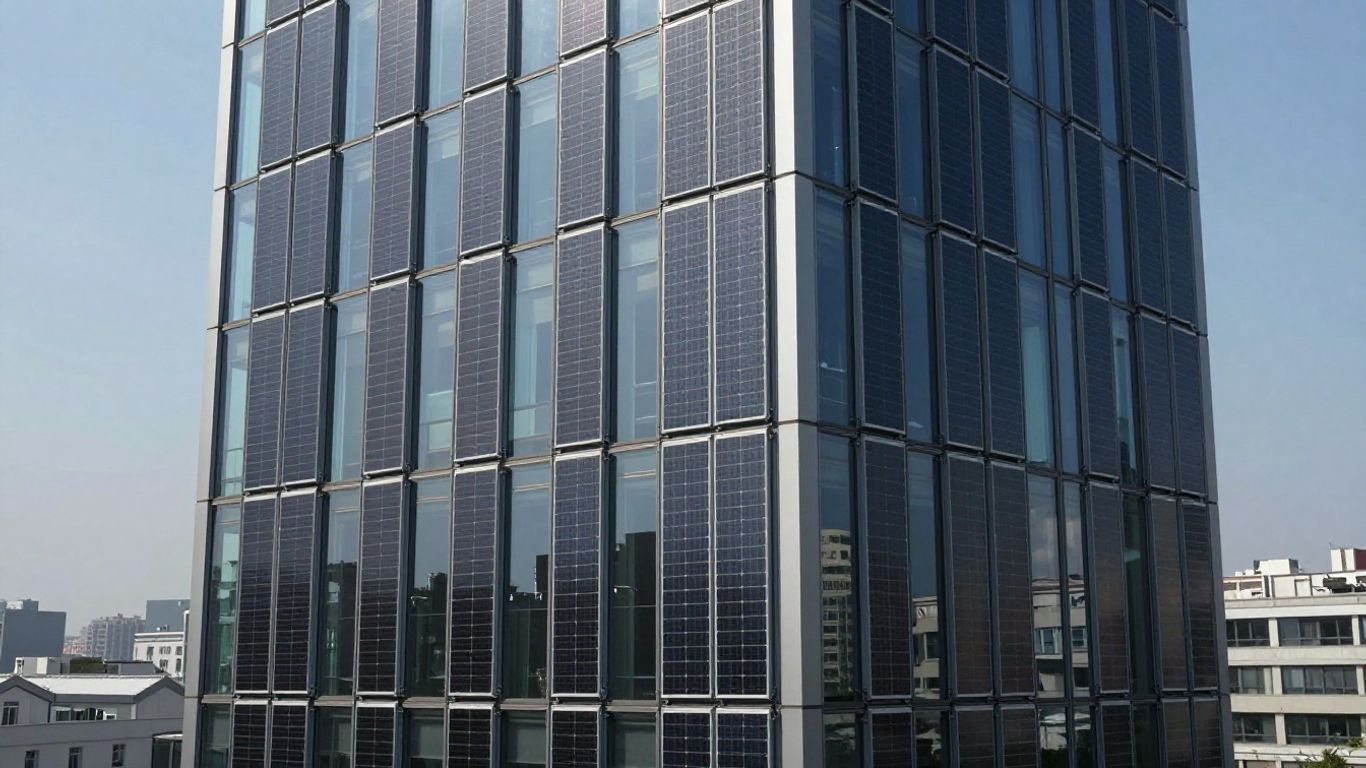
While vertical solar panels offer interesting advantages, it is important to consider their technical limitations for a realistic assessment of their performance. You need to understand that their different positioning from traditional installations has direct implications for energy production.
Reduced Intensity and Duration of Direct Sunlight
Unlike panels mounted on tilted roofs, which are often optimized to capture maximum sunlight throughout the day and seasons, vertical panels face a different challenge. Their 90-degree orientation means they receive less direct sunlight, especially during the hours when the sun is highest in the sky. The angle of incidence of solar rays is less favorable, which can reduce the intensity of the captured energy. In winter, when the sun is low on the horizon, their performance can be more interesting, but over the entire year, this reduced exposure can impact overall output compared to an optimized roof installation. Therefore, it is important to choose the sunniest facade.
Impact of Cell Overheating Due to Limited Airflow
Another point to consider is ventilation. Solar panels work best when kept at a reasonable temperature. Vertical wall installations can suffer from less efficient rear airflow than panels placed on the ground or on roofs. This limitation can lead to overheating of the photovoltaic cells, especially on hot days. High cell temperatures can reduce their efficiency and, consequently, the amount of electricity produced. This is a factor not to be overlooked in hot climates.
Comparison of Solar Incidence Angle with Traditional Installations
The angle at which sunlight strikes a panel is crucial for its production. Traditional panels are generally installed with an average tilt (often between 30 and 35 degrees) to optimize light capture over the year. In summer, the sun is high (angle of about 64°), in autumn and spring, it is at a medium height (about 41°), and in winter, it is low (about 18°). Vertical panels, being at 90°, have an incidence angle that varies considerably compared to these ideal positions. This means they capture direct light less effectively, especially when the sun is high. However, they can be more efficient during sunrise and sunset, or when the sun is low in winter, which can make them complementary to more traditional installations.
Here is a simplified comparison table:
| Installation Type | Solar Incidence Angle (Summer) | Solar Incidence Angle (Winter) | Airflow |
|---|---|---|---|
| Traditional Panel (Tilted) | Optimal | Less Optimal | Good |
| Vertical Panel | Less Optimal | Potentially More Interesting | Limited |
It is therefore essential to weigh these disadvantages against the specific advantages of vertical installation, especially in contexts where roofs are not a viable option.
Optimizing the Performance of Vertical Wall Solar Panels
Installing solar panels on a vertical wall is an idea that is gaining traction, especially when the roof is not an option. But for it to really work well, you need to think about it a bit. You can’t just put them anywhere and expect miracles. There are tricks to get the most out of them.
Choosing the Sunniest Facade and Its Condition
The first thing to do is to see which wall gets the most sun. Often, it’s the one facing due south. That’s where the sun shines the longest during the day, which is great for electricity production. But be careful, the wall also needs to be in good condition. If it’s all crooked or full of defects, it can complicate the installation and even reduce efficiency. The surface needs to be as smooth and straight as possible.
- South Orientation: Maximizes direct exposure.
- Absence of Shadows: Ensure no trees or buildings cast shadows.
- Surface Condition: A smooth wall facilitates installation and aerodynamics.
Cost-Benefit Analysis for Increasing Installation Surface Area
If you don’t have much sun on the ideal wall, or if you want to produce even more, you might consider installing more panels. That’s a good idea, but you need to do the math. Is it really worth investing in more panels? You need to look at how much it will cost and how much electricity you will get back. Sometimes, adding a few more panels can make a big difference in the long run, but you need to be sure the investment is justified.
It is important not to rush into an overly large installation without a thorough study. Profitability depends on many factors, such as the price of electricity you buy and the cost of the installation.
Importance of Professional Certified Installation
To ensure everything works correctly and you get the most out of your vertical solar panels, it is highly recommended to use professionals. They know exactly how to install the panels so they are well oriented, securely fastened, and cause no problems. A poorly done installation can be expensive to repair and will produce less electricity. Using an RGE certified installer is a guarantee of quality and performance. They can also advise you on the best equipment and techniques for your specific situation.
The Potential of Bifacial Vertical Solar Panels
Capturing Light on Both Sides for Increased Production
You might be wondering how a solar panel can produce more electricity simply by being installed vertically. The answer often lies in bifacial technology. Unlike traditional panels that only capture light on their front side, bifacial panels are designed with photovoltaic cells on both sides. This means they can capture not only direct solar radiation but also light that is reflected by the ground, surrounding walls, or even snow. This ability to use light from different angles and sources can significantly increase their output, sometimes by 5 to 15% compared to an equivalent monofacial panel, especially in diffuse sunlight conditions or when the sun is not directly overhead.
Increased Yield Thanks to Diffused and Reflected Light
The benefit of bifacial panels doesn’t stop at their ability to capture light on both sides. Their vertical installation can even be an advantage in certain situations. For example, in the morning and evening, when the sun is low on the horizon, the rays strike vertical panels at a more favorable angle than they would on a traditional horizontal installation. Furthermore, light reflected by the ground, especially if it is light or reflective, strikes the back of the panel. This helps to smooth out energy production throughout the day, capturing more energy during traditional off-peak hours, which can be very useful for balancing grid demand.
Increased Robustness and Durability of Bifacial Modules
Beyond their energy performance, bifacial vertical solar panels are often designed to be particularly robust. They are built to withstand various weather conditions and sometimes demanding environments. This increased durability is a major asset, as it ensures a longer lifespan for your installation. Less maintenance concerns, better resistance to shocks or bad weather, these are all benefits that add to their clean energy production potential. They therefore represent a future-proof solution for those looking to maximize their solar output while having a reliable long-term installation.
Innovative Applications of Vertical Solar Panels
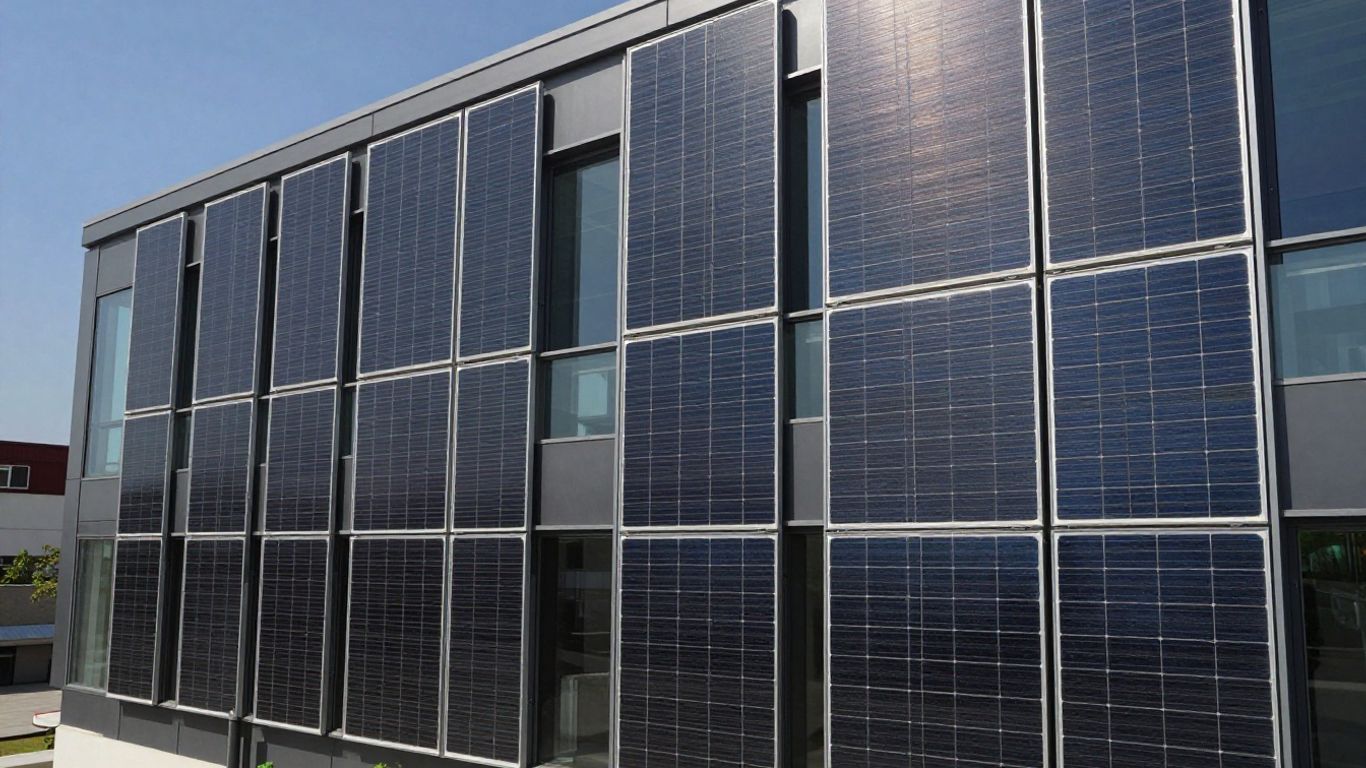
Integration into Agrivoltaics for Agricultural Holdings
Agrivoltaics, the practice that combines agricultural production and solar energy production, finds a promising new avenue in vertical panels. Imagine agricultural holdings where rows of bifacial solar panels are installed vertically, much like modern fences. These structures not only capture light on both sides but also allow enough light to pass through for certain crops or for livestock to move. It’s a smart way to optimize space, producing electricity while continuing agricultural activity. Bifacial panels, in particular, are well suited to this configuration as they can capture light reflected by the ground or crops, thus increasing their yield. Furthermore, their vertical installation can offer protection against certain climatic elements for sensitive crops.
Use in Transportation Infrastructure and Parking Lots
Transportation areas, such as parking lots or the sides of railway lines, represent considerable areas often underutilized in terms of energy production. Vertical solar panels are particularly well suited for these applications. In parking lots, they can be erected between parking spaces, serving both as dividers and electricity generators. In Japan, for example, projects have emerged where parking lots are equipped with vertical solar panels, an ideal solution in regions prone to heavy snowfall that would make traditional canopies less effective. SNCF in France is also exploring this avenue by considering installing panels along railway lines. The idea is to produce electricity to power trains, thus transforming linear infrastructure into real solar power plants.
Potential for Balconies in Collective Housing
For residents of apartment buildings, installing solar panels on the roof is often impossible, whether for technical, co-ownership, or regulatory reasons. Balconies, however, offer potential space. Vertical solar panels, designed to be attached to balcony railings, can allow each resident to produce a portion of their own electricity. Although the production from a single balcony is limited, the cumulative effect on an entire building can be significant. These installations must, of course, comply with strict safety standards and be designed to withstand bad weather, while also being aesthetically acceptable. This is an interesting avenue for democratizing solar energy in dense urban areas.
In Summary
As you’ve understood, vertical solar panels are not just an alternative, but a real option for those looking to produce their own energy. While they may have slightly lower output in certain conditions compared to traditional panels, their ability to adapt to confined or unsuitable spaces, their ease of maintenance, and their potential, especially with bifacial technologies, make them a solution for the future. Think about it, your wall could well become your best ally for greener energy.
Frequently Asked Questions
Can a solar panel installed on a wall produce as much electricity as a panel on a roof?
A vertical solar panel can be very efficient, but it generally receives less direct sunlight than a tilted panel on a roof. However, it can produce electricity at other times of the day, especially in winter. The idea is to see if, in your situation, it can still be a good solution.
Why choose to install solar panels on a wall rather than on a roof?
Installing panels on a wall is a clever solution when your roof is not suitable for solar panels, for example, if it is too small, poorly oriented, or if there is too much shade. It also allows you to use spaces that would not otherwise be used, especially in cities where every square meter counts.
Do wall-mounted solar panels get hotter and produce less?
Yes, vertical panels can get a bit hotter because air circulates less well behind them than behind roof-mounted panels. When a panel is too hot, it produces a little less electricity. This is one of the reasons why their output can be a bit lower in certain conditions.
How do I know which wall is best for installing solar panels?
You should choose the wall that receives the most sun throughout the day. Often, the south-facing wall is the best. Also, make sure the wall is flat and in good condition for a solid and efficient installation.
What is a ‘bifacial’ vertical solar panel and is it more efficient?
A bifacial panel is a special panel that can capture sunlight from both sides. It uses direct light on its front and light that bounces off the wall or ground on its back. This allows it to produce more electricity, and they are also often more robust.
Does installing vertical solar panels cost more?
Sometimes, installing panels on a wall can be a bit more complicated and therefore cost a bit more than on a roof. Additionally, financial aid is not always the same for this type of installation. It is important to carefully study the cost versus the savings you can make.