Looking to understand how to compare a solar water heater for a home and a heat pump for your heating system? This is an excellent step towards making an informed choice. Both technologies use renewable energy, but they operate differently and have distinct implications for your budget and comfort. This article will help you see things more clearly.
Key Takeaways
- A solar water heater for a home directly captures heat from the sun, while a heat pump uses calories from the air, ground, or water.
- The performance of each system depends on factors like sunshine for solar, and outdoor temperature for the heat pump.
- The initial investment for a heat pump is often higher than for some solar thermal systems, but operating costs can be lower for the heat pump.
- Installing a solar water heater for a home requires good sun exposure, while a heat pump needs space for an outdoor unit.
- Both systems contribute to reducing your carbon footprint, but financial aid can vary depending on the chosen technology.
Operating Principles of Solar Water Heaters for Homes and Heat Pumps
To fully understand how these two systems can heat your home, you first need to grasp their basic operation. They both use renewable energy, but in very distinct ways.
Heat Capture and Transfer with Solar Water Heaters
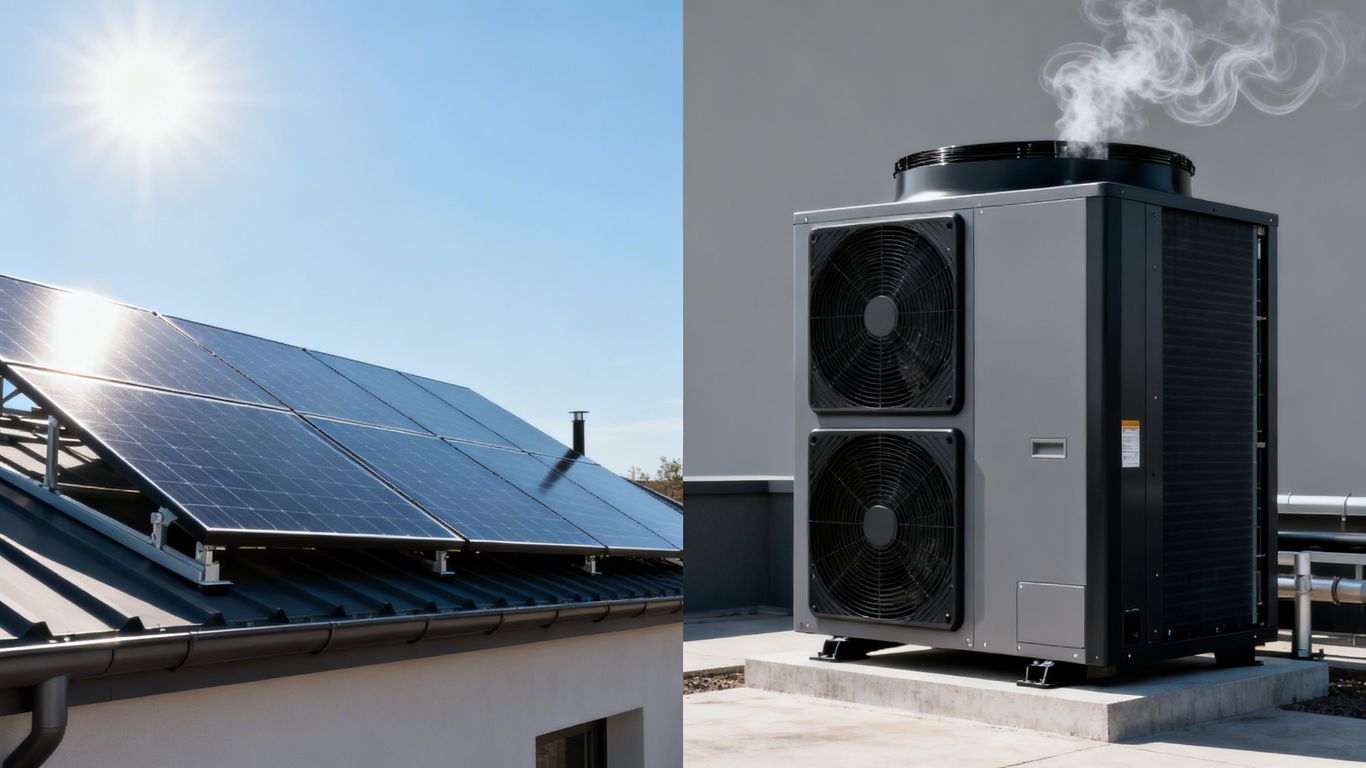
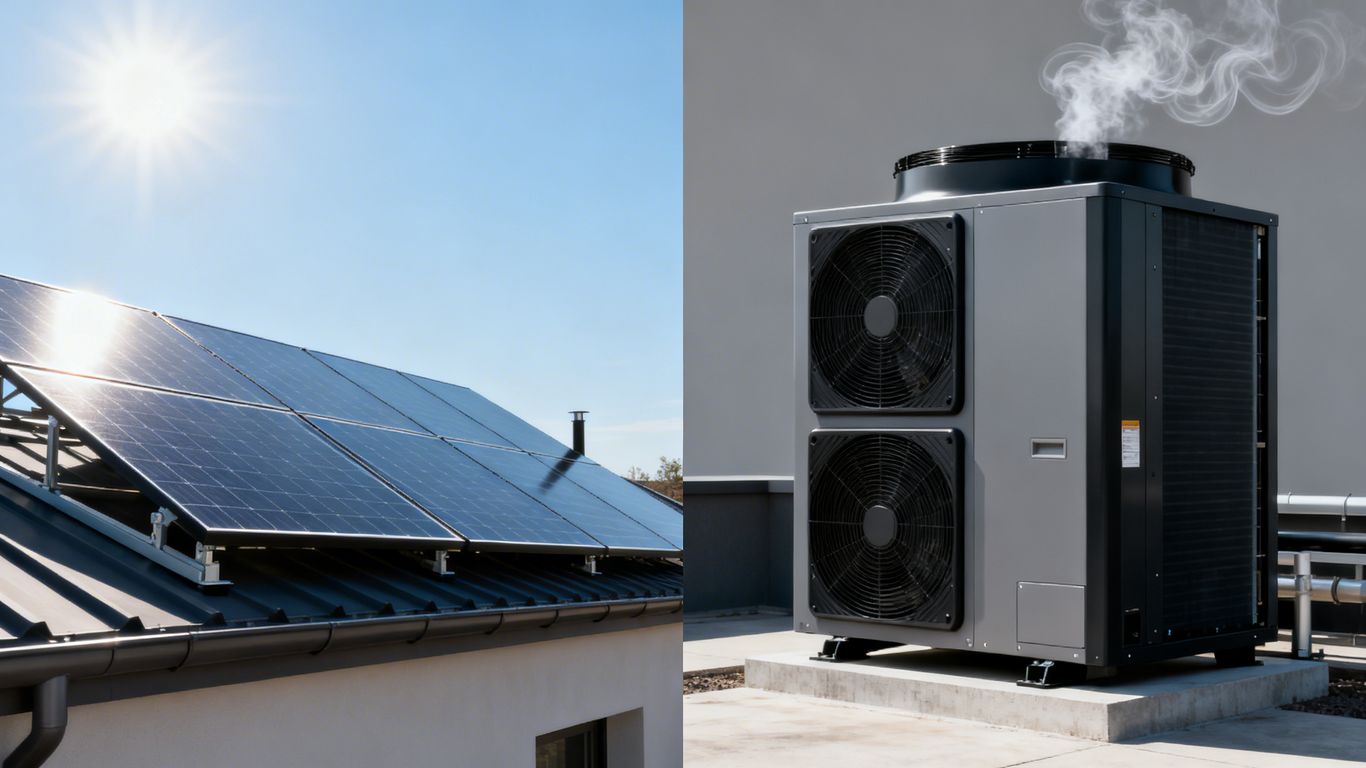
A solar water heater, more precisely a solar thermal system, works by directly capturing heat from the sun. Imagine panels installed on your roof. These panels contain tubes through which a special fluid circulates. When the sun shines, this fluid heats up. Then, this hot fluid transfers its heat to water stored in a tank. This hot water then supplies your heating system, such as radiators or underfloor heating. There is also passive solar, which is more of an architectural design aimed at maximizing natural solar gain, but when we talk about solar water heaters, we primarily mean the thermal system.
The Thermodynamic Cycle of a Heat Pump
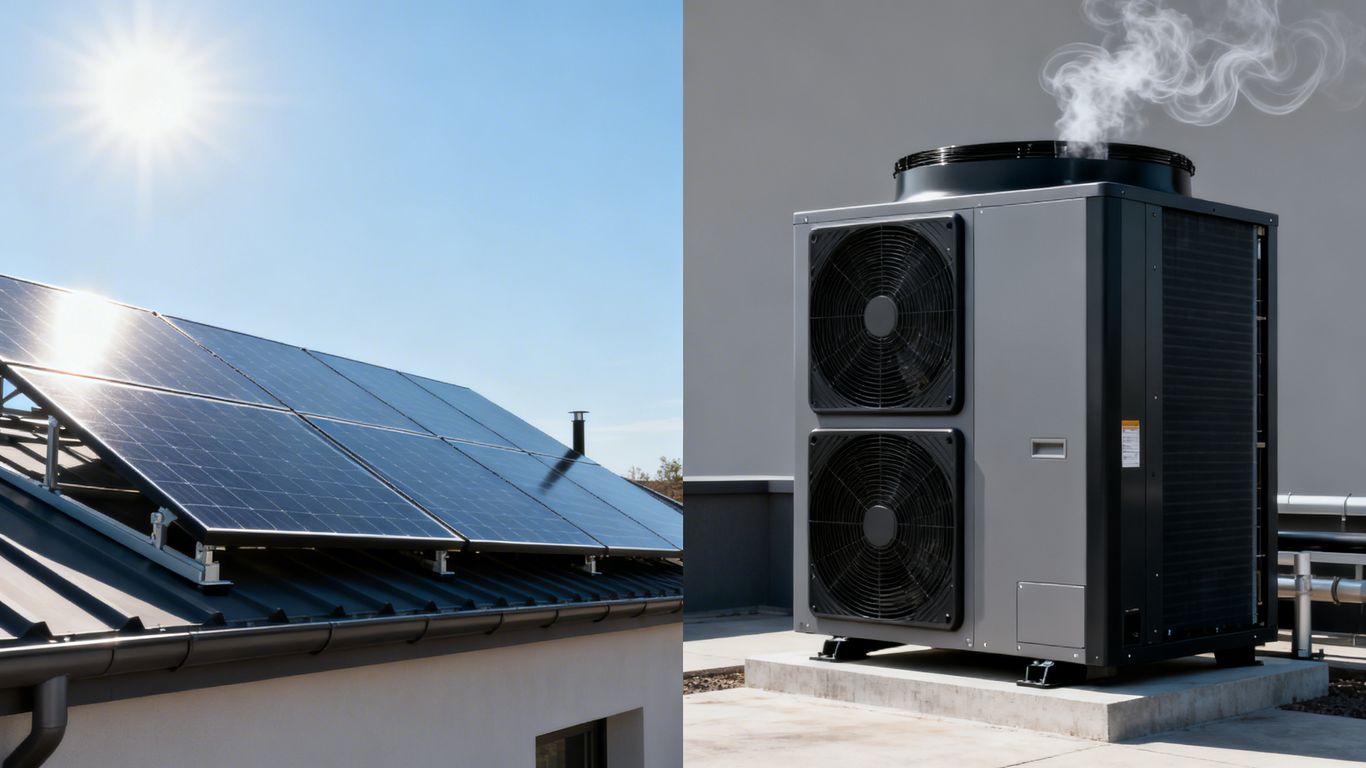
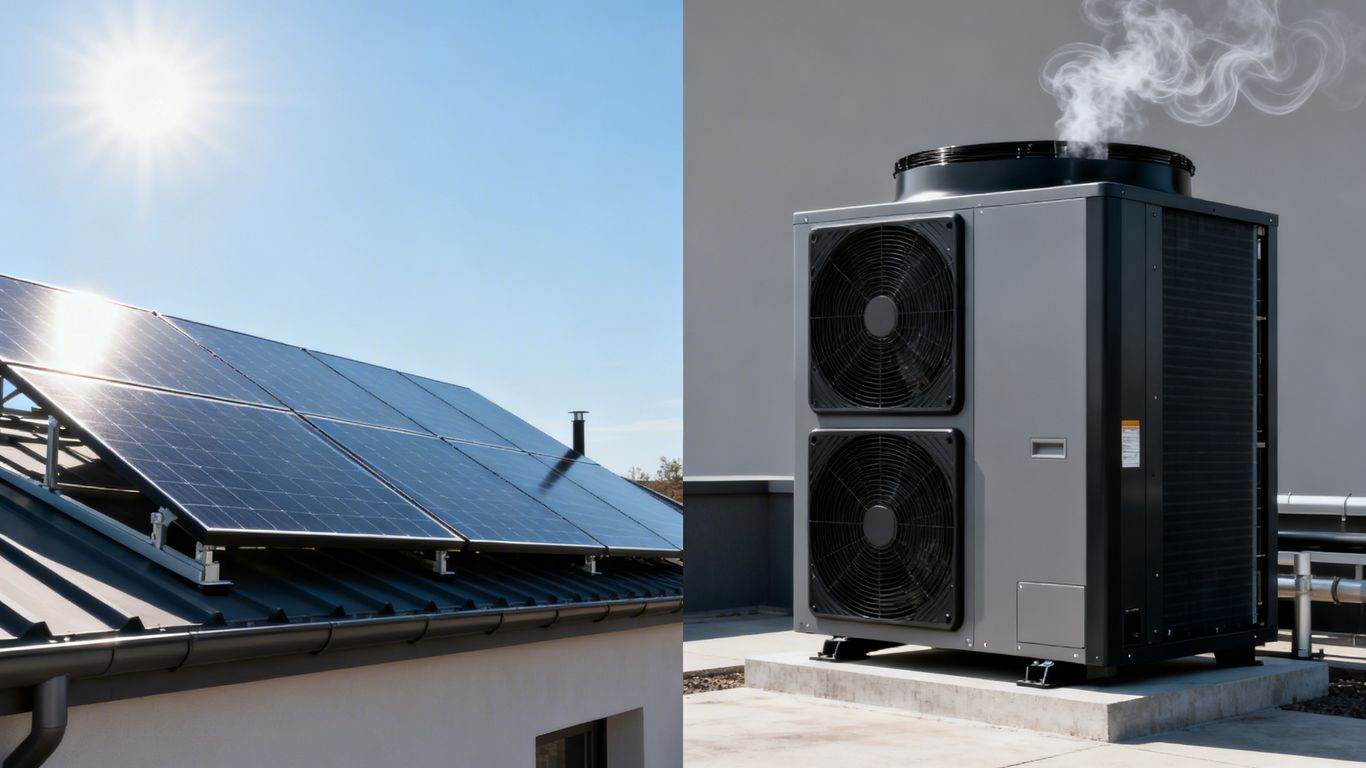
A heat pump (HP) is a bit different. It doesn’t produce heat directly from the sun, but it captures it where it is, even when it’s cold outside. It uses a thermodynamic cycle, much like a refrigerator, but in reverse. It extracts calories (heat) from the outside air, ground, or water, then concentrates them to heat your home. Simply put, it uses a small amount of electricity to move a large amount of heat. This is why it’s considered very efficient: for 1 kWh of electricity consumed, it can deliver 3 to 7 kWh of heat, depending on its type and conditions.
Existing Technologies and Variants
For solar thermal systems, we mainly find flat-plate collectors and evacuated tube collectors. The former are more common and economical, while the latter are more efficient, especially in cold or less sunny weather. They also differ in their integration: some are installed on the roof, others are integrated directly into the roofing material.
Regarding heat pumps, there are several main categories:
- Air/Air: It captures heat from the outside air and distributes it into the indoor air via fan coil units. It can often function as air conditioning in the summer.
- Air/Water: It extracts heat from the outside air to heat the water in your central heating circuit (radiators, underfloor heating).
- Geothermal (Ground/Water or Water/Water): It uses the heat stored in the ground (via buried collectors) or in a water table. This is often the most efficient, but also the most expensive to install.
The choice between these different technologies will depend on many factors, such as your geographical location, the configuration of your land, and the type of heating system you already have.
Energy Performance and Efficiency of the Two Heating Systems
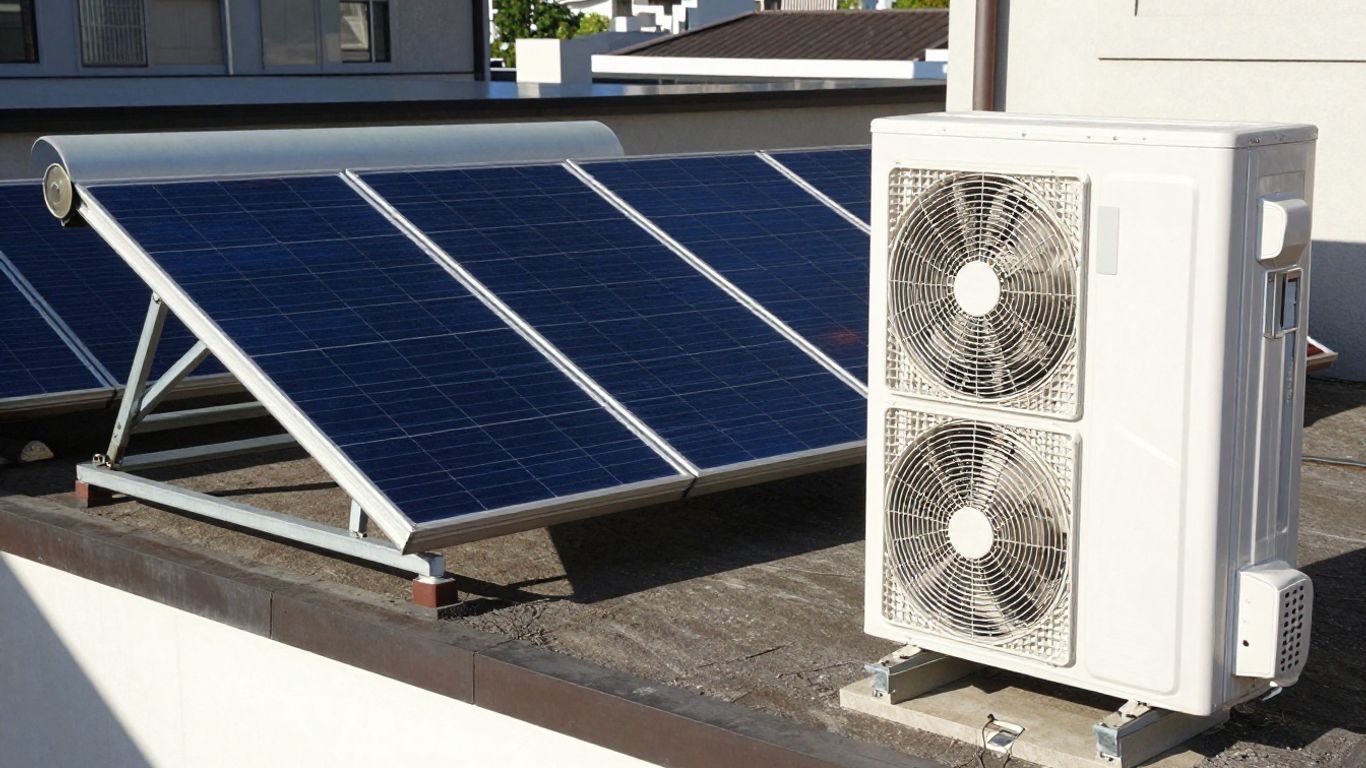
The comparison between a solar water heater for a home and a heat pump is primarily based on their ability to convert available energy into useful heat. This performance, measured by efficiency, will directly impact your energy savings and the suitability of the system for your home.
Factors Influencing the Efficiency of a Solar Water Heater for a Home
The performance of a solar thermal water heater depends primarily on:
- The intensity of sunshine, which varies by season and location.
- The orientation and tilt of the solar collectors.
- The efficiency of the heat transfer system between the collector and domestic heating.
For example, under good sunshine, the efficiency of solar thermal collectors often ranges between 30% and 40%, placing it above other technologies, as indicated in this summary on the efficiency of solar thermal panels.
A well-designed installation, with enough collectors and an appropriate tank, ensures a reliable heat supply for many years, but performance remains closely linked to local weather conditions.
Energy Efficiency of Heat Pumps Depending on the Context
A heat pump uses electricity to extract heat from the air, ground, or water. Its efficiency is measured by the Coefficient of Performance (COP).
- In practice, the actual COP of a heat pump is frequently between 2 and 2.5: this means that for every kWh of electricity consumed, the unit delivers 2 to 2.5 kWh of heat.
- Performance varies with outdoor temperature. The colder it gets, the harder the heat pump works, and the lower its efficiency.
- Its efficiency also depends on proper sizing and insulation quality: undersizing leads to insufficient heating, while oversizing causes short cycles that *shorten* its lifespan.
Annual Performance Comparison
To clarify, here is a simplified table to compare the two systems over a year under standard conditions:
| System | Typical Efficiency (%) | Climate Dependency | Winter/Summer Production | Electrical Consumption |
|---|---|---|---|---|
| Solar Water Heater | 30 – 40 | High (sunshine) | Low production in winter | Very low |
| Heat Pump | 200 – 250 (COP 2–2.5) | Medium (depending on temperature) | Stable but dependent on cold | Moderate to low |
The choice of system therefore depends on your location and the insulation of your home.
- Solar Water Heater: ideal as a supplement to other heating, especially in sunny regions.
- Heat Pump: suitable everywhere, provided good insulation and proper sizing.
- In both cases, seasonal variations must be taken into account, and the system adjusted to your habits and actual needs.
Installation Costs and Long-Term Operating Expenses
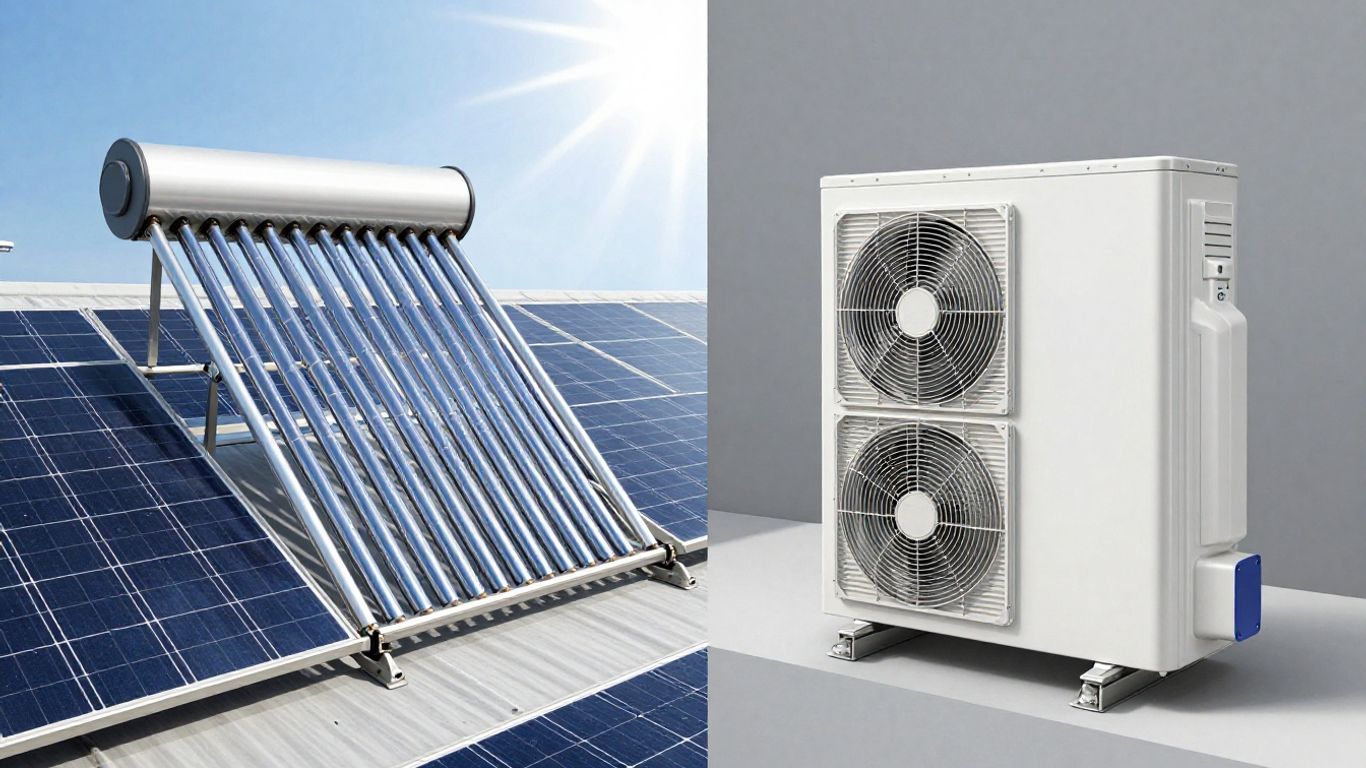
When comparing a solar water heater for a home and a heat pump, it’s hard to ignore the financial aspect. The initial cost is often the first criterion that guides the choice of a heating system. Let’s look together at the necessary investments and what they imply in the long term.
Initial Investment for a Solar Water Heater for a Home
Installing a solar water heater for a home, whether it operates via thermal or photovoltaic panels, involves several clearly identified costs:
- Purchase of solar panels, kit, or specific modules
- Installation costs (often less significant than for a heat pump)
- Potential purchase of a storage system or battery
On average:
| Type of Installation | Estimated Cost (€) |
|---|---|
| Solar Thermal Panels | 6,000 to 15,000 |
| Photovoltaic Panels (3 kWp) | 8,000 to 12,000 |
Government and local authority aid can help reduce this investment, notably with *MaPrimeRénov’* or the eco-PTZ. Don’t forget that profitability is often around 8 to 12 years depending on your region and sunshine levels.
Prices and Variations According to Heat Pump Types
The price of a heat pump depends on the chosen type:
- Aerothermal HP (Air-Air; Air-Water): €4,000 to €18,000 depending on power
- Geothermal HP: €15,000 to over €20,000 (including drilling)
The following table summarizes the orders of magnitude:
| Type of Heat Pump | Estimated Cost (€) |
|---|---|
| Air-Air Aerothermal HP | 4,000 to 16,000 |
| Air-Water Aerothermal HP | 10,000 to 18,000 |
| Geothermal HP | 20,000 and up |
You will also need to include the cost of work (geothermal drilling, adaptation of existing heating) in your initial budget. Heat pumps are eligible for major public aid, provided certain installation criteria are met.
Analysis of Operating Expenses and Maintenance
Operating costs should not be overlooked. Here’s what to watch out for with each system:
Solar Water Heater:
- Once the installation is paid for, solar energy is free.
- Little maintenance: annual checks, replacement of certain components after 10 to 15 years (pump, heat transfer fluid).
- Requires a backup (electric resistance or boiler) in case of prolonged bad weather.
Heat Pump:
- Runs on electricity (costs vary depending on consumption and kWh price)
- Regular maintenance recommended (annual maintenance contract)
- Lifespan between 15 and 20 years
Here is a summary of typical annual costs:
| System | Annual Operation (€) | Annual Maintenance (€) |
|---|---|---|
| Solar Water Heater | 0 to 350 (backup) | 100 to 200 |
| Heat Pump | 500 to 1,200 | 150 to 300 |
Over time, the absence of energy bills for solar water heaters weighs in the balance, but the need for backup in case of a long winter or low sunshine should not be underestimated.
In summary, your choice will primarily depend on the budget you are willing to commit upfront, your geographical situation, and your willingness to manage or not a backup to ensure daily comfort.
Adaptation Criteria to the Specifics of the Home
Choosing between a solar water heater and a heat pump (HP) is not to be taken lightly. You need to look closely at how these systems integrate into your home. Each home has its peculiarities, and what works for one will not necessarily be ideal for another. Think carefully before deciding.
Influence of Sunshine and Home Exposure
For a solar water heater, sunshine is the key. If your home is often in the shade, or if sunny days are rare in your region, performance will inevitably be limited. You need to assess the exposure of your roof and facades: a south orientation is a definite advantage. Shading caused by trees or neighboring buildings must also be considered. A study of your immediate environment is therefore necessary to determine if solar thermal will be truly effective in your home.
Space Constraints and Equipment Installation
Available space is a determining factor. Solar thermal panels require a clear, well-oriented roof area. For a heat pump, you need to plan for the outdoor unit (which can be noisy and requires good ventilation) and the indoor unit, as well as potential energy storage. The size of your house and the layout of the rooms play a role. For example, an air-water HP may require a hot water storage tank.
Compatibility with Existing Heating Systems
It is rare to completely replace a heating system without any adaptation. Often, the new system complements or replaces part of the old one. A heat pump can be adapted to low-temperature radiators or underfloor heating. A solar thermal water heater can be coupled with your current boiler to reduce its consumption. You need to check the compatibility of the heat emitters (radiators, underfloor heating) with the water temperature produced by the chosen system. A well-insulated house can even be content with electric radiators as a backup if the HP is primarily used for summer cooling.
Adapting the heating system to your home’s characteristics is a key step. A thorough analysis of your home, its environment, and your actual needs will allow you to make the most judicious and profitable choice in the long term.
Environmental Impacts and Contribution to the Energy Transition
Carbon Footprint of a Solar Water Heater for a Home
The installation of a solar water heater, although dependent on solar energy, is not entirely neutral in terms of environmental impact. The manufacturing of solar panels and associated components requires energy and materials whose extraction and processing have a carbon footprint. However, once in place, the system produces heat using a *renewable and free resource*, thus significantly reducing greenhouse gas emissions compared to conventional heating systems running on fossil fuels. Its long-term carbon footprint is therefore very favorable.
Emissions and Energy Balance of a Heat Pump
Heat pumps (HP) run on electricity. In France, a large part of this electricity is of nuclear origin, making it low in CO2 emissions during production. The HP is particularly efficient because it produces more thermal energy than it consumes in electricity, thanks to its heat transfer principle. We speak of a Coefficient of Performance (COP) that can range from 3 to 5, meaning that for 1 kWh of electricity consumed, the HP delivers 3 to 5 kWh of heat. This translates into reduced CO2 emissions compared to direct electric heating or fossil fuels. The main point of concern is the refrigerant fluid used, which can be a greenhouse gas. However, technologies are evolving towards less impactful fluids (like R32 or R290), and systems are designed to be hermetic, limiting leaks.
| Type of System | CO2 Emissions per kWh of Heat (estimate) |
|---|---|
| Classic Electric Heater | 0.2 kg CO2eq/kWh |
| Heat Pump (HP) Air/Water | 0.05 kg CO2eq/kWh |
| Gas Boiler | 0.23 kg CO2eq/kWh |
Public Aid and Incentives for Renewable Solutions
To encourage the adoption of more environmentally friendly heating systems, numerous public aids are available. These aim to reduce the initial investment cost and make these technologies more accessible.
- MaPrimeRénov’: Financial aid from the National Housing Agency (Anah) for energy renovation work, including the installation of HPs and solar systems.
- Zero-interest Eco-loan (Éco-PTZ): Allows financing of energy improvement work without paying interest.
- Reduced VAT rate: A VAT rate of 5.5% applies to energy renovation work, including the installation of these systems.
- Energy Savings Certificates (CEE): Aid paid by energy suppliers for work carried out.
These schemes encourage the energy transition by making renewable solutions more competitive. It is advisable to consult the relevant organizations to find out about eligibility criteria and aid amounts.
The adoption of solar water heaters or heat pumps is part of a global effort to reduce our dependence on fossil fuels. These technologies actively contribute to the fight against climate change by reducing greenhouse gas emissions and promoting the use of renewable or more efficient energies.
Thermal Comfort and Adaptation to Occupant Needs
Stability and Uniformity of Heat Produced
The stability of the temperature in your home depends heavily on the chosen system.
- A solar water heater diffuses heat by radiation, which provides a natural and gentle, fairly constant feel. The temperature varies less quickly during stops and starts, as the system stores and releases heat even on cloudy days.
- A heat pump operates on the principle of air blowing or exchange via low-temperature radiators. Comfort here depends on the type of diffusion: ventilation (air-air) or heat transfer fluid (air-water). Air heating can cause an impression of drafts, especially if the HP starts and stops regularly.
- Variations are slightly more significant with an air-air HP compared to a solar water heater, especially if the home’s insulation is average.
Seasonal Comfort Management (Heating and Cooling)
Your choice will directly influence the feeling of comfort in both summer and winter.
- Only the reversible heat pump offers a cooling mode for summer. Practical during heatwaves, it is nevertheless accompanied by an increase in electricity consumption.
- The solar water heater, on the other hand, only manages heating. It does not offer a solution for lowering indoor temperature during heatwaves.
- *The relevance of each solution depends on your region and your seasonal needs.*
| System | Winter Heating | Summer Cooling | Temperature Stability | Room Adaptation |
|---|---|---|---|---|
| Solar Water Heater | Yes | No | Good | Limited |
| Heat Pump | Yes | Yes (reversible) | Moderate to Good | Good |
A well-sized system, adapted to the insulation, greatly reduces the feeling of discomfort, whether due to thermal variations or draft effects.
Noise Level and System Discretion
Noise is a point that is sometimes forgotten, but which really matters in everyday life:
- Solar water heaters are almost silent during operation. There are no fans or compressors. You enjoy a calm atmosphere, without auditory nuisance.
- Heat pumps, especially air-air models, have an outdoor unit that can generate operating noise (fan and compressor). This noise can be heard in the garden and sometimes even indoors, if the unit is close to a living room or a window.
- If there are multiple indoor units (multi-split HP), each can contribute to the soundscape.
The choice between a solar water heater and a heat pump largely depends on your sensitivity to noise and your requirements for uniform heat.
- If you are looking for discretion and temperature stability, a solar water heater is preferable.
- If cooling is a key criterion and noise does not bother you, a heat pump may be suitable.
Ultimately, adapting to occupant needs involves reflecting on your actual usage, the local climate, and the importance of acoustic and thermal comfort in your daily life.
Reliability and Maintenance of Solar Water Heaters for Homes and Heat Pumps
Frequency and Ease of Maintenance Operations
When it comes to maintenance, solar water heaters for homes require little effort. Simple dusting of the collectors and the distribution system is generally sufficient to maintain their efficiency. This type of heating has few mechanical parts, which limits the risk of malfunctions while reducing the time spent on maintenance.
In comparison, maintaining a heat pump remains accessible, but a bit more demanding. You will need to regularly check the filters and ensure the outdoor unit is in good condition.
- Cleaning and replacement of filters every 6 to 12 months.
- Annual check of refrigerant fluid tightness.
- Mandatory professional maintenance every two years to maintain performance and prevent leaks.
The table below summarizes the main tasks:
| System | Main Operations | Recommended Frequency |
|---|---|---|
| Solar Water Heater | Dusting of collectors | 1 to 2 times/year |
| Heat Pump | Filter check, tightness | Every 6-12 months (filters), 2 years (professional) |
Even though the maintenance of solar water heaters is limited, do not neglect their periodic checks to ensure constant control of performance.
Estimated Lifespan According to the System
In terms of longevity, solar water heaters stand out. Their lifespan can exceed 25 years if the collectors are well maintained, while the accumulator needs to be replaced after 10 to 15 years. The solar system benefits from a simple and robust design.
On the heat pump side, the lifespan generally ranges from 12 to 20 years depending on usage, model, and installation quality. Electronic components and the compressor show the fastest wear.
- Solar Thermal Water Heater: 25 years (collectors), 10-15 years (accumulator)
- Heat Pump: 12-20 years (entire system)
It is wise to anticipate the potential replacement of certain parts to avoid prolonged heating interruptions during the cold season.
Risk of Breakdown and After-Sales Service Management
Solar water heaters offer remarkable reliability: the absence of major moving parts limits the number of possible breakdowns. The main risks concern worn seals or a drop in collector efficiency after prolonged exposure to the elements.
On the other hand, heat pumps are more prone to breakdowns – mainly due to onboard electronics and the compressor. Common risks include:
- Defective electronic board
- Refrigerant leak
- Compressor problem
To minimize inconvenience, opt for a maintenance contract with rapid intervention and choose a reputable installer. Combining your heat pump with a *solar energy source*, as illustrated in the photovoltaic and HP synergy, can also secure your overall energy installation.
In summary, ease of maintenance and reliability are strong points for solar water heaters, while a heat pump requires more attention but offers the convenience of often structured after-sales service.
In Summary: Which System to Choose?
After examining solar water heaters and heat pumps, it appears that the choice really depends on your situation. Solar panels are great if you have good sunshine and are looking to reduce your bills in the long term, even if the initial investment is significant. The heat pump is more versatile, especially if you also want to cool down in the summer, but it requires good insulation and a higher initial budget. Often, the best approach is to combine the two: use solar energy to power your heat pump. Carefully weigh your needs, your budget, and your home’s characteristics to make the most suitable decision for your comfort and savings.
Frequently Asked Questions
How does a solar water heater work for a house?
A solar water heater, more precisely a solar thermal system, uses special panels on your roof to capture heat from the sun. This heat warms a liquid that circulates in the panels. This hot liquid then heats the water in your home, which supplies your radiators or underfloor heating. It’s like using the sun to make hot water for your heating.
What is a heat pump and how does it heat?
A heat pump (HP) is a device that captures calories (heat) present in the outside air, ground, or water. It then uses a system somewhat like a refrigerator, but in reverse, to make this heat more intense and transfer it into your home to heat it. It consumes electricity, but it produces much more heat than it consumes electricity.
Does a solar water heater work when there is no sun?
A solar water heater depends directly on the sun. When it’s cloudy or at night, it produces less or no heat. This is why it is often recommended to pair it with another heating system, such as a boiler or a heat pump, to ensure comfort even when the sun is not present.
What is the main difference between a heat pump and classic electric heaters?
The big difference is their efficiency. Classic electric heaters convert electricity into heat, but they consume as much electricity as they produce heat (efficiency of 1). A heat pump, on the other hand, uses electricity to capture heat from the outside, so it produces much more heat than it consumes electricity (efficiency often greater than 3).
Which system is more expensive to install: a solar water heater or a heat pump?
In general, installing a solar thermal system requires a higher initial investment. Solar panels, the tank for storing heat, and their integration are expensive. Heat pumps, while also representing a certain budget, can sometimes be a little less costly to purchase and install, depending on the model.
Which system is more ecological for heating my home?
Both systems use renewable energy, which is a good point for the environment. The solar water heater directly uses solar energy, an inexhaustible resource with no pollution during use. The heat pump uses air, ground, or water, but it needs electricity to operate. If this electricity is produced cleanly, the heat pump is also very ecological. The ideal is often to combine the two for maximum efficiency and minimal environmental impact.