Faced with the constant rise in electricity prices, you’re wondering if solar self-consumption is truly the solution to reduce your bills? That’s an excellent question. In this article, we’ll take a close look at reviews of solar self-consumption. You’ll discover real-life testimonials, tips for optimizing your installation, and how to assess its profitability. The goal is to give you all the keys to understanding if this approach is right for you.
Key Takeaways
- Solar self-consumption means producing your own electricity with solar panels to power your home, thus reducing your dependence on suppliers and your bills.
- Users like Daniel, Olivier and Stéphanie, and Vincent report real savings, ranging from several hundred to over a thousand euros per year, and highlight the ecological benefits.
- To maximize savings, it’s advisable to adapt your consumption habits, consider energy storage (physical or virtual), and use smart management.
- The profitability of a solar installation is calculated by analyzing initial costs against potential gains, taking into account available aid and the lifespan of the panels.
- To find reliable reviews on solar self-consumption, consult specialized forums, consumer association reports, and independent rating platforms, while remaining vigilant about the date of the information.
Understanding Solar Self-Consumption: Definition and Principles
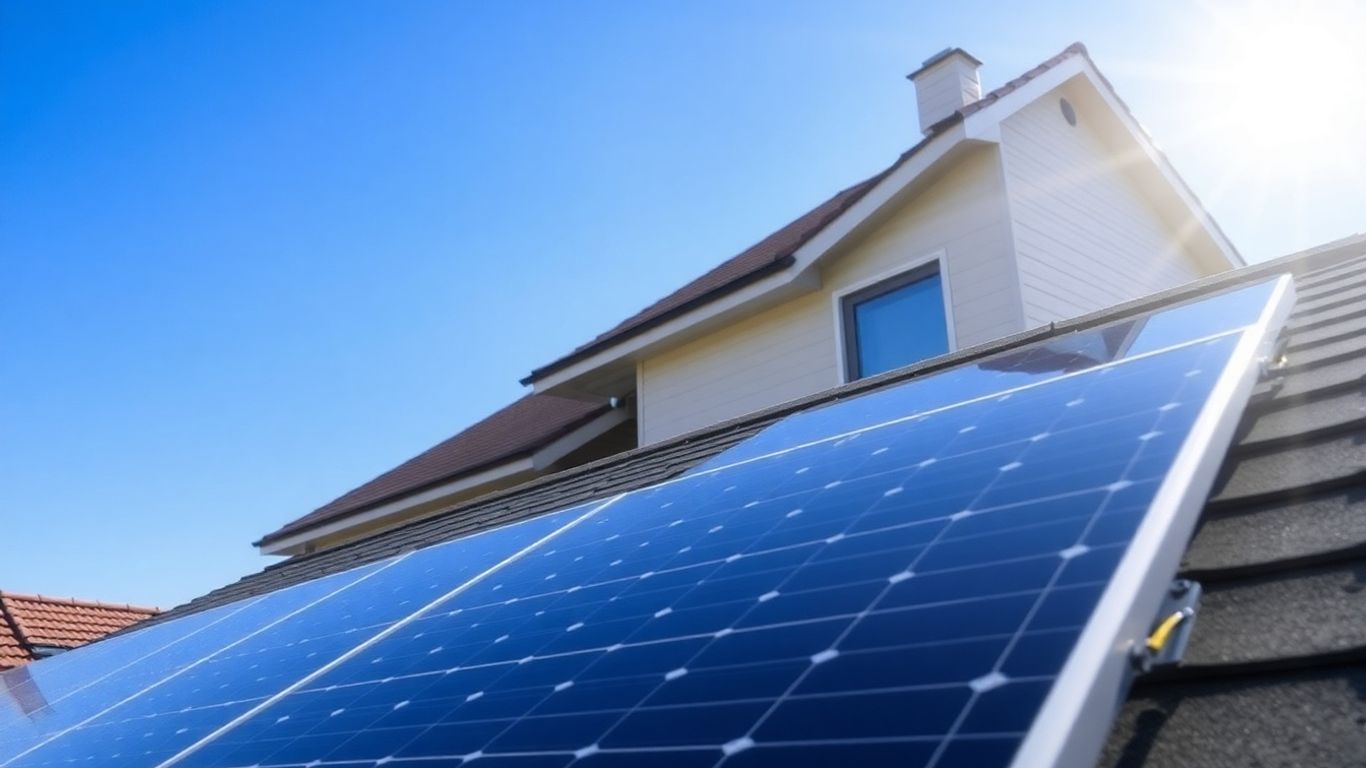
Solar self-consumption is the idea of producing your own electricity using photovoltaic panels installed on your roof. Basically, you directly use solar energy to power your home. It’s a way to become a little more independent from traditional energy suppliers and, let’s be honest, to see your electricity bill go down. If you produce more than you need at any given time, this surplus can be stored for later or sold. It’s an approach that is attracting more and more people, both for the savings it allows and for its ecological aspect.
Solar self-consumption involves producing a portion of the electricity you consume daily using photovoltaic panels. When the sun shines, your panels produce electricity. If you are home and using this electricity, you are self-consuming it. It’s as simple as that. If production exceeds your immediate consumption, you have two main options: either you feed the surplus into the public electricity grid, or you store it in batteries to use later, for example in the evening when there’s no more sun. The main goal is to reduce your dependence on the grid and lower your energy expenses.
Switching to solar self-consumption offers a dual advantage. From an economic perspective, reducing your electricity bill is the most direct benefit. By producing your own energy, you buy less electricity from the grid, which translates into concrete savings. The return on investment can be quite rapid, especially if you adapt your consumption habits to use solar energy when it’s being produced. On an ecological level, it’s a positive step. You are using a clean, renewable energy source, which helps reduce your carbon footprint. It’s a way to actively participate in the energy transition.
It’s important to clearly distinguish self-consumption from total electricity sales. In the case of self-consumption, as we’ve seen, you consume a portion of the electricity you produce. The other option, total sales, involves selling all of your solar production to the electricity grid. In this case, you don’t directly consume the energy produced by your panels; you receive payment for all the electricity fed into the grid. The choice between these two models depends on your situation: your consumption, your place of residence, and your financial goals. Self-consumption is often preferred for a primary residence with regular consumption, while total sales can be interesting in certain cases, such as for a rarely occupied secondary residence.
Real-Life Testimonials of Solar Self-Consumption: Feedback
Solar self-consumption raises many questions, particularly about the real savings it allows. To help you see more clearly, we’ve gathered testimonials from people who have taken the plunge. Their experiences will give you a more precise idea of what you can expect from this approach.
Daniel: €1000 Annual Savings Thanks to Self-Consumption
Daniel, a retiree, installed his first solar panels in 2010. Faced with increased electricity consumption due to the addition of a spa, he expanded his installation in 2022 to switch to self-consumption. The initial investment of €9,000 proved to be very profitable. His electricity bill was more than halved, dropping from over €100 per month to less than €40. He estimates his annual savings at around €1,000, achieving a self-consumption rate of 52% over the year. The surplus electricity is sold back to the grid, generating additional income.
The installation was completed quickly, in just 24 hours by a team of three people. The addition of a new water heater was also done at the same time.
Olivier and Stéphanie: Powering a Bed and Breakfast with Green Energy
Olivier and Stéphanie renovated a 400m² guesthouse to bring it up to environmental standards (RE 2020). They installed 12 photovoltaic panels, thus achieving an excellent Energy Performance Diagnosis (EPD) of level A. Their main motivations were to reduce their ecological impact and achieve savings, especially since their house has significant energy needs (air conditioning, swimming pool, electric vehicle charging). The rise in electricity prices also played a role in their decision.
| Characteristic | Details |
|---|---|
| Building Type | House for 6 people + Guesthouse |
| Location | Roquefort-les-Pins (06) |
| Installation Power | 6 kWp |
| Number of Panels | 12 photovoltaic panels |
Vincent: €500 Savings in Six Months for an All-Electric Household
For an all-electric household, solar self-consumption represents an opportunity to significantly reduce expenses. Vincent observed a €500 drop in his electricity bill over a six-month period. To maximize his gains, he adapted his consumption habits, prioritizing the use of energy-intensive appliances during hours of high solar production. He also implemented an energy storage strategy for deferred use, particularly for charging portable devices overnight. This approach allows him to better control his energy expenses and reduce his carbon footprint.
Optimizing Your Installation to Maximize Savings
Once your solar installation is in place, it’s not enough to just let it run on its own to get the best results. To truly get the most out of your investment, you need to think about how you use the electricity produced and how your system can adapt. This is where optimization comes in, and it can make a real difference to your bill.
Adapting Consumption Habits
The first, and often simplest, step is to align your consumption habits with the times when your system produces the most electricity. Consider using your most energy-intensive appliances, such as the washing machine, dishwasher, or electric car, during optimal sunlight hours. This increases your self-consumption rate, which is the portion of electricity you produce and consume directly. The more you consume your own production, the less you need to draw from the grid, and therefore the less you pay.
Here are some ideas for adjusting your usage:
- Shift major consumption (laundry, cooking, electric vehicle charging) to sunny hours.
- Use programmable appliances so they start automatically when the sun is shining.
- Be mindful of your overall consumption and identify the largest energy users.
The idea isn’t to revolutionize your daily life, but to make subtle changes that, when combined, optimize the use of your solar production. It’s a gradual process that requires a little attention at first.
The Role of Storage: Physical or Virtual?
Storing solar electricity is another key to maximizing your savings. There are two main approaches: physical storage via batteries and virtual storage.
- Physical Storage (Batteries): A battery allows you to store excess electricity produced during the day to use it in the evening or at night, when the sun is no longer present. This significantly increases your autonomy and your self-consumption rate. The return on investment for a battery can vary, but it offers increased energy independence.
- Virtual Storage: This is a service offered by some energy providers. The electricity you don’t use is fed into the grid and credited back to you later when you need it. It’s a simpler solution to implement than a physical battery, but it depends on the buy-back and sell-back rates for your electricity.
The choice between these two options will depend on your budget, your autonomy needs, and the offers available on the market. For advanced optimization, combining a battery with smart management can be very effective.
The Importance of Smart Energy Management
Smart management, often called home automation or building management systems (BMS), allows your solar installation to operate more autonomously and efficiently. Connected systems can learn your consumption habits and automatically adjust the operation of your appliances to match your solar production. For example, a smart thermostat can slightly increase heating when there’s a surplus of solar energy, or an electric vehicle charging station can shift its charging time. These systems can also interact with demand response programs, a mechanism where you receive compensation for reducing your consumption during peak grid demand. By combining these technologies, you can not only reduce your bill but also potentially generate additional income. This approach transforms your home into a responsive and optimized energy system, helping you maximize your solar self-consumption.
Assessing Profitability and Return on Investment
After exploring the benefits and testimonials, it’s time to address the question that concerns everyone: the profitability of your solar project. Is solar self-consumption truly a good financial deal? The short answer is yes, provided you fully understand the mechanisms involved and optimize your installation. It’s not just about installing panels and waiting for the money to roll in; a thoughtful approach is necessary.
Analysis of Costs and Potential Gains
To assess profitability, you first need to create a precise balance sheet of expenses and expected revenues. The initial cost of a photovoltaic installation can seem substantial. Let’s take the example of a 3 kWp system, whose average installation cost is around €8,100 in 2025. Fortunately, financial aid helps alleviate this burden. The self-consumption bonus, for instance, amounts to €260 per kWp. For our 3 kWp installation, this represents a one-time payment of €780, bringing the net investment down to €7,320.
In parallel, you need to estimate the gains. The annual production of such a system is approximately 3,940 kWh. If your self-consumption rate reaches 49% (i.e., 1,930 kWh consumed directly), this translates into a saving of about €386 on your electricity bill. Added to this is the sale of surplus electricity not consumed, which generates about €80 per year. The total annual gain therefore amounts to €466.
The return on investment (ROI) is calculated by dividing the net investment by the annual gain. In this basic scenario, without any optimization, the ROI is between 9 and 10 years. This is already an interesting performance, especially considering the average lifespan of solar panels, which is 25 to 30 years.
The Role of Self-Consumption Aid and Bonuses
Financial aid plays a significant role in accelerating the profitability of your installation. The self-consumption bonus, maintained in 2025, is a welcome boost. It is paid out in a single installment and directly reduces the amount of your initial investment. For example, a 6 kWp installation will benefit from a €1,560 bonus, and a 9 kWp installation up to €2,340.
It’s important to note that the buy-back rate for surplus electricity has significantly decreased. For residential installations under 9 kWp, it has dropped to €0.04/kWh in 2025. This means that selling your surplus is no longer the main driver of profitability. The winning strategy now relies on maximizing your own consumption of solar electricity.
Lifespan and Maintenance of Solar Panels
The longevity of solar panels is a major asset for profitability. With an average lifespan of 25 to 30 years, an installation amortized in 9 to 10 years still offers you many years of free production. The maintenance of solar panels is generally minimal. Occasional cleaning, once a year or every two years, is often enough to maintain their optimal performance. It is advisable to have your installation checked by a professional every 5 to 10 years to ensure it is functioning correctly and to detect any potential issues.
Where to Find Reliable Reviews on Solar Self-Consumption?
Finding honest feedback on solar self-consumption can sometimes feel like a quest. The market is full of promises, and it’s normal to want to ensure the reliability of information before committing. Fortunately, several avenues exist to help you see more clearly.
Specialized Forums and Online Communities
Forums dedicated to photovoltaics and self-consumption are goldmines. You’ll find individuals and professionals sharing their experiences, successes, and also their difficulties. It’s a place for exchange where you can ask specific questions and get answers based on real-life experience. However, be vigilant: always verify the information, as not everything is always accurate. Discussions can cover technical points, equipment choices, or feedback on installers.
Consumer Association Reports
Consumer associations regularly conduct in-depth investigations into the solar energy sector. Their reports often offer an objective analysis of technologies, costs, and company practices. They can highlight the advantages and disadvantages of self-consumption, as well as pitfalls to avoid. It’s important to check the publication date of these reports, as the field evolves rapidly and old information may no longer be relevant.
Independent Rating Platforms
Websites like Trustpilot or other platforms dedicated to customer reviews allow you to read feedback from people who have already installed solar panels. These reviews often focus on the quality of the installation, the professionalism of the installer, and after-sales support. They provide a concrete idea of user satisfaction. Don’t hesitate to read multiple reviews to form a balanced opinion.
It is essential to cross-reference information sources. An isolated review, whether very positive or very negative, does not always reflect the overall reality of a self-consumption project. The diversity of feedback helps to better understand the different aspects of such an investment.
Choosing the Right Installer for Your Solar Project
Finding the right professional to install your solar panels is a crucial step for the success of your self-consumption project. A well-executed installation means optimal performance and long-term peace of mind. It’s not a decision to be taken lightly, as the quality of the installation and the materials used will have a direct impact on your savings and the lifespan of your system.
Criteria for Selecting an RGE Certified Professional
RGE certification (Reconnu Garant de l’Environnement – Recognized Guarantor of the Environment) is a mark of quality and reliability. It attests that the installer meets strict criteria for technical skills and environmental respect. Choosing an RGE-certified company is often a necessary condition to benefit from certain financial aid, such as the self-consumption bonus. It is therefore essential to verify this certification before taking any action. Beyond certification, inquire about the company’s experience, its local reputation, and the ongoing training of its teams. A company that invests in training its technicians is more likely to offer cutting-edge solutions.
The Importance of Comparing Multiple Quotes
Never settle for the first quote you receive. It is strongly recommended to request at least three proposals from different installers. This process will not only allow you to compare prices but also to assess the clarity of the technical proposals, the quality of the suggested equipment, and the warranties offered. A detailed quote should include the brand and model of the panels, the type of inverter, the total installation power, as well as labor costs and any potential additional fees. Carefully compare the warranties offered on the panels, the inverter, and the installation itself. An offer that is too low can sometimes hide compromises on quality.
Ensuring the Quality and Durability of the Installation
To ensure a durable and high-performing installation, several points need to be checked. The ten-year warranty (garantie décennale) is essential coverage that protects against defects affecting the structural integrity of the work or making it unfit for its intended purpose. Make sure the installer has this insurance. Also, ask for details about the performance warranty for solar panels, which guarantees a certain level of production over a given period, often 25 years. Finally, discuss the terms of follow-up and maintenance. A good installer will offer post-installation support, or even maintenance contracts to optimize the yield of your panels over the long term. Don’t hesitate to consult reviews from other clients on independent platforms to get a more precise idea of overall satisfaction regarding solar installations.
Selecting a qualified and certified installer is the first step towards a successful solar project. It determines the performance, safety, and profitability of your investment over several decades.
Solar Self-Consumption: A Wise Investment for Your Energy Future
You now have a better understanding of the concrete benefits of solar self-consumption, supported by real testimonials. As you’ve seen, switching to solar energy can be an excellent way to control your energy expenses in the face of rising prices. It’s a project that requires some preparation, but the returns on investment, both financial and ecological, are significant. Don’t hesitate to explore the options further and consult professionals to find the solution best suited to your situation. Your actions today could well shape your comfort and savings tomorrow.
Frequently Asked Questions about Solar Self-Consumption
What exactly is solar self-consumption?
It’s when you produce your own electricity using solar panels installed at your home. The idea is to use this energy to power your appliances, like your fridge or TV, instead of taking it all from your usual energy provider. It’s a bit like having your own small power plant!
Is it really worth it for my wallet?
Yes, generally, it’s a good deal for reducing your bills. By consuming the electricity you produce, you buy less electricity from EDF or others. If you produce more than you need, you can even sell the surplus, which earns you a little money. So, it’s a way to save money in the long run.
How do I know if I get enough sun for it to work well?
Most regions in France receive enough sunlight for an installation to be profitable. Even on somewhat cloudy days, panels continue to produce electricity, just less. The important thing is to have good exposure, ideally without too much shade from nearby trees or buildings.
Do I need to change all my electrical appliances to use solar energy?
No, not at all! Your current appliances will work perfectly with solar electricity. The trick is to try to run appliances that consume a lot (like the washing machine or dishwasher) during the day, when your panels are producing the most energy. It’s about adapting your habits a bit.
What is energy storage, and is it essential?
Storage means having a battery to keep the electricity produced during the day and use it in the evening or at night, when there’s no more sun. It’s not mandatory, but it allows you to consume even more of your own production and therefore save more money. There are also ‘virtual storage’ solutions that work a bit differently.
How do I find a trustworthy installer for my solar panels?
It’s very important to choose a reliable professional. Look for installers who have RGE certification (Reconnu Garant de l’Environnement), which ensures they meet quality standards. Always ask for multiple quotes to compare prices and services offered. Don’t hesitate to read reviews from other customers online on independent platforms.