It is sometimes difficult to reconcile the desire to produce your own energy with the aesthetic of your home, especially when it is old or located in a protected area. Fortunately, the tile-colored solar panel offers a discreet and elegant solution. Are you wondering how to integrate these panels without altering your roof? This article guides you through the specifics of these modules, their advantages, points to consider for their installation, and market trends.
Key Takeaways
- The tile-colored solar panel allows for discreet visual integration, particularly suitable for heritage roofs or protected areas, by imitating the appearance of traditional tiles.
- Building-integrated photovoltaics (BIPV), where the panel replaces part of the roofing, is preferred for preserved aesthetics but can be more complex and costly than a superimposed installation.
- These panels offer the benefits of solar energy (green electricity production, reduced bills) while enhancing the built heritage and property value.
- Professional and certified installation is essential to guarantee watertightness, performance, and regulatory compliance, especially in areas subject to specific urban planning rules.
- The market for tile-colored solar panels is constantly evolving, with innovations aimed at improving their performance, appearance, and compatibility with various types of traditional roofs.
Discreet Integration of Tile-Colored Solar Panels
The Principle of Building Integration for Preserved Aesthetics
Building-integrated photovoltaics (BIPV) represent a specific approach to installing solar panels. Unlike simply placing them on top of the roof, BIPV involves removing a portion of the existing roofing to install the panels. Thus, these panels blend into the landscape of your roof, producing electricity while contributing to the watertightness of your covering. This method is particularly appreciated in areas where visual appearance is paramount, such as listed sites or near historical monuments, as it preserves architectural harmony. It is also an interesting solution if your roof needs repair, as the panels can then replace part of the covering, generating savings.
Visual Advantages of Tile-Colored Solar Panels
Tile-colored solar panels are designed to imitate the appearance of traditional tiles, thus offering an aesthetic solution for those who wish to produce green energy without compromising the character of their home. Their main asset lies in their ability to blend discreetly into the roof. They are less visible than panels installed on top, which is a considerable advantage for homeowners concerned about the aesthetics of their home. This discretion is all the more important in areas where urban planning rules are strict regarding roof appearance. The visual aspect is therefore greatly improved, making solar energy more acceptable to a wider audience.
Compatibility with Traditional Roofs
Tile-colored solar panels are developed to adapt to a wide variety of traditional roofs. They can be installed on different types of tiles, whether they are flat tiles, Roman tiles, or mechanical tiles made of terracotta or concrete. Adaptation also depends on the slope of your roof. Specific systems exist for slate roofs, for example. It is important to note that building integration is often favored during the construction of new homes or during a complete roof renovation. This broad compatibility allows a large number of homeowners to benefit from solar energy while preserving the authenticity of their buildings. You can find solutions adapted to many types of roofs, even in specific architectural contexts. To learn more about different installation options, consult the advantages of solar panels.
Here is an overview of available systems based on climatic conditions and tile types:
| System | Tile Compatibility | Suitable Slopes | Climate |
|---|---|---|---|
| Vario Nord | Interlocking flat tiles, flat concrete tiles | 13.5° to 60° | Harsh |
| Vario Sud | Interlocking or sliding tiles with relief, Roman tiles | 11° to 60° | Standard |
| Vario Tuile Plate Ardoise | Slates, flat terracotta/concrete tiles | 19° to 60° | Standard |
Technical Specifics of Tile-Colored Solar Panels
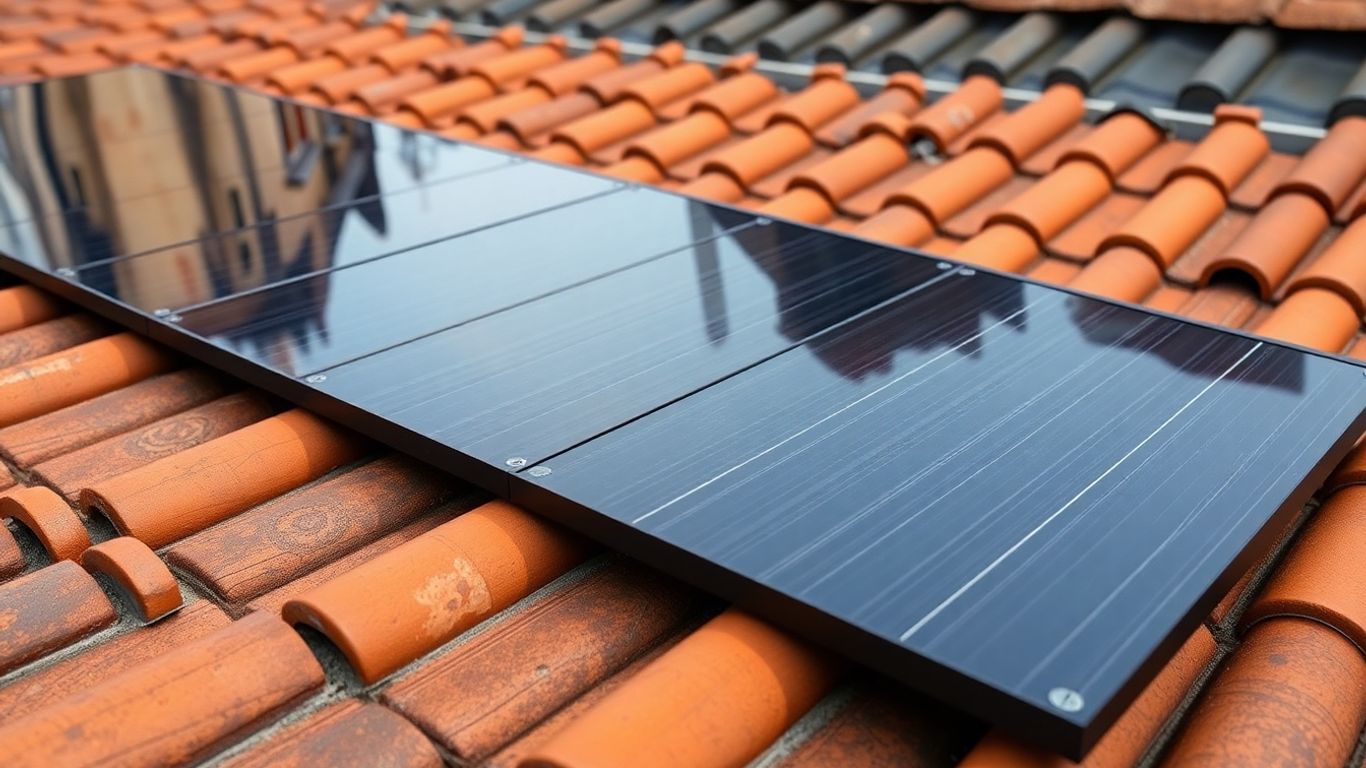
When considering tile-colored solar panels, it’s important to understand how they technically adapt to your roof. These modules are designed to blend into the landscape, but their manufacturing and installation require special attention.
Adaptation to Different Tiles and Roof Slopes
Tile-colored solar panels are designed to harmonize with a wide variety of traditional coverings. Whether you have flat, mechanical, or Roman tiles, integration solutions exist. The color, often brick red or terracotta, is achieved through specific processes that may slightly alter the surface of the photovoltaic cells. It is essential to verify the compatibility of the fixing system with the type of tile and the structure of your roof. Roof slopes are also taken into account; mounting systems are adjustable to ensure optimal installation, whether your roof is slightly sloped or steeper. The goal is to minimize visual impact while ensuring good sun exposure.
Solutions for Harsh Climates and Specific Tiles
Some environments present particular challenges. For regions subject to extreme climatic conditions (heavy snow, strong winds, intense heat), reinforced panels may be necessary. Manufacturers offer models capable of withstanding significant snow loads or stronger winds. Similarly, if you have old or fragile tiles, adapted installation solutions, such as specific rail systems or lightweight fixings, can be considered to avoid compromising the integrity of your roof. Material expansion due to temperature should also be considered, which is an important technical aspect for the durability of the installation.
Material Choice for Harmonious Integration
Beyond color, material choice plays a role in integration. The frames of the panels can be matched to the tile color or kept discreet. Some models use textured or anti-reflective glass to better blend into the landscape and reduce glare. The weight of the panels is also a factor to consider, especially for older roofs. Manufacturers strive to offer high-performance modules while optimizing their weight. The use of high-efficiency monocrystalline cells is increasingly common, even in colored versions, to compensate for any slight loss in efficiency due to coloring. You can find panels that closely resemble traditional tiles for maximum discretion.
Advantages and Disadvantages of Tile-Colored Solar Panels
Opting for tile-colored solar panels means seeking to reconcile green energy production with respect for your roof’s aesthetics. This approach has several advantages, but it is also important to consider some less favorable aspects.
Green Energy Production and Carbon Footprint Reduction
One of the major benefits of these panels, like any photovoltaic installation, is their contribution to renewable electricity production. By using solar energy, you reduce your dependence on fossil fuels and actively participate in the energy transition. This translates into a reduction in your carbon footprint, a concrete action for the environment. Furthermore, this local production can allow you to save on your electricity bills, especially if you opt for self-consumption.
Enhancement of Built Heritage and Real Estate
The discreet integration of tile-colored solar panels is an undeniable asset for homeowners concerned about the appearance of their home, particularly for old buildings or those located in protected areas. Unlike traditional solar panels, their color and texture blend more easily into the landscape, thus preserving the architectural character of your property. This visual harmony can even be an additional selling point, enhancing your real estate value. They allow for roof equipping without altering their original appearance, which is often a requirement in local regulations or for listed buildings. You can thus enjoy the benefits of solar energy while preserving the aesthetic integrity of your heritage. For successful integration, it is advisable to consult the available solutions for building integration.
Cost and Energy Yield of Colored Modules
It is important to note that tile-colored solar panels may have a slightly higher acquisition cost than conventional solar panels. This additional cost is due to more complex manufacturing processes aimed at achieving the desired shade while maintaining performance. However, technological advancements have helped reduce this gap. The energy yield of these panels is generally very good, although some models may experience a slight decrease compared to standard black panels, especially if a colored filter is used. Manufacturers today offer high-performance solutions, often based on monocrystalline cells, which minimize this difference. It is therefore essential to carefully compare the technical data sheets to choose modules that offer a good balance between aesthetics and efficiency.
Here is a simplified comparison table:
| Characteristic | Classic Solar Panels | Tile-Colored Solar Panels |
|---|---|---|
| Purchase Cost | Standard | Slightly higher |
| Visual Integration | Less discreet | Very good, harmonious |
| Energy Yield | Generally very high | Good to very good, potentially slightly lower |
| Ideal for | All roofs | Traditional roofs, protected areas |
It should also be considered that the range of tile-colored solar panels, although growing, is sometimes less extensive than that of standard models. This may require more in-depth research to find the product that perfectly meets your expectations and your roof.
Installation and Regulations for Tile-Colored Solar Panels
The installation of solar panels, even those designed for discreet integration like tile-colored models, is subject to specific rules. It’s not just about attaching elements to your roof; a legal and technical framework must be respected to ensure safety, performance, and visual harmony, especially in heritage areas.
The Importance of Professional and Certified Installation
Entrusting the installation of your tile-colored solar panels to qualified professionals is a fundamental step. These experts possess the necessary know-how to ensure that the installation is not only aesthetically successful but also technically impeccable. They master building integration or superimposed installation techniques, adapted to the specifics of your roof (tile type, slope, structure). Improper installation can lead to problems with watertightness, performance, or even safety risks. Look for RGE (Reconnu Garant de l’Environnement) certified installers, as this qualification is often a condition for receiving financial aid and attests to their expertise.
Administrative Procedures for Protected Areas
The installation of solar panels, particularly in protected areas or near historical monuments, requires special attention to administrative procedures. Before anything else, it is essential to consult your municipality’s Local Urban Plan (PLU). This document defines the applicable urban planning rules, including those concerning photovoltaic installations. In protected areas, prior authorization from the Architects of the French Buildings (ABF) may be required. It is therefore advisable to submit a prior declaration of works (DP) to your town hall, providing a complete file describing your project. Without opposition from the town hall within the given timeframe, your project may be considered accepted.
Selection Criteria for Optimal Installation
For a successful installation, several criteria must be considered. The choice of tile-colored solar panels should first consider their compatibility with your existing roof, both in terms of color and dimensions. Then, the energy performance of the modules must be evaluated; although the color may slightly impact the yield compared to classic black panels, current technologies allow for very satisfactory results. Don’t forget to check the power (in Watt-peak), the manufacturer’s warranties (product and performance), and compatibility with the rest of your installation (inverter, wiring). Finally, request several detailed quotes from professionals to compare offers and ensure good value for money.
The visual integration of tile-colored solar panels is a major asset, but it should never be at the expense of technical quality and regulatory compliance. Careful planning and professional support are key to a successful project that respects both your heritage and your environment.
Evolution of the Tile-Colored Solar Panel Market
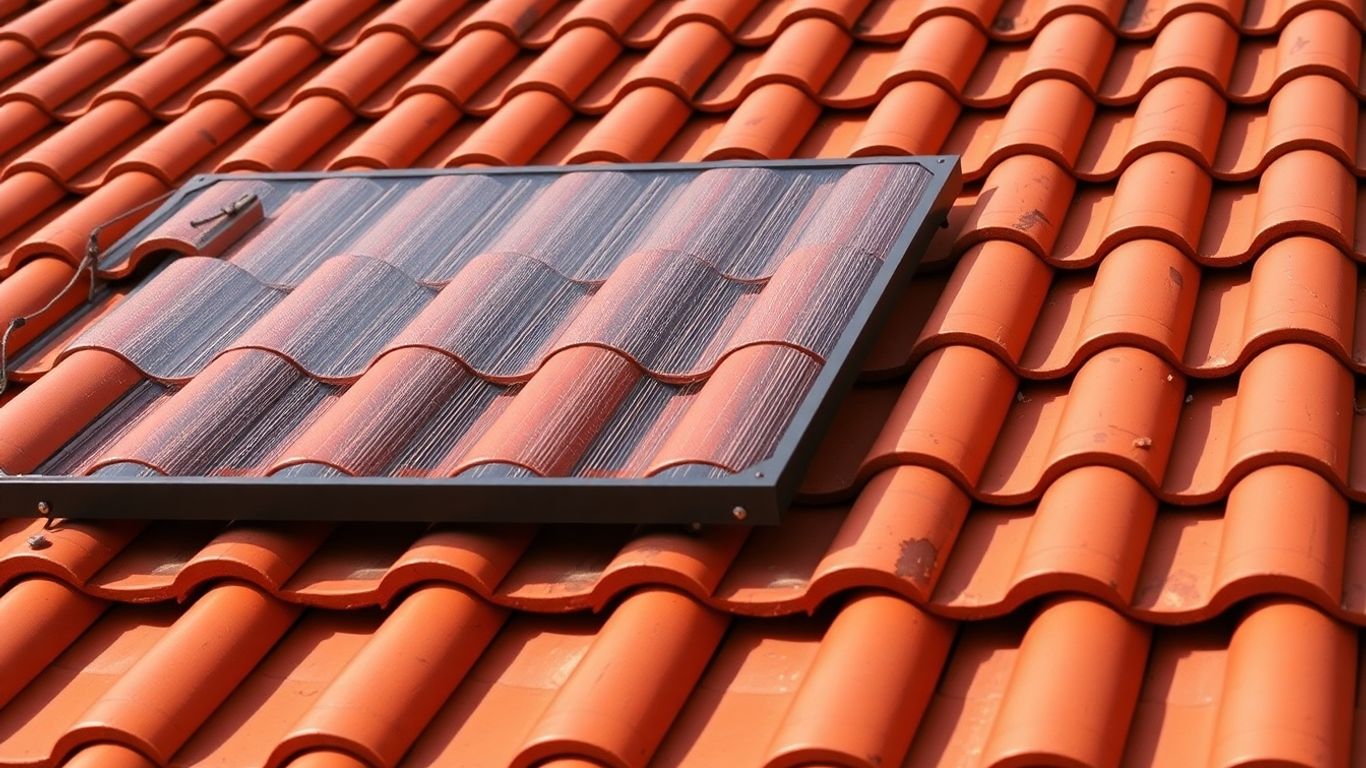
The market for tile-colored solar panels has undergone a significant transformation in recent years. Initially, the main objective was energy production, often at the expense of aesthetics. However, a collective awareness and stricter regulations, particularly in heritage areas, have driven manufacturers to innovate.
Innovation and Performance Improvement
The first generations of colored solar panels sometimes had a slight performance deficit compared to their black counterparts. This was due to the addition of colored filters that could absorb part of the light spectrum. Today, technological advancements have largely compensated for this gap. High-efficiency monocrystalline cells are increasingly used, allowing for comparable performance, often between 18% and 20%. Some models even incorporate textured glass or anti-reflective treatments to optimize light capture while maintaining the desired hue. The goal is now to combine visual discretion with maximum energy efficiency.
Response to Growing Demand for Visual Integration
The demand for discreet photovoltaic solutions has exploded. Owners of old houses, residents of listed sites, or those concerned about architectural harmony are actively seeking alternatives to traditional blue or black panels. Tile-colored, or terracotta, panels perfectly meet this need. They integrate more naturally onto existing roofs, thus preserving the character of buildings. This trend is particularly strong in France, a country rich in built heritage.
Trends and Prospects for Historic Buildings
The future looks promising for tile-colored solar panels. Manufacturers continue to invest in research and development to offer increasingly high-performance and aesthetically pleasing products. We are seeing the emergence of lighter, easier-to-install solutions, offering an even wider range of shades to adapt to all types of roofing. The integration of these panels is becoming a real asset for property enhancement, while contributing to the energy transition. It is even envisioned that large-scale projects will deploy thousands of panels to increase renewable energy capacity across a site.
The evolution of tile-colored solar panels illustrates market maturity, where aesthetics are no longer a barrier to the adoption of renewable energy, but rather a key success factor, especially for historically significant constructions.
A Wise Choice to Combine Aesthetics and Renewable Energy
In summary, the integration of tile-colored solar panels represents a particularly relevant solution for homeowners who wish to preserve the architectural integrity of their property while producing their own electricity. Although their initial cost may be slightly higher than that of more conventional panels, their ability to blend harmoniously into the landscape, especially in protected areas or on old roofs, justifies this investment. You thus benefit from green energy production without compromising the character of your home. Do not hesitate to consult qualified professionals to assess the feasibility of your project and choose the system best suited to your roof and your energy needs.
Frequently Asked Questions
Why choose tile-colored solar panels for an old house?
Tile-colored solar panels are perfect for old houses or those located in areas where appearance is important. Their color blends well with traditional tiles, allowing for discreet integration without altering your home’s style. It’s an excellent way to produce energy while respecting heritage.
Do tile-colored solar panels produce as much electricity as classic panels?
Generally, tile-colored solar panels may have a slightly lower yield than classic black panels. This is due to the technology used to give them their color. However, manufacturers have greatly improved this, and the difference is often minimal, especially with the latest models.
What is the additional cost for tile-colored solar panels?
Tile-colored solar panels generally cost a bit more than standard panels. This extra cost is due to their more complex manufacturing. However, this difference can be offset by financial aid, and they add value to your property.
Is it mandatory to use a professional to install these panels?
Yes, it is strongly recommended to use a qualified and certified installer. Installing solar panels, especially those that integrate into the roof, requires technical expertise to ensure the system’s watertightness, insulation, and performance. A professional will ensure everything is installed correctly and safely.
What are the administrative procedures if my house is in a protected area?
If your house is in a protected area (near a historical monument, for example), you will likely need to obtain authorization before installing solar panels. It is advisable to submit a detailed file, with images showing how the panels will integrate well with your roof, to obtain approval from the Architects of the French Buildings.
Are tile-colored solar panels suitable for all types of roofs?
These panels are designed to adapt to different types of tiles and roof slopes, including traditional terracotta tiles. Specific systems exist to ensure they integrate well, whether your roof is flat, interlocking, or even slate. A professional can tell you what is best suited for your situation.