Considering installing solar panels and wondering what the Systovi brand is really worth, especially with their R-Volt system? It’s an excellent step to gather information before you begin. In this article, we will explore in detail what Systovi’s aerovoltaic panels offer, a French manufacturer that emphasizes innovation and local production. We will also compare them with other solutions and look at available financial aid. Get ready to get a clearer picture of this promising technology.
Key Takeaways
- Systovi is a recognized French manufacturer in the renewable energy sector, offering solutions like the R-Volt aerovoltaic panel.
- Systovi’s R-Volt system is a 4-in-1 aerovoltaic technology: it produces electricity, heats, cools, and purifies indoor air.
- Aerovoltaic panels, like R-Volt, harness a larger portion of solar energy compared to conventional photovoltaic panels.
- Installing solar panels, including aerovoltaic ones, may qualify for various financial aid from the state and local authorities.
- Although the initial cost may be higher, aerovoltaic panels offer advantages in terms of energy performance and savings on heating and electricity bills.
Systovi Reviews: Presentation of the French Manufacturer
Systovi is a French company that has positioned itself as a significant player in the renewable energy field. Founded over 15 years ago, it has committed to the energy transition by offering innovative solutions for solar energy production. The company prides itself on designing and manufacturing its products in France, earning it the « Made in France » label.
Systovi, A Committed Player in the Energy Transition
Systovi’s commitment to the energy transition is evident in its approach focused on innovation and sustainability. The company aims to provide solutions that enable households to gain energy independence while reducing their environmental impact. It has developed particular expertise in solar technologies, going beyond simple photovoltaics.
Aerovoltaic Innovation by Systovi
Systovi is recognized for inventing aerovoltaic technology in 2011. This approach combines electricity production with other functions, such as heating, nighttime cooling, and indoor air purification. The R-VOLT panel is the flagship of this technology, offering a 4-in-1 solution aimed at optimizing the use of solar energy.
Systovi’s Guarantees and Certifications
The company highlights the quality and reliability of its products. Systovi is ISO 9001 and ISO 14001 certified, attesting to its commitment to quality and environmental management. Regarding its panels, it offers solid guarantees:
- 20-year manufacturing warranty.
- 80% performance warranty over 25 years.
These guarantees are intended to reassure customers about the durability and efficiency of the installed equipment.
Systovi’s R-VOLT Aerovoltaic Panel
Multiple Features of the R-VOLT System
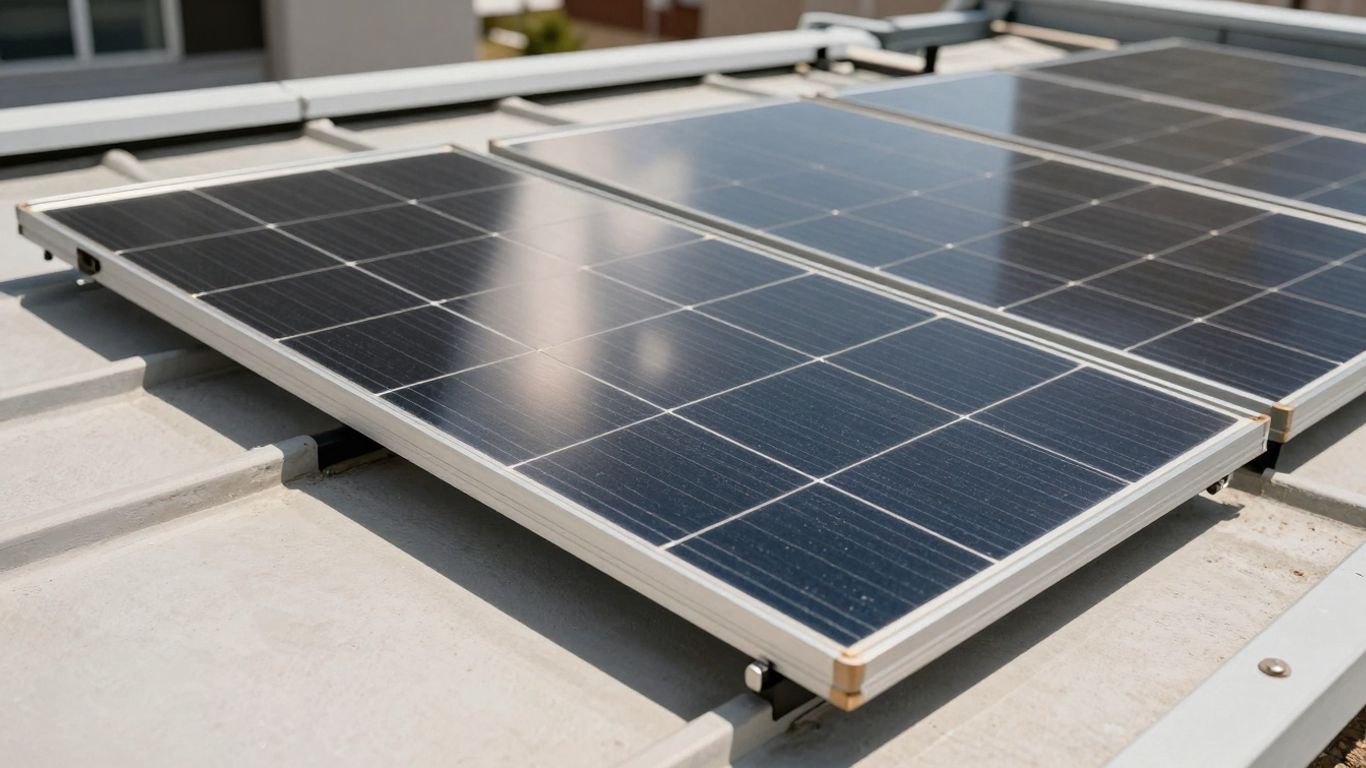
Systovi’s R-VOLT system stands out for its exceptional versatility, offering much more than just electricity production. It is an integrated solution designed to optimize your home’s comfort throughout the year. This aerovoltaic panel is a true 4-in-1 energy center. It produces electricity, but also actively contributes to heating your home, cooling it during the summer months, and purifying the ambient air. This comprehensive approach significantly reduces your reliance on traditional heating systems and improves the quality of the air you breathe.
R-VOLT’s Adaptability and Integration
One of the major advantages of R-VOLT lies in its design, which is intended for easy integration, regardless of your home’s configuration. Systovi has developed innovative solutions, such as the Modul-R SLIM system, which allows for discreet and efficient installation, even in tight spaces or complex roof structures. Whether your house is new or undergoing renovation, with or without unused attic space, R-VOLT adapts. Its sleek design, often « full black, » ensures harmonious aesthetic integration with your roof. The installation is designed to be as simple as that of a conventional photovoltaic panel, thus eliminating many space constraints.
Energy Performance and Potential Savings
The R-VOLT panel is designed to maximize your energy independence and achieve substantial savings on your bills. Thanks to its high thermal efficiency, it can reduce the need for your main heating system to operate, or even replace it during shoulder seasons. It is estimated that for a D or E energy class home, savings on the overall energy bill (electricity and heating) can range from 20% to 40%. The system is also intelligent: a digital thermostat regulates temperature and humidity in real-time, optimizing comfort and consumption. The SMART-R app even offers remote control of your installation.
Here is an overview of the expected performance:
- Aerovoltaic sensor power: 1000 W (including 700 W thermal and 300 W electrical).
- Solar thermal efficiency (COP): Up to 30, meaning for 1 kWh consumed, up to 30 kWh of heat are returned.
- Estimated cost per kWh returned: Approximately €0.06.
- Manufacturing warranty: 20 years.
- Performance warranty: 80% over 25 years.
Comparison of Hybrid Solar Panels: R-VOLT and SPRING
Considering installing hybrid solar panels and hesitating between Systovi’s R-VOLT model and DualSun’s SPRING panel? Both Made in France solutions offer advanced features, but they differ in several key aspects. Understanding these distinctions will help you make the choice best suited to your needs.
Technical Characteristics of the Panels
Hybrid solar panels combine electricity production and heat recovery. Systovi’s R-VOLT panel stands out for its versatility: it produces electricity, heats your home, cools it in summer, and purifies indoor air. It is a so-called « 4-in-1 » solution. It uses monocrystalline cells and has a nominal power of 250 Wp, with a surface efficiency of 167 W/m² and an overall efficiency of 16.5%.
The SPRING panel, on the other hand, is a hybrid module that incorporates a patented heat exchanger. It is designed to produce electricity (high-efficiency monocrystalline cells, 425 Wp, 20.4% efficiency) and heat (thermal power of 420 Wth/m²). Visually, it is identical to DualSun’s FLASH photovoltaic modules, allowing for system expansion if space permits.
Here is a comparison table to better visualize the differences:
| Characteristic | R-VOLT Panel (Systovi) | SPRING Panel (DualSun) |
|---|---|---|
| Technology | Aerovoltaic (4-in-1) | Hybrid (PV + Thermal) |
| Nominal PV Power | 250 Wp | 425 Wp |
| PV Efficiency | 16.5% | 20.4% |
| Thermal Power | Not specified (integrated heating function) | 420 Wth/m² |
| Features | Electricity, Heating, Cooling, Purification | Electricity, Domestic Hot Water (DHW) |
| Airflow | 100 to 400 m³/h | Not applicable |
Product and Performance Guarantees
In terms of guarantees, both manufacturers offer solid commitments. The R-VOLT panel benefits from a 10-year warranty on the modules and a 2-year warranty on the air components. The linear PV performance warranty is 80%.
The SPRING panel, meanwhile, offers a 10-year product warranty, with an announced lifespan exceeding 30 years. Its performance warranty on photovoltaic yield is 25 years, ensuring 84.8% of the initial yield. The panel is also nearly 95% recyclable.
Advantages and Disadvantages of the Technologies
Systovi’s R-VOLT aerovoltaic technology has the advantage of being an all-in-one solution for home comfort, including air quality. It can significantly reduce your energy bill, potentially by 20% to 40% for a well-insulated home. Its integrated ventilation system renews the air and evacuates excess heat.
The R-VOLT system is designed to optimize indoor thermal comfort throughout the year, by utilizing solar energy in a multifunctional way.
DualSun’s SPRING panel is particularly efficient for domestic hot water production and can produce up to twice as much energy per square meter as a standard PV panel when coupled with a heat pump. Its design allows for aesthetic integration and easy system expansion. However, its initial cost may be higher, and it is primarily focused on DHW and electricity production, unlike Systovi’s more comprehensive solution. The choice will therefore depend on your priorities: overall home comfort with R-VOLT, or optimized DHW and electricity production with SPRING. For more information on Systovi‘s solutions, it is advisable to consult the detailed technical specifications of each product.
Advantages and Disadvantages of Aerovoltaic Solar Panels
Considering installing aerovoltaic solar panels? It’s wise to weigh the pros and cons before you begin. This technology, while promising, has aspects that require careful consideration.
Efficiency and Versatility of Aerovoltaics
One of the major advantages of aerovoltaics lies in its ability to produce both electricity and heat. Unlike conventional photovoltaic panels that only generate electricity, aerovoltaic systems, like Systovi’s R-VOLT, use the air heated at the back of the panels to ventilate your home. This dual functionality optimizes the use of captured solar energy.
Here are the main advantages of this technology:
- Electricity Production: You benefit from a renewable energy source to reduce your electricity bill.
- Heat Production: The recovered hot air can contribute to heating your home in winter, thus reducing your dependence on traditional heating systems.
- Cooling: In summer, the system can help cool your home, improving your thermal comfort.
- Air Renewal: Integrated ventilation ensures constant renewal of indoor air, contributing to better air quality.
- Potential Savings: By combining electricity and heat production, you can achieve significant savings on your overall energy expenses. Installing solar panels offers many benefits, making this option attractive for many. Discover the benefits.
Cost and Complexity of the Technology
It is undeniable that aerovoltaics represent a higher initial investment than standard photovoltaic solar panels. As the technology is more sophisticated, incorporating components for heat recovery and ventilation, its acquisition and installation cost is higher. Furthermore, being a relatively new technology, it is still in the refinement phase, which may translate into potentially higher long-term maintenance costs, although the lifespan of the panels remains comparable to that of conventional panels, often around 30 years.
The innovative aspect of aerovoltaics implies a learning curve for installers and an adaptation of maintenance methods. It is therefore essential to choose a qualified installer and to fully understand the specific maintenance required.
Impact on Insulation and Required Space
The efficiency of an aerovoltaic system can be influenced by your home’s insulation. A poorly insulated house may not fully benefit from the heat produced, thus limiting the expected economic gains. It is therefore recommended to ensure your home has good insulation before considering this type of installation. Moreover, aerovoltaic systems may require slightly more installation space than conventional photovoltaic panels, due to the presence of ventilation ducts and additional components. Installing solar panels offers many benefits, including the ability to self-consume electricity. These systems can increase your property value.
Operation and Technology of the Aerovoltaic Panel
Principles of Electricity and Heat Generation
The aerovoltaic panel, like Systovi’s R-VOLT model, is an ingenious technology that goes beyond simple electricity production. It combines two main functions thanks to its specific design. On one hand, the front of the panel captures solar energy to generate electricity, much like a conventional photovoltaic panel. But where it distinguishes itself is in its ability to recover heat. Ambient air, heated by the sun and by the photovoltaic cells themselves, is drawn in at the back of the panel.
Ventilation System and Air Renewal
This is where the integrated ventilation system comes into play. This key component allows the recovered hot air to be channeled. This air can then be blown directly into your home. This process not only heats your interior during the cold months but also renews the ambient air. In summer, the system can even be used to cool your home at night by expelling accumulated heat. This is a 3-in-1 approach that optimizes the use of solar energy.
Indoor Air Quality and Home Automation
Beyond energy production, aerovoltaics contribute to improving indoor air quality. Constant air renewal reduces the concentration of pollutants and humidity. Furthermore, these systems can often be integrated with home automation solutions. This allows you to control and optimize ventilation, heating, and cooling centrally, directly from your smartphone or a dedicated interface. You can thus adjust the system’s operation according to your needs and weather conditions, for increased comfort and maximum energy savings.
Financial and Tax Aid for Installation
Zero-Interest Eco-Loan and Prime Rénov’
The installation of aerovoltaic solar panels, such as Systovi’s R-VOLT system, can be supported by several aid programs. The Zero-Interest Eco-Loan (Éco-PTZ) is an interesting option. It is an interest-free loan, up to €50,000, intended to finance energy renovation work. Whether you are an owner-occupier or a landlord, and your home is more than two years old, you can qualify without income restrictions. Additionally, Prime Rénov’ can also be applied for. It offers financial support, particularly for solar hot water production systems, with amounts varying according to your income. These aids aim to make investment in renewable energy more accessible.
Self-Consumption Bonus and Reduced VAT
To encourage self-consumption, meaning consuming the electricity you produce, you can benefit from the self-consumption bonus. This bonus is paid by the state and its amount depends on the power of your installation. It can be combined with other aids, which can significantly reduce the initial cost of your project. Furthermore, taxation is also advantageous: you benefit from a reduced VAT rate of 5.5% on the purchase and installation of your solar panels. This is a significant advantage that lightens the overall budget. You can get information on the self-consumption bonus up to €500 per kWp.
Local and Regional Aid
Beyond national programs, it is important to inquire about specific aid offered by your region or municipality. Many local authorities actively support the energy transition and may offer additional subsidies. These local aids can take various forms: bonuses, repayable advances, or tax exemptions. It is therefore advisable to consult your region’s website or contact the dedicated services directly to learn about all possibilities. Do not forget that an RGE (Reconnu Garant de l’Environnement – Recognized Guarantor of the Environment) professional is often essential to be eligible for these various financial aids. They will be able to guide you through the process and ensure that your installation meets the required criteria. Installing solar panels can also be done through innovative solutions like solar carports for businesses.
Obtaining completely free solar panels is often a myth. Be wary of offers that seem too good to be true, as no program covers the entire cost of purchase and installation.
In Summary: An Investment for the Future
Ultimately, whether you choose DualSun’s SPRING panels or Systovi’s R-VOLT aerovoltaic solution, you are opting for an innovative French technology. These systems, designed to last and manufactured locally, represent a concrete step towards your home’s energy independence. They not only allow you to reduce your bills but also contribute to a healthier environment. Think about it, it’s an investment that makes sense for you and for the planet.
Frequently Asked Questions
What is Systovi’s R-VOLT aerovoltaic panel?
Systovi’s R-VOLT panel is an innovative solution that does several things at once. It produces electricity like a conventional solar panel. But that’s not all! It also helps heat your home in winter, cool it in summer, and even renew the indoor air for better quality. It’s like having multiple devices in one, all manufactured in France.
How does the R-VOLT system produce heat and cold?
The R-VOLT panel uses the air that heats up behind it thanks to the sun. This hot air is then recovered and sent into your home to heat it. In summer, the system can do the opposite: it uses the cooler night air to cool your home. It’s an intelligent technology that adapts to the seasons.
What are the advantages of choosing an aerovoltaic panel over a conventional photovoltaic panel?
Aerovoltaics, like R-VOLT, use a larger portion of the sun’s energy, up to 80%, compared to conventional panels which utilize about 20%. In addition to producing electricity, it offers heating, cooling, and air renewal functions. This can lead to savings on your energy bills, whether for electricity or heating.
Is the R-VOLT panel suitable for all homes?
Yes, the R-VOLT system is designed to be adaptable. Whether your home is new or old, with or without an attic, there are solutions for installing it. The panels have a discreet design that integrates well with most roofs. It can even be installed on flat roofs.
What financial aid can I get to install Systovi solar panels?
To help you finance your project, several aids are available. You could benefit from the Zero-Interest Eco-Loan, Prime Rénov’, or the Self-Consumption Bonus. VAT can also be reduced to 5.5%. It is advisable to inquire with the relevant authorities to know the precise conditions.
What is the lifespan and warranty of R-VOLT panels?
Systovi is committed to the quality of its products. R-VOLT panels generally benefit from a 20-year manufacturing warranty. Furthermore, the manufacturer provides a performance warranty on the yield, often maintained at 80% for 25 years. This is a testament to Systovi’s confidence in the durability of its technology.