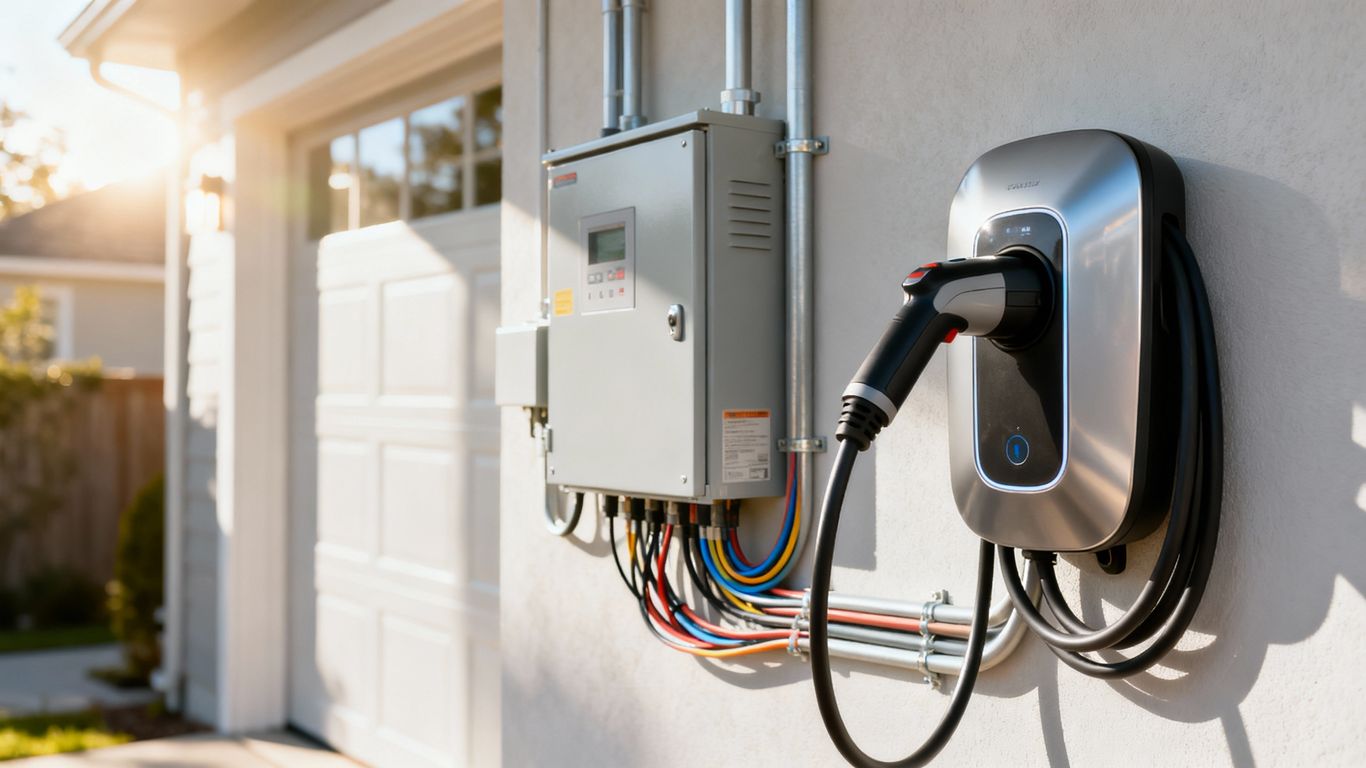
Considering the purchase of an electric car and wondering about the best way to charge it at home? This article sheds light on the different options, their advantages and disadvantages, to help you make the most suitable choice for your situation. We will explore how to optimize the installation cost of a reinforced outlet, while considering practical and financial aspects.
Key Takeaways
- The standard household outlet is not recommended for regular use due to the risk of overheating and its slowness. Opt for a more suitable solution for daily charging of your electric vehicle.
- The reinforced outlet offers a good balance between safety and cost. It allows for more efficient charging than a standard outlet and can be an economical solution, especially since it qualifies for financial aid.
- To reduce the installation cost of a reinforced outlet or charging station, inquire about available aid such as tax credits, Advenir program subsidies, and reduced VAT rates.
- The power of your charging device should match your daily usage (mileage) and your vehicle, while also considering your existing electrical system to avoid overconsumption.
- Opting for an electricity contract with peak/off-peak hours and scheduling your charging during these periods can significantly reduce your energy costs.
Understanding the Different Home Charging Options
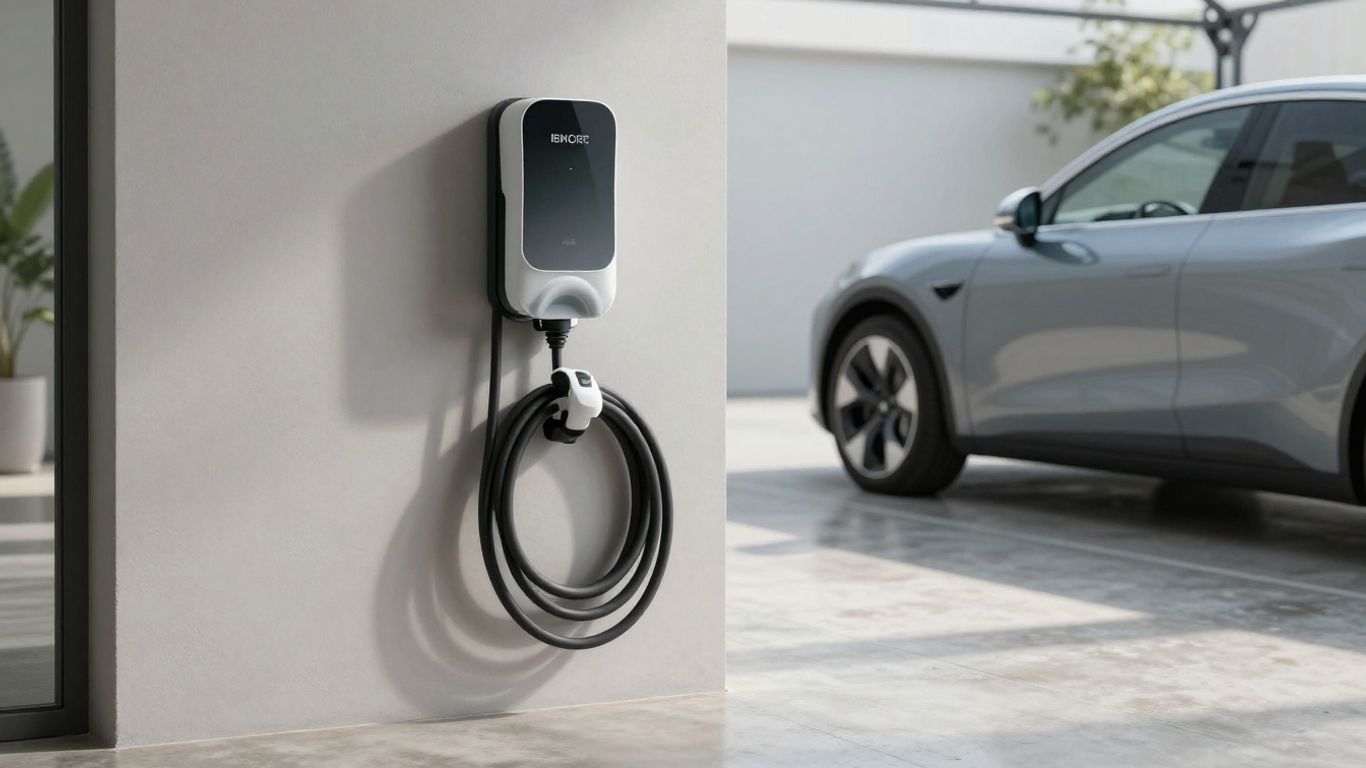
When considering charging your electric vehicle at home, several solutions are available. It’s important to be familiar with them to make the best choice for your needs and budget. Forget the standard wall outlet in your home, as it’s not designed to handle the continuous and intensive load of an electric vehicle. Its use carries risks of overheating and can even, in extreme cases, cause a fire. Furthermore, its power is very limited, making charging particularly slow.
Limitations of the Standard Household Outlet
The standard electrical outlet, the one you use for your everyday appliances, is simply not made for car charging. It typically delivers a power of 2.3 kW, which means it would take over 20 hours to fully recharge an average electric car battery. It’s a backup solution, but absolutely not a long-term one. The risks of overheating of the cables and the outlet itself are real, as the circuit is not designed for such an energy flow over a long duration.
The Reinforced Outlet: A Safe and Economical Compromise
The reinforced outlet, also known as Green’up or type E/F outlet, represents a safer and more efficient alternative to the standard household outlet. It is designed to handle a higher load for longer periods, while incorporating safety features to limit risks. Its power is generally 3.7 kW, allowing you to regain about 10 to 15 km of range per hour of charging. It’s a good compromise if you drive short distances daily and have a limited budget. It’s faster than a standard outlet and offers greater peace of mind.
The Charging Station (Wallbox): Performance and Speed
For faster and more efficient charging, the wall-mounted charging station, or wallbox, is the go-to solution. These devices can deliver power ranging from 7.4 kW to 22 kW, or even more for some models. A 7.4 kW wallbox, for example, can recharge an electric car battery in 6 to 8 hours, which is ideal for a full charge overnight. The most powerful models can significantly reduce this time. Furthermore, modern wallboxes are often connected, offering advanced features like charging scheduling, consumption monitoring, and compatibility with off-peak hours, allowing for substantial savings on your electricity bill.
Optimizing the Installation Cost of a Reinforced Outlet with Financial Aid
Installing a reinforced outlet represents an investment, but did you know you can significantly reduce its cost through various financial aids? In France, several programs are in place to encourage the adoption of electric mobility. It would be a shame not to take advantage of them.
The Tax Credit for Energy Transition
Although its application for charging stations has evolved, it is still relevant to inquire about current tax incentives. Historically, a tax credit could cover a portion of the expenses related to the installation of charging equipment. It is important to check the current conditions, as these aids can change. Consult the tax authorities or a professional to find out the latest provisions applicable to your situation.
Subsidies from the Advenir Program
The Advenir program is a major initiative aimed at supporting the deployment of charging infrastructure. It targets various types of beneficiaries, including individuals. Depending on your project and your place of residence (primary, secondary, co-ownership), you may be eligible for subsidies covering part of the installation costs. The amounts vary and are often capped, but they can represent substantial savings.
- Eligibility Conditions: Ensure that your installation complies with safety standards and that the chosen equipment is approved.
- Subsidy Amount: Subsidies can cover a percentage of expenses, with specific limits.
- Procedures: You generally need to go through a qualified installer to submit your application.
Reduced VAT Rate on Installations
This is a direct and often much-appreciated aid: the Value Added Tax (VAT) can be reduced to 5.5% for the installation of your reinforced outlet. This measure generally applies to homes over two years old and requires the work to be carried out by a certified professional. This reduction applies to both the cost of the equipment and the labor, significantly reducing the final bill.
The application of these financial aids often requires adherence to certain conditions, particularly the use of a qualified IRVE (Infrastructure de Recharge pour Véhicules Électriques – Electric Vehicle Charging Infrastructure) professional for the installation. This is a guarantee of safety and an essential step to be eligible for these financial supports.
Choosing the Right Power for Your Daily Needs
When considering the installation of a reinforced outlet, it’s important to think carefully about the power you will actually need. Just because an option is more powerful doesn’t necessarily make it the best for you. You need to consider your daily usage and your vehicle.
Assessing Your Daily Mileage
The first step is to estimate the average number of kilometers you drive each day. Most drivers cover between 30 and 60 kilometers per day. For this type of usage, a standard reinforced outlet, often called « Green Up » and delivering 2.2 kW, or a 3.7 kW wallbox, is more than sufficient. These solutions are generally less expensive to purchase and install, and don’t always require an increase in your electricity meter’s capacity. If your commutes are longer, you might need a more powerful solution.
Matching Power to Your Vehicle and Installation
It’s also essential to check the maximum power your vehicle can accept. Installing a very powerful station that your car cannot utilize would be a waste of money. For example, if your vehicle can only accept a maximum of 7.2 kW, an 11 kW station will not provide a significant speed increase. Also, consider your home’s electrical system. A reinforced outlet delivers a maximum power of 3.7 kW, which is a good compromise for many uses. If you need more, a wallbox should be considered.
Anticipating Increased Electricity Consumption
Installing a charging device will inevitably increase your electricity consumption. Therefore, it’s wise to think ahead. Your needs may evolve, whether through the purchase of a new, more powerful vehicle or a change in your travel habits. In some cases, it might be more prudent to opt for a slightly more powerful solution now, such as a 7.4 kW station, to avoid having to redo the work later. This would also allow you to fully benefit from an electricity contract with peak/off-peak hours.
It’s important to note that charging power depends on several factors, including the voltage, current, and number of phases of your installation. A 7.4 kW station, for example, is typically single-phase, while higher power levels may require three-phase power.
Here is a simplified comparison table:
| Device Type | Typical Power | Range Recovered Per Hour |
|---|---|---|
| Reinforced Outlet | 2.2 kW | ~10 km |
| Wallbox | 3.7 kW | ~15-20 km |
| Wallbox | 7.4 kW | ~30-40 km |
| Wallbox | 11 kW | ~60 km |
It is always recommended to consult a professional to accurately assess your needs and compatibility with your vehicle and home.
Securing Your Installation and Ensuring Compliance
Installing a reinforced outlet at home is an excellent idea for charging your electric vehicle, but it’s crucial not to overlook safety and compliance aspects. A poorly executed installation can not only damage your vehicle or electrical system but also pose risks to your safety.
The Importance of Hiring a Qualified IRVE Electrician
For any installation of a reinforced outlet, and especially if its power exceeds 3.7 kW, it is absolutely necessary to hire an IRVE (Infrastructure de Recharge pour Véhicules Électriques – Electric Vehicle Charging Infrastructure) certified professional. This is not just a recommendation; it’s a guarantee of safety. A qualified IRVE electrician has the specific knowledge to install this type of equipment in compliance with current standards. Furthermore, this qualification is often a prerequisite for benefiting from certain financial aids, such as those from the Advenir program. Think of it as an investment in your peace of mind and your wallet.
Requirements of the NFC 15-100 Standard
The NFC 15-100 standard is the reference in France for all low-voltage electrical installations, including those for charging electric vehicles. It imposes precise rules to ensure the safety of people and property. For example, it stipulates that each charging point must be protected by a type A or B residual current device, and that overcurrent protection must be installed. Compliance with this standard is therefore non-negotiable. Ignoring these requirements could lead to malfunctions, fire risks, and would cause problems in the event of a claim with your insurance. You can consult the details of the NFC 15-100 standard to better understand the constraints.
Benefits of a Dedicated Electrical Circuit
For a reinforced outlet, it is strongly recommended, and often mandatory depending on the power, to install a dedicated electrical circuit. This means the outlet will be powered directly from your electrical panel by a specific cable, without being shared with other appliances. Why is this so important? A dedicated circuit prevents overloading your existing electrical system, which is not designed to handle the continuous and high demand of electric vehicle charging. This prevents risks of overheating, unexpected power outages, and ensures stable and safe charging. It’s a simple but effective measure to protect your home and your vehicle.
The installation of a reinforced outlet should be considered an extension of your home electrical network, requiring special attention to avoid any risks. Hiring an IRVE certified professional is the best way to ensure everything is compliant and safe.
Reducing Your Energy Costs During Charging
Once your charging installation is in place, it’s time to think about how to make your charging sessions as economical as possible. The goal is simple: refuel your vehicle without it putting too much strain on your monthly budget. Fortunately, several tips exist to achieve this.
Subscribing to a Peak/Off-Peak Electricity Contract
The first and arguably most impactful step is to review your electricity contract. If you haven’t already, subscribing to a « peak/off-peak hours » (HP/HC) option is highly recommended. This type of contract, offered by most energy providers, divides the day into two periods: peak hours, when the rate is higher, and off-peak hours, generally at night, when the price per kilowatt-hour is significantly lower. By concentrating your electric car’s charging during these reduced-rate periods, you can achieve substantial savings, sometimes up to 16% on the total cost of your electricity consumption dedicated to charging.
It’s important to check with your provider for the exact hours of these periods, as they can vary by region and network developments. For example, a rate of €0.1635 including tax/kWh during off-peak hours versus €0.1952 including tax/kWh during standard hours may seem like a small difference, but it adds up quickly.
Scheduling Charging for Reduced Rate Periods
Once your HP/HC contract is subscribed, the key is to ensure that your vehicle’s charging actually occurs during off-peak hours. Several methods are available:
- Direct Connection to the Linky Meter: If your charging station is installed near your Linky meter, a wired connection allows for automatic management. Charging can thus be scheduled to start during off-peak hours without any intervention from you. However, you retain the ability to manually initiate a charge outside these periods if necessary.
- Using a Connected Charging Station: The majority of modern charging stations are « smart » and controllable via a dedicated mobile app. Once connected to your home Wi-Fi network, this app allows you to precisely define when charging should start and stop. You can thus schedule your charging for the night, optimizing your electricity bill.
- Vehicle App Features: Many car manufacturers integrate charging scheduling functions directly into your car’s mobile app. These tools allow you to set weekly charging schedules, adapted to your travel and needs, taking into account electricity rates.
Smart charging scheduling is not just about savings. It also contributes to the stability of the electrical grid by shifting demand to periods of lower load.
Comparing Energy Provider Offers
The electricity market is competitive, and offers are constantly evolving. It is therefore wise not to stick with your current contract. Take the time to regularly compare the different offers from energy providers. Some offer particularly attractive rates for electric vehicle users, or specific options that might better suit your consumption profile. Don’t hesitate to use online comparison tools to find the most advantageous offer and further reduce the cost of your charging.
Here is a simplified comparison table of contract options:
| Contract Type | Main Advantage | Potential Disadvantage |
|---|---|---|
| Standard | Simplicity, single rate | Higher cost for overnight charging |
| Peak/Off-Peak Hours | Significant savings during off-peak hours (night) | Requires charging scheduling |
| Specific EV Offers | Potentially lower charging rates | May require commitment or specific conditions |
By adopting these different strategies, you will transform the charging of your electric vehicle into an economical and controlled action.
Considering Advanced Features of Charging Devices
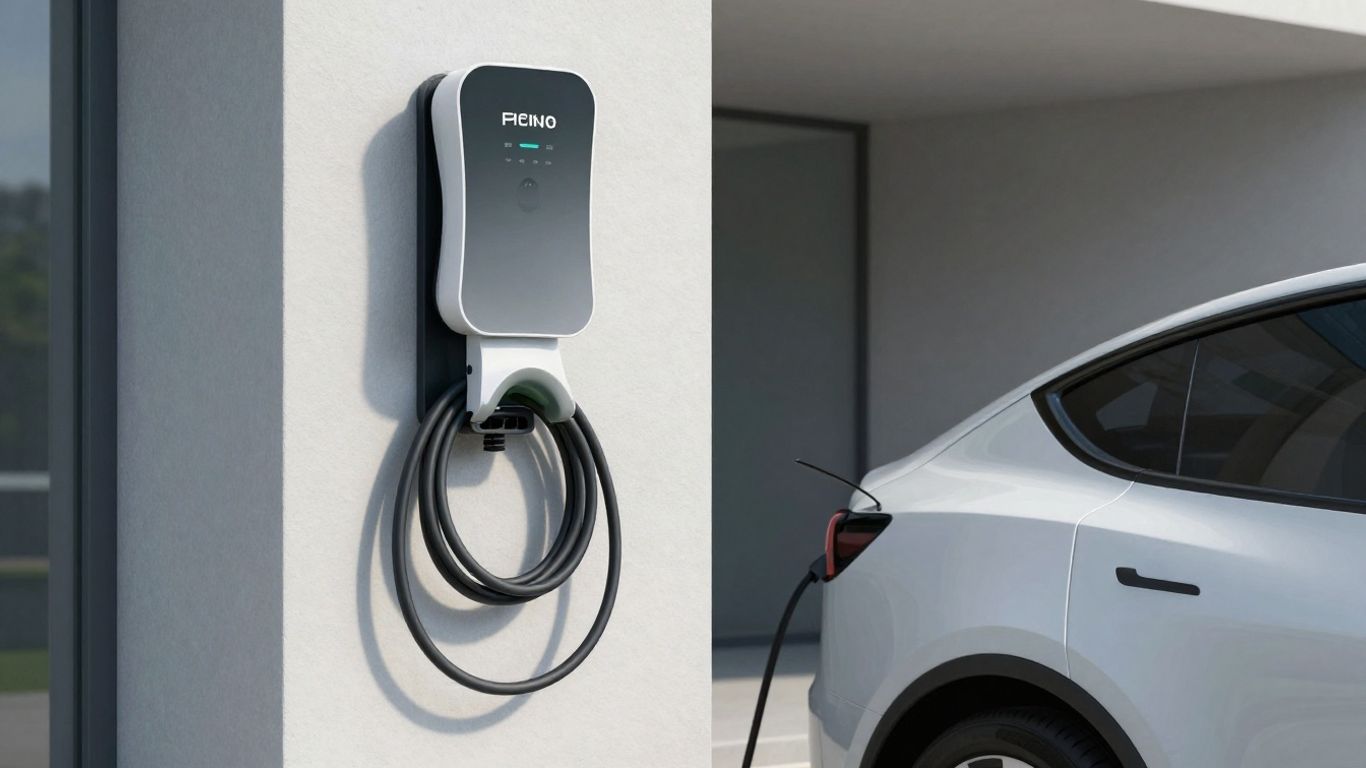
Beyond the simple ability to charge your vehicle, modern devices offer options that can simplify your daily life and optimize your expenses. It’s no longer just about plugging in and waiting, but about intelligently interacting with your charging system.
Smart Charging Management
So-called « smart » or « connected » charging stations give you increased control over the charging process. Thanks to a dedicated mobile app, you can precisely schedule when your vehicle should charge. This is particularly useful for taking advantage of reduced electricity rates during off-peak hours. You can set specific time slots, for example, to have charging start automatically at 2 AM and finish before you leave in the morning. Some apps go further by allowing you to set a desired charge level (e.g., 80%) for a given time, or even integrate the production from your solar panels to use your own green energy.
Access Control Options
For households with multiple drivers or for security reasons, some charging stations offer access control features. This can include:
- Badge or App Authentication: Only authorized individuals can start a charging session.
- Multi-User Management: Allows tracking of each user’s consumption if multiple vehicles share the same station.
- Remote Lock: You can start or stop your vehicle’s charging remotely.
These options are particularly relevant if you share your installation or simply want extra peace of mind.
Integration with Mobile Applications
The electric vehicle ecosystem is increasingly revolving around mobile applications. Your charging station, if connected, often integrates into this world. You can thus use your car manufacturer’s app to schedule charging, or your charging station’s app for finer adjustments. This centralization allows for easier management of your electric mobility. In some cases, it’s even possible to synchronize charging with other connected devices in your home for overall energy management. Consider checking the compatibility of the charging station with the apps you already use or plan to use.
Adopting smart features is not just about convenience; it’s also a strategy for controlling your energy costs and optimizing the daily use of your electric vehicle. These technologies are rapidly evolving, so it’s wise to research the latest innovations when making your choice.
In Conclusion: Thoughtful Installation for Worry-Free Charging
Installing a reinforced outlet at home is a process that requires a little preparation. By carefully weighing the different options, considering your actual travel needs and your budget, you will find the most suitable solution. Don’t forget to inquire about available financial aids, which can significantly reduce the installation cost. Hiring a qualified professional is a key step to ensure the safety and compliance of your installation. This way, you can fully enjoy your electric vehicle with complete peace of mind.
Frequently Asked Questions
What is the main difference between a reinforced outlet and a charging station (wallbox)?
A reinforced outlet is an improved electrical outlet, safer than a standard one for charging your electric car. It is more economical but charges more slowly. A charging station, on the other hand, is more powerful and faster, but represents a larger investment.
Do I need to hire a professional to install a reinforced outlet or a charging station?
Yes, it is strongly recommended, and even mandatory for devices over 3.7 kW, to hire a qualified IRVE electrician. This ensures the safety of your installation and allows you to benefit from financial aid.
What financial aids are available for installing a home charging solution?
You can benefit from a tax credit, subsidies like the Advenir program, and a reduced VAT of 5.5%. These aids help reduce the total installation cost.
How do I choose the right power for my charging station?
You need to consider how many kilometers you drive each day. For moderate daily use, a reinforced outlet or a 3.7 kW station is often sufficient. If you drive a lot, a more powerful station will be more suitable.
Is it worthwhile to subscribe to an ‘off-peak hours’ electricity contract to charge my car?
Absolutely! Charging your vehicle during off-peak hours, which are generally at night, allows you to pay less for your electricity. This can significantly reduce your charging costs.
Can I schedule my charging to happen automatically at night?
Yes, many modern charging stations are « smart » and can be programmed via a mobile app. This allows you to choose when your car charges, ideally during off-peak hours.