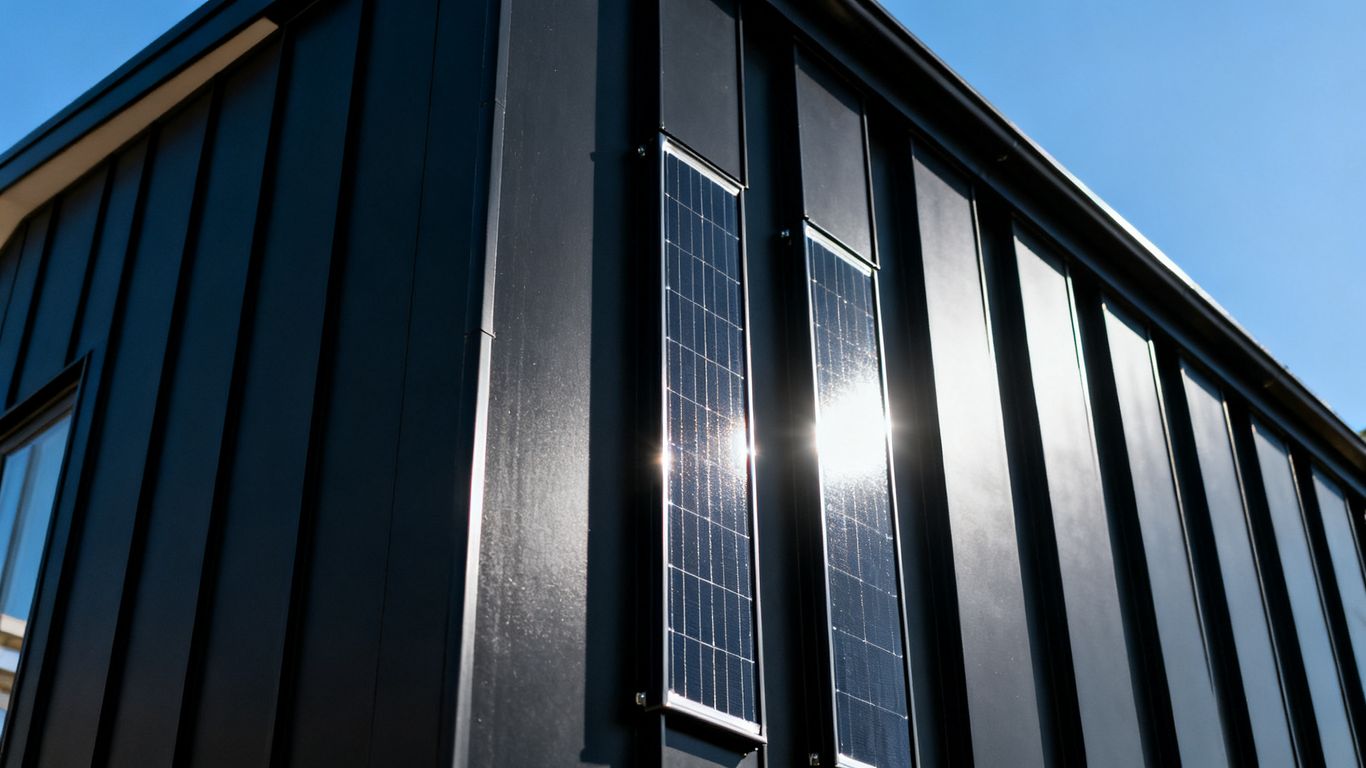
Here are the key takeaways regarding the installation of solar panels on a vertical wall.
Key Takeaways
- Most vertical wall solar panel installations require a prior declaration of works at the town hall.
- Always check your municipality’s Local Urban Plan (PLU) as it may impose specific rules.
- In protected areas, the opinion of the Architecte des Bâtiments de France (ABF) is often required and can influence the type of authorization.
- Small installations (up to 3 kWp and less than 1.80m high) are generally exempt from authorization, but a declaration to the network operator may be necessary.
- After installation, steps such as applying for grid connection and declaring solar income must be completed.
General Regulations for Installing Solar Panels on a Vertical Wall
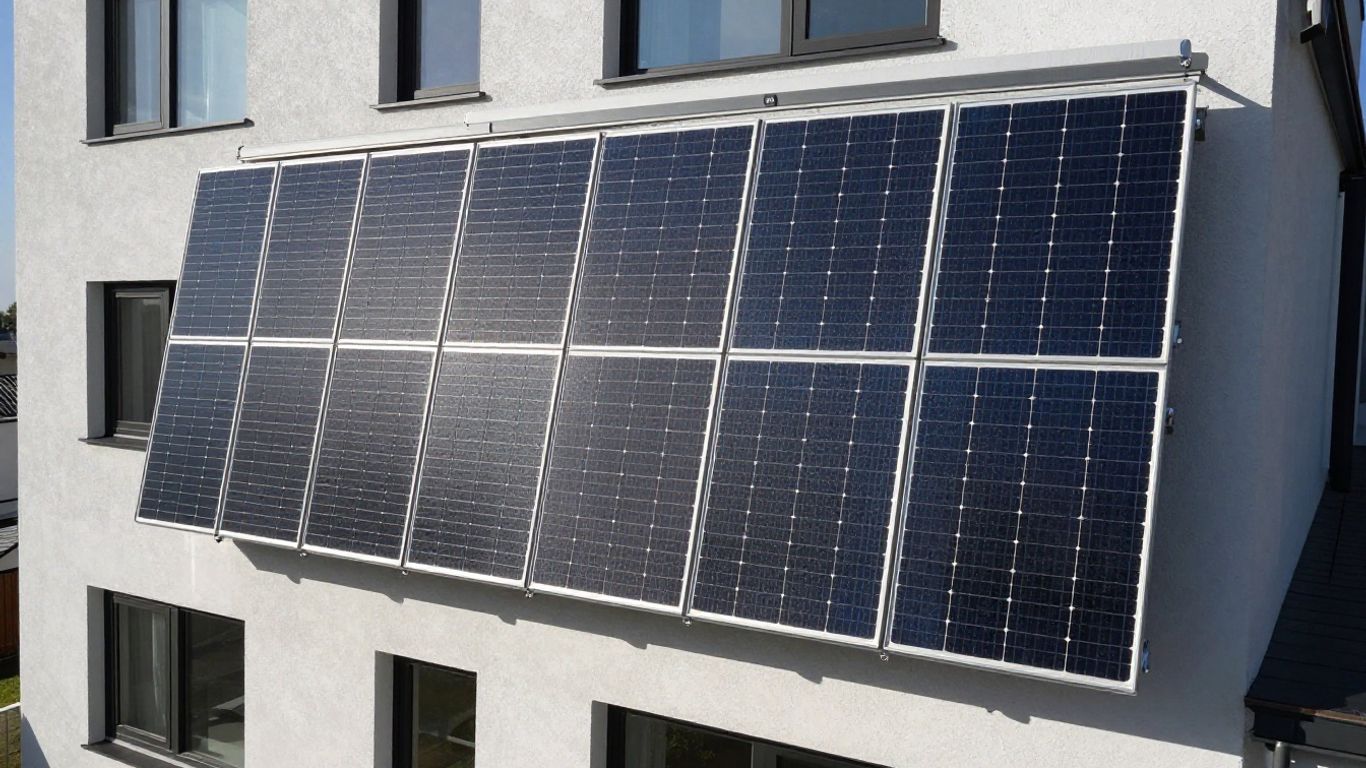
Before embarking on the installation of solar panels on a vertical wall, it is important to be aware of the rules governing this type of project. Although less common than rooftop installations, these installations alter the exterior appearance of your building and may therefore be subject to specific regulations.
Administrative Steps Prior to Installation
The first step is to inquire at your town hall. Your municipality’s Local Urban Plan (PLU) is the key document that defines the applicable urban planning rules. It may impose particular constraints regarding the integration of solar panels, especially on facades.
- Check your municipality’s PLU: This is the primary source of information for local rules.
- Anticipate the procedures: Never start work without obtaining the necessary authorizations.
- Consider the complexity: The procedures can vary, so it is best to be well prepared.
Impact on the Building’s Exterior Appearance
The installation of solar panels on a vertical wall undeniably changes the appearance of your facade. This is why local authorities pay close attention to these modifications. The goal is to preserve the architectural harmony of buildings and neighborhoods.
The visual integration of solar panels is a frequently raised point. It is advisable to choose models and colors that harmonize with the existing facade to minimize visual impact.
Checking the Local Urban Plan (PLU)
The PLU is an essential document that governs the development of your municipality. It may contain specific provisions concerning solar installations, including those attached to walls. Therefore, it is imperative to consult it before taking any action. You will find information on areas where installations are permitted, the types of panels accepted, and any aesthetic restrictions. A good understanding of the PLU can save you a lot of trouble and help you complete a compliant project. It may sometimes be necessary to conduct a feasibility study to ensure your project meets all constraints.
Urban Planning Authorizations for Solar Panels on a Vertical Wall
The installation of solar panels on a vertical wall, while less common than on a roof, is subject to precise urban planning rules. These procedures aim to regulate the integration of this equipment into the built landscape and ensure its compliance with local regulations. It is therefore essential to fully understand the necessary authorizations before proceeding.
Prior Declaration of Works: General Case
In most situations, installing solar panels on the exterior wall of your home will require a prior declaration of works. This procedure is required whenever the installation modifies the exterior appearance of the building. It applies whether the panels are mounted on top or integrated into the facade. The power of the installation is generally not the determining factor for this formality; it is the visual modification that matters. You can usually complete this process at the town hall, and more and more municipalities offer online services to simplify the submission of your application.
Building Permit: When is it Required?
A building permit becomes necessary in more specific cases. It is generally required for large-scale projects or when the installation is accompanied by new construction. For example, if you install solar panels on an ancillary structure such as a carport or pergola that creates a ground footprint of more than 20 m², a building permit will be required. Similarly, if your project is located in a protected area (classified site, vicinity of a historical monument, etc.) and the installation’s power is 3 kWp or more, this more stringent authorization applies. For individuals, a building permit is rarely necessary for standard wall installations, except in specific cases related to protected areas or significant extensions.
Exemptions for Small Installations
There are cases where administrative formalities are reduced or even non-existent. For installations with a power output of up to 3 kWp, and if the panels do not exceed 1.80 meters in height from the ground, no urban planning authorization is generally required, provided you are not in a protected area. These installations, often intended for self-consumption for limited needs, benefit from a simplified procedure. However, it is always wise to check with your town hall, as Local Urban Plans (PLU) may have specific provisions. The goal is to facilitate the adoption of renewable energy for small solar projects.
It is essential to consult your municipality’s Local Urban Plan (PLU) before taking any action. This document details the specific urban planning rules applicable in your area, including for photovoltaic installations on vertical walls. Requirements can vary significantly from one municipality to another, making this check essential to avoid future administrative problems.
Specifics for Protected and Heritage Areas
Installing solar panels on a vertical wall in a protected area or a remarkable heritage site requires special attention. These areas, whether they are classified sites, the vicinity of historical monuments, nature reserves, or national parks, benefit from regulations aimed at preserving their unique character. It is therefore essential to inquire thoroughly at your town hall to determine if your property is located within such a perimeter.
Role of the Architecte des Bâtiments de France (ABF)
In these areas, your project will be reviewed by the Architecte des Bâtiments de France (ABF). Their opinion is consultative but often decisive for obtaining your authorization. The ABF ensures that the installation integrates harmoniously into the landscape and respects local architecture. They may issue recommendations on the type of panels, their color, their arrangement, or even their exact location. It is advisable to contact them early in your process to understand their expectations.
Specific Procedure for Classified Sites
For classified sites, the procedure may be stricter. The ABF’s opinion is generally required, and in some cases, a specific authorization may be necessary in addition to the prior declaration or building permit. You need to verify the exact nature of the protection that applies to your municipality. Heritage preservation is a priority here, which can influence the choice of materials and the visibility of the installation.
Impact on the Type of Authorization Required
The location of your property in a protected area can change the type of urban planning authorization you need. For example, an installation that would be exempt from formalities in a non-protected area might require a prior declaration if it is located in a remarkable heritage site. It is therefore crucial to consult your municipality’s Local Urban Plan (PLU) and contact the urban planning services to know the exact procedures. Thorough preparation of your application, including clear visuals of the planned integration, will greatly facilitate the processing of your request. For general information on procedures, the Service Public website can be a useful resource.
Documents Required for Solar Panel Declaration on a Vertical Wall
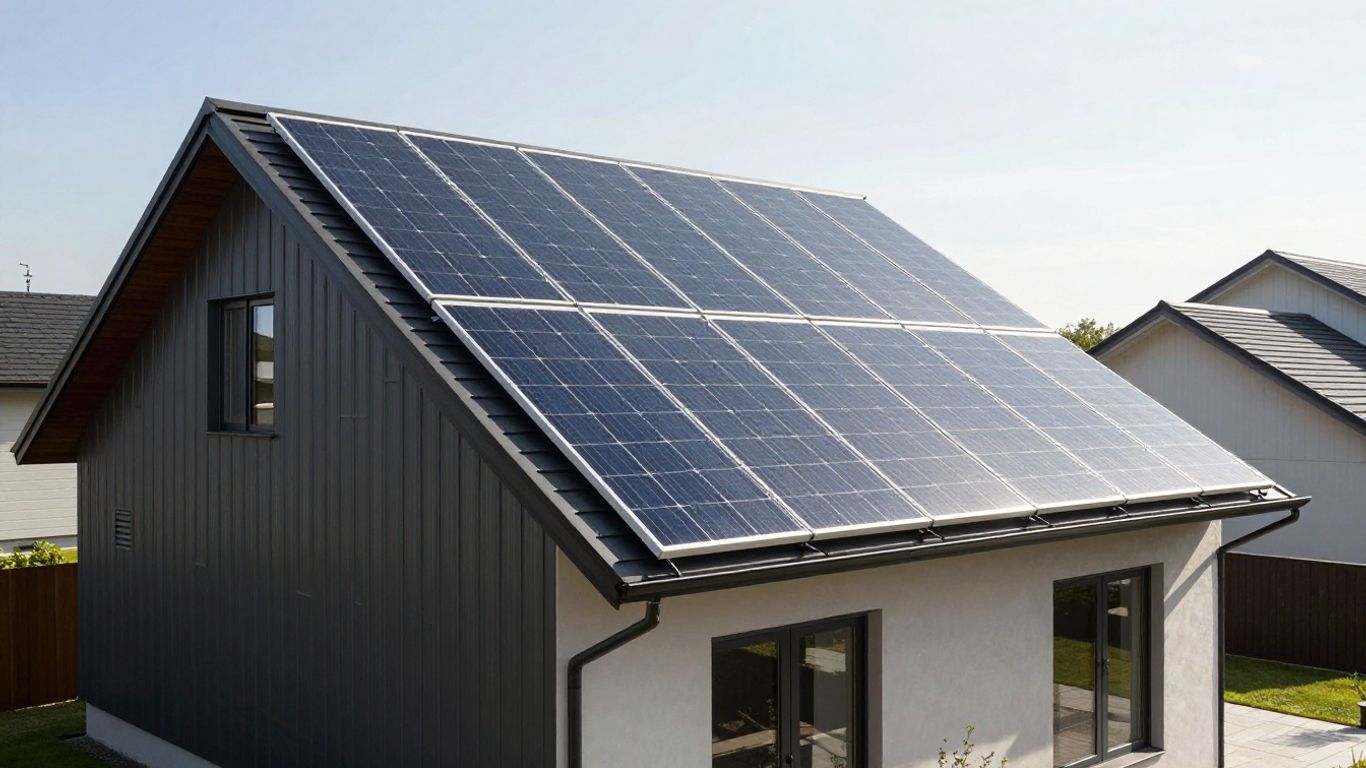
To successfully complete your project of installing solar panels on a vertical wall, meticulous preparation of documents is essential. These supporting documents allow the authorities to understand the scope of your project and ensure its compliance with current urban planning rules.
Location Plan and Site Plan
The location plan is the first document to provide. It is used to precisely locate your home within the municipal territory. You can generally generate it through government platforms like Géoportail. Then, the site plan comes into play. This document represents your entire plot of land and must indicate the exact location where the solar panels will be installed on the wall. It allows for visualization of the installation’s integration into its immediate environment.
Installation Diagram and Representation of the Installation
To complete your application, you will need to attach an installation diagram. This drawing, often an aerial view, shows how the panels will be attached to the vertical wall, specifying their orientation and arrangement. A representation of the installation is also requested. This consists of one or more views showing the exterior appearance of the panels once installed, so that the administration can assess their visual impact on the building’s facade and the surrounding landscape. Consider choosing the type of panels carefully to ensure they integrate well.
Site Photograph
Finally, a site photograph is often required. This image, taken from the street or a public viewpoint, shows the current state of the wall before installation and helps assess the future integration of the panels into the building. It helps to appreciate the architectural context and the potential impact of your project. Sometimes, multiple photos from different angles are requested for better assessment. These documents are essential for compiling a complete application and facilitating the processing of your request. If you have doubts about the electrical aspects, consulting electrical diagrams for solar systems can help you better understand the requirements.
Post-Installation and Grid Connection Procedures
Once your solar panels are installed on your vertical wall, several steps are necessary to fully benefit from your energy production. It’s not enough to just install the panels; they must also be connected to the electrical grid and their compliance ensured.
Grid Connection Request
The first step is to request the connection of your installation to the public electricity distribution network, managed by Enedis. This step is essential, whether you wish to sell surplus production or simply benefit from precise monitoring of your consumption. The request is generally made online via the Enedis Connect platform. You will need to provide information about your installation, such as its power, the desired connection type, and attach the previously obtained urban planning documents. This procedure is mandatory for the commissioning of your installation.
Commonly requested documents include:
- Urban planning authorization (prior declaration or building permit).
- A location plan and a site plan of the building.
- Photographs of the installation.
- Proof of ownership.
- Your installer’s certification.
The average time to receive a technical and financial proposal from Enedis is 10 to 15 days. Once this proposal is accepted, Enedis will schedule the technical intervention.
Consuel Compliance Certificate
Before any commissioning, your installation must be certified compliant with current safety standards. This is the role of Consuel (National Committee for the Safety of Electricity Users). You will need to obtain a compliance certificate, which proves that your electrical installation is safe and complies with regulations. Without this document, Enedis will not be able to proceed with the final connection. This certificate is required for most installations connected to the public grid, especially those that inject surplus power or have a power exceeding 3 kWp. It is important not to overlook this step, as a non-certified installation could cause problems in case of inspection or dispute. For more information on the procedures, you can consult the Consuel website.
Declaration of Solar Income
If you sell all or part of your electricity production, you will need to declare the income generated. This is generally done through a purchase contract with EDF Obligation d’Achat (EDF OA) or another authorized buyer. Once your installation is connected and commissioned, you can invoice the surplus electricity injected into the grid. This invoicing is often done annually, on the anniversary of your contract. You will need to fill in information in your dedicated customer area regarding production and non-consumption. EDF OA will then pay you by bank transfer. It is advisable to closely monitor your production and associated income to optimize the profitability of your solar installation.
Grid connection is a key step that not only allows for the sale of your surplus energy but also the commissioning of your Linky meter and access to potential financial aid. Without this connection, you can neither sell your electricity nor benefit from support schemes. It is therefore crucial to anticipate this procedure from the design phase of your project.
Conclusion
Installing solar panels on a vertical wall is a process that requires a good understanding of the regulations. Before you begin, make sure you fully understand the administrative procedures, any necessary urban planning authorizations, and the specifics related to protected areas. Good preparation will allow you to carry out your project with peace of mind and fully enjoy the benefits of solar energy.
Frequently Asked Questions
Do I always need to request authorization to install solar panels on my wall?
Not always! If your installation is small, say less than 3 kWp and not exceeding 1.80 meters in height, you generally don’t need special authorization. It’s like a little boost to get started. But be careful, you still need to report it to Enedis, the electricity grid operator.
What is a prior declaration of works?
It’s a bit like telling the town hall what you plan to do. It’s a form to fill out to report your solar panel installation project on your wall. The town hall checks if everything is in order with the neighborhood rules. It’s the most common procedure for this type of installation.
Why is the opinion of the Architecte des Bâtiments de France important?
Imagine you live near an old castle or in a historic neighborhood. The ABF ensures that new installations, like your solar panels, don’t spoil the beauty of the landscape or old buildings. Their opinion is therefore very important in these special areas.
When is a building permit required for solar panels on a wall?
It’s quite rare for panels on a wall. Generally, it happens for very large installations, or if your municipality has very strict rules, especially if you are in a protected area. It’s best to ask your town hall to be sure.
What should I do after installing my solar panels?
Once your panels are installed, there are still a few small things to do. You need to request permission to connect your panels to the electrical grid, and if you sell the electricity you don’t consume, you’ll need to declare it for tax purposes. There’s also a certificate to obtain to show that everything is installed correctly.
Do I have to pay to file my declaration?
Good news! Filing a prior declaration of works to install solar panels is free. You don’t have to pay anything to the town hall for this procedure. However, if you hire a professional to help you with the paperwork, then there will be fees.