Wondering how an electric car’s battery voltage works? It’s an important question, especially with evolving technologies. Between direct current and alternating current, different charging types, and even auxiliary batteries, it’s easy to get lost. This article will clarify everything for you, simply explaining the basics of electric car battery voltage.
Key Takeaways
- In an electric car, the main battery stores energy in direct current (DC), often at high voltages (over 400V) to power the motor. Alternating current (AC) is used for charging from a domestic outlet or a slow charging station, requiring conversion to DC by the onboard charger.
- Fast direct current (DC) charging allows the vehicle to be plugged directly into charging stations that provide the appropriate current, thus speeding up the charging process. Voltage is a determining factor for the speed and efficiency of this charging.
- DC/DC converters play a vital role in stepping down the high voltage of the traction battery to power auxiliary equipment (headlights, radio, air conditioning) which typically operate at low voltage (12V or 48V).
- Despite the presence of the high-voltage battery, electric cars retain a 12V auxiliary battery. This is essential for starting the high-voltage system and powering basic electronic components. Research is underway to replace it with solutions based on the high-voltage system.
- The high-voltage circuits of electric vehicles are dangerous and reserved for professionals. For individuals, maintenance is limited to low-voltage circuits (12V) and adherence to manufacturer recommendations to ensure safety.
Understanding Electric Car Battery Voltage
In an electric car, battery voltage is a central element that deserves attention. It’s not just a number, but the force that powers the entire vehicle. You might wonder why direct and alternating current are discussed so much in this context. It’s an important distinction.
The Distinction Between Direct Current and Alternating Current
Simply put, direct current (DC) is a flow of electrons that always moves in the same direction. Think of it like a river where water flows constantly in one direction. Your electric car’s battery, the one that stores energy to move the vehicle, operates on direct current. Voltages can be quite high, often around 400 volts, or even more on some recent models. It’s this stored DC energy that directly powers the traction system.
Alternating current (AC), on the other hand, periodically changes direction. This is the type of current you find in your home outlets. To recharge your electric car’s battery at home or at a standard public charging station, this alternating current must be converted into direct current. This is the role of the onboard charger in the vehicle. It acts as a translator between the electrical grid and the battery.
The Role of the High-Voltage Battery in Traction
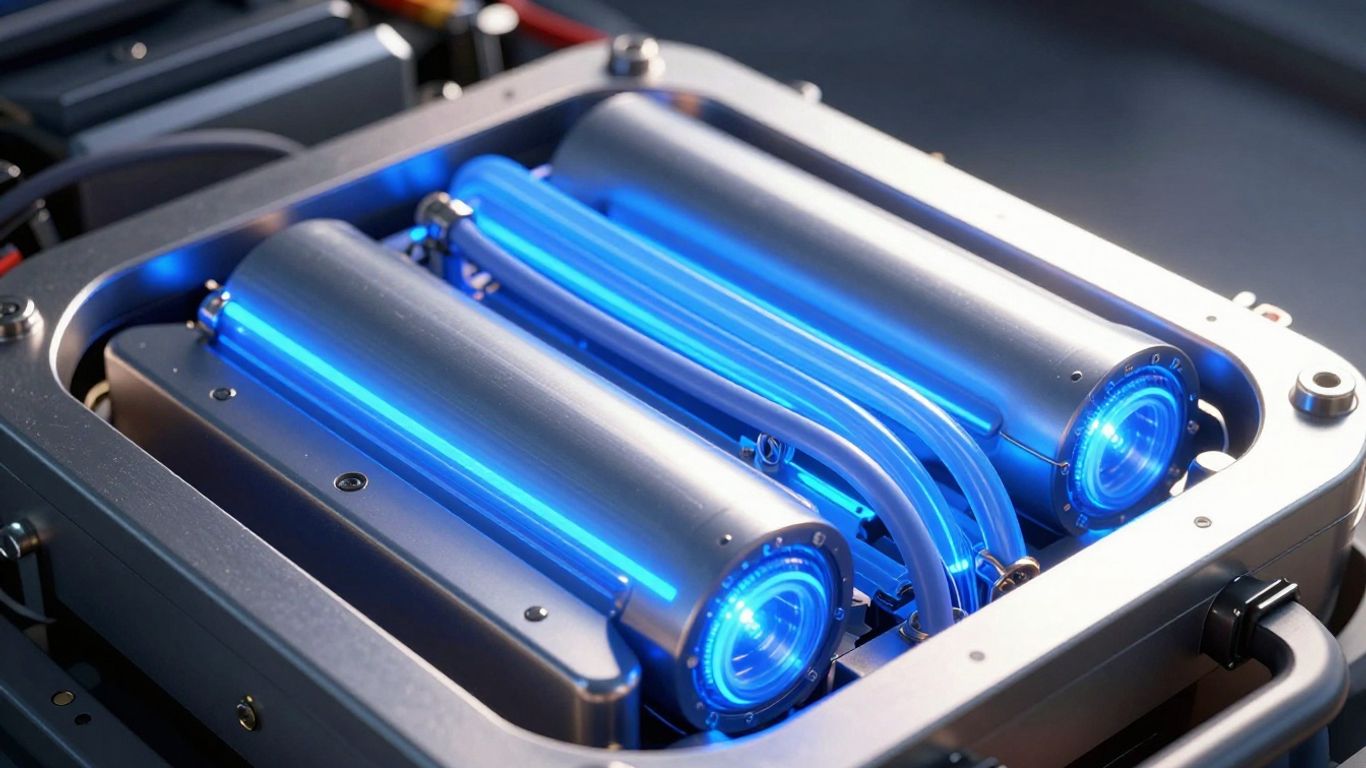
The high-voltage battery is the energy heart of your electric car. It stores a considerable amount of energy, measured in kilowatt-hours (kWh), and delivers it as direct current. For example, a 95 kWh battery can power the vehicle for a certain time, but its voltage, which can reach 396V, is what provides the necessary power to the electric motor. It is this high voltage that makes the performance and range of electric vehicles possible. Without it, there’s no propulsion.
Specifics of Electric Vehicle Electrical Circuits
Electric vehicles have electrical circuits that are a bit more complex than those in internal combustion engine cars. In addition to the usual low-voltage circuit (often 12V) that powers accessories like headlights, wipers, or the multimedia system, there’s the high-voltage circuit dedicated to propulsion. This circuit includes the main battery, the inverter that converts direct current to alternating current for the motor, and the electric motor itself. The entire system is managed by sophisticated electronic systems to optimize energy consumption and ensure safety. Managing this high voltage is a field reserved for trained professionals.
It’s important to understand that voltage in an electrical circuit is like water pressure in a pipe. The higher the pressure, the more forcefully the current can flow. In an electric car, this force is necessary to move a heavy vehicle and to allow for quick acceleration.
The voltages encountered in electric vehicles can be dangerous. Therefore, it is crucial to follow safety instructions. For you, as a user, this mainly means understanding the basics for safe and efficient use of your vehicle, especially during charging. The difference between alternating current (AC) and direct current (DC) charging directly impacts charging speed and how your battery is utilized. Knowing this helps you better plan your trips and preserve your battery’s health long-term. For example, a fast DC charging station can deliver up to 30 kW, which is much faster than standard AC charging. Understanding DC Charging
Different Charging Types and Their Impact on Voltage
Understanding how your electric vehicle manages charging also means grasping how voltage varies depending on the type of current and equipment used. This is not a trivial matter: choosing the right method influences charging time, battery health, and sometimes even safety during daily use or long trips.
AC Charging and the Onboard Charger
Most of the time, you’ll charge your electric car from a domestic outlet or a public AC charging station.
- The current delivered is then alternating (AC), like the current in your home.
- It’s the onboard charger in the car that converts this alternating current into direct current (DC), which is stored in the battery.
- The input voltage depends on the grid (often 230V in France), and the output of the onboard charger adapts to the voltage required by the battery (generally between 350 and 800V for recent models).
A key point to remember: charging power depends on both the voltage, amperage, and capacity of the onboard charger – a low-power model limits charging speed, even if the external charging station offers more.
DC Fast Charging at a Charging Station
To save time on long trips or highway stops, you’ll likely use DC fast charging:
- Here, the charging station directly supplies direct current to the battery, bypassing the onboard charger.
- This allows for very high power levels (50, 150, or even over 300 kW depending on the station and vehicle).
- The charging voltage then rises significantly, often to 400V or more (some models accept up to 800V), which allows the battery to be filled much faster than with AC.
A summary table:
| Charging Type | Current Type | Typical Voltage | Max Power (kW) | Time for 80% |
|---|---|---|---|---|
| Domestic Outlet | AC | 230 V | ~2 | 20h-30h |
| AC Charging Station | AC | 230/400 V | 7-22 | 5h-8h |
| Fast Charging Station | DC | 400-800 V | 50-350 | 15min-1h |
The Importance of Voltage During Charging
As you’ve understood, charging voltage directly impacts how quickly your battery fills up. But that’s not all:
- Voltage influences compatibility between the charging station and your car. Some stations offer 800V, but if your vehicle doesn’t support it, it will automatically limit the charging voltage.
- Higher voltage allows for more efficient charging, especially for modern, high-capacity batteries.
- During fast charging, thermal management and protection systems are engaged: the battery must remain at the correct temperature, and electronic devices constantly monitor the voltage.
- On a daily basis, opting for moderate charging (AC) often helps preserve your battery’s longevity.
In practice, these choices affect your comfort, trip planning, and vehicle wear. Other parameters come into play, such as temperature or the initial battery level, modulating the power actually delivered by the charging station – certain factors can limit the effective charging speed.
Managing charging involves considering both the available voltage, your car’s capabilities, and the long-term consequences for the battery. This requires planning, especially based on your daily needs or exceptional trips.
The Role of Converters and Inverters
The Function of the DC/DC Converter for Auxiliaries
In an electric vehicle, the high-voltage traction battery, which powers the motor, cannot directly supply the energy needed for numerous auxiliary systems like headlights, radio, wipers, or the air conditioning system. These components typically operate at a much lower voltage, often 12V, similar to that of internal combustion engine cars. This is where the DC/DC converter comes in. Its role is to take the direct current (DC) from the high-voltage battery and transform it into a lower-voltage direct current, compatible with these secondary systems. It acts as an essential bridge between the vehicle’s energy core and its comfort and safety functions. Without this device, a separate low-voltage battery and a complex charging system for these auxiliaries would be necessary, which would add weight to the vehicle and complicate its design. The integration of these converters is therefore a key step for the overall efficiency of an electric car.
Current Transformation by the Inverter for the Motor
Your electric car’s battery stores energy as direct current (DC). However, the electric motor that propels the vehicle often operates with alternating current (AC), or at least a current whose form and frequency can be modulated to control speed and torque. The inverter is the component that performs this crucial conversion. It takes the direct current from the battery and transforms it into alternating current, precisely adjusting the voltage and frequency to drive the motor. It is thanks to the inverter that you can accelerate, decelerate, and maintain a constant speed. The performance and efficiency of this inverter directly impact your vehicle’s range and responsiveness. Modern technologies allow for very fast and precise conversions, thus optimizing energy consumption. You can learn more about the design of DC-AC converters to better understand this technology.
Component Integration to Optimize Performance
Power electronics, including converters and inverters, represent a significant part of the onboard technology in an electric vehicle. To gain in compactness, weight, and efficiency, manufacturers are increasingly seeking to integrate these functions. For example, it’s possible to combine the onboard charger (which converts AC from the grid to DC for the battery) and the DC/DC converter into a single unit. This pooling of functions reduces the number of parts, simplifies wiring, and decreases energy losses. The goal is to create a more intelligent and higher-performing electrical system. Here are some key points of this integration:
- Reduced Number of Components: Fewer parts mean less weight and fewer potential failure points.
- Space Optimization: Integrated modules take up less space, which can be used for other elements or to improve interior space.
- Improved Energy Efficiency: By consolidating functions, conversion and energy transfer losses can be minimized.
- Simplified Maintenance: A more integrated system can paradoxically be easier to diagnose and repair if the modules are designed to be modular.
The constant evolution of power electronics aims to make electric vehicles more efficient, with greater range, and more affordable. These components, although often hidden, are at the heart of the electric driving experience.
Auxiliary Batteries and Their Voltage
Maintaining a 12V Battery in Electric Vehicles
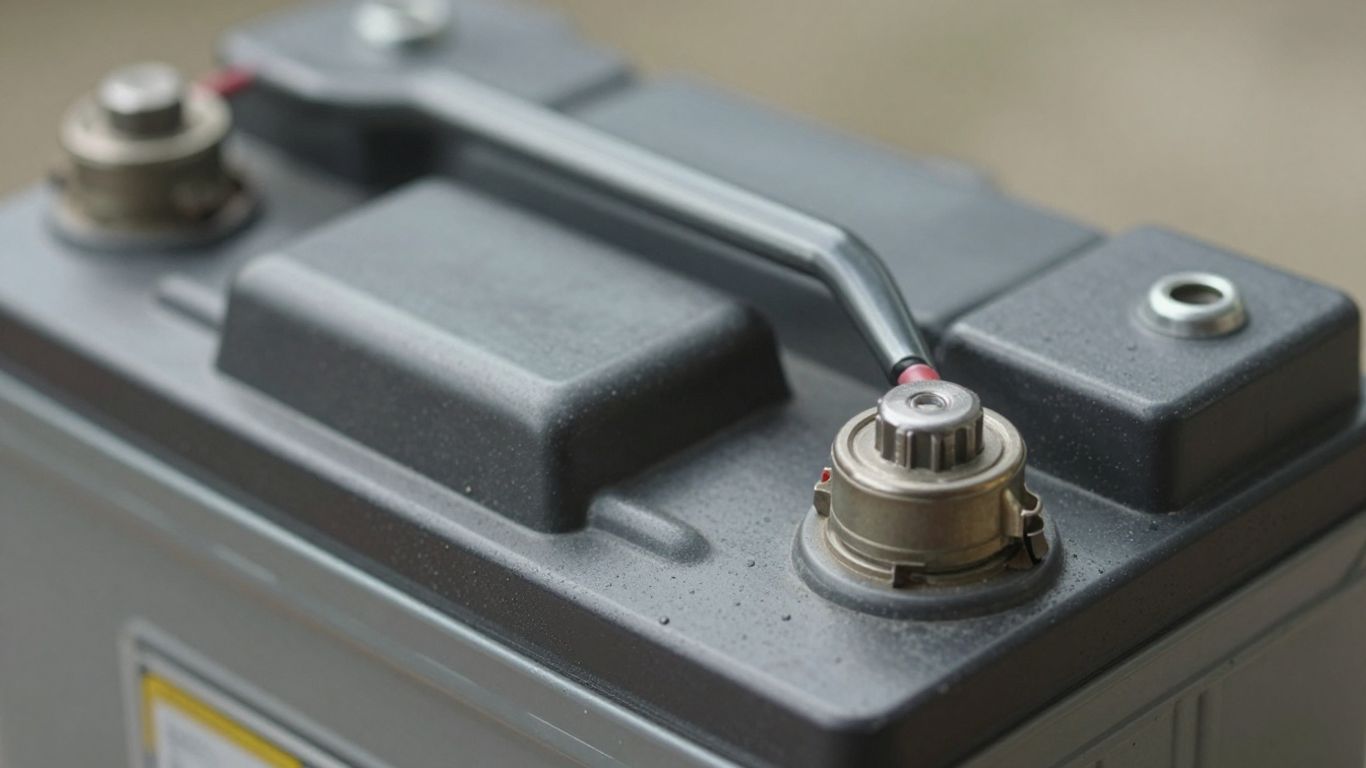
Despite the shift towards high-voltage systems, most electric cars continue to include a 12-volt auxiliary battery. This low-voltage circuit is far from obsolete; it remains essential for powering a multitude of systems vital for daily use. Think of interior and exterior lighting, infotainment systems, windshield wipers, or central locking. Without this auxiliary battery, these components simply couldn’t function.
The Role of the Auxiliary Battery in Starting
The most critical function of the 12V battery in an electric vehicle concerns starting. It provides the energy needed to activate the main contactors. These contactors, once engaged, then allow the high-voltage traction battery to take over and power the drivetrain. In other words, a failure of this small 12V battery can immobilize an electric vehicle, even if its main battery is in perfect condition. It’s like the silent guardian that allows the entire machine to awaken.
Innovations to Replace the 12V Battery
The reliance on the 12V battery is seen by some as a weak point in the architecture of electric vehicles. Research is underway to potentially do away with it. The idea would be to directly use the high-voltage system to power these auxiliary functions, often via specific converters. Some concepts even explore using two high-voltage batteries to ensure redundancy and prevent any service interruption. While promising, these innovations aim to simplify the system and improve overall reliability. For now, the 12V battery remains an important component, with a typical voltage around 12.6V at rest, but it requires monitoring to ensure proper functioning charging is needed below 12.2V.
The auxiliary battery, despite its lower voltage, plays a disproportionate role in the daily operation and starting of electric vehicles. Its presence is a current technical necessity, despite advancements aimed at deeper system integration.
Safety and Maintenance Related to Electric Car Battery Voltage
Addressing the safety and maintenance of an electric car’s electrical circuits, particularly those related to battery voltage, is a step you should not overlook. While driving an electric vehicle is often simpler, managing high-voltage energy requires special attention.
Dangers of High-Voltage Circuits
It is imperative to understand that high-voltage circuits in an electric vehicle, which can reach voltages of 400V, 800V, or even more, pose significant risks. Improper handling can have serious consequences. These systems are designed to be isolated and protected, but any unauthorized or poorly executed intervention on these components can lead to severe electric shocks. Therefore, it is strongly recommended to leave any work on the high-voltage system to qualified and authorized professionals. For your information, the nominal voltage of an electric car battery is generally between 300 and 500V DC, but can rise up to 950V DC [4200].
Maintenance of Low-Voltage Circuits
Fortunately, most routine maintenance tasks that you can perform yourself concern the 12V low-voltage circuit. This circuit, although less powerful, remains vital. It powers auxiliary systems like lighting, wipers, infotainment systems, and, most importantly, it is often responsible for activating the contactors that energize the main high-voltage battery. Regular maintenance of this 12V battery, including checking the cleanliness and tightness of the terminals, is therefore good practice. If a fuse blows, replace it with an identical model. If a fuse repeatedly blows, it indicates a deeper problem requiring professional diagnosis.
Precautions During Handling
When handling electrical components, even those in the 12V circuit, certain precautions are necessary. Avoid overloading outlets (like the cigarette lighter) with too many devices simultaneously. Pay attention to warning signs:
- Lights dimming at idle.
- Difficulty starting, even with a recent battery.
- A hot or burning smell coming from the circuits.
- Warning lights (airbag, ABS) illuminating unexpectedly.
It is essential to follow the manufacturer’s recommendations regarding charging and maintenance. For high-voltage circuits, the golden rule is not to intervene yourself. High-voltage batteries store a considerable amount of energy, requiring specific diagnostic and safety procedures [b3a5].
In summary, for everyone’s safety and the longevity of your vehicle, entrust interventions on the high-voltage system to experts and ensure the 12V circuit is in good working order.
Conclusion on Your Electric Car Battery Voltage
There you have it, we’ve covered the various aspects of your electric car’s battery voltage, from charging to AC/DC currents, and auxiliaries. You see, it’s not that complicated once you have the basics. Understanding these elements will help you use your vehicle better daily, take care of it, and avoid unpleasant surprises. Remember that the high-voltage part is reserved for professionals, but knowing the general operation will make you more independent in your usage. Take care of your battery, and it will take care of you!
Frequently Asked Questions
What is the difference between direct current (DC) and alternating current (AC) in an electric car?
Imagine electricity as water. Direct current (DC) is like a river that always flows in the same direction; this is what your main battery stores. Alternating current (AC) is like a tide that rises and falls; this is what you find in your home outlets and what some charging stations provide. Your car needs to convert AC to DC to recharge its battery.
Why do electric cars always have a small 12V battery in addition to the large high-voltage battery?
It’s a bit like having a small generator to start a big machine. The small 12V battery is used to ‘wake up’ the car’s system, to turn on the onboard computers and relays that will then allow the large high-voltage battery to operate and move the car. Without it, the big battery couldn’t be activated.
What do the onboard charger and inverter do in an electric car?
The onboard charger is like a translator: it takes the alternating current (AC) from your outlet or charging station and converts it into direct current (DC) that the battery can accept. The inverter, on the other hand, does the opposite: it takes the direct current (DC) from the battery and converts it into alternating current (AC) to run your car’s electric motor.
Can I charge my electric car on a normal home outlet?
Yes, you can, but it will be slower. Household outlets provide low-power alternating current (AC). Your car will convert this current using its onboard charger. For faster charging, you need to use specific charging stations, especially those that provide direct current (DC).
What is a DC/DC converter and why is it important?
The DC/DC converter is a transformer. It takes the current from the large high-voltage battery (e.g., 400 Volts) and reduces it to a lower voltage, often 12 Volts, to power all accessories like headlights, radio, air conditioning, etc. It ensures that these devices receive the correct voltage without being damaged.
What are the dangers associated with high voltage in an electric car?
High voltage is much more powerful than the current from your home outlets. If you are not properly trained and equipped, handling high-voltage circuits can be extremely dangerous, even fatal. This is why these parts of the vehicle are reserved for qualified professionals for any intervention.