

Imagine the power goes out at your house. Your solar panels are there, but everything stops. Frustrating, right? That’s where a “backup box” comes in. This small device allows your solar installation to continue functioning even when the public grid is down. We’ll look at how it works and why it’s a good idea to have one for peace of mind, no matter what happens.
Key Points
- A backup box allows your solar installation to continue producing electricity even in the event of a grid outage.
- Modern inverters like those from Huawei, SolarEdge, or Solis can be equipped with a backup function.
- The Huawei backup box is a reliable solution that ensures a smooth transition between the grid and off-grid mode.
- For an autonomous solar project, it is important to identify the essential appliances to power first.
- Installing a backup box improves the safety, comfort, and self-consumption of your home.
Understanding the need for a backup box for your solar installation
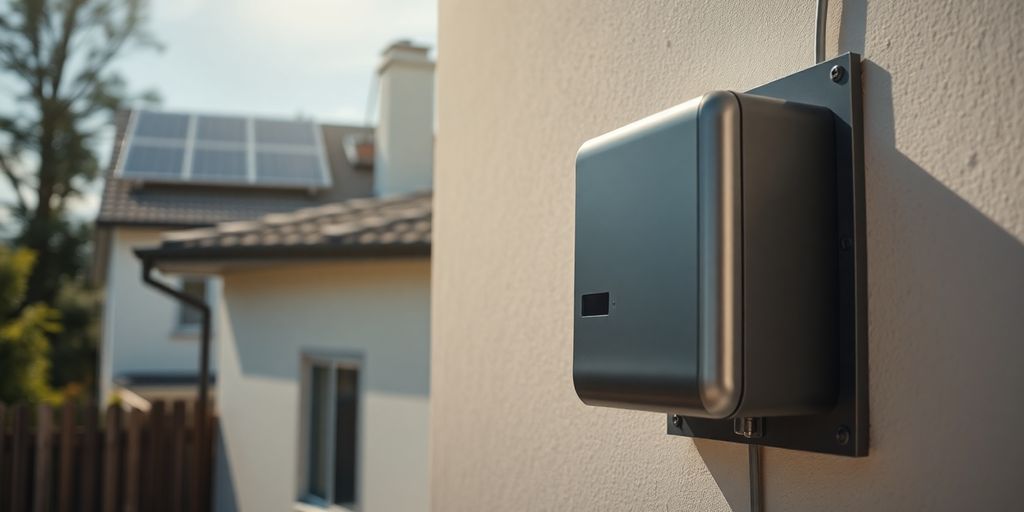
It’s important to understand why a backup box has become an essential component for any modern solar installation. Power outages are more frequent than we think, and a standard solar installation, while producing energy, cannot always help you during these interruptions. A backup box changes the game, allowing you to continue powering your essential appliances even when the grid is out of service. It’s an investment in your comfort and energy security.
How solar installations work during a grid outage
Normally, your solar installation injects the electricity produced into the grid. However, as a safety measure, during a power outage, the inverter disconnects from the grid. This is done to prevent electrocuting workers on the power lines. Without a backup power supply, your home will be without electricity, even in full sun. A backup box bypasses this problem by creating an isolated electrical network, powered by your solar panels and batteries.
Safety standards and inverter protection
Solar inverters are designed to comply with strict safety standards. These standards require the inverter to disconnect from the grid in the event of an outage. A backup box adds an extra layer of protection by ensuring the inverter operates safely in isolated mode. It also protects the inverter from potential damage caused by voltage fluctuations when power returns.
Energy autonomy: a goal to achieve with the backup box
Energy autonomy is an increasingly popular goal. A backup box is a key element to achieve this autonomy. It allows you to store solar energy produced during the day in batteries, and use it during power outages or at night. This reduces your dependence on the electrical grid and allows you to consume your own green energy. Self-consumption then becomes a tangible reality, saving you money on your electricity bills and reducing your carbon footprint.
A backup box is not just an accessory, it’s an investment in your energy independence. It offers you peace of mind knowing that you won’t be left in the dark during the next power outage. It allows you to maximize the use of your solar installation and contribute to a more sustainable future.
Here are some concrete advantages of a backup box:
- Maintains power to essential appliances (refrigerator, lighting, etc.)
- Reduces dependence on the electrical grid
- Increases the rate of self-consumption
Inverter solutions with integrated backup function
It is important to know that several manufacturers offer inverters directly integrating a backup function. This greatly simplifies installation and offers a more compact solution. Let’s explore some interesting options together.
The Huawei inverter and its FusionSolar range
Huawei has established itself as a major player in the field of solar inverters. Its FusionSolar range offers hybrid models capable of managing a storage battery and providing backup power in the event of a power outage. To benefit from this functionality, the installation of a Huawei backup box is necessary. These inverters are designed to optimize energy production and reduce operating costs.
The SolarEdge inverter with backup option
SolarEdge, known for its inverters with optimizers, also offers a backup option. Models SE5000RWS or SE6000RWS, equipped with a backup circuit, can power a secondary circuit in the event of a grid outage. Backup electricity can come either from the battery or directly from the solar panels. This is an interesting solution to ensure a [backup power supply](#5aa0].
The Solis inverter and its backup capabilities
Solis is a manufacturer of solar inverters that has made a name for itself in the global market. Although less known than Huawei or SolarEdge, Solis offers inverters with interesting backup capabilities. These inverters can switch to off-grid mode in the event of a power outage, thus ensuring continuity of power for certain essential appliances. It is important to check compatibility with your [solar energy kit](#c24d] for optimal integration.
Integrating a backup function directly into the inverter simplifies installation and reduces the number of components required. This can also improve system reliability by reducing the number of potential points of failure.
Here is a simplified comparison table of the backup features of these inverters:
| Manufacturer | Model (example) | Backup power source | Requires a backup box? |
|---|---|---|---|
| Huawei | SUN2000 KTL | Battery/Solar panels | Yes |
| SolarEdge | SE5000RWS | Battery/Solar panels | No (integrated circuit) |
| Solis | (Varies) | Battery/Solar panels | May vary |
It is important to note that exact specifications may vary depending on the inverter model. It is therefore recommended to consult the manufacturers’ datasheets for precise information.
The Huawei backup box: a reliable solution for backup power
The Huawei backup box represents a reliable solution to guarantee backup power in the event of a grid outage. It ensures the continuity of service for your essential appliances, thus offering you increased peace of mind. This device is particularly relevant if you have a solar installation and wish to maximize your energy autonomy.
Presentation of the single-phase Huawei backup box
The single-phase Huawei backup box is a device designed to provide backup electrical power in the event of a power failure. It is compatible with Huawei solar inverters of the L1 series and a storage system of the same brand. Lightweight and compact, it facilitates installation and easily integrates into your existing installation. It communicates with the inverter via a digital input and benefits from IP65 protection against bad weather. The Huawei backup box is an ideal solution for those who wish to increase their rate of electrical self-consumption and avoid load shedding.
Operation in grid-connected mode and backup mode
In grid-connected mode, the Huawei backup box operates with a voltage of 220 V / 230 V and a frequency of 50Hz / 60Hz. The AC voltage range is 198 V – 253 V. In backup mode, it offers a nominal voltage of 220 V / 230 V Ac and a frequency of 50Hz / 60Hz. Its maximum power is 5000 VA, with a maximum output current of 22.7 A. The switching time is less than 3 seconds, ensuring a fast and almost imperceptible transition in the event of an outage. This rapid switching is essential for sensitive devices.
Advantages of combining with a Huawei inverter and a storage system
The combination of the Huawei backup box with a Huawei inverter and a storage system offers many advantages.
- It allows uninterrupted power supply, even in the event of a grid outage.
- It optimizes the self-consumption of produced solar energy.
- It ensures the protection of electrical appliances in case of voltage fluctuations.
The Huawei backup box monitors the status of the inverter, whether it is connected to the public grid or off-grid (battery storage). In the event of a power outage, the inverter switches to off-grid mode, but continues to supply electricity. The backup box then serves as a backup power supply and continues to supply alternating current for electrical appliances (fridge, freezer, light, etc.). When power on the primary grid is restored, the Huawei backup box allows the inverter to return to grid-connected status.
The proper installation of the backup box is crucial to ensure its proper functioning and longevity. Huawei offers a complete and integrated solution for optimal management of your solar energy.
Key steps for an autonomous solar project with backup box
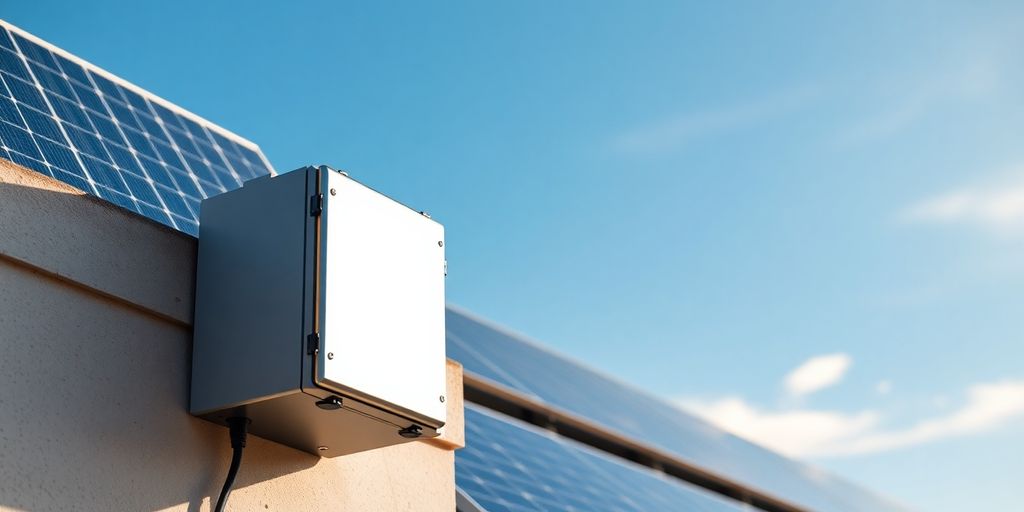
To guarantee the autonomy of your solar installation in the event of a grid outage, several steps are essential. These steps will allow you to correctly size your system and ensure a reliable and durable backup power supply.
Identification of critical loads to be backed up
The first step is to precisely identify the critical loads in your home that you want to power in the event of a power outage. It is important not to overload the backup network, as this could strain the battery and drain your storage too quickly. A backed-up network must be frugal and secure only critical items.
- Essential lighting (a few LED lamps).
- Heating system (e.g., a small heat pump).
- Medical devices (if applicable).
It is recommended to avoid equipment with high starting current draw, such as induction hobs. Prioritize appliances that smooth their electricity consumption to preserve the autonomy of your system.
Technical choice of inverter technology
Several manufacturers offer inverters with integrated backup function, such as Huawei and its FusionSolar range, SolarEdge, and Solis. Each solution has its advantages and disadvantages. It is therefore important to make an informed technical and technological choice. Do not hesitate to discuss with a professional, such as your solar panel installer, to get personalized advice. They can help you choose the inverter best suited to your needs and budget.
Optimizing the longevity of storage batteries
The lifespan of storage batteries is a key factor for the profitability of your autonomous solar installation. To optimize their longevity, it is important to follow the manufacturer’s recommendations for charging and discharging. Avoid deep discharges and excessive fast charges. Intelligent battery management, via the FusionSolar application, can also help extend its lifespan. Remember to consult the diagrams of the different setups for optimal installation.
Installation and configuration of the Huawei backup box
Installing a Huawei backup box is a crucial step to ensure continuous power supply in the event of a power outage. Here is a detailed guide to successfully complete this installation.
Referencing the necessary parts for installation
Before you begin, make sure you have all the essential components. Meticulous preparation is the key to a successful installation. Here is a list of the components you will need:
- Huawei Backup Box
- Battery cables (suitable for your storage system)
- Power cables for connection to the electrical panel
- Power cables for connection to the inverter
- Communication cable for connection to the inverter
It is highly recommended to check the compatibility of all components with your existing solar installation. Incompatibility can lead to malfunctions or damage your equipment.
Environmental requirements for optimal operation
The environment in which you install the Huawei backup box plays an important role in its performance and longevity. Here are some recommendations to follow:
- Choose a dry place, sheltered from bad weather. Humidity and temperature variations can affect electronic components.
- Ensure adequate ventilation to prevent overheating, especially if the backup box is installed in an enclosed space.
- Avoid direct exposure to sunlight, as this can also lead to overheating and reduce the lifespan of the device.
Configuration via the FusionSolar application
The configuration of the Huawei backup box is mainly done via the FusionSolar application. This application allows you to set operating modes and monitor the status of your system. Here are the steps to follow:
- Log in to the FusionSolar application with your installer account. If you don’t have an account, you will need to create one. You can download the FusionSolar application from Huawei’s official website.
- Go to the “Me” section, then select “Device commissioning”.
- Follow the on-screen instructions to connect the backup box to your Wi-Fi network. The application will guide you through the different configuration steps.
- Once the connection is established, go to “Settings”, then “Function settings” to configure the off-grid and grid-connected modes according to your needs. You will then be able to define the switching thresholds and power priorities.
It is important to note that the configuration may vary slightly depending on your backup box model and the FusionSolar application version. Do not hesitate to consult the user manual for more detailed instructions. Once the installation is complete, remember to perform an audit of your installation to ensure everything is working correctly.
Ensuring service continuity with a backup box
A backup box is an essential component to ensure that your solar installation continues to function even in the event of a power outage. It ensures a smooth transition to backup power, allowing you to maintain power to your important appliances. It’s an investment that brings peace of mind and autonomy.
The role of the backup box in case of load shedding
In the event of load shedding, the backup box takes over to power your home. It detects the power outage and automatically switches to battery power. This prevents you from experiencing the inconvenience of a power outage and allows you to continue using your essential appliances. The backup box acts as a bridge between the electrical grid and your solar system, ensuring continuous power.
Powering essential appliances during an outage
The backup box is designed to power the appliances you deem most important. This may include:
- Your refrigerator to keep your food fresh.
- Your heating or air conditioning system to maintain a comfortable temperature.
- Your lights to move around safely.
- Your internet router to stay connected.
The capacity of the backup box to power these appliances depends on the size of your battery and the power consumption of your appliances. It is therefore important to properly size your system according to your needs.
Smooth transition between grid and off-grid mode
One of the main advantages of a backup box is its ability to make an almost instantaneous transition between the electrical grid and off-grid mode. This transition is so fast that you won’t even notice the power outage. The Huawei backup box ensures uninterrupted power, thus avoiding any data loss or service interruption. It offers increased security and optimal comfort in the event of a failure. With a solar kit, you can be sure that your home will remain powered, even when the electrical grid is out of service.
Benefits of a solar installation with backup box
Security and comfort in case of grid interruption
A solar installation equipped with a backup box offers you unparalleled peace of mind. In the event of a power outage, you continue to benefit from an electrical supply, which is particularly important for people requiring medical equipment or wishing to maintain a certain level of comfort. Imagine no longer having to worry about losing your food in the refrigerator or interrupting your work from home. It’s an investment in your serenity.
Increased rate of electrical self-consumption
The backup box, combined with a storage system, optimizes your electrical self-consumption. Rather than reinjecting your surplus solar production into the grid at an often unfavorable price, you store this energy for later use. This reduces your dependence on the grid and lowers your electricity bills. It is both an economic and ecological approach.
Here are some ways to increase your self-consumption rate:
- Properly size your storage system.
- Schedule the use of your energy-intensive appliances during daylight hours.
- Monitor your consumption and production using a monitoring application.
Equipment protection and installation longevity
A backup box protects your electrical appliances from power surges and voltage fluctuations that can occur during power outages. These disturbances can damage your sensitive electronic equipment, such as computers, televisions, and household appliances. By stabilizing the power supply, the backup box helps extend the lifespan of your appliances and ensure the longevity of your solar installation.
Installing a backup box is a wise investment to secure your power supply, optimize your self-consumption, and protect your equipment. It offers you increased energy autonomy and peace of mind in the event of a power outage.
In summary
Setting up a “backup box” for your solar installation is a good idea so you don’t find yourself without electricity when the grid goes down. We’ve seen that classic inverters cut everything for safety, but with a backup system, you can keep part of your house powered. You need to choose carefully what you want to run first, like the fridge or lighting, so you don’t drain the batteries too quickly. Brands like Huawei, SolarEdge, or Solis offer solutions for this. It’s an investment, but it brings real peace of mind, especially if you’re in an area where outages are frequent. It allows you to remain autonomous and continue to use your own solar energy, even when everyone else is in the dark.
Frequently Asked Questions
Does my solar installation work if the power is cut?
No, most solar installations automatically shut down in the event of a power outage for safety reasons. Imagine a technician trying to repair a downed power line: they must not risk being electrocuted by electricity from your home. That’s why a safety system cuts off your solar production as soon as the grid is down.
What is a backup box for?
A backup box is a device that allows your solar installation to continue functioning even when the electrical grid is down. It acts as an intelligent switch that disconnects your home from the main grid and connects it to your solar system and batteries, thus ensuring that certain appliances continue to receive electricity.
Does my battery make me autonomous in case of an outage?
No, having a battery is not enough. The same safety rule applies: if the grid goes down, your inverter must shut off to protect technicians. The backup box is what allows you to bypass this rule by creating a small isolated network in your home, powered by your panels and your battery.
Which inverters offer a backup function?
There are several inverter brands that offer “backup” options or solutions to continue producing in the event of a failure. Among the best known are Huawei with its FusionSolar range, SolarEdge, and Solis. Each brand has its own specificities and systems.
How to choose which appliances to power with the backup box?
To choose which appliances to power, think about what is essential: the fridge, the freezer, a few lights, and maybe something to charge your phone. Avoid large appliances like cooktops or water heaters that drain batteries very quickly. The goal is to last as long as possible with the least amount of energy.
Is installing a backup box complicated?
Installing a backup box requires precision. You need to identify the cables correctly, comply with safety standards, and ensure the location is protected. Often, an application like FusionSolar for Huawei allows you to configure the system. It is always recommended to call a professional for a safe and efficient installation.


