

Are you wondering if investing in solar panels in Toulouse is a good idea? It’s a question many homeowners ask themselves. Between the region’s generous sunshine and constantly improving technologies, there’s reason to be optimistic. But in concrete terms, how does the profitability of photovoltaic panels in Toulouse work? And above all, how long does it take for your installation to be paid off? We’ll look at that together, simply, so you have all the cards in hand.
Key Takeaways
- Toulouse’s sunshine makes solar panels particularly effective, which helps reduce your electricity bills quickly.
- The time it takes for your installation to become profitable depends on several things, such as the initial cost and the aid you can obtain.
- Choosing the right equipment and orienting your panels correctly is super important for them to produce maximum energy.
- There are administrative procedures for connecting your installation to the grid, but they are necessary to ensure everything is in order.
- Financial aid is available to help you get your solar project off the ground, which can make the investment even more attractive.
Understanding the profitability of photovoltaic panels in Toulouse
The profitability of photovoltaic panels in Toulouse is a subject that deserves particular attention if you are considering investing in this technology. Several factors come into play, and it is important to understand them in order to correctly assess the potential of your installation. An in-depth analysis will allow you to determine if the investment is wise for your specific situation.
Factors influencing local solar yield
Several elements can impact the yield of your solar panels in Toulouse. These include:
- Panel quality: High-quality panels capture solar radiation more effectively.
- Roof orientation and inclination: A south-facing orientation and optimal inclination maximize exposure to the sun.
- Shading: Trees, buildings, or other obstacles can significantly reduce energy production.
- Temperature: Solar panels tend to lose efficiency when the temperature is too high.
It is therefore essential to take these factors into account when planning your installation. Consider having an installation audit carried out by professionals to assess the potential of your roof.
Impact of Toulouse sunshine on production
Toulouse benefits from favorable sunshine, which is a major asset for solar energy production. However, it is important to qualify this statement. Sunshine varies throughout the year, with peaks in summer and cloudier periods in winter. Sunshine direct is a key factor.
It is crucial to consult local weather data to estimate the annual production of your panels. This data will help you anticipate seasonal variations and correctly size your installation.
Estimating savings on electricity bills
One of the main advantages of photovoltaic panels is the reduction of your electricity bill. By producing your own energy, you reduce your dependence on the electricity grid and reduce your expenses. The extent of the savings depends on several factors, including:
- The size of your installation: The larger your installation, the more electricity you will produce.
- Your electricity consumption: If you consume a lot of electricity, you will save more.
- The price of electricity: The higher the price of electricity, the greater your savings will be.
In general, a photovoltaic panel installation for a 100 m² house in Toulouse can reduce your electricity bill by 30 to 50%. To maximize your savings, you can consider consuming the electricity you produce in real time, which is called self-consumption.
Payback period of a photovoltaic installation
Methods for calculating return on investment
When we talk about solar panels, the question that often comes up is: “How long will it take for me to get my money back?”. It’s a legitimate question! Calculating the return on investment (ROI) for a photovoltaic installation involves several factors. You need to take into account the initial cost of the installation (panels, inverter, installation, connection), the estimated annual electricity production, the selling price of the electricity produced (if you resell it), and the savings made on your electricity bill if you consume your own production.
There are several methods for calculating this ROI. A simple method is to divide the total cost of the installation by the annual revenue generated (savings + electricity sales). This gives you an estimate of the number of years needed to reach the break-even point. However, this method does not take into account changes in electricity prices, financial aid, or the degradation of solar panels over time. For a more accurate analysis, it is best to use simulation tools that integrate these different parameters. Don’t hesitate to call on professionals to determine the profitability of your project.
Concrete examples of profitability over different periods
To give you a clearer idea, let’s take a few concrete examples. Imagine a 3 kWp installation in Toulouse, costing around €7,300 (self-consumption premium deducted). With good sunshine, this installation could produce around 3,600 kWh per year. If you consume some of this electricity and sell the surplus, you could save and earn around €800 per year. In this case, the return on investment would be around 9 years.
Now, consider a 1,000 m² solar farm. These installations can produce 210,000 kWh per year. With an average purchase price of €0.12/kWh, annual revenue amounts to around €12,000-18,000. The payback period is generally between 8 and 10 years. Over a period of 25 years (average lifespan of the panels), profitability becomes very attractive:
- After 10 years: the investment is amortized, and the plant begins to generate net profits;
- Over 20 years: with stable annual revenues (~€12,000-18,000), the cumulative amount exceeds €500,000, representing a return on investment multiplied by 2 to 2.5;
- Over 25 years: even anticipating a slight decrease in panel performance (around 0.5% per year), the plant will have produced the equivalent of 5 million kWh, for a total turnover approaching €600,000.
Analysis of initial costs and revenue generated
Analyzing initial costs is essential. The cost of a photovoltaic installation depends on several factors: the installed power, the type of panels, the complexity of the installation, and the costs of connecting to the grid. On average, it costs between €2,500 and €3,500 per kWp installed. Don’t forget to include maintenance costs, which represent around 1 to 2% of the initial cost per year.
The revenue generated depends on the amount of electricity produced and the selling price of that electricity. If you consume your own production, you save on your electricity bill. If you sell the surplus, you receive additional income. The electricity purchase price is set by EDF Obligation d’Achat (EDF OA) and varies depending on the power of the installation. It is therefore important to carefully assess your consumption and production potential to optimize your return on investment. For more information, consult this site map which will help you optimize your solar installation.
Optimizing the performance of solar systems
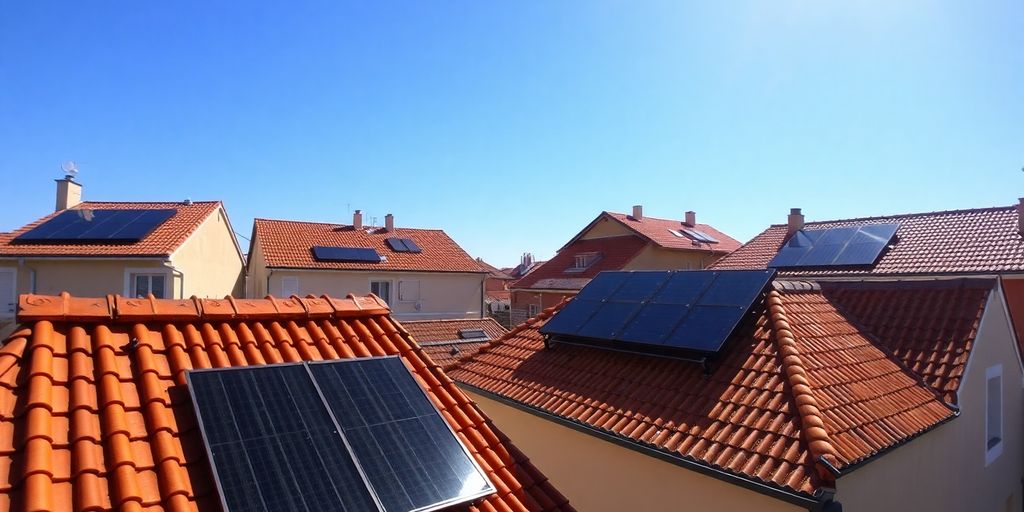
It is imperative to optimize the performance of your solar systems to maximize your return on investment. Several factors come into play, ranging from the quality of the equipment to the orientation of the panels. Here are some key points to consider to ensure optimal performance of your photovoltaic installation in Toulouse.
Importance of material quality and equipment
The quality of the equipment is paramount. Opt for solar panels and inverters from brands recognized for their reliability and durability. A larger initial investment in high-quality equipment will result in more stable energy production and a longer lifespan for your installation. The latest generation solar panels, such as bifacial panels, can significantly increase energy production. It is important to note that developers select and finance this high-end equipment. Your role is to choose a partner who uses these technologies to guarantee optimal production on your land. Don’t hesitate to contact an expert for component optimization.
Role of panel orientation and inclination
The orientation and inclination of solar panels play a crucial role in the amount of solar energy they can capture. In the northern hemisphere, a south-facing orientation is generally ideal. The optimal inclination depends on the latitude of Toulouse and the time of year. An inclination of 30 to 35 degrees is often recommended to maximize annual production. However, it is possible to use solar trackers to automatically adjust the orientation of the panels according to the position of the sun, thus significantly increasing the yield. Local sunshine remains the primary determinant of the profitability of a solar farm, but its actual impact is often poorly assessed by project developers.
Modern technologies for increased efficiency
Technological advances offer many solutions to improve the efficiency of solar systems. Bifacial panels, which capture light on both sides, can increase production by 10 to 20%. New generation inverters minimize energy losses during the conversion of direct current to alternating current. In addition, monitoring systems allow real-time monitoring of energy production and rapid detection of any anomalies. Good monitoring of the installation is the key to guaranteeing stable income over the long term.
Regular maintenance of your installation is also essential. Professional cleaning of the panels and verification of electrical connections help maintain production at its optimal level. A high-performance monitoring system must be put in place to immediately detect any drop in production.
Here is a comparative table of the different technologies:
| Technology | Advantages | Disadvantages |
|---|---|---|
| Bifacial panels | Increased production (10-20%) | Higher initial cost |
| Solar trackers | Yield optimization (up to 25%) | More complex maintenance, higher cost |
| New generation inverters | Minimizing energy losses | May require an upgrade to the existing installation |
It is important to carefully assess your needs and choose the technologies best suited to your situation to maximize the profitability of your solar installation. Do not hesitate to contact our expert team for more information.
Technical and regulatory considerations for installation
Procedures for connecting to the electricity grid
When you think about installing solar panels in Toulouse, it’s not enough to just put the panels down and hope it works. There is a whole process of connecting to the electricity grid to follow, and it’s not always simple. The first step is to make a connection request to Enedis, the grid operator. They will study your file and propose a technical solution. This study can take time, sometimes several months. Then, the connection work must be carried out, which may include pulling cables, installing a specific meter, and setting up electrical protections. This work must be carried out by an approved professional, as they must comply with very strict safety standards. Finally, once everything is installed, Enedis carries out a compliance check before validating the connection. It’s a bit long, but it’s essential to ensure that your installation is safe and works correctly. Don’t forget to find out about the available aid to finance this work, as it can represent a significant cost.
Equipment certification and compliance standards
Let’s talk about standards! It’s a bit of a thing that can quickly become a headache, but it’s super important. All the equipment you use for your solar installation must be certified. This concerns the panels, of course, but also the inverter, cables, electrical protections, etc. These certifications guarantee that the equipment complies with the safety and performance standards in force. For example, the panels must meet the IEC 61215 or IEC 61646 standard, and the inverter the EN 50549-1 standard.
- Always check that the equipment you buy is certified.
- Don’t hesitate to ask the installers for the certificates.
- Beware of prices that are too low, as this may hide non-compliant equipment.
Choosing certified equipment means ensuring that you have a safe, efficient and durable installation. It’s a long-term investment, and it’s really worth not skimping on quality.
Impact of grid access tariffs on profitability
Grid access tariffs, or TURPE, are a bit like the tax you pay to use the electricity grid. These tariffs are set by the Energy Regulatory Commission (CRE) and vary according to several criteria, such as the power of your installation, your consumption profile, and your geographical location. The impact of these tariffs on the profitability of your solar installation can be significant, especially if you consume little electricity and inject a large part of your production into the grid. In this case, the income you derive from the sale of your electricity may be reduced by the costs associated with access to the grid. It is therefore important to study these tariffs carefully before embarking on a solar project. You can consult the CRE website for more information on the tariffs in force. Also consider looking at the solar installations already in place to get an idea of the real costs.
Financing and aid available for solar projects
Are you considering a solar project and want to know how to pay for it without breaking the bank? You can combine several solutions to reduce the initial cost and benefit from your panels more quickly.
Financing options for photovoltaic installations
Several options are available to you:
- Reduced-rate credit or green loan from your bank.
- Eco-loan at zero interest rate (amount up to €30,000 depending on your file).
- Equipment rental (leasing) to avoid cash advances.
- Participatory financing to involve the local community.
This financial package allows you to keep a controlled budget from the first month.
You can also apply for MaPrimeRénov’ aid to reduce the cost of equipment and installation.
Benefit from self-consumption premiums
The State encourages self-consumption with premiums that depend on the installed power. Here is a summary:
| Power (kWp) | Installation premium (€) | Payment duration |
|---|---|---|
| ≤ 3 | 380 | 5 years |
| 3 – 9 | 280 | 5 years |
| 9 – 36 | 160 | 5 years |
These amounts are paid quarterly, directly into your account.
Support for obtaining competitive quotes
To avoid oversized or incomplete offers, follow these steps:
- Define your budget and production needs.
- Contact at least three installers and check their references.
- Compare quotes on the detail of components and warranties.
- Negotiate payment terms (deposit, schedule).
Don’t rush into the first offer. Take the time to check the reliability of the installer and the conformity of the equipment.
With these tips, you will be able to choose the clearest and best offer for your solar project.
Comparative analysis of profitability according to installed power
It is essential to examine how the profitability of your photovoltaic installation evolves according to its size. Different installed powers imply varied initial costs, distinct levels of electricity production and, consequently, different returns on investment. You must carefully evaluate these aspects to determine the configuration best suited to your needs and budget.
Profitability of a 3 kWp installation for a home
A 3 kWp installation is often considered for individual homes. It covers a significant portion of a household’s electricity consumption and thus reduces your electricity bill. The profitability of this type of installation depends heavily on your self-consumption rate, i.e. the proportion of electricity produced that you consume directly.
- A 3 kWp installation costs around €7,300 (self-consumption premium deducted).
- It becomes profitable from the 10th year in cities like La Rochelle, Toulouse or Lyon.
- It significantly reduces your electricity bill.
Calculating profitability for a 1000 m² plant
A 1000 m² solar plant represents a larger investment, but also offers a higher income potential. This type of installation is generally considered for agricultural, industrial or community projects. The profitability calculation must take into account several factors, including the installed power, the annual electricity production and the selling price of this electricity.
For a standard photovoltaic installation, 1,000 m² of panels represent a power of 150 to 200 kWp, depending on the technology used. This surface produces on average 180,000 to 240,000 kWh/year in the south of France.
- The power of a standard panel is around 300 to 400 Wp for a surface area of 1.6 to 2 m².
- In the south of France, a 1,000 m² installation can produce 210,000 kWh per year.
- Optimal profitability is achieved with large-scale projects (>1 MWp), where economies of scale and regulated tariffs ensure better economic viability.
Projecting long-term gains
To assess the profitability of a solar installation over the long term, it is important to take into account the lifespan of the photovoltaic panels, which is generally 25 to 30 years. The gradual degradation of panel performance over time, as well as the costs of maintenance and equipment replacement, must also be considered. A realistic projection of long-term gains will allow you to make an informed decision about your investment. Do not hesitate to consult experts for component optimization of your installation.
| Factor | Impact on profitability


