

You’ve probably already heard of soft mobility, but do you really know what it encompasses? It’s a concept that’s taking up more and more space in our cities and our lives, and for good reason: it’s about rethinking our travel so that it’s more respectful of the environment, better for our health, and more pleasant in everyday life. No more solo car trips for the slightest journey, make way for alternatives that are good for us and for the planet. Soft mobility is somewhat the key to greener cities and happier citizens.
Key Points
- Soft mobility is the idea of moving around in a more environmentally friendly way, using less polluting means of transport.
- It aims to improve the quality of life in the city, by reducing pollution and traffic jams, and by making travel easier for everyone.
- Important principles of soft mobility include sobriety (fewer unnecessary trips), efficiency (choosing the right mode of transport), and decarbonization (reducing carbon emissions).
- Innovation and inclusion are also at the heart of soft mobility, to create transport solutions accessible to all and ever more efficient.
- Implementing soft mobility means developing our cities to encourage walking and cycling, and promoting more eco-responsible behaviors in everyday life.
Soft mobility definition: a global approach
Soft mobility, often called ecomobility, represents much more than a simple alternative to traditional modes of transport. It embodies a global vision of travel, integrating environmental, economic, and social dimensions. It is an approach that aims to rethink our way of moving, by favoring sustainable solutions that respect our environment.
Understanding soft mobility and its challenges
Soft mobility encompasses a set of crucial challenges for our future. It is not just about reducing greenhouse gas emissions, but also about improving air quality, promoting public health, and making our cities more pleasant to live in. It is a systemic approach that takes into account all the impacts of our travel.
Modes of transport concerned by soft mobility
When we talk about soft mobility, we immediately think of cycling and walking. But it encompasses many other modes of transport, such as public transport, carpooling, and personal motorized transport devices (PMTDs) like scooters. The objective is to offer a range of alternative solutions to the individual car, adapted to everyone’s needs and constraints. It is important to note that human mobility is at the heart of this transition.
Key players in sustainable mobility
The implementation of soft mobility requires the involvement of all actors in society. Local authorities play an essential role in land use planning and infrastructure development. Companies can encourage their employees to adopt more sustainable modes of transport. And of course, citizens have a crucial role to play by changing their travel habits. Here are the actors involved:
- The State
- Local authorities
- Businesses
- Citizens
The fundamental objectives of ecomobility
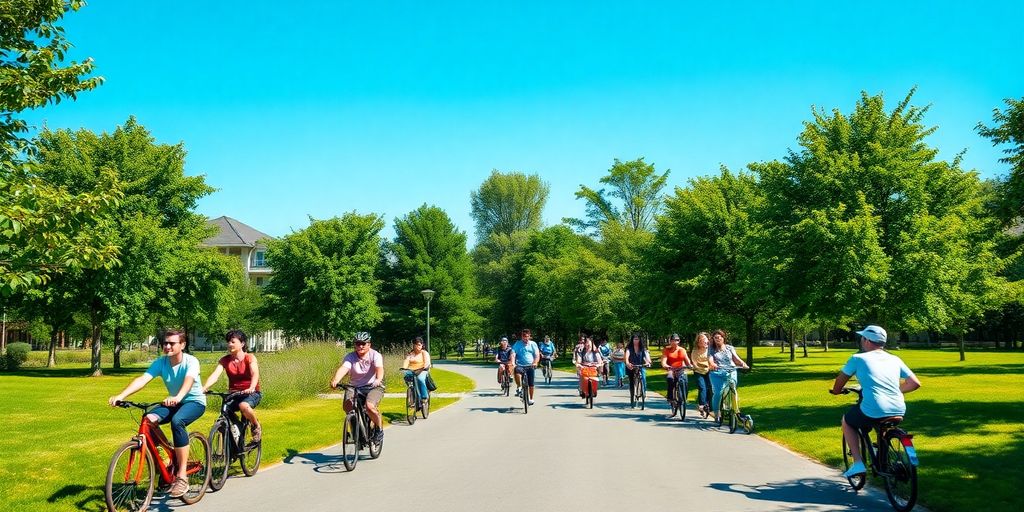
Ecomobility, or sustainable mobility, aims to transform our way of moving in order to minimize the negative impact on the environment and improve the quality of life. This is a major challenge that requires a global approach and concerted efforts from all stakeholders.
Reducing the environmental impact of transport
One of the main objectives of ecomobility is to reduce the ecological footprint of the transport sector. This involves several actions:
- Reducing greenhouse gas (GHG) emissions: In France, transport is a significant source of emissions. Ecomobility seeks to reverse this trend by promoting less polluting modes of transport.
- Improving air quality: Thermal vehicles contribute to air pollution, particularly in urban areas. Ecomobility promotes alternatives for healthier air.
- Reducing energy consumption: By using more efficient vehicles and optimizing journeys, it is possible to reduce the demand for fossil energy.
Ecomobility is not limited to replacing polluting vehicles with cleaner models. It involves a profound transformation of our travel habits and our relationship with mobility.
Improving urban quality of life
Ecomobility helps make cities more pleasant to live in. How?
- By reducing car congestion: Fewer cars mean fewer traffic jams and smoother travel. This involves optimizing modes of transport.
- By reducing noise: Electric vehicles and active modes of transport are much quieter than thermal cars.
- By creating more convivial public spaces: Ecomobility encourages the development of pedestrian and cycling areas, promoting encounters and exchanges.
Accessibility and equity of travel for all
Ecomobility must benefit everyone, including people with reduced mobility, the elderly, and disadvantaged populations. It is important to:
- Ensure access to public transport: Transport networks must be accessible to all, regardless of age or physical condition.
- Develop adapted mobility solutions: On-demand transport services and adapted vehicles can facilitate travel for people with specific needs.
- Fight against social and geographical exclusion: Ecomobility must enable everyone to travel easily, regardless of their place of residence. Student initiatives should be encouraged to raise awareness of the impact of their travel choices.
The five guiding principles of soft mobility
Soft mobility is based on a set of fundamental principles that guide its development and implementation. These principles aim to create a more sustainable, equitable, and environmentally friendly transport system. It is important to understand them to fully grasp the challenges of ecomobility.
Sobriety in travel
Sobriety, in the context of soft mobility, primarily means reducing the need to travel. This involves several actions:
- Promoting the proximity of services and shops.
- Encouraging teleworking and flexible working arrangements.
- Developing alternatives to individual cars for short journeys.
The goal is to limit unnecessary travel and opt for less energy-intensive modes of transport. We can also consider urban planning, which plays an essential role in reducing travel distances.
Efficiency of transport solutions
The efficiency of transport solutions is measured by their ability to optimize resource use and minimize their environmental impact. This implies:
- Prioritizing the most suitable modes of transport for each type of journey.
- Optimizing routes and traffic flows.
- Improving intermodality, i.e., the combination of different modes of transport.
Efficiency also involves better parking management and appropriate pricing for different modes of transport.
Decarbonization of transport modes
Decarbonization is a major challenge for soft mobility. It involves reducing greenhouse gas (GHG) emissions related to transport. To achieve this, it is necessary to:
- Develop low-emission vehicles (electric, hydrogen, etc.).
- Encourage the use of active modes of transport (cycling, walking).
- Improve the energy efficiency of existing vehicles.
Decarbonization also involves considering the fuels used and the development of adequate cycling infrastructure.
Inclusion and innovation in the service of soft mobility
Inclusion and innovation are two essential pillars for successful soft mobility. Inclusion ensures that all citizens, regardless of their age, physical condition, or income level, can benefit from equitable access to sustainable mobility solutions. Innovation, meanwhile, enables the development of more efficient, cleaner, and better-adapted transport solutions to everyone’s needs.
The role of communities in urban planning
Local authorities have a central role to play in promoting soft mobility. They are responsible for urban planning, transport planning, and the implementation of incentive policies. They must:
- Develop public spaces conducive to soft modes of transport.
- Develop efficient public transport networks.
- Implement adapted parking policies.
- Raise citizens’ awareness of soft mobility issues.
Inclusion and innovation in the service of soft mobility
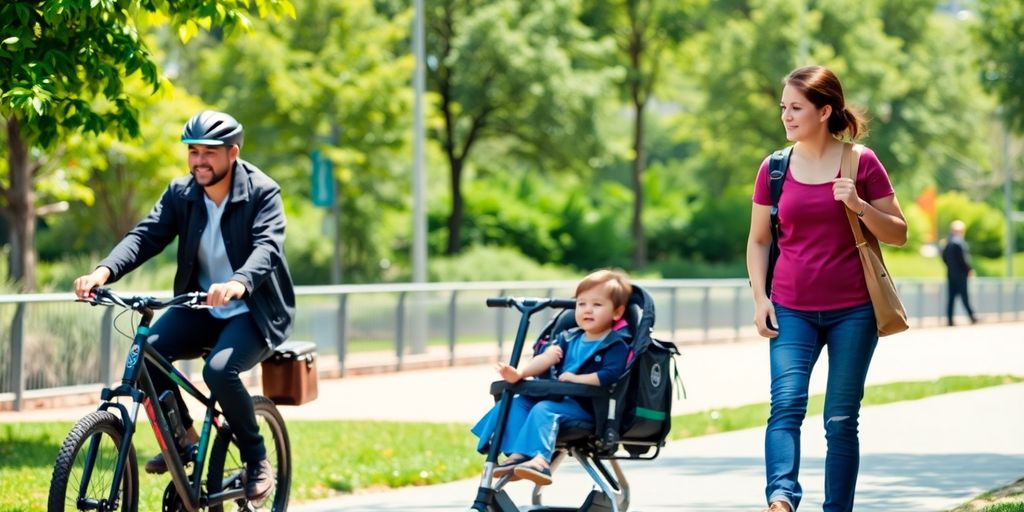
Contributing to more accessible and equitable mobility
Inclusion in soft mobility means that everyone, regardless of their age, physical abilities, or economic situation, must be able to move around easily. This requires particular attention to the needs of the elderly, people with reduced mobility, and families with children. It is important to note that financial aid can play a decisive role in making soft mobility accessible to all.
- Improvement of public transport accessibility.
- Development of infrastructure adapted for people with reduced mobility.
- Implementation of social tariffs for public transport.
The objective is to reduce inequalities in access to mobility and promote the autonomy of all citizens.
Technological and service innovation
Innovation is an essential driver of soft mobility. It enables the development of more efficient, cleaner, and better-adapted transport solutions to users’ needs. New technologies, such as carpooling applications or self-service bicycle systems, facilitate the adoption of alternative modes of transport to the individual car. Innovation is not limited to technology; it also concerns services, such as the development of multimodal platforms that allow combining different modes of transport for the same journey.
The role of communities in urban planning
Local authorities have a major role to play in the development of soft mobility. They are responsible for the development of public space and the implementation of infrastructure adapted to soft modes of transport. This involves the creation of safe cycle paths, pedestrian zones, and 20 mph zones. In addition, data analysis from connected vehicles can help better plan infrastructure and optimize traffic flows.
- Development of cycle paths and greenways.
- Creation of pedestrian zones and 20 mph zones.
- Establishment of park-and-ride facilities at city entrances.
Development of infrastructure for soft mobility
Infrastructure development is a central pillar for encouraging the adoption of soft mobility. Without adequate facilities, it is difficult to convince citizens to abandon their cars in favor of more environmentally friendly modes of transport. This is an essential investment for a more sustainable future.
Development of spaces conducive to active mobility
To encourage the use of cycling and walking, it is imperative to develop dedicated and secure spaces. This involves:
- The creation of continuous and well-maintained cycle paths.
- The development of pleasant and accessible pedestrian areas.
- The installation of appropriate street furniture (benches, shelters, etc.).
These developments must be designed to facilitate daily travel and make active mobility more attractive. Communities must offer safe cycling and pedestrian infrastructure.
User safety and comfort
Safety is an absolute priority. Infrastructure must be designed to minimize the risk of accidents and ensure user comfort. This implies:
- The implementation of efficient public lighting.
- Clear and visible signage for routes.
- Physical separation of traffic flows (pedestrians, cyclists, cars).
Creating safe and comfortable environments is essential to encourage the adoption of soft mobility. Users must feel safe to choose these modes of transport.
Optimized traffic and parking management
Efficient traffic and parking management is essential to promote soft mobility. It is necessary to:
- Encourage the development of public transport.
- Set up secure and well-located bicycle parking areas.
- Limit car access to city centers.
Intelligent parking management can encourage motorists to opt for alternative modes of transport.
Concrete practices of soft mobility in everyday life
Prioritizing active modes of transport
Adopting soft mobility in everyday life begins with simple choices. For short distances, prioritize walking or cycling. Not only is it good for your health, but it’s also an effective way to reduce your carbon footprint. Consider investing in a good bike or using bike rental services available in many cities. Walking, meanwhile, is always an accessible and pleasant option for discovering your environment. For longer journeys, consider public transport or carpooling.
Optimizing journeys and travel
Optimizing your journeys is another essential practice. Before taking your car, ask yourself if another mode of transport would be more appropriate. Use route planning applications that integrate different modes of transport, including public transport, cycling, and walking. Teleworking, when possible, is also an excellent way to reduce your travel and your environmental impact.
Adopting eco-responsible behaviors
Adopting eco-responsible behaviors goes beyond choosing the mode of transport. It also includes how you drive. Adopt smooth driving and avoid sudden accelerations, which helps reduce your fuel consumption. Regularly maintain your vehicle so that it operates optimally. Finally, be mindful of your energy consumption at home and in the office, as this also has an impact on your overall carbon footprint. Every small gesture counts to contribute to a more sustainable future.
Soft mobility is not limited to individual actions. It also requires collective commitment and favorable public policies. Encourage those around you to adopt soft mobility practices and support local initiatives that promote sustainable mobility.
Here are some examples of eco-responsible behaviors:
- Using reusable bags for your groceries.
- Reducing your water and energy consumption at home.
- Sorting your waste and recycling as much as possible.
The multiple benefits of soft mobility
Soft mobility offers a multitude of advantages, ranging from improving public health to stimulating the local economy. By adopting more environmentally friendly modes of transport, you contribute to a more sustainable and pleasant future for all. It’s a change of perspective that brings concrete benefits to everyday life.
Positive impact on the environment and public health
Soft mobility significantly reduces greenhouse gas emissions and air pollution. By prioritizing walking, cycling, or public transport, you directly contribute to improving air quality and combating climate change. This has a direct impact on your health and that of your fellow citizens, by reducing the risks of respiratory and cardiovascular diseases. Furthermore, the regular physical activity promoted by these modes of transport helps combat sedentary lifestyles and obesity. It is important to note that soft mobility promotes daily physical activity, combating sedentary lifestyles.
Economic and social benefits
Beyond the environmental and health benefits, soft mobility offers significant economic and social advantages. It helps reduce transport-related expenses, particularly fuel and car maintenance. It also promotes local economic development, by stimulating local trade and sustainable tourism. Moreover, it helps strengthen social ties, by encouraging interactions between inhabitants and creating more convivial public spaces.
Here are some concrete examples:
- Reduced transport costs for households
- Job creation in the cycling, public transport, and tourism sectors
- Improved attractiveness of cities and territories
Soft mobility is a profitable long-term investment, both for individuals and for society as a whole. It helps create cities that are more pleasant to live in, healthier, and more prosperous.
Contribution to a sustainable future
By adopting soft mobility, you actively participate in building a more sustainable future. You contribute to preserving natural resources, reducing social inequalities, and improving the quality of life for future generations. Ecomobility is a responsible and civic approach that allows reconciling travel needs with environmental and social imperatives. It’s a meaningful choice that can make a difference.
In conclusion, the multiple challenges of soft mobility
Soft mobility is really important for our society and for the future. It allows us to connect our travel needs with environmental protection, everyone’s health, and safety. Of course, we talk a lot about reducing pollution and greenhouse gases, but we must not forget the economic and social aspects, which are just as important. And then there’s public health: the more we walk or cycle, the better we feel. If everyone gets involved, the air we breathe will be much better.
Frequently Asked Questions
What exactly is soft mobility?
Soft mobility is the idea of moving around in a simpler and more environmentally friendly way. This includes walking, cycling, scooters, but also public transport and carpooling. The goal is to pollute less and make our cities more pleasant to live in.
Why is soft mobility important for the environment and health?
Soft mobility helps reduce air pollution, because fewer cars mean fewer harmful gases. It also reduces noise in the city and encourages physical activity, which is good for health. In addition, it makes cities calmer and safer for everyone.
How can cities encourage soft mobility?
To encourage soft mobility, cities are building more cycle paths, improving sidewalks for pedestrians, and developing public transport. They can also offer aid for buying a bike or carpooling services.
Can I also adopt soft mobility in my daily life?
Yes, absolutely! By walking or cycling for short journeys, using public transport, sharing your car with others (carpooling), or choosing less polluting vehicles like electric bikes, you actively participate in soft mobility.
What is the difference between soft mobility and sustainable mobility?
Soft mobility focuses on non-polluting or low-polluting means of transport (cycling, walking, public transport). Sustainable mobility is a broader concept that includes soft mobility, but also urban planning so that people have less need to travel far, and the use of cleaner technologies for all transport.
How does the sustainable mobility package work?
The sustainable mobility package is financial aid that some companies or administrations can give to their employees so that they use more ecological means of transport to get to work, such as cycling, carpooling, or public transport. It’s a boost to encourage them to change their habits.


