

The rise of electric mobility is transforming how we get around. To support this revolution, solar photovoltaic energy offers an ideal solution. By combining a solar charging station with your installation, you can charge your vehicle with clean and economical energy. This article explores how to combine these two technologies for a successful energy transition.
Key Takeaways
- Electric mobility is growing rapidly, leading to increased demand for charging stations.
- Associating a photovoltaic installation with your charging station allows you to use green electricity and reduce your costs.
- Local authorities have a role to play in installing solar infrastructures to support urban electromobility.
- Optimizing solar charging is achieved through self-consumption and smart charging station features.
- Vehicle-to-Grid (V2G) represents a promising technology for storing and reinjecting solar energy via your vehicle’s battery.
The Rise of Electric Mobility and the Role of Photovoltaics
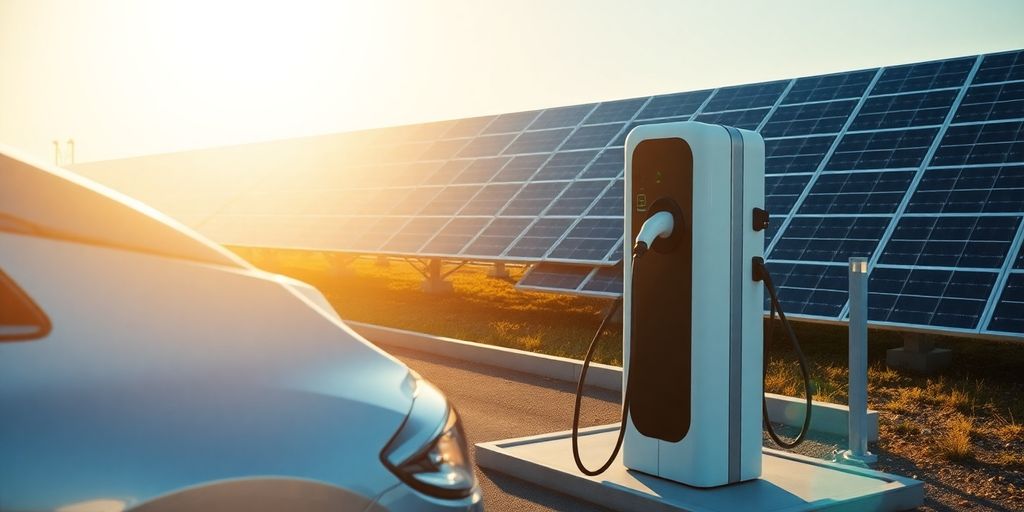
The increasing adoption of electric vehicles is transforming how we get around, and the photovoltaic sector plays a key role in this transition. In France, there’s a significant increase in the number of electrified vehicles on the roads. This trend, driven by ecological concerns and the appeal of new technologies, is reshaping the automotive landscape. Simultaneously, the charging station market is experiencing rapid expansion, supported by a favorable regulatory framework and financial incentives. It therefore becomes natural to seek to reconcile these two revolutions: electric mobility and renewable energy production. The synergy between renewable energies, particularly solar, and electric mobility represents a major opportunity to decarbonize both our energy systems and our individual commutes. Coupling a solar installation with your electric vehicle, for example via a photovoltaic carport, creates a true synergy in service of the energy transition, using green electricity to charge your car. The integration of these two areas opens new perspectives for a more sustainable future and optimized energy management, relying on forecasting tools and a logical approach to energy deployment [8968].
Advantages of Coupling a Photovoltaic Installation with Electric Mobility
Coupling a photovoltaic installation with your electric mobility offers several concrete advantages. It allows you to charge your vehicle with clean energy, directly from the sun. This approach fits perfectly into an energy transition logic, using a renewable source to power your commutes.
Charging Your Vehicle with Green Electricity
It is entirely logical to want to power an electric vehicle, often chosen for its ecological qualities, with sustainably produced electricity. Installing solar panels, whether on your roof or via a solar carport, gives you the ability to produce your own green electricity. This means that the energy used to charge your car comes directly from renewable sources, thereby reducing your overall carbon footprint.
Meeting Increased Power Needs
The adoption of electric vehicles leads to an increase in your electricity consumption, particularly during charging. A photovoltaic installation can help offset this increased demand. By producing part, or even all, of the electricity needed to charge your vehicle, you reduce your dependence on the traditional electricity grid and its price fluctuations. This can result in better management of your energy budget.
Comfort and Protection for Charging Station Users
Installing a charging station, especially if coupled with a structure like a photovoltaic carport, offers significant comfort. You benefit from a shelter for your vehicle, protecting it from weather conditions like rain, snow, or intense sun. This shaded space can also make charging more pleasant, especially during warm months. It’s a way to improve your daily experience with your electric vehicle and fully enjoy your charging station.
The combination of solar energy and electric mobility creates a powerful synergy for a successful energy transition. It not only reduces charging costs but also minimizes the environmental impact of your daily commutes.
Local Authorities Facing the Energy Transition

Local authorities play an important role in the energy transition, particularly concerning electric mobility. They are at the forefront of encouraging the adoption of clean vehicles and deploying the necessary charging infrastructures. Integrating photovoltaics into these initiatives represents a major opportunity to further green this mobility.
Case Study on Solar Cities and Mobility
Studies have been conducted to evaluate the potential of combining solar energy and electric mobility in major French metropolitan areas like Paris, Lyon, and Marseille. These analyses show promising results. For example, by imagining that 50% of urban rooftops are equipped with solar panels by 2030 and that 50% of individual cars are electrified, a significant reduction in CO2 emissions, ranging from 48 to 56%, could be observed. Furthermore, solar energy production could cover between 39% and 80% of these metropolitan areas’ energy needs. Investment in such installations could be recouped in less than 2.3 years.
Potential of Urban Rooftops for Photovoltaics
The rooftops of public and private buildings, as well as vast parking areas, represent a considerable resource for installing photovoltaic panels. The APER law of March 10, 2023, also requires local authorities to equip their outdoor parking lots larger than 1500 m² with photovoltaic carports. These structures offer a double advantage: they produce green electricity and protect parked vehicles from bad weather, thus creating a more pleasant environment for charging station users. It’s a concrete way to enhance built heritage for renewable energy production.
Promoting Electromobility for City Dwellers
To encourage the adoption of electric mobility, local authorities can implement various actions. This includes deploying public charging stations, incentivizing the installation of solar panels on municipal buildings, and raising citizen awareness of the benefits of these technologies. By combining these efforts, cities can become key players in the energy transition, offering their residents cleaner and more economical mobility, powered in part by the sun.
Optimizing Charging with Solar Electricity
To get the most out of your solar installation for charging your electric vehicle, it’s essential to optimize this process. This notably involves intelligent management of the surplus production from your photovoltaic panels.
Utilizing Surplus Photovoltaic Production
The main idea is to consume as much of the electricity you produce yourself as possible. When your photovoltaic installation generates more energy than your household consumes at a given moment, this surplus can be directed towards charging your car. For optimal charging, your solar panels need to produce a sufficient surplus. For example, with a single-phase connection, a surplus of more than 1380 watts is necessary to charge your car using only solar energy. It is therefore important to properly size your installation and understand how it interacts with your domestic consumption and vehicle charging. The goal is to maximize the self-consumption of your solar production, thereby reducing your dependence on the electricity grid and your bills. You can thus charge your car with green electricity, directly from your roof. Charging your electric car with solar energy is an ecological and economical approach.
Smart Features for Optimized Charging
To go further, smart charging solutions exist. These systems communicate with your photovoltaic installation and your vehicle to adapt the charging power based on the available solar production. They can prioritize powering your home, then use the surplus to charge your car. If solar production is insufficient, these systems can supplement the charge with grid electricity, but always optimizing solar usage. Some charging stations even offer a function
The Potential of Vehicle-to-Grid (V2G)
V2G: A Future Technology for Energy Transition
Vehicle-to-Grid, or V2G, represents a major technological advancement for integrating electric vehicles into our energy system. It is a bidirectional system that not only allows you to charge your electric car but also, and this is the novelty, to send the electricity stored in its battery back to the electrical grid. Imagine your vehicle as a giant mobile battery, capable of supporting the grid during peak demand or storing surplus solar energy. This ability to interact with the grid transforms your car from a mere consumer into a dynamic player in the energy transition. It’s a smart way to leverage your investment in an electric vehicle while contributing to grid stability and decarbonization. V2G is therefore much more than a simple charging function; it’s a real opportunity for energy flexibility.
Storing and Reinjecting Solar Energy via the Vehicle’s Battery
One of the most interesting aspects of V2G is its ability to integrate with solar energy production. When your photovoltaic installation produces more electricity than you immediately consume, this surplus can be stored in your electric vehicle’s battery. Then, when demand is high or solar production is low (for example, at night or on cloudy days), you can choose to reinject this stored solar energy into the grid. This maximizes the use of your solar production, reduces your dependence on fossil fuels, and actively participates in grid balancing. It’s a perfect synergy between solar and electric mobility, where your car becomes an extension of your photovoltaic installation.
Economic and Ecological Advantages of V2G
Coupling V2G with a solar installation offers considerable benefits, both economically and ecologically. From an economic standpoint, you can reduce your electricity bills by using stored solar energy rather than buying it from the grid. In some cases, it’s even possible to generate income by reselling this stored energy to the grid during periods of high demand. Ecologically, V2G promotes the integration of intermittent renewable energies like solar. By storing surplus solar production, you avoid wasting green energy and contribute to better resource management. Furthermore, by using your vehicle as a battery, you potentially reduce the need to build new power plants, often based on non-renewable energies. It’s a win-win approach for your wallet and for the planet, fitting perfectly into a sustainable mobility strategy and smart charging stations.
Solutions and Support for Photovoltaic Professionals
Transferability of Photovoltaic Expertise to Electromobility
As a professional in the photovoltaic sector, your expertise provides a solid foundation for addressing the electric mobility market. The skills acquired in installing and maintaining solar systems are directly applicable to installing charging stations. This is a natural extension of your business, allowing you to offer more comprehensive energy solutions to your clients. Think of it as a logical evolution of your offerings, leveraging your knowledge of electrical grids and on-site installations. It’s a great opportunity to diversify your activities and remain relevant in a changing energy landscape.
Business Opportunities: Carports and Charging Stations
The coupling of solar and electric mobility opens up interesting business prospects. Photovoltaic carports, for example, offer dual functionality: they produce electricity while protecting vehicles from sun and bad weather. This is a particularly popular solution in corporate parking lots, shopping centers, or for local authorities. Furthermore, installing charging stations on these structures maximizes their profitability. You can offer turnkey solutions, including design, installation, and maintenance, thus meeting a growing demand for sustainable charging infrastructures. The installation of charging infrastructures for electric vehicles is becoming a rapidly expanding market, driven by a favorable regulatory environment and incentive aids. Consult available aids.
Technical and Commercial Support for Projects
To support you in this transition, many partners offer technical and commercial assistance. Whether you are a novice or already experienced, these structures can guide you through each step of your projects, from material selection to commissioning. They often provide training to master the specificities of charging stations and associated management systems. Furthermore, they can help you identify commercial opportunities and structure your offers. The goal is to enable you to calmly develop your business in this promising sector. Analyzing your load curve by experts can optimize your self-consumption rates and maximize the profitability of your installations by adapting the solution to your needs.
A Cleaner Energy Future is Within Reach
In summary, combining solar photovoltaic energy with electric mobility is not just an interesting idea; it’s a logical step towards a more sustainable future. You’ve seen how it can reduce your bills, improve your comfort, and even contribute to the energy transition of our cities. Whether you are an individual looking to optimize your consumption or a community aiming to green its services, solutions exist and are increasingly accessible. Don’t hesitate to explore these avenues to make your mobility a true source of clean energy.
Frequently Asked Questions
What is solar charging for electric cars?
It’s when you use the sun’s energy to charge your electric car. Solar panels produce electricity when there’s sun, and this electricity can then be used to charge your vehicle.
Is it a good idea to combine solar panels and an electric car?
Yes, it’s an excellent idea! When you produce your own electricity with solar panels, you can use it to charge your car. It’s more ecological because you use clean energy, and it can also save you money on your electricity bill.
What is the role of charging stations in this system?
Charging stations are the devices that allow electric cars to be plugged in and charged. When they are associated with solar panels, they use the green electricity produced by the panels to charge the car.
How can cities use solar for electric mobility?
Cities can install solar panels on building rooftops or create ‘carports’ (car shelters) with solar panels. This allows for providing green electricity to charge residents’ cars and making the city cleaner.
What is ‘Vehicle-to-Grid’ (V2G)?
Vehicle-to-Grid (V2G) allows your electric car to send the electricity stored in its battery back to the electrical grid, or even to your home. If this electricity comes from the sun, that’s even better! This helps balance electricity supply and demand and can earn you money.
What are the advantages for solar professionals?
For solar professionals, this means they can offer their clients not only solar panel installation but also charging stations. It’s a new opportunity for them to grow their business by helping people transition to electric mobility with solar energy.


