Are you wondering how to produce electricity at home? This is an excellent initiative, whether for saving money, for the environment, or for gaining autonomy. There are several ways to produce your own electricity, some on a large scale, others more suited to your home. We will explore different solutions together so you can make the best choice.
Key Takeaways
- Photovoltaic solar panels are a popular solution for producing electricity at home, converting sunlight into direct current and then into alternating current using an inverter.
- Self-consumption, which involves using your own electricity production, significantly reduces your bills and increases your independence from the grid.
- Although wind turbines and hydraulic turbines can produce electricity, they have significant constraints such as the need for specific weather conditions and complex administrative procedures.
- Lithium batteries are effective for storing produced electricity, but their high cost makes them less suitable for long-term storage.
- Hydrogen, obtained by electrolysis of water, is another avenue for energy storage, although its efficiency is still improvable and it requires significant investment.
Photovoltaic Solar Panels
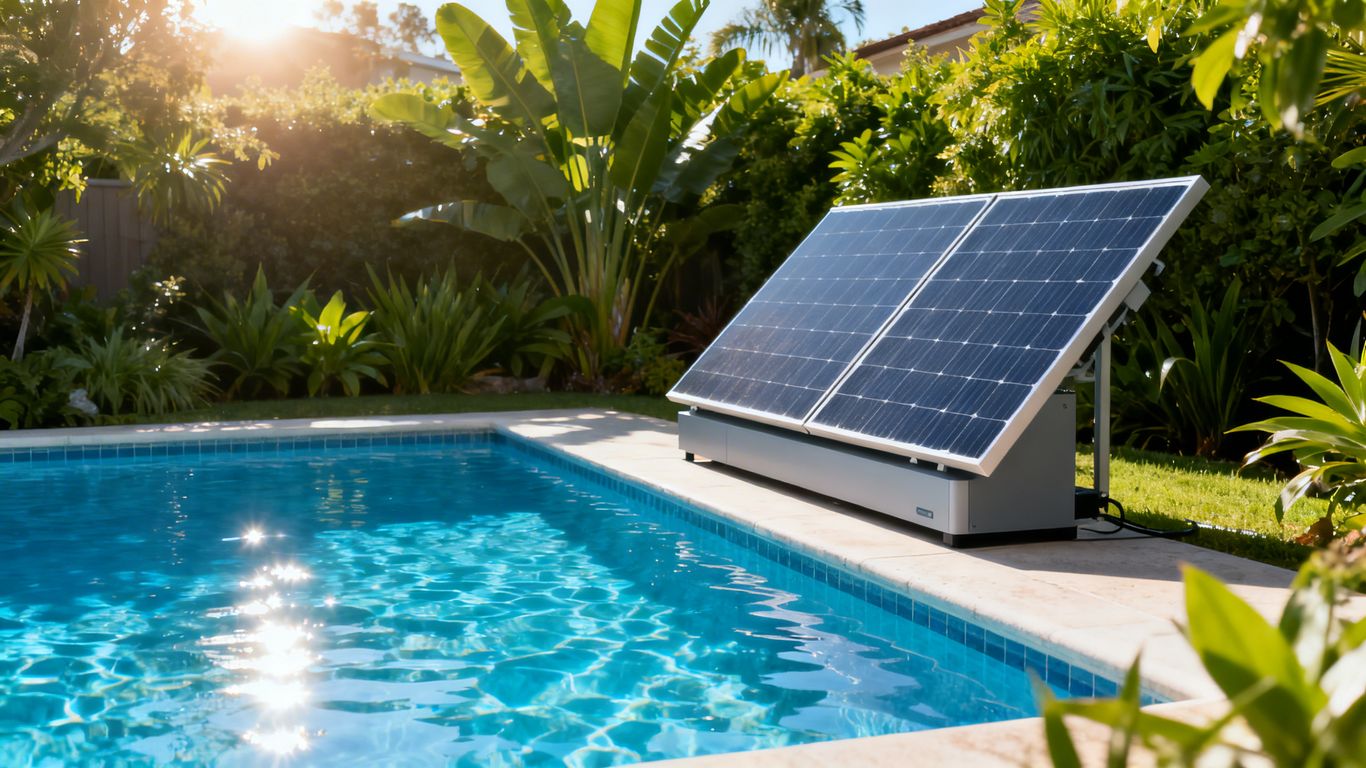
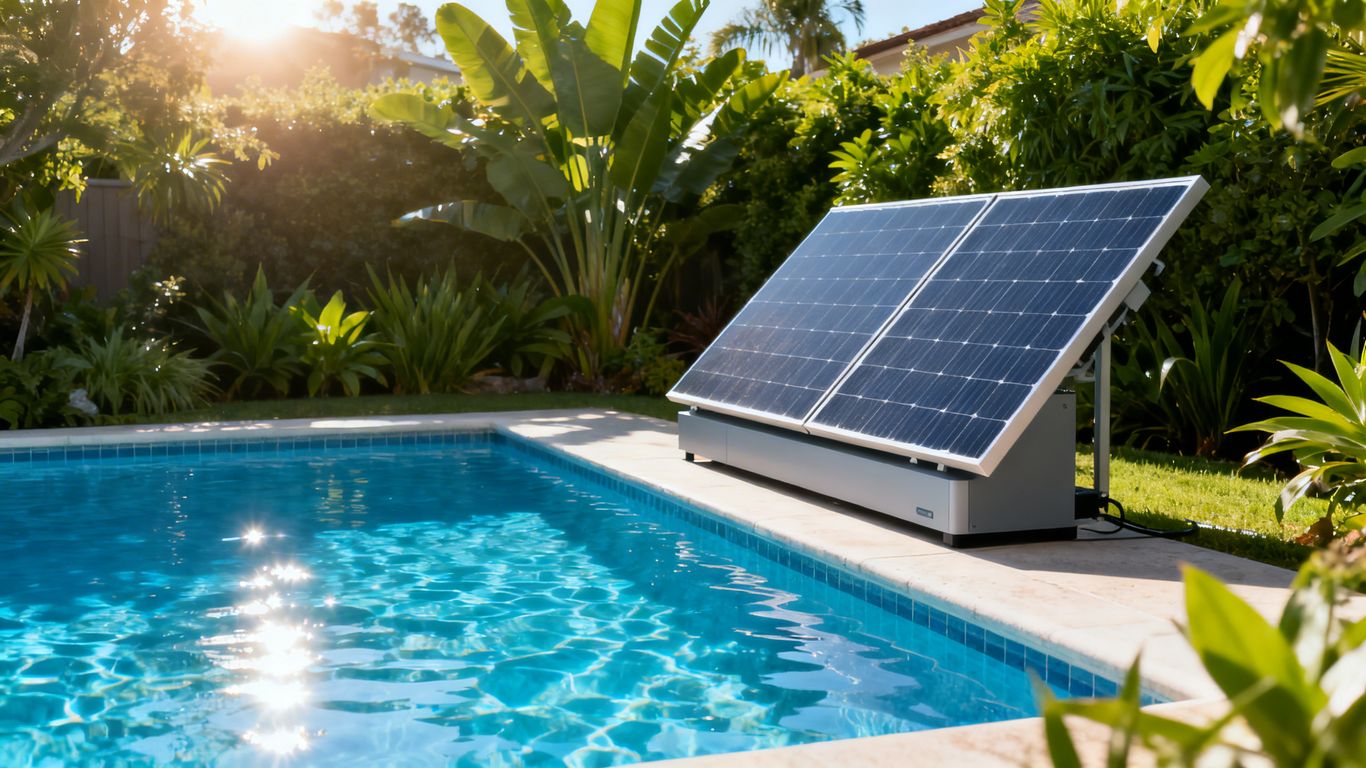
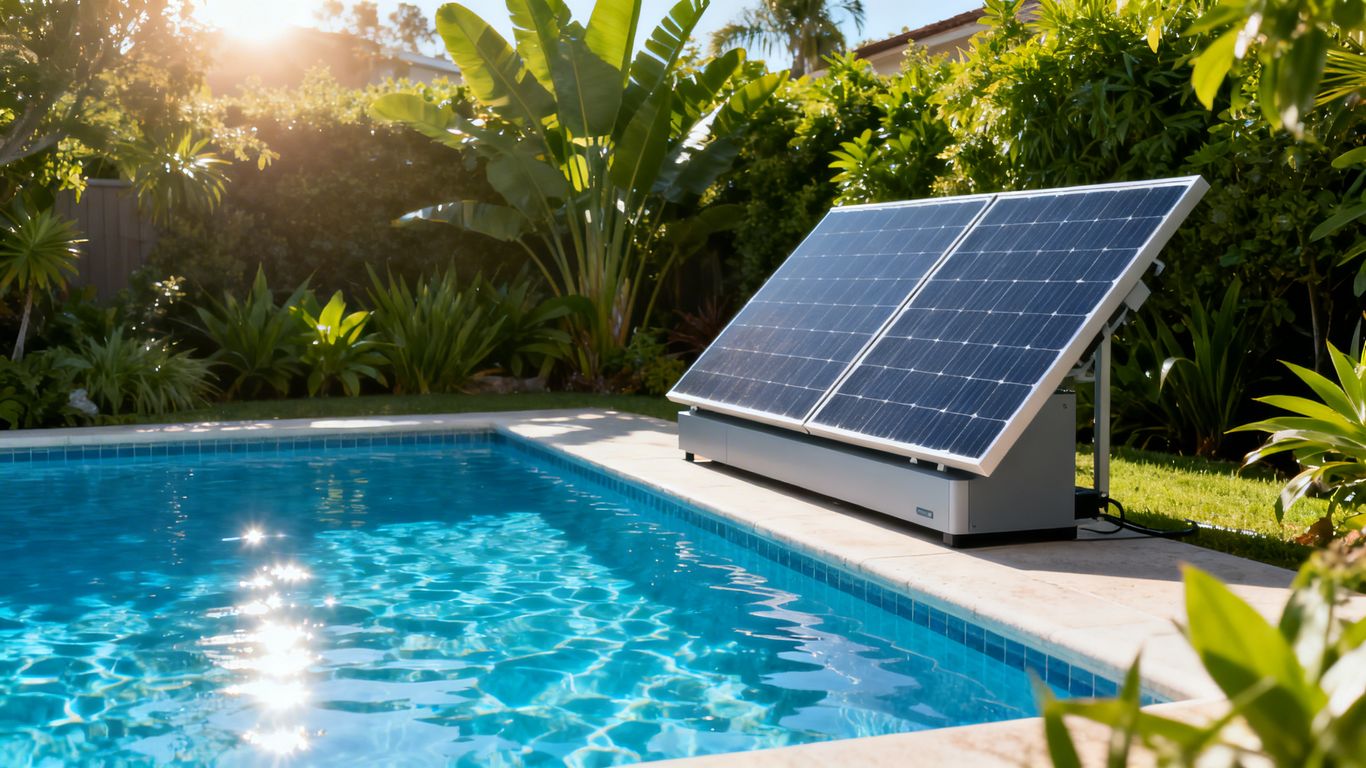
To produce your own electricity, photovoltaic solar panels represent an increasingly accessible and efficient solution. These devices directly convert sunlight into electrical current usable by your home. A typical installation includes the panels themselves, an inverter to convert direct current to alternating current compatible with your home’s grid, and a meter to measure production.
Self-consumption is a practice that is gaining popularity, allowing you to use the electricity you produce, thus reducing your dependence on traditional suppliers and your energy bill. You also have the option to sell any surplus electricity not consumed to a distributor, which can generate additional income. The profitability of such an installation is often observed between 9 and 12 years, making it an interesting long-term investment.
Here is an overview of common installation sizes and their estimated annual production capacity:
| Annual Consumption | Installed Capacity | Number of Panels (estimated) | Roof Area (estimated) |
|---|---|---|---|
| Less than 11,000 kWh | 3 kWp | 8 | 16 m² |
| 11,000 – 17,000 kWh | 6 kWp | 17 | 34 m² |
| More than 17,000 kWh | 9 kWp | 25 | 50 m² |
The administrative procedures for installing solar panels are generally faster than for other energy production systems. After consulting your municipality’s Local Urban Plan (PLU) and checking for any restrictions in protected areas, a prior declaration of works must be filed with the town hall. Once authorization is obtained, the installation work, often done in superposition to preserve the watertightness of your roof, generally takes only one to two days. For new homes, a solar installation can also help comply with current environmental regulations.
It is important to note that installing solar panels does not damage your roof. On the contrary, the superposition technique, which involves installing the panels above your existing covering, can even improve your home’s insulation and ensure better watertightness.
Financial aid, such as the self-consumption bonus, can reduce the initial cost of your installation. The amount of this bonus is calculated based on the power of your installation. Additionally, for installations with a power of 3 kWp or less on a house older than two years, you can benefit from a reduced VAT rate of 10%. You can get a quote for your solar panels in just a few clicks by entering your address. Producing your own electricity at home is therefore an increasingly viable option for greater energy independence.
Thermal Solar Panels
Thermal solar panels are an interesting solution for producing heat, whether for your domestic hot water or for heating your home. Unlike photovoltaic panels that produce electricity, thermal panels use solar energy to heat a heat transfer fluid. This fluid then circulates in a closed loop, passing through a heat exchanger where it transfers its heat to the water intended for your consumption or your heating system. This technology significantly reduces your dependence on fossil fuels for heating and hot water.
The most common system is the Individual Solar Water Heater (CESI) or the Combined Solar System (SSC) if you also want supplementary heating. A storage tank is essential to store the hot water produced. The lifespan of these installations is generally longer than that of conventional water heaters, often around 20 years.
Here are the main advantages of thermal solar panels:
- Reduction of your energy bill for hot water and heating.
- Contribution to reducing your carbon footprint.
- Increased value of your property.
- Greater autonomy for your heating needs.
It is important to note that the efficiency of a thermal solar panel depends on several factors, including the sunshine in your region, the orientation and inclination of your roof, and the quality of the installation. A professional can help you correctly size your installation to cover part, or even all, of your hot water needs.
Installing thermal solar panels can be an excellent way to make your home more environmentally friendly and economical. It is part of a sustainable energy transition approach.
Wind Turbine
Wind energy is the idea of capturing the force of the wind and converting it into electricity. You may have already seen these large blades turning in fields or on the coast. They work on a fairly simple principle: the wind turns the blades, which drive a rotor, which is connected to an alternator that produces current. It is a renewable energy source, which is a positive point for the environment.
However, installing a wind turbine at home is not always as simple as it seems. First, you need to ensure that your region benefits from sufficient wind, ideally an annual average of at least 20 km/h. Wind is also a capricious resource; unlike sunshine, it is difficult to predict when it will blow and with what intensity. Furthermore, some municipalities may prohibit wind turbines, and the noise generated can be a problem with neighbors. You also need to consider the vibrations that a wind turbine can cause, which could damage your home in the long term.
The cost of a domestic wind turbine can be significant, sometimes reaching up to 40,000 euros for an installation capable of powering a house. Although wind energy is very relevant in windy areas like the coast or large plains, it is not always the most practical solution for producing electricity at home.
Here are some points to consider if you are considering a wind turbine:
- Wind potential verification: Ensure that the wind is sufficient and constant in your area.
- Local regulations: Inquire about the necessary permits and any restrictions.
- Noise and visual impact: Consider the noise and aesthetics, as well as potential reactions from your neighbors.
- Cost and maintenance: Evaluate the initial investment and ongoing maintenance costs.
For larger-scale electricity production, wind farms are a common solution, but for individual use, you need to weigh the pros and cons carefully. If you are looking for an alternative, solar energy is often more accessible for individuals, and its cost has significantly decreased in recent years, making solar energy increasingly attractive.
Hydraulic Turbine
Hydraulic energy is the exploitation of the force of moving water to produce electricity. Think of rivers, waterfalls, or even artificially created systems with reservoirs. The main idea is to use the water flow to turn a turbine. This turbine, connected to a generator, then converts this mechanical energy into electricity.
This is a very old method of electricity production, but it is still relevant and particularly effective when the conditions are right.
For this to work at your home, you naturally need access to a watercourse with sufficient flow. This is not something that can be installed anywhere. You also need to consider the administrative aspects, as using a watercourse requires permits. The flow must be constant to ensure regular electricity production.
Here are the key elements to consider:
- The site: The presence of a watercourse with a sufficient drop or current is essential.
- The turbine: There are different types, adapted to the speed and volume of water.
- The generator: It converts the turbine’s rotation into electricity.
- Permits: Obtaining the necessary permits is a mandatory step.
Hydraulic energy is a renewable energy source that can provide stable electricity production, unlike other intermittent sources. It is used on a large scale in dams, but smaller systems can also be considered for local needs, provided you have the right location and the required permits. Installing a hydraulic turbine is a technical solution that requires in-depth study of the site and current regulations.
It is important to note that hydraulic energy, particularly through pumped-storage systems, also allows for energy storage. Water is pumped to a reservoir during periods of low demand and then released to produce electricity when needed. This is a smart way to manage fluctuations in electricity demand and supply, using the potential energy of water to balance the grid.
While less common for individuals than solar or wind, hydraulic turbines represent a very reliable renewable electricity production solution if you have the necessary natural resources.
Lithium Batteries
Lithium batteries have become a key component for electricity storage, especially for domestic solar installations. They allow for storing energy produced during the day, for example by photovoltaic panels, to be used when the sun is not shining, such as at night. The operating principle is based on the reversible exchange of lithium ions between two electrodes. This system offers a fairly good storage efficiency, often around 85%, meaning that most of the stored electricity can be recovered. However, it should be noted that the cost of materials for these batteries is still high, making them less suitable for very long-term storage compared to other solutions like hydrogen, which, despite having lower efficiency currently, can be produced in larger quantities and at a lower cost for seasonal needs.
For a residential solar installation, integrating lithium batteries can improve your energy autonomy. Here are some points to consider:
- Increased autonomy: You depend less on the public electricity grid, especially during peak hours.
- Use of surplus: Electricity not consumed immediately can be stored for later use, rather than being lost or sold at a low price.
- Grid stability: By storing your own energy, you help reduce the load on the general electricity grid.
- Initial cost: Investing in a battery represents a significant cost, which must be evaluated against long-term savings.
It is important to choose a battery whose capacity matches your consumption needs and the production of your solar system. Manufacturers offer different sizes and technologies, and it is advisable to inquire about the lifespan and warranties offered. Installation must be carried out by qualified professionals to ensure the safety and efficiency of the system.
Storing electricity via lithium batteries is a proven technology for short and medium-term applications. Although the cost of components is a limiting factor for very large-scale or long-term storage, their effectiveness in managing domestic energy is undeniable. They play an important role in optimizing solar self-consumption.
The choice of a lithium battery should therefore be part of a comprehensive assessment of your renewable energy production system. It is possible to find financial aid for the installation of this equipment, which can make the investment more accessible. Remember to check the eligibility criteria for energy renovation aid.
Hydrogen

Hydrogen represents a promising avenue for energy storage, particularly when discussing electricity produced from renewable sources. The principle is relatively simple: excess electricity, for example, that produced by solar panels on a sunny day or by wind turbines on a windy day, is used to break down water (H₂O) into its components, hydrogen (H₂) and oxygen (O₂). This process, called electrolysis, transforms electrical energy into chemical energy stored in hydrogen.
The main advantage of hydrogen lies in its ability to be stored for long periods, unlike batteries which are more suited for short-term storage. However, hydrogen storage presents its own challenges. It is a very light gas that requires a significant volume for storage. Research is ongoing to develop more efficient storage solutions, such as the use of underground cavities or specific tanks. Green hydrogen, produced from renewable energies, is considered a key solution for decarbonizing certain sectors.
To reuse this energy, hydrogen is then converted back into electricity, generally via fuel cells. This process reverses electrolysis: hydrogen and oxygen react to produce electricity, heat, and water. The overall efficiency of this production, storage, and reconversion cycle is not yet as high as that of batteries (around 50% for hydrogen compared to 85% for lithium), but it offers flexibility and large-scale storage capacity that are difficult to match. The development of hydrogen as an energy carrier is therefore an important area of research and investment for the future of the energy transition, particularly for applications in heavy mobility or seasonal energy storage. You can learn more about the role of hydrogen in the Canadian energy sector.
Here are the general steps for producing and using hydrogen as an energy source:
- Production by electrolysis: Use of renewable electricity to separate water into hydrogen and oxygen.
- Storage: Storing gaseous hydrogen in pressurized tanks or other storage forms.
- Reconversion into electricity: Use of fuel cells to convert stored hydrogen into electricity, heat, and water.
Although efficiency is still an area for improvement, the potential of hydrogen to stabilize the electricity grid and provide decarbonized energy is considerable.
Biomass Boiler

To produce electricity and heat at home, you might consider a biomass boiler. This system uses organic matter, such as wood residues or agricultural waste, to generate energy. This is an interesting approach because it utilizes resources that would otherwise be lost.
The operation is quite simple: the boiler burns the biomass fuel, and the heat produced is used to heat water. This hot water can then be used for heating your home and for your sanitary needs (showers, dishes). Some more complex installations can even produce electricity directly, although this is less common for simple domestic use.
Here are the main advantages of this system:
- Ecological: Biomass is a renewable energy source. Its use does not result in net CO2 emissions, as the carbon released during combustion is what plants absorbed during their growth.
- Economical: The cost of biomass fuel is often lower than that of fossil fuels. Additionally, you can benefit from financial aid and tax credits for installation.
- Comfort: It provides pleasant and constant heat, and some modern boilers offer automatic fuel filling, which greatly simplifies maintenance.
However, there are also some points to consider.
Installing a biomass boiler requires space. You need to allocate space for the boiler itself and a storage area for the fuel (the silo). Furthermore, unlike solar or wind energy, biomass represents a regular purchase cost.
The types of fuels that can be used are varied:
- Solid biomass: wood pellets, logs, wood chips.
- Agricultural biomass: straw, crop residues.
- Biomass from waste: sewage sludge, organic waste.
The choice of fuel will depend on its local availability, cost, and compatibility with your boiler. It is recommended to use wood from sustainably managed forests for an even more responsible approach.
Thermal Heat Pump
The thermal heat pump is an interesting solution for producing heat and domestic hot water in an environmentally friendly way. It works by capturing calories present in the environment, whether in the ground, air, or water, and converting them into usable energy for your home. This system is particularly efficient because it does not depend on external weather conditions, unlike other renewable energies.
The operating principle is based on a thermodynamic cycle. Sensors, buried in the ground (geothermal) or installed outdoors, capture calories. A refrigerant fluid circulates through these sensors and heats up on contact with the calories. This fluid is then compressed by a compressor, which increases its temperature. The heat thus released is transferred to a water circuit that supplies your heating system and your hot water production.
Here are the main advantages of the thermal heat pump:
- Constant energy production: It operates year-round, regardless of the weather.
- Ecological: It uses renewable energy sources and does not produce greenhouse gases during operation.
- Economical in the long term: Although the initial investment is significant, the savings on energy bills are substantial and allow for rapid payback.
- Versatility: It can heat your entire home and provide domestic hot water.
Before installing a heat pump, a study of your land is often necessary to determine the most suitable type of sensors (horizontal for large plots, vertical for smaller ones) and their installation depth. This is a process that requires some planning, but the benefits in terms of comfort and savings are notable.
Solar Tiles
Solar tiles represent an interesting alternative to traditional photovoltaic panels, particularly for new constructions or roof renovations. They blend discreetly into your roof, mimicking the appearance of classic tiles while producing electricity. Each tile integrates photovoltaic cells that capture sunlight to convert it into electrical energy. This energy is then sent to an inverter that converts it into current usable by your home.
While their aesthetics are a major asset, it is important to note that their energy efficiency is generally lower than that of classic solar panels. Furthermore, their installation cost can be higher. However, for those who prioritize architectural integration and aesthetics, solar tiles offer a discreet and efficient renewable energy production solution.
Here are some points to consider:
- Aesthetic integration: They blend perfectly into the landscape of your roof.
- Electricity production: They operate on the same principle as photovoltaic solar panels.
- Efficiency: Generally slightly less performant than classic panels.
- Cost: The initial investment can be more substantial.
Installing solar tiles can be an excellent option if you want to produce your own electricity without compromising the visual appearance of your home. They are particularly suited for homeowners concerned about the architectural harmony of their property.
Solar Water Heater
The solar water heater is an ingenious solution for producing domestic hot water using solar energy. This system relies on solar collectors, generally installed on your roof, which capture the sun’s heat. This heat is then transferred to a heat transfer fluid that circulates in a closed loop. This heated fluid, in turn, heats the water stored in a tank. It can thus cover a significant portion of your hot water needs, reducing your dependence on fossil fuels.
The operation is quite simple:
- Thermal solar collectors absorb solar radiation.
- The heat transfer fluid heats up on contact with the collectors.
- This hot fluid circulates to the storage tank.
- A heat exchanger in the tank transfers heat to the water.
A solar water heater system can typically meet up to 70% of the hot water demand for a household of three to four people. The lifespan of these installations is also quite long, often around 20 years, which is longer than that of conventional water heaters. Installing such devices is an excellent way to reduce your energy bill.
Hot water represents a significant portion of a household’s energy consumption. Opting for a solar water heater helps reduce this impact while achieving substantial long-term savings.
In Conclusion: Your Energy Future
You now have a better understanding of the different ways to produce electricity, whether on a large scale or at home. Solutions like photovoltaic solar panels are becoming increasingly accessible and advantageous for gaining autonomy and reducing your bills. Don’t forget to thoroughly research available aid and consider your specific needs before getting started. Choosing greener energy production is an important step for your budget and for the planet.
Frequently Asked Questions
How can I produce electricity without paying?
To produce electricity for free, you can consider photovoltaic solar panels, wind turbines, or hydraulic turbines. Solar panels are often the simplest choice because they are efficient and their cost can be reasonable.
How do solar panels work to generate electricity?
Solar panels capture sunlight using special cells. This light is converted into direct current. Then, a device called an inverter changes this direct current into alternating current, which is what you use for your electrical appliances at home.
Why is it beneficial to consume your own electricity?
Consuming the electricity you produce yourself is called self-consumption. It allows you to significantly reduce your electricity bills, often by half. Furthermore, you use clean energy and protect yourself from future increases in electricity prices.
What is the price to install solar panels at home?
The cost of a solar installation varies. For a small 3 kWp installation, expect around €6,000. For a 6 kWp installation, the price is around €9,000, and for 9 kWp, plan for over €12,000. These prices include state aid.
Is it easy to install a wind turbine at home?
Installing a wind turbine at home can be complicated. You need to live in a place with a lot of wind, and wind is difficult to predict. Also, some towns prohibit it, your neighbors may object due to noise, and vibrations can damage your house. It is also a very expensive investment.
Can you produce electricity with river water?
Using river water with a turbine is another idea. However, you need to have a river with sufficient flow near your home. Then, you need to obtain numerous administrative permits, which can take a long time, sometimes up to two years.