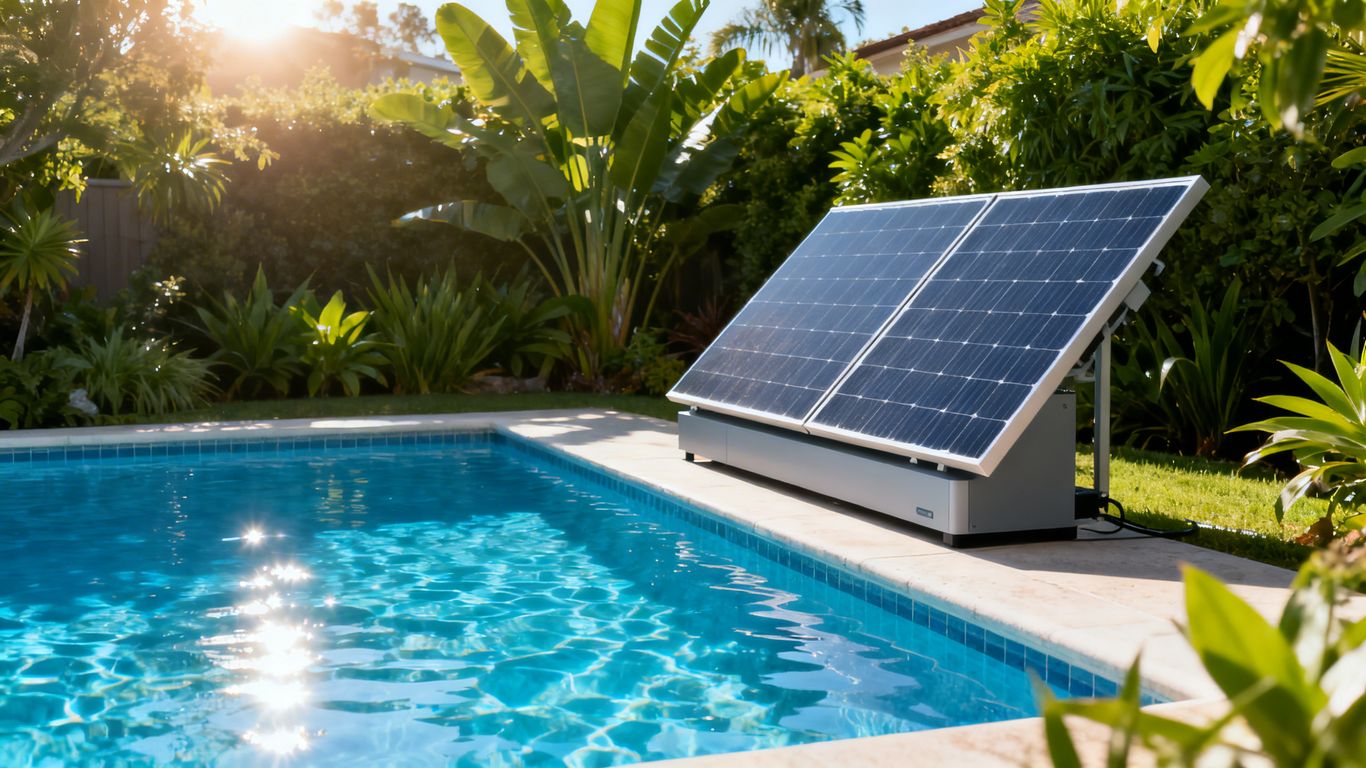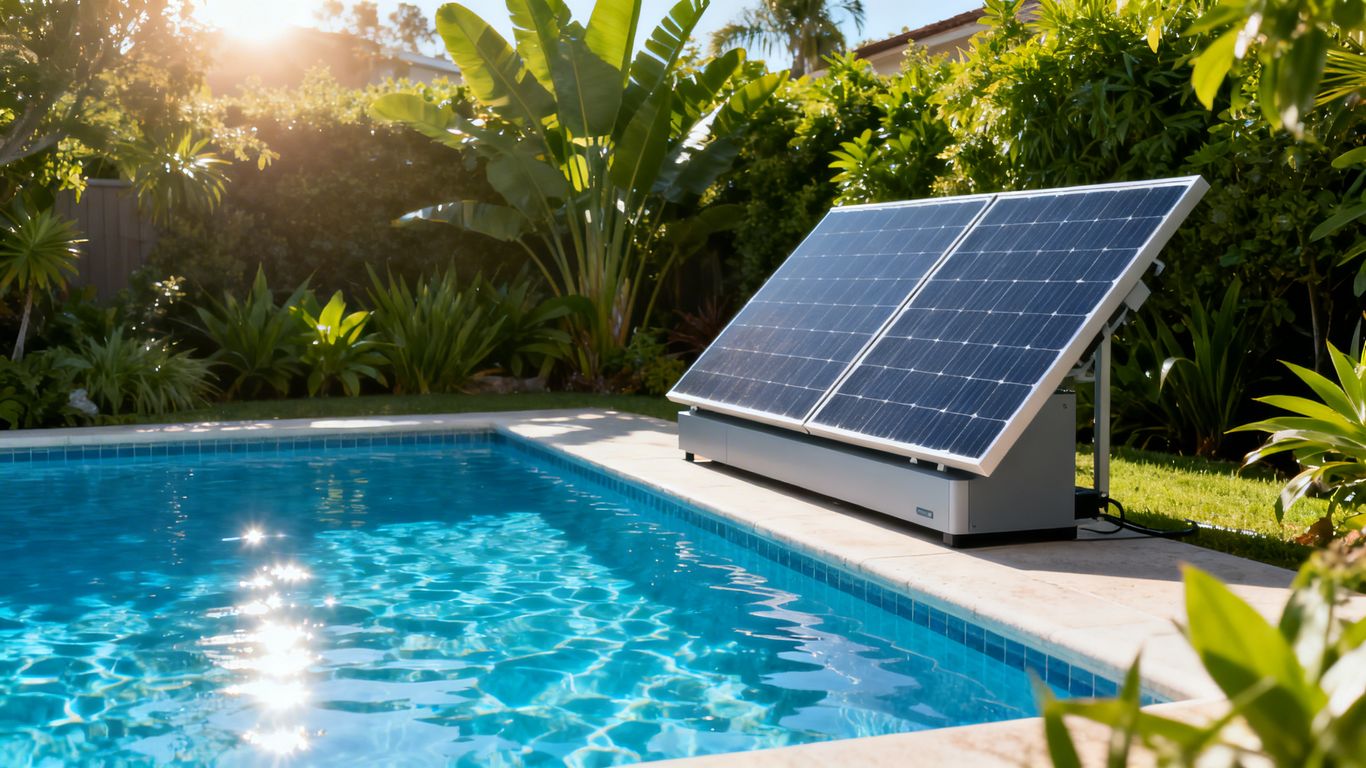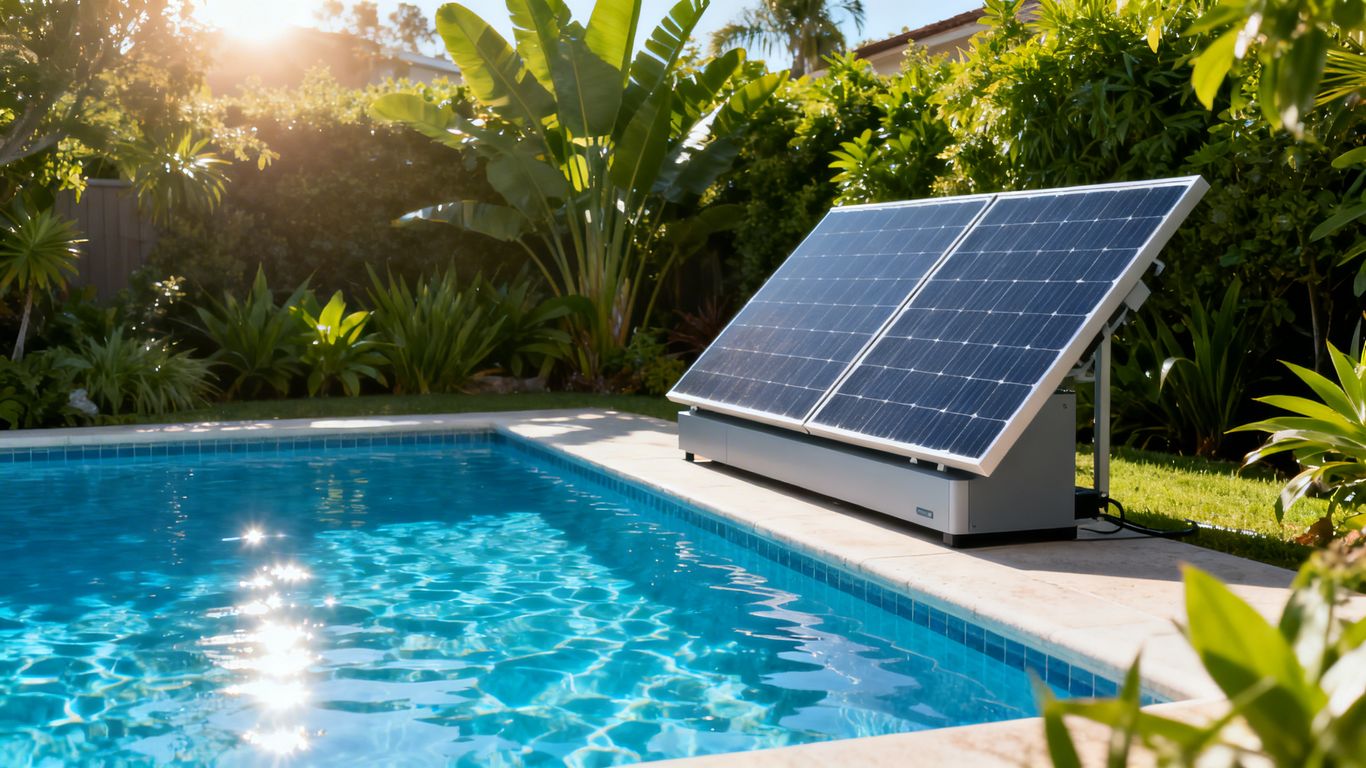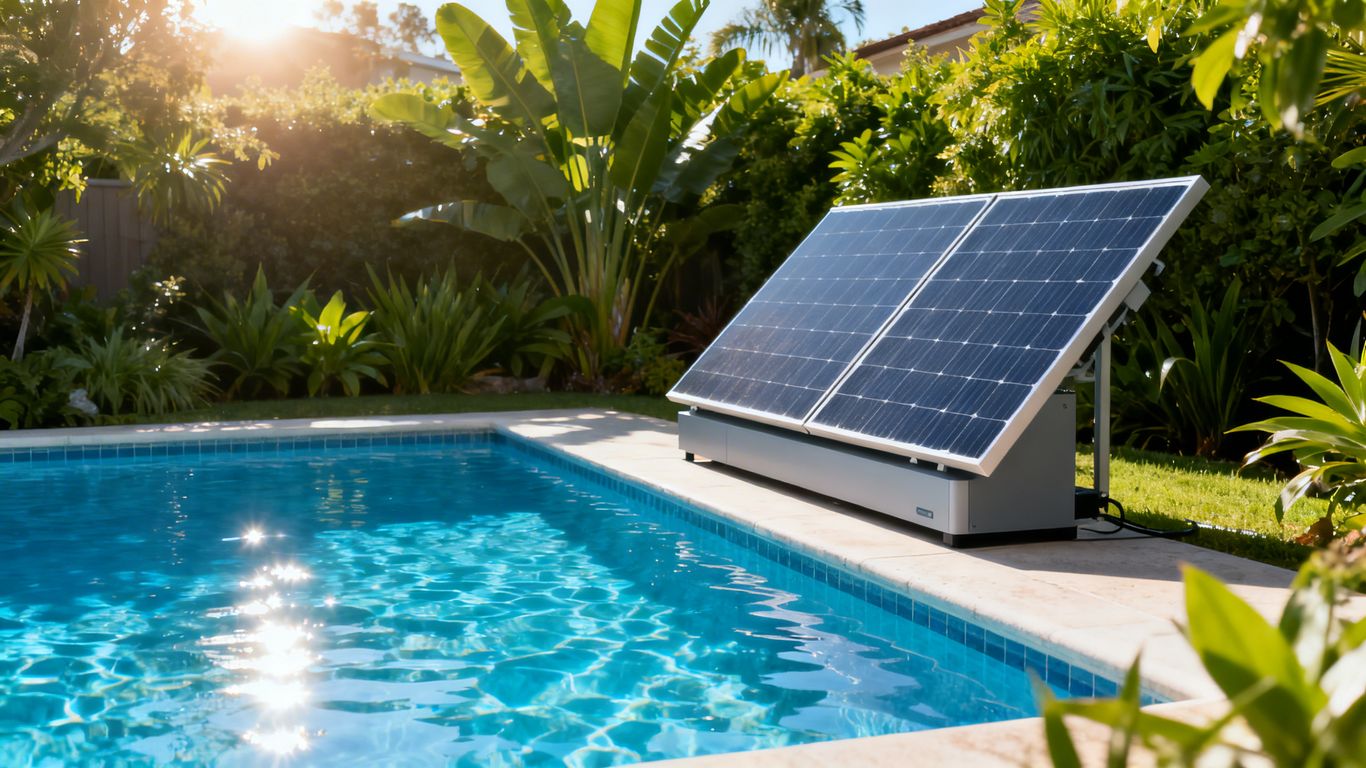
Maintaining your swimming pool represents a significant cost, particularly due to the filtration pump, which consumes a lot of electricity. Are you wondering if there’s a more economical and ecological solution? Know that opting for a PV kit dedicated to pool filtration, and more specifically a solar panel for a pool pump, could be the answer to your concerns. Let’s discover together why this investment is an excellent idea for your pool.
Key Takeaways
- Reduce your electricity expenses: Your pool’s filtration pump is a major energy consumer. A solar panel for a pool pump allows you to use free solar energy, significantly lowering your bills. Annual savings can reach several hundred euros, with a quick return on investment.
- Adopt an ecological approach: By using solar energy, you contribute to the energy transition and reduce your carbon footprint. It’s a more environmentally friendly alternative than traditional electric pumps.
- Gain autonomy: A photovoltaic solar system makes you less dependent on the electrical grid. Your pump will continue to operate even during power outages, ensuring constant filtration.
- Choose the right equipment: Understanding the specifics of photovoltaic panels is important. The choice of a solar panel for a pool pump should be based on the required power, the size of your pool, and your location for optimal efficiency.
- Simplify your installation: Although installation may require a professional for strategic positioning, modern solar systems are reliable and require little maintenance. This ensures long-term peace of mind.
Significantly Reduce Your Electricity Bills
Maintaining a swimming pool represents a significant energy consumption, especially during the summer months. The filtration pump, the central element of your system, is often the main culprit for this expense. Fortunately, there is a solution to alleviate this burden: solar energy.
The Energy Impact of the Filtration Pump
Your pool pump operates intensively to ensure water circulation and purification. Its power, measured in watts (W) or kilowatts (kW), can vary considerably, generally ranging from 0.5 kW to over 2 kW for the most powerful models. Added to this is the daily operating time, which can extend for several hours, or even continuously during the swimming season. The pump’s efficiency, whether variable speed or not, and the size of your pool also influence this consumption. When you add the current cost of electricity, the annual bill can quickly escalate.
Substantial Savings Thanks to Solar
Opting for a photovoltaic kit dedicated to your pool pump allows you to produce your own electricity. Solar energy is free and abundant, especially during the periods when your pool is used the most. By producing your own electricity, you reduce your dependence on the traditional electrical grid and, consequently, your expenses. A well-sized installation can cover a large part, if not all, of your pump’s energy needs. For example, a pump consuming 1,840 kWh per season, at a rate of €0.25/kWh, represents an annual cost of approximately €460. With a solar installation, you could achieve substantial annual savings, often between €400 and €500, or even more if you live in a very sunny region.
A Quick and Sustainable Return on Investment
The initial investment in a solar kit for your pool pump may seem significant, but it is quickly amortized thanks to the savings made on your electricity bills. The lifespan of solar panels is generally 30 years or more. This means that after the amortization period, which can vary between 10 and 15 years depending on your consumption and installation cost, the energy produced by your panels becomes almost free for your pump. Furthermore, a pool is used during the sunniest months, which optimizes self-consumption and accelerates the return on investment. Potential income from selling surplus unused electricity can also contribute to making your installation more profitable.
Opt for an Environmentally Friendly Solution
Choosing a photovoltaic kit for your pool pump is a concrete action for the planet. You actively participate in the energy transition while reducing your ecological impact.
Contributing to the Energy Transition
Solar energy is an inexhaustible and clean resource. By using it to power your filtration system, you reduce your dependence on fossil fuels, the combustion of which is a major source of pollution. This is an approach that fits into a broader vision of sustainable development.
Reducing Your Carbon Footprint
Every kilowatt-hour produced by your solar panels is a kilowatt-hour that was not generated by power plants often powered by non-renewable fuels. This translates into a direct reduction in greenhouse gas emissions. Here’s an idea of the impact:
| Component | CO2 Emissions Avoided Per Year (Estimate) |
|---|---|
| Solar Pump | 200 kg |
| Conventional Pump | 800 kg |
These figures are indicative and depend on your location and pump usage.
Improving Your Pool Water Quality
Beyond environmental benefits, a solar pump can contribute to better pool management. More consistent filtration, thanks to a stable power supply during daylight hours, helps maintain clearer and healthier water. In some cases, this can even reduce the amount of chemicals needed for water treatment, adding an extra benefit for your health and the aquatic environment of your pool.
Gain Energy Autonomy for Your Pool
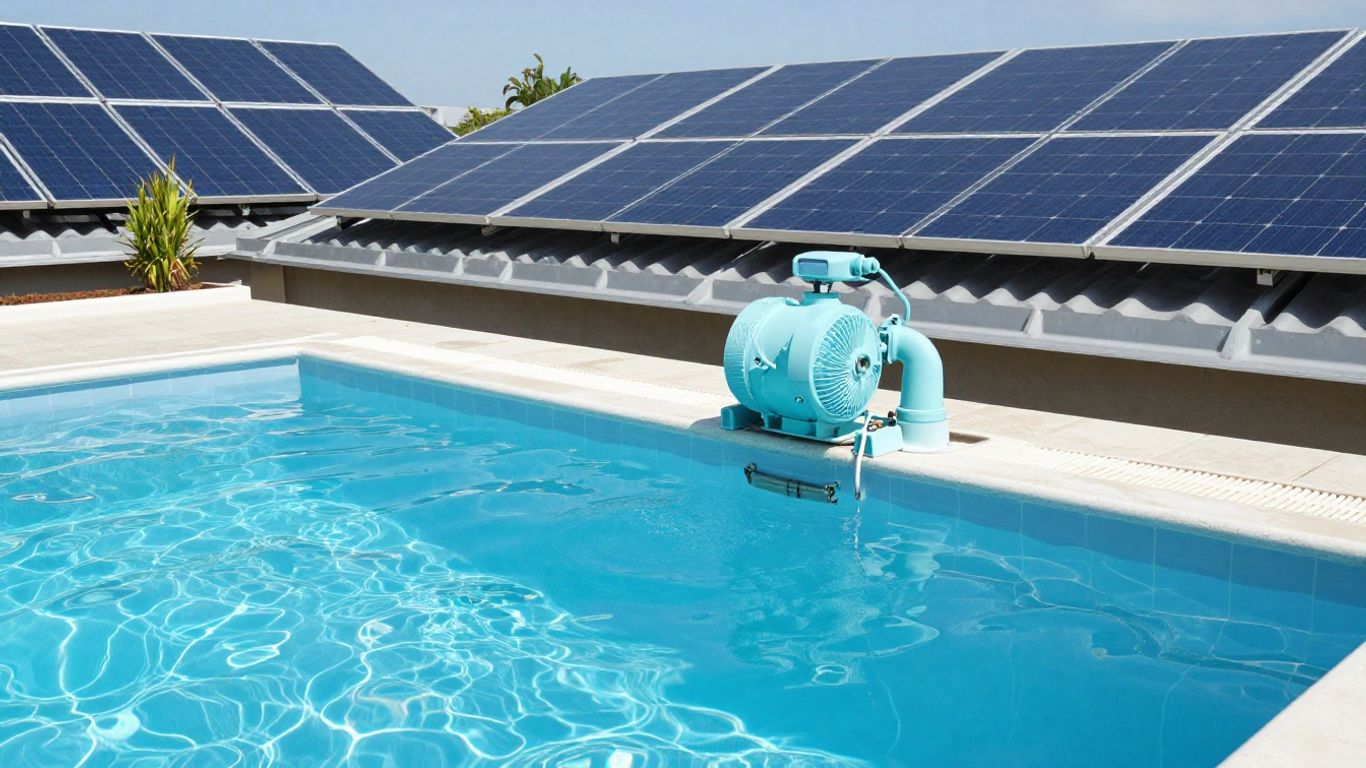
Increased Independence from the Grid
The idea of no longer being entirely dependent on the electrical grid for your pool’s operation can be very attractive. By installing a dedicated solar kit, you use the sun’s energy, a free and inexhaustible resource, to run your filtration pump. This means you are less sensitive to electricity price increases and potential market fluctuations. Your pool thus becomes a less expensive recreational space to operate.
Guaranteed Operation Even During Outages
Imagine: a power outage occurs in your neighborhood, but your pool continues to operate without interruption. This is one of the major advantages of a solar system with storage (batteries). Energy accumulated during the day can be used when the sun isn’t shining, or, as in this case, when the electrical grid fails. Your filtration system runs, the water stays clean, and you don’t have to worry about the inconveniences of a breakdown.
Optimizing Solar Energy Use
A well-sized solar kit allows you to make the most of the energy you produce. The goal is to match solar production with your pump’s needs. If your installation produces more electricity than needed at a given moment, this excess energy can be stored in batteries for later use, or, if the panels are connected to the grid, it can be fed back to power other appliances in your home. This is a smart way to maximize the return on your solar investment.
Choosing the Right Solar Panel for Your Pool Pump
To efficiently power your pool pump with solar energy, it is essential to select the appropriate equipment. It’s not just about buying panels randomly; several factors come into play to ensure performance and durability.
Understanding the Specifics of Photovoltaic Panels
There are different types of solar panels, but for a pool pump, it’s the photovoltaic panels that interest us. Unlike thermal panels that heat water directly, photovoltaic panels produce electricity. This electricity can then power your filtration pump, your heating system (like a heat pump), or even a robotic cleaner. The choice therefore lies in the ability of these panels to generate a stable and sufficient electrical current. Monocrystalline panels are often recommended for their good efficiency, even in less optimal sunlight conditions.
Sizing the Installation According to Your Needs
The power required for your pool pump depends on several factors. You need to consider your pump’s electricity consumption (its power in Watts), the number of hours per day it operates, and the seasonality of its use. For example, a filtration pump can consume about 1 kWh per day in summer. To meet this need, a solar panel installation of about 850 Wp (i.e., 2 panels of 425 Wp) may be sufficient, generating up to 4.5 kWh per day during the summer period. It is important to note that these figures are estimates and can vary. A personalized study is therefore essential for precise sizing. For instance, to power a pool heat pump, you would need approximately 6 to 8 panels of 425 Wp, totaling 3 kWp [e816].
The Importance of High-Performance and Durable Equipment
Investing in quality solar panels is crucial. Look for panels with high efficiency, above 21%, as they will produce more electricity from a given surface area. Resistance to weather and the longevity of the equipment are also criteria not to be overlooked. A modern and efficient system will guarantee reliable energy production in the long term, even when sunlight is low. Also consider the orientation and tilt of the panels; a well-thought-out installation maximizes sun exposure and thus electricity production.
Installing photovoltaic solar panels for your pool pump represents a sustainable and economical solution. It allows you to reduce your dependence on the traditional electrical grid and save money on your electricity bills, while contributing to the ecological transition.
Simplifying Installation and Maintenance
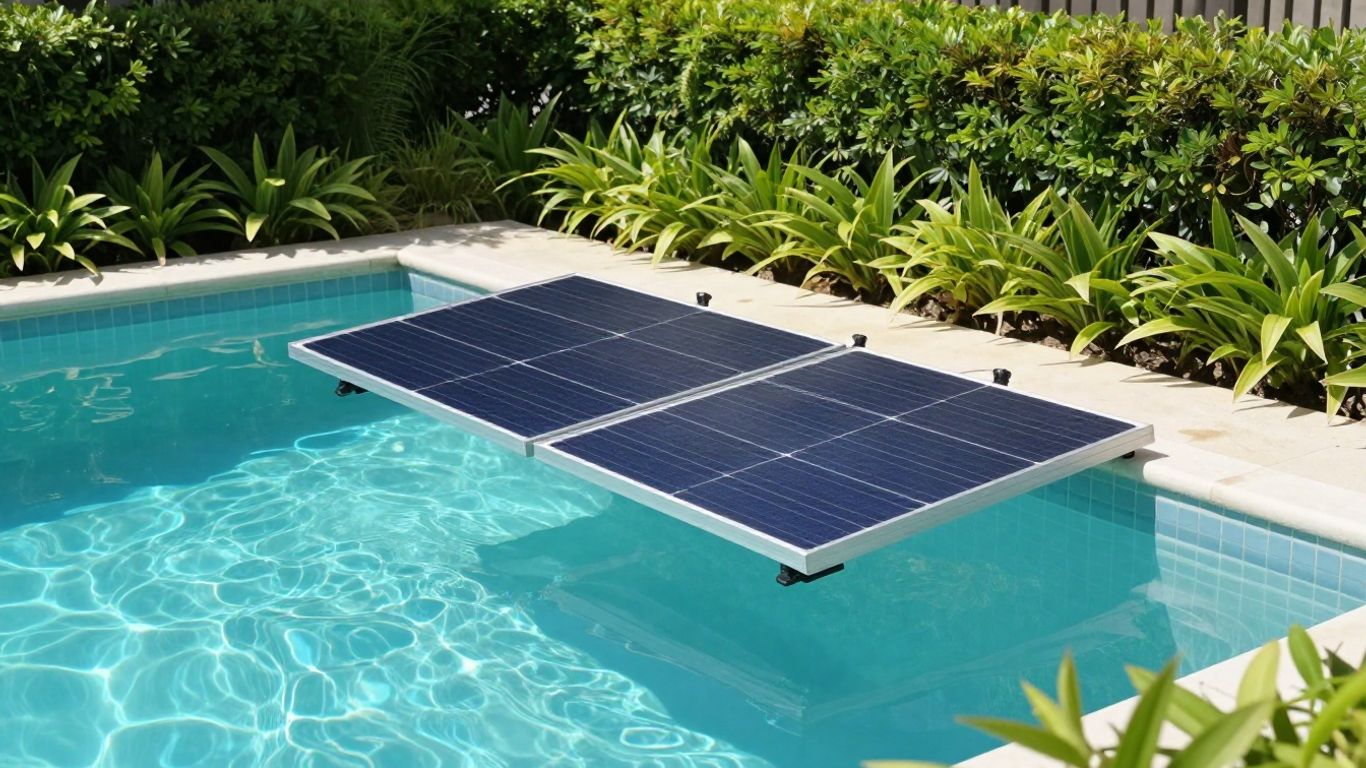
Installing a solar system for your pool pump may seem complex, but modern solutions make this process surprisingly accessible. The goal is to offer you peace of mind, both during setup and for routine maintenance.
Strategic Placement for Maximum Efficiency
The location of solar panels is crucial for capturing maximum light. You need to choose an open area, free from shadows cast by trees or buildings, ideally facing south. The tilt will be adjusted according to your latitude to optimize energy production throughout the year. While this may require some initial thought, once the panels are correctly positioned, their performance is assured for a long time. Consider exploring the solutions offered in the SOLIDPOOL 2026 catalog to find suitable equipment.
Reliability of Modern Solar Systems
Current photovoltaic kits are designed to be robust and durable. They withstand outdoor conditions well and require little intervention. Manufacturers focus on the quality of materials to ensure a long lifespan for your installation. You thus benefit from a stable and reliable energy source for your pump.
Reduced Maintenance for Peace of Mind
One of the great advantages of these systems is their ease of maintenance. Unlike other equipment, solar panels require little upkeep. Occasional cleaning is generally sufficient to maintain their efficiency. Here are the key points to remember:
- Panel Cleaning: Simple rinsing with clean water, once or twice a year, is often enough. Avoid abrasive products.
- Connection Check: Ensure cables are securely fastened and protected.
- Performance Monitoring: Most modern systems offer remote monitoring, alerting you if needed.
The initial investment in a solar kit for your pool pump translates into a significant reduction in long-term maintenance constraints and costs. You enjoy clear water without worrying about electricity bills or frequent breakdowns.
In Conclusion: A Wise Choice for Your Pool and the Planet
In summary, opting for a photovoltaic kit dedicated to your pool’s filtration represents both an economical and ecological approach. You will significantly reduce your electricity bills while enjoying cleaner water thanks to optimized filtration. Furthermore, you will take concrete action for the environment by using renewable energy. Although the initial installation requires some attention, the long-term benefits amply justify this investment. Consider it; it’s a solution that makes sense for your comfort and for the planet.
Frequently Asked Questions
Is it really possible to power a pool pump solely with solar panels?
Yes, it is entirely possible to power your pool’s filtration pump with solar panels. You just need to properly size the installation according to your pump’s power and your region’s sunshine. This way, your pool will operate using solar energy, without depending on the electrical grid.
What are the financial benefits of a solar kit for a pool?
Installing a solar kit for your pool can significantly reduce your electricity bills. By using free solar energy, you no longer pay for electricity to run the pump. Generally, the initial investment is quickly recouped, often in just a few years.
Is it complicated to install solar panels for a pool?
The installation requires some preparation, especially for choosing the right location without shade. It is advisable to call on a professional to ensure an efficient and safe installation. Once installed, the panels require little maintenance.
What to do if the sun doesn’t shine every day?
Even on cloudy days, solar panels continue to produce electricity, but in smaller quantities. To ensure the pump operates on overcast days or at night, it is possible to add a storage battery to keep the energy produced during the day.
Is a solar system for a pool truly ecological?
Yes, by using solar energy, you reduce your impact on the environment. You limit the use of electricity from polluting sources and contribute to protecting the planet by reducing your CO2 emissions.
Do I need to maintain my solar installation often?
No, maintenance is simple and infrequent. You just need to clean the panels from time to time to remove dust or leaves. Modern systems are designed to last and require little maintenance.