

EDF load shedding can be a bit scary at first, especially when you hear about power outages in the middle of winter. But it’s not just a random blackout: there’s a whole system behind it. Like many others, you’re probably wondering how it works, who decides, who is affected, and, most importantly, how to prepare without panicking. We’re going to try to clarify everything, without complicated words or alarmist speeches. The idea is for you to understand what’s happening and how to react if it ever happens to you.
Key Points to Remember
- EDF load shedding is a temporary and organized outage to avoid a widespread failure of the electrical grid.
- You will be notified in advance via official alerts, especially through the EcoWatt app or the Enedis website.
- Not everyone is affected: some sensitive sites like hospitals are protected, and the outage never lasts more than two hours.
- Outages mainly occur in the morning or early evening, never at night or on weekends except in exceptional cases.
- To prepare, charge your devices, have a backup lamp ready, and avoid using the elevator just before the scheduled time.
Understanding How EDF Load Shedding Works
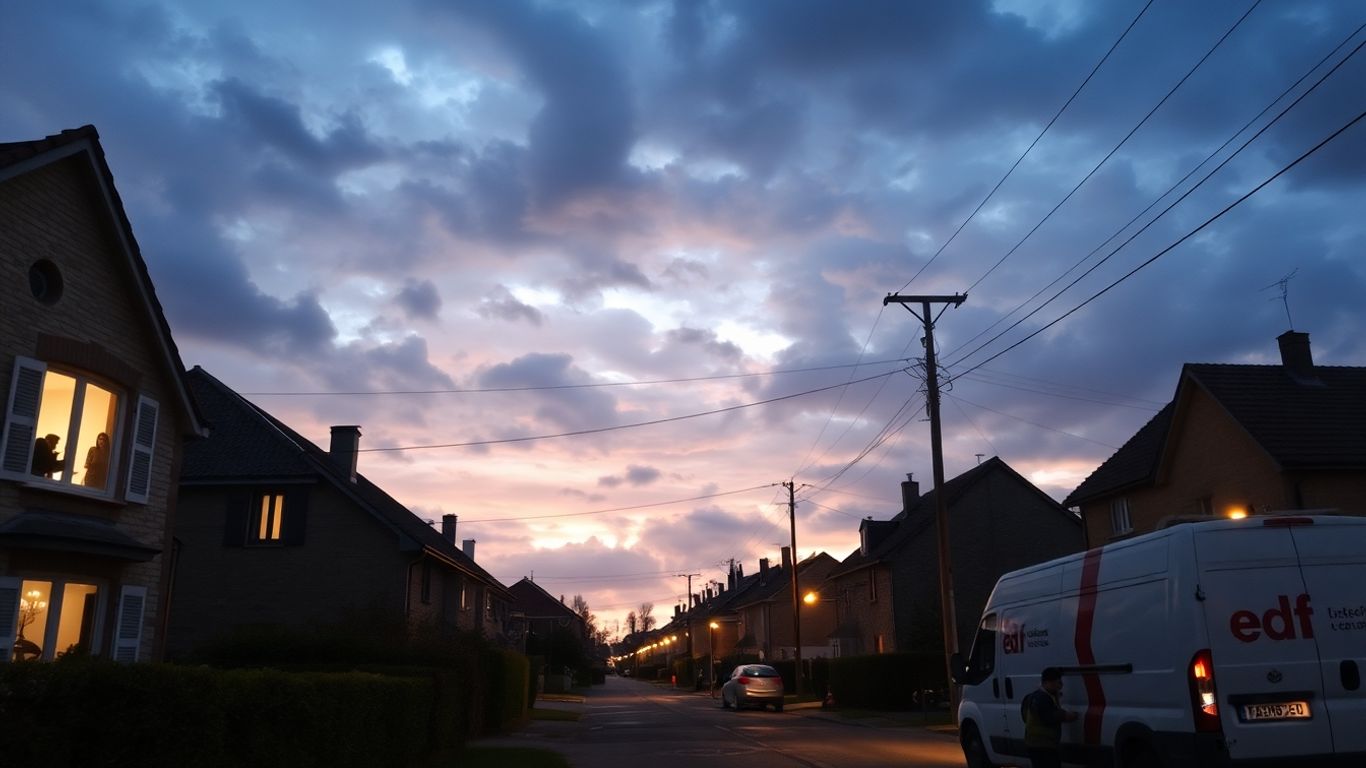
When electricity demand becomes too high compared to the available supply, EDF load shedding takes place to stabilize the grid and avoid much more serious consequences such as a general blackout. Load shedding is not just a random cut-off but aims instead to organize the management of the shortage temporarily. Here’s a detailed explanation by topic:
Precise Definition of Electrical Load Shedding
EDF load shedding consists of targeted and temporary outages on the electricity grid. They are decided ahead of time to limit the overload on the national system when the electricity supply can no longer cover demand. A partial outage is then implemented, usually lasting two hours and affecting a variable area, to relieve pressure on the national grid.
- Main objective: prevent a widespread blackout.
- Temporary, localized measure.
- Implemented in a planned manner, never arbitrarily.
These interruptions don’t just affect your household devices—they can also impact public services, except for those considered critical sites.
Differences Between Planned and Unplanned Outages
There are two major types of power interruptions:
| Type of Outage | Nature | Example |
|---|---|---|
| Planned Outage | Scheduled/organized | Load shedding during a consumption peak |
| Unplanned Outage | Accidental | Technical incident on the local grid |
- Planned outages, like load shedding, are coordinated ahead of time and communicated to the public.
- Unplanned outages are due to a failure or technical emergency, sometimes with no warning.
- Communication around load shedding is structured to limit discomfort and prepare users.
Role of Network Operators in Implementation
Grid operators play a central role.
- RTE (Electricity Transmission Network) manages the national balance.
- Enedis actually implements the outages in the affected areas.
- Tools such as the management of household equipment power come into play, prioritizing essential needs before limiting secondary uses—for example, the power allotted to a household.
Their main job is to guarantee system safety and ensure constraints are distributed fairly across the territory, while avoiding long or recurring outages as much as possible. They decide on the specific measures and notify towns and citizens in advance.
In summary, EDF load shedding is a necessity: to preserve the grid’s integrity during winter or exceptional situations. Even if it can create challenges in daily life, the mechanisms are set up so that the impact is limited, announced, and fairly distributed.
Criteria for Triggering EDF Load Shedding
EDF load shedding is never decided lightly. You may be wondering under what circumstances these targeted electricity interruptions can occur. Several factors come together before reaching this point. Let’s discover the trigger elements together.
Meteorological Factors and Consumption Peaks
Weather remains one of the main triggers:
- A cold snap increases electricity demand, especially for heating. Heavy use of electric heating, very common in France, drains reserves.
- Peaks are usually seen in the morning between 8 a.m. and 1 p.m., and in the evening between 6 p.m. and 8 p.m., when human activity is at its peak.
- Prolonged periods of cold weather make the situation tense, as high consumption continues for several days in a row.
Electricity then becomes something that must be shared rigorously.
If temperatures stay above seasonal norms, the risk of load shedding remains low, even with high consumption elsewhere in Europe.
Status of the French Power Generation Fleet
The state of production facilities plays a critical role. Here’s a summary:
| Source of Production | Share in France | Caution Points |
|---|---|---|
| Nuclear | ≈ 67% | Shutdowns for maintenance or incidents |
| Hydropower | ≈ 12% | Depends on rainfall |
| Gas/Coal/Oil | ≈ 10% | Supply tensions |
| Renewable energies (excluding hydropower) | ≈ 11% | Intermittent production |
– Few nuclear reactors available due to maintenance
-Supply difficulties for gas or coal
-Unpredictable management of renewable energies dependent on wind or sun
When the entire power fleet is not running at full capacity, the risk of imbalance increases.
Scenarios Considered by National Authorities
French authorities, in collaboration with the network operator (RTE), plan for several possible scenarios:
- Mild winter: no outages
- Moderately cold winter: some planned load shedding, with prior warning
- Very severe winter and struggling production: multiple outages, maximum 2 hours per area
If necessary, outages are only decided as a last resort, to avoid a total collapse of the grid.
As you can see, EDF load shedding is never automatic. It is always a progressive response to several signs of tension in the power system. It aims to preserve the balance between production and consumption, so electricity remains accessible to as many people as possible, even in times of high stress.
Identifying Who and What Areas Are Affected by EDF Load Shedding
When EDF load shedding becomes necessary, it does not affect the entire country or population in the same way. The selection of targeted areas and people follows rules established by network operators and national authorities.
Fairness Principles in Outage Distribution
The goal is to apply outages as fairly as possible. The following principles are respected:
- Outages are scheduled during specific slots, usually between 8 a.m.-1 p.m. and 6 p.m.-8 p.m. on weekdays.
- Each area is only affected a limited number of times to avoid prolonged exclusion of any one sector.
- Outages alternate as much as possible, so that some people are not continually disadvantaged.
This system aims to make sure that the load shedding is shared fairly among the affected population.
Exceptions for Priority and Sensitive Sites
Certain sites are given a total or partial exception, as their operation cannot be interrupted without major consequences:
- Hospitals and healthcare facilities, including dialysis centers and critical labs
- Police stations, fire stations, and emergency alert/response centers
- Major public transport infrastructure
- Facilities strategic to national security
- At-home patients with vital medical equipment (if pre-registered)
Operators ensure these sites are not included in load shedding zones, except in cases of extreme emergency.
Geographic Coverage and How It’s Applied
Load shedding is organized by large geographic zones known as « outage sectors. » Each sector covers an average of 2,000 to 5,000 households. In practice, this means:
- Certain departments or neighborhoods can be cut off for a time slot while others stay powered.
- Residents can check their status the day before from 5 p.m. by entering their address on the Enedis or RTE sites.
- About 60% of the population could be affected during a widespread load shedding operation, depending on how many priority sites are on their line.
| Zone | Affected by Load Shedding | Exempted (Priority) |
|---|---|---|
| Residential Neighborhood | Yes | No |
| Hospital | No | Yes |
| Shopping Center | Yes | No |
| Police Station | No | Yes |
In practice, it’s up to you to check ahead of time if your address might be affected. Outages, planned for a maximum of two hours, are never scheduled at night or on weekends except in exceptional situations.
User Information and Alert Process During an EDF Load Shedding
When the risk of EDF load shedding approaches, the communication process is strict and follows several steps so everyone can adapt quickly.
Official Prevention and Alert Systems
The official alert system relies on a series of notifications coordinated by grid operators and public authorities. At the slightest sign of stress on the grid, users are warned several days in advance. Here’s how the information typically unfolds:
- 3 days before: first level of vigilance is issued, signaling a possible upcoming outage.
- The day before, from 5 p.m. or 7:30 p.m.: confirmation of the time slot and the potentially impacted area.
- The day before, around 9:30 p.m.: publication of maps of affected departments on official websites.
- D-Day: actual outages begin and targeted alerts are sent out.
| Time | Alert Method | Information Provided |
|---|---|---|
| 3 days before | RTE website, media | Increased vigilance |
| Day before (7:30 p.m.) | RTE/Enedis site, email, press | Probable zones & schedules |
| Day before (9:30 p.m.) | Online interactive map | Department selection |
| D-Day | EcoWatt notifications, SMS | Confirmation and details |
During risk weeks, it’s a good idea to check this information daily so you’re not caught off guard by an unexpected outage.
Using the EcoWatt App and Other Digital Tools
EcoWatt, managed by RTE, acts as the electricity weather forecast. This service notifies you with a color-code system—here’s what to expect:
- Green: normal situation, no precautions needed.
- Orange: high tension, recommendations to reduce your consumption.
- Red: unavoidable outages, impending load shedding.
The app also offers personalized notifications based on your location. Other digital tools exist: SMS alerts, emails from energy providers, and direct updates via Enedis, RTE, or prefecture websites.
Role of Local Authorities and Operators in Communication
Departmental prefects, Enedis, and RTE widely relay these guidelines.
- Town halls and prefectures update bulletins on official channels (websites, social networks, local bulletins).
- Local media relay the time slots and specify affected neighborhoods.
- For businesses, emails are sent.
In a crisis, access to certain emergency numbers—such as 112, always reachable on mobile—is reiterated. The aim is for every user to have a clear sense of the upcoming period and know how to reduce their consumption or prepare for an outage.
The combined efforts of authorities and operators ensure a broad notification, but it is advisable to remain vigilant, subscribe to suitable information tools, and share messages with your loved ones or colleagues.
Concrete Consequences of EDF Load Shedding on Daily Life
When load shedding occurs, your daily life can be severely disrupted. You may suddenly find yourself without electricity in your home or workplace, without prior notice. This means you’ll be unable to use home equipment (heating, appliances, lighting) during the load shedding period, usually up to two hours. The consequences are more serious when the cold is intense or if you work remotely.
For businesses, a sudden power cut affects organization, production, and employee safety. Some factories or offices in fragile grid areas can be frequently affected, as shown by recent outages in Martinique. Companies therefore need to adjust their schedules or ask employees to take leave.
Main effects for individuals:
- Temporary loss of heating, hot water.
- Shutdown of electronic and household appliances.
- Food storage becomes difficult without a refrigerator.
For businesses:
- Production and customer service are suspended.
- Risk of data loss for offices lacking backup power.
- Need to adapt working conditions or temporarily suspend operations.
Outages are rotating: not everyone is affected at the same time, but nobody is completely immune.
Impact on Essential Infrastructure (Health, Safety, Transport)
Certain infrastructure is prioritized and little if ever subjected to load shedding: hospitals, fire stations, national security sites, and some critical industrial facilities. Nevertheless, vital sectors can be indirectly affected:
- Schools may have to close during the outage so children aren’t left without light or heat.
- Public transport, if affected by load shedding, may partially shut down services to avoid passengers being stranded between stations.
An important note: public safety can be affected, especially if the outage hits areas where alarms or road networks depend on electricity.
Limitations on Electronic and Communication Services
One of the biggest challenges is communication. When power cuts out, mobile and landline networks become unavailable short-term in the affected area. Not being able to reach emergency services at 15, 17, or 18 means you must call 112, available no matter which carrier you use.
| Service Impacted | Immediate Consequence |
|---|---|
| Mobile Phone Service | Cut off in load shedding area |
| Internet | No access, network overload |
| Security Monitoring | Operations interrupted |
During the outage, you could lose access to all services dependent on a stable connection, which can make family or professional organization more difficult.
During load shedding periods, every household and business must plan for these interruptions, protect sensitive equipment, and organize activities to limit inconvenience.
Preparation and Management Measures for EDF Load Shedding
Preparing for load shedding shouldn’t be taken lightly, especially as an outage can happen quickly. To reduce the impact on your daily life or professional activities, several steps should be planned ahead. Being informed and proactive will help make the outage less disruptive.
Recommendations for Individuals and Power Management
First, it’s recommended to set aside essential items: flashlights, candles, power banks, water, non-perishable food. This limits surprises if an outage lasts several hours, as can happen in a localized power cut.
Here’s a simple checklist:
- Make sure your electronic devices are fully charged the night before a scheduled outage.
- Favor meal preparation methods that don’t require much electricity.
- Keep a small amount of cash on hand, in case card terminals are unavailable.
- Write down emergency numbers that are reachable without power.
- Have blankets or warm clothing available, as heating could be lost.
During load shedding, staying calm and avoiding the use of limited grid power helps network stability and reduces the risk of wider unexpected outages.
Actions for Businesses
A power outage can disrupt business operations. To avoid activity paralysis:
- Regularly test your generators, especially in sensitive sectors.
- Establish protocols for shutting down and saving data before high-risk periods.
- Inform your teams about the necessary precautions and adjust schedules (for example, moving up or shifting critical tasks).
- Set up effective internal communication to notify when operations resume.
- Plan for leave or comp time in advance during expected peak periods.
A table can help to plan the allocation of activities or staff by risk periods:
| Time Slot | Recommended Activity | Minimum Staff |
|---|---|---|
| Before 8 a.m. / After 8 p.m. | IT work, meetings | Full staff |
| 8 a.m.-1 p.m. / 6 p.m.-8 p.m. | Manual tasks, small meetings | 50% |
Risk Prevention and Continuity of Essential Activities
Certain activities must continue even during an outage, especially health and safety related ones. Key actions to consider:
- Install reliable backup power systems for all critical equipment (medical, security).
- Set up a contingency plan for urgent telecommunications needs.
- Ensure everyone in your household or team knows basic safety measures (e.g., using candles, safe ventilation).
Finally, make sure to regularly check tools like the EcoWatt app, which provides real-time alerts and lets you plan for tense periods. Good organization and a few simple gestures can make a big difference during a planned outage.
Preventing Risky Situations and Staying Safe During EDF Outages
Planned EDF outages, also called load shedding, require specific safety measures to protect your home and loved ones. Even if the outage is announced in advance, some dangers remain and require your vigilance. Here’s an overview of the habits to keep in mind for getting through these periods smoothly.
Securing Home and Workplace Installations
A power cut can create problems or even accidents if you aren’t prepared. Especially in businesses, it’s advised to check ahead that critical equipment is robust and to plan for backup power.
- Make sure all your electrical devices are in good condition and unplugged during the outage, except those strictly necessary.
- Update and regularly test your alarm or security equipment connected to the grid.
- To reduce fire risk, use battery lamps or rechargeable LED lights rather than candles. Avoid using gas or open flame appliances indoors to prevent poisoning; remember these safety guidelines during outages.
Special Instructions for At-home Patients
For vulnerable people or those receiving care at home, preparing is even more important. Schedule treatments or care at different times if possible and inform loved ones if you rely on any electric medical devices. Here’s what to plan for:
- Register with your town hall if you depend on electric medical equipment.
- Keep a reserve of medication and non-electric medical supplies if possible.
- Have a list of emergency contacts within reach.
Best Practices During an Outage
To get through an outage safely and easily, a few simple behaviors should be followed.
- Charge your mobile phone before a scheduled outage so you always have a means of communication.
- Use only flashlights or battery lanterns for lighting.
- Leave open any electric gate or access you’ll use during the day in the morning.
- Avoid elevators in the hour before an outage, as there’s a significant risk of getting stuck.
The absence of electricity also affects access, traffic lights, and sometimes mobile networks. Always remember that during load shedding, emergency communications must go through 112, which is accessible even locally when other networks are down.
For companies as well as individuals, taking the time to get organized in advance and learning about possible scenarios greatly reduces the risks of accidents or incidents during future load shedding.
Conclusion
In the end, it’s important not to underestimate the impact that load shedding can have on your daily life or your work. Even though these outages remain rare and are organized to minimize inconvenience, they do require at least some planning. You now have the knowledge to better understand how these interruptions work and how to prepare for them. Be sure to follow alerts, adapt your routines, and raise awareness with those around you. By taking a few simple precautions, you can get through these periods more calmly. It’s never pleasant to be without electricity, but a little preparation goes a long way.
Frequently Asked Questions (FAQ)
What is EDF load shedding and why is it done?
EDF load shedding is a temporary and intentional power cut in certain areas to avoid a general grid breakdown. This happens when electricity demand exceeds what’s being produced, for example, during cold spells.
How will I know if my area is going to be affected by load shedding?
You’ll be notified in advance through alerts sent by the EcoWatt app, the Enedis website, or official messages. Three days before, a warning is given, then the day before, you can check if your address will be affected.
Who is protected from load shedding?
Priority sites such as hospitals, fire stations, police, and some patients at home with medical devices will not be cut off. Other areas are chosen to be fair, but not everyone is affected at the same time.
How long does a load shedding outage last?
Usually, a load shedding outage doesn’t last more than two hours. Outages mostly happen in the morning between 8 a.m. and 1 p.m. and in the evening between 6 p.m. and 8 p.m., rarely after 8 p.m. and never at night or on weekends.
How can I prepare for a load shedding outage?
You can charge your phones, prepare battery or solar lamps, avoid using the elevator before the outage, and open electric gates ahead of time if you will need to leave. It’s also wise to limit your electricity use to help avoid outages.
What are the risks or consequences of load shedding?
During load shedding, some services like internet, landlines or mobile phone networks, and traffic lights may be down. Schools and transport can be affected too. For emergencies, 112 remains accessible even if other emergency numbers don’t work.


