
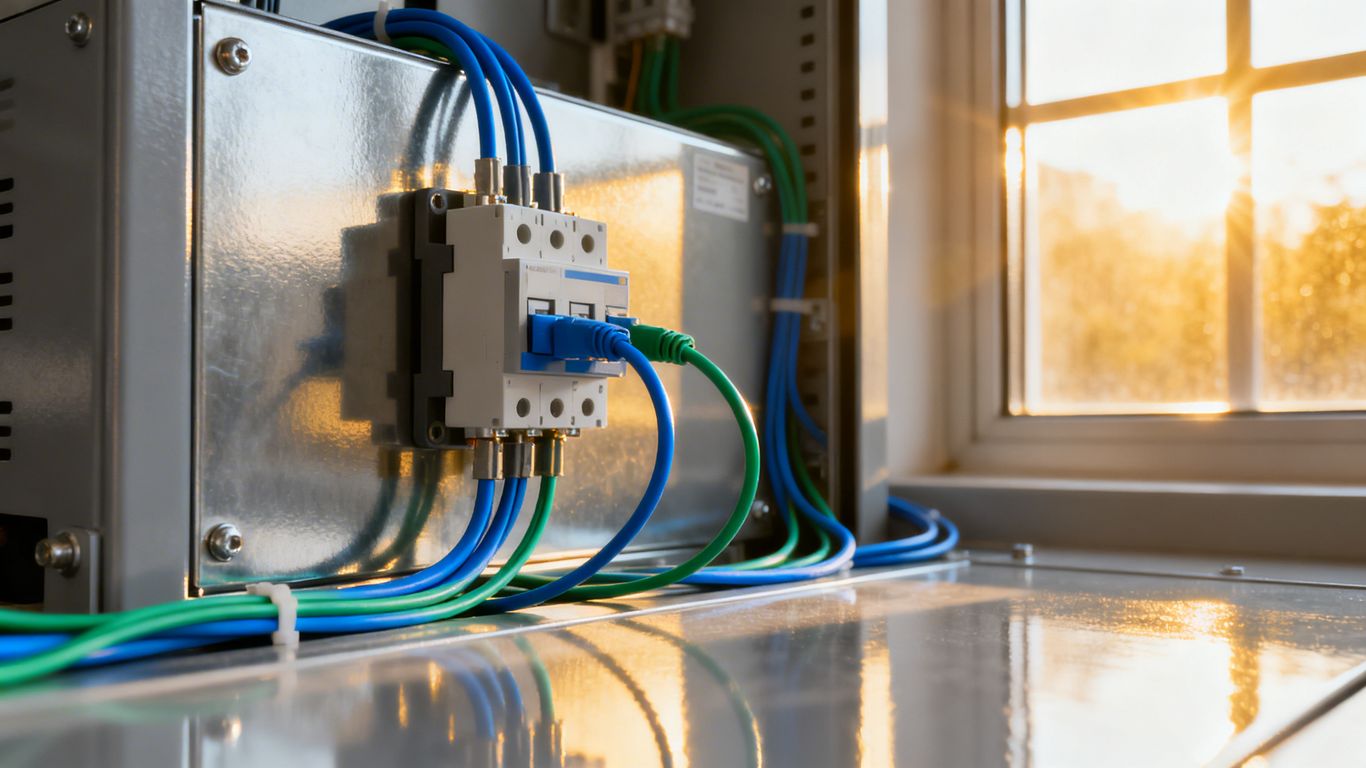
Thinking about installing renewable energy at home, but your old electrical panel is making you hesitate? Frankly, we don’t always realize it, but this panel has already done a lot of work over the years. Between changing standards and new appliances arriving, it quickly becomes outdated. Before plugging in your solar panels or a charging station, it’s best to know what you’re getting into. This guide will help you assess the situation and decide if your current setup can survive the transition, or if it’s time for an upgrade.
Key Takeaways
- An old electrical panel isn’t always ready to accommodate new energy sources, especially renewables.
- Before starting, a thorough diagnosis of the panel and cable condition is necessary.
- Electrical standards evolve quickly; it’s important to ensure everything is still compliant before making any modifications.
- Integrating renewable energy often requires adding or changing protections and circuit breakers.
- Hiring a professional for the upgrade guarantees safety and avoids unpleasant surprises.
Understanding the Evolution of Your Old Electrical Panel
Your electrical panel, much more than a simple fuse box, is the heart of your installation. It has evolved significantly over time, moving from a purely protective role to that of an intelligent management center for your home. Understanding this transformation is the first step in adapting it to modern needs, particularly those related to renewable energy.
The Electrical Panel: A Central Component of the Installation
In the past, the electrical panel primarily served to distribute power and protect circuits from overloads and short circuits using fuses or circuit breakers. It was a passive element. Today, it has become an active device, capable of managing and controlling your energy consumption. It centralizes all incoming strong and weak currents, grouped in what is called the Electrical Technical Space of the Dwelling (ETEL), an evolution of the Dwelling Technical Duct (GTL) mandated by recent standards.
Integrated Functions and Automations
Modern electrical panels increasingly incorporate automations. You can now control certain circuits remotely, for example, to simulate occupancy when you’re away, or to program heating. It’s also possible to monitor your electricity consumption in real-time or over defined periods, and to receive alerts in case of problems. These features pave the way for home automation and finer energy management.
Adaptation to Standards and New Technologies
Electrical standards, such as NF C 15-100, are constantly evolving to incorporate new technologies and ensure safety. The latest edition of this standard has become mandatory, replacing the one from December 2002. It is therefore important to ensure that your installation, and particularly your panel, complies with current requirements. The integration of renewable energies, such as photovoltaic solar, represents a major change that requires adaptation of your electrical panel to manage bidirectional energy flows and potentially higher loads. Adapting your panel is therefore an essential step for a safe and efficient electrical installation.
The evolution of electrical panels reflects technological advancements and increasing demands for safety and energy management. Moving from a simple protective box to an intelligent control center is a major transformation that prepares your home for the energy challenges of tomorrow.
Assessing the Compatibility of Your Current Panel with Renewable Energies
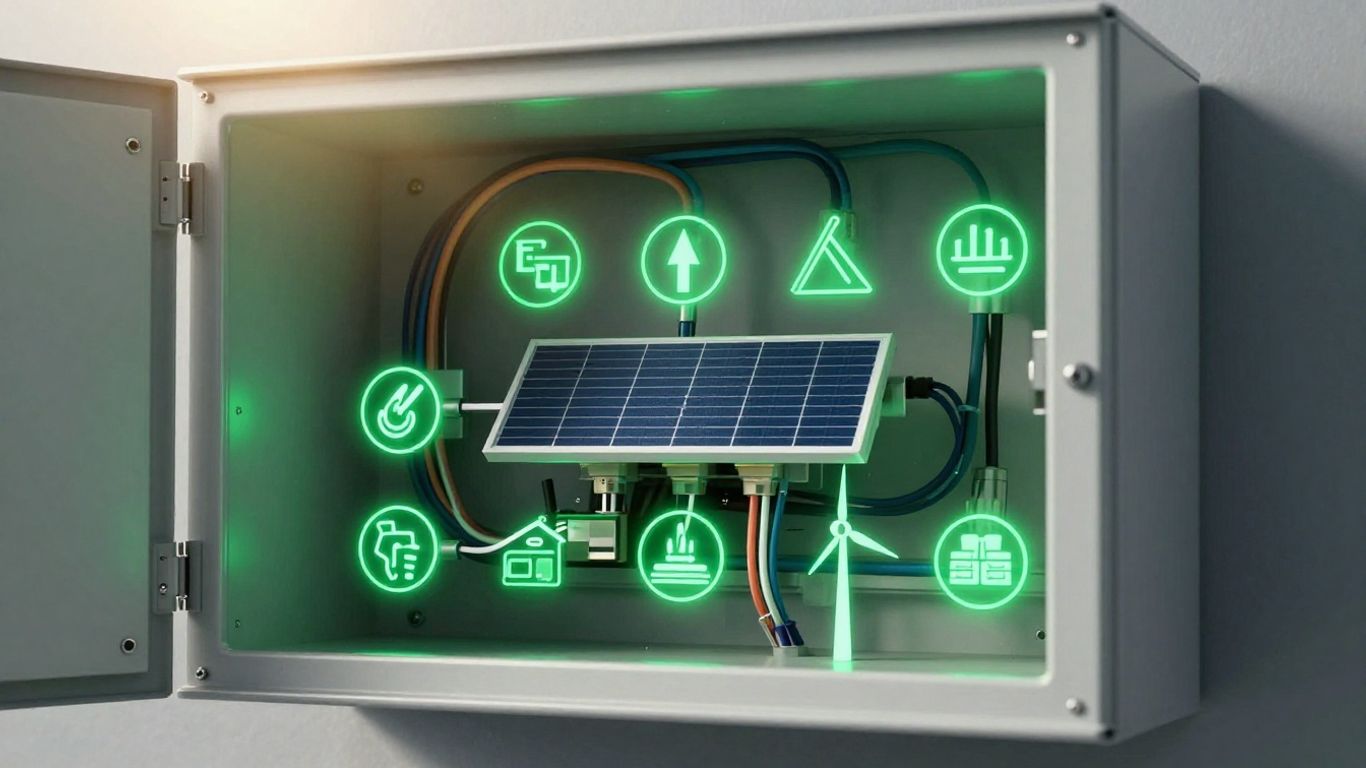
Before embarking on the integration of renewable energies, it is essential to take stock of your existing installation. Is your current electrical panel ready to accommodate these new energy sources? This is a question you must seriously ask yourself.
Diagnosis of Wiring Capacity and Condition
The first step is to examine the general condition of your panel and its wiring. An old panel may not have the necessary capacity to handle the additional energy flows generated by solar panels or other renewable systems. You need to check the wire gauge, their condition, and any signs of overheating or degradation. Undersized or worn wiring poses a significant risk to the safety of your installation.
- Check the maximum power capacity of your current panel.
- Inspect the physical condition of the wires and connections.
- Assess the presence of residual current devices (RCDs) and circuit breakers suitable for current standards.
Identifying Specific Needs Related to Renewable Energies
Integrating renewable energies, such as photovoltaic solar, imposes specific constraints. You will likely need to add specific protective devices, such as surge protectors or decoupling devices. You also need to anticipate the management of energy produced and consumed, which may require adding communication or monitoring modules. Also, consider the available space in your panel to accommodate these new components.
Analysis of Regulatory and Normative Constraints
Electrical regulations are strict, especially when it comes to renewable energies. You must ensure that your current installation and the planned modifications comply with the NF C 15-100 standard. This standard is regularly updated to incorporate new technologies. Ignoring these regulations could lead to safety issues, difficulties when selling surplus electricity, or even refusal of connection by the grid operator.
It is highly recommended to hire a qualified professional to perform this diagnosis. Their expertise will ensure an accurate assessment compliant with current standards, thus avoiding costly and potentially dangerous mistakes.
Modernizing Your Panel to Integrate Renewable Energies
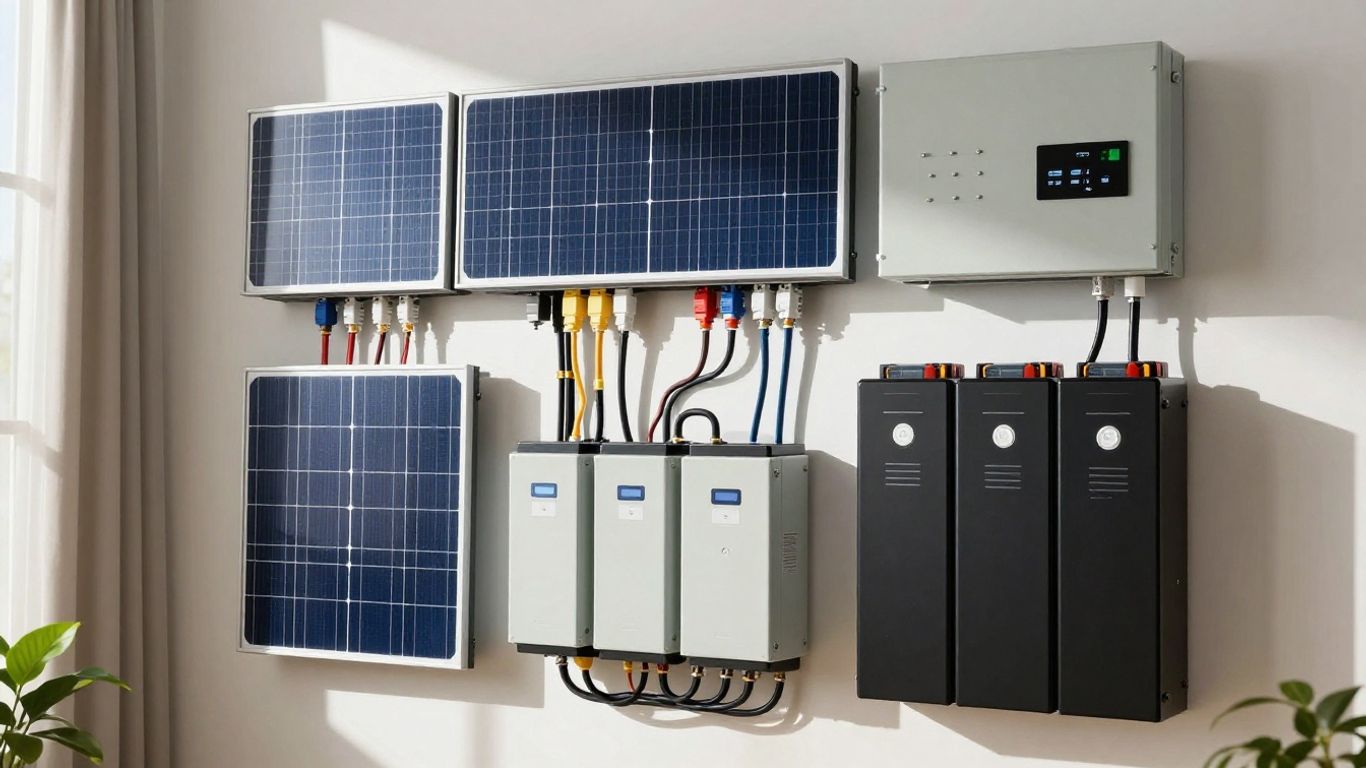
Integrating renewable energies into your home, such as installing solar panels to reduce your energy costs, often involves an increase in the electrical load of your installation. Your current electrical panel, designed for more modest needs, may no longer be up to the task. It’s therefore time to consider its modernization so it can safely and efficiently accommodate these new energy sources.
Choosing a New Panel Suitable for Increased Loads
With the addition of new equipment, your electrical panel must be able to handle a higher energy demand. This often means opting for a larger panel, offering more slots for circuit breakers and other protections. It’s also important to consider the total capacity of the installation. An undersized panel could overheat, cause outages, or pose a fire risk. Consider a model that complies with current standards, particularly NF C 15-100, which is updated to include new technologies and safety requirements.
Selecting Appropriate Circuit Breakers and Protections
Adding renewable energy systems requires careful attention to protective devices. Circuit breakers must be chosen based on the power of the new equipment and the capacity of the circuits. For example, a photovoltaic solar system may require specific protections, such as Type A or Hpi residual current circuit breakers, depending on the configuration. It is also recommended to include surge protectors to safeguard your sensitive equipment from voltage spikes, especially if you are in an area prone to thunderstorms. The safety of your installation depends on a rigorous selection of these components.
Considerations for Photovoltaic Solar Installations
If you are considering a photovoltaic solar installation, your electrical panel will need to be adapted to manage both the energy coming from the grid and that produced by your panels. This may involve adding a dedicated circuit breaker for injecting surplus electricity into the grid, or for managing self-consumption. You also need to consider the space required for new modules and how they will be connected. Careful planning is essential to ensure a harmonious and safe integration of your solar system.
Installing or modifying an electrical panel is a complex operation that requires specific technical skills. It is strongly advised to hire a qualified professional to carry out this work. Attempting to do it yourself could lead to risks for your safety and that of your installation; it is not recommended to attempt this task yourself.
Here are some points to consider when selecting your new panel:
- Capacity: Ensure the new panel can accommodate all current and future circuits, including those related to renewable energies.
- Type of Protection: Verify that the circuit breakers and residual current devices are suitable for the new loads and current standards.
- Space: Allow sufficient space for additional modules and good ventilation.
- Connectivity: If you want intelligent energy management, opt for a panel compatible with home automation or connected systems.
Key Steps for Upgrading Your Electrical Panel
Modernizing your electrical panel to integrate renewable energies requires a methodical approach. It’s not just about replacing a few wires, but about rethinking your entire electrical distribution to make it both safe and efficient.
Planning and Obtaining Necessary Permits
Before any intervention, rigorous planning is essential. First, you need to accurately assess your current and future energy needs, especially with the addition of systems like photovoltaic solar panels. This assessment helps determine the necessary capacity of your new panel and associated protections. Once this step is completed, it is often necessary to obtain permits or authorizations from local authorities or your electricity provider. These administrative steps are important to ensure the compliance of your installation and can vary by municipality. Don’t forget to check the specific requirements for installing solar panels, as they may involve particular procedures with the grid operator [9a7d].
Professional Intervention for Power Disconnection and Installation
Safety comes first. Upgrading your electrical panel must be carried out by a qualified professional. They will first completely disconnect your existing installation to prevent any risk of accidents. Then, they will proceed with the installation of the new panel, ensuring all connections are made according to current standards. The choice of components, such as circuit breakers and residual current devices, will be adapted to the new loads generated by your renewable energy equipment. It is also important to properly size the overall system, taking into account the total power your installation will need to support [6d1c].
Post-Installation Compliance Testing and Certification
Once the physical installation is complete, a verification phase is essential. The professional will perform a series of tests to ensure everything is working correctly and, most importantly, that there are no electrical risks. This includes checking the grounding, circuit insulation, and the proper functioning of protective devices. Once these checks are validated, a certificate of conformity can be issued, attesting that your new installation meets all current safety standards. This is the guarantee that your modernized panel is ready to safely accommodate your renewable energies.
Practical Solutions for Renovating an Old Panel
Making an Existing Installation Safe
Sometimes, your current electrical panel is not obsolete enough to require a complete replacement. It may involve bringing an older installation into compliance with current safety standards. This can include adding missing protections, such as a main residual current device or branch circuit breakers adapted to new uses. The goal is to ensure the safety of people and property without necessarily changing the entire structure. Targeted upgrades may be sufficient to make your installation safer.
Partial or Full Panel Replacement
If your panel shows signs of weakness, is undersized for your current needs (especially with the addition of renewable energies), or no longer complies with standards at all, replacement is necessary. You can opt for a full replacement, which will allow you to start with a clean, modern foundation. In some cases, a partial replacement may be considered, for example, by replacing only the main box while keeping certain components if their condition permits and they are compliant. The choice will depend on the overall condition of your installation and your future projects.
Adaptation to Specific Configurations
Older electrical panels had various configurations: some were recessed, others surface-mounted, and protections could be single-pole or double-pole. During renovation, it’s important to consider these specifics. For example, if you have a recessed panel, you’ll need to ensure the new model can fit into the existing space, or plan for the necessary work to adapt it. Similarly, the transition from single-pole protections to more modern protections (like residual current circuit breakers) must be managed carefully. The idea is to find the most suitable solution for your particular situation, taking into account the existing setup.
Here are some points to consider during renovation:
- Check the condition of existing wiring: Before any work, it is essential to ensure that the electrical wires are in good condition and show no signs of deterioration (cracked insulation, exposed wires).
- Sizing of protections: Adapt the protections (circuit breakers, residual current devices) to the power of the appliances you use and the new energy sources you are integrating.
- Compliance with standards: Even for a partial renovation, it is imperative to comply with current electrical standards (especially NF C 15-100) to ensure safety.
- Circuit identification: Take the opportunity to clearly identify and label each circuit, which will facilitate future interventions.
Renovating an old electrical panel is not just a simple change of equipment. It is a process aimed at modernizing your installation to make it safer and more efficient, while taking into account the technical and regulatory constraints specific to your home.
In Conclusion: Your Electrical Panel, Ready for the Future
There you have it, you now have a better idea of how to prepare your electrical panel to integrate renewable energies. It’s no small feat, but with the right information and, let’s be honest, often the help of a professional, it’s entirely achievable. Think of it as an upgrade for your home, an investment that will make you more self-sufficient and environmentally friendly. Don’t hesitate to consult experts to ensure everything is done according to best practices. Your installation will then be ready for the energy challenges of tomorrow.
Frequently Asked Questions
Why does my old electrical panel need to be modernized for renewable energy?
Your old panel was designed for more modest electrical needs. Adding equipment like solar panels or electric car charging stations requires more power. A modernized panel ensures your installation can handle this increased demand safely, preventing overloads and fire risks.
How do I know if my current electrical panel is compatible with renewable energy installations?
It’s difficult to know without an expert’s opinion. An electrical professional will check your panel’s capacity, the condition of the wires, and the protections. They can then determine if your current installation can support the addition of new equipment or if everything needs to be replaced to comply with safety standards.
What are the main elements to consider when choosing a new electrical panel for renewable energy?
You’ll need to choose a panel capable of providing more power (expressed in amperes). You also need to select the right circuit breakers, which act as safety switches, to protect each circuit. For solar panels, specific protections are necessary to manage the electricity produced and that coming from the grid.
What are the important steps to upgrade my electrical panel?
The first step is planning. Then, you need to hire a qualified electrician. They will handle turning off the power, replacing the old panel with a new one, wiring everything correctly, and then verifying that everything works perfectly and complies with safety regulations.
Is it possible to simply improve my old panel without replacing it entirely?
Sometimes, yes. If your panel is in good general condition but just a bit outdated, an electrician might be able to reinforce certain parts or add protections. However, to integrate renewable energies that require more power, a complete replacement is often the safest and most effective solution.
Do I need to obtain permits before modifying my electrical panel?
Yes, in most cases, permits are required before undertaking significant work on your electrical installation. Your electrician will guide you on the necessary steps and ensure everything is done according to regulations to guarantee the safety and compliance of your installation.


