Key Takeaways
The temperature of a water heater affects sanitary safety, comfort, energy consumption, and limescale buildup. A measured setting, regularly checked, is generally more effective than a very high setting or frequent changes.
- A setting that is too low can increase health risks.
- Excessive temperature increases consumption and the risk of burns.
- The actual temperature available at the tap must be measured, not just inferred from the thermostat.
- Water hardness influences the scaling of the tank and the heating element.
- Regular maintenance helps preserve the efficiency and lifespan of the appliance.
Understanding the Importance of Water Heater Temperature
The storage temperature determines the amount of hot water available and the speed at which the tank reheats after a shower or washing dishes. It also influences heat loss, even when no one is using the system. For this reason, the correct setting is not necessarily the maximum temperature offered by the appliance. It’s more about finding a setting that is consistent with the home’s configuration and the household’s habits.
The Role of Temperature in Domestic Hot Water Production
In a tank, water is heated and then stored before use. The greater the difference between the cold water temperature and the storage temperature, the more energy the appliance must supply. However, a high temperature can increase the usable reserve, as the same amount of stored water can be mixed with more cold water at the point of use. This benefit must be weighed against losses and safety constraints.
The Recommended Range for Balancing Comfort and Safety
For a recent and properly adjusted individual installation, a range of around 50 to 55 °C is often considered a compromise. Some collective equipment or installations may require a different setting, especially when thermostat accuracy or local health regulations demand it. The guide on the ideal water heater temperature can help compare the main benchmarks before taking action. However, you should refer to your model’s manual and, if in doubt, seek professional advice.
Risks of Too Low a Temperature
Water kept at an insufficient temperature for extended periods can create an environment conducive to the development of microorganisms, especially in stagnant areas of the system. The risk depends on the installation, volume, circulation, and frequency of use. A temporary drop should not be decided solely to reduce the bill. Collective, old, or large installations require particular vigilance.
Consequences of Excessive Temperature
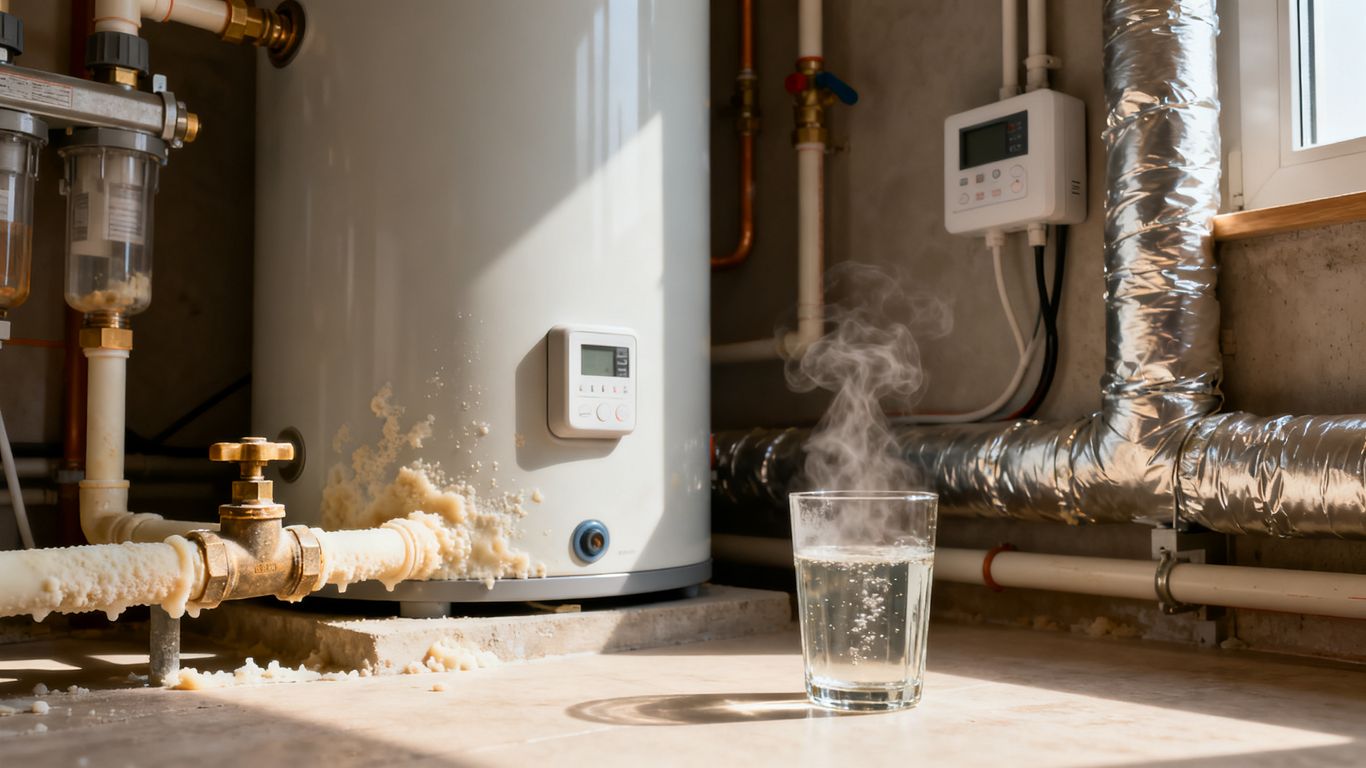
A setting that is too high increases the risk of burns at the tap, especially for children and the elderly. It also leads to greater heat loss and can accelerate mineral deposits in hot parts. A thermostatic mixer can limit the risk at the point of use, but it does not correct an inappropriate setting in the tank. Safety at the tap remains a priority, even when the goal is to maintain comfort.
Measuring and Adjusting Water Heater Temperature
The setting displayed on an appliance is not always sufficient to know the actual temperature delivered. The thermostat’s location, the condition of the heating element, the probe’s accuracy, and mixing with cold water can alter the result. A simple measurement at the tap therefore provides more useful information than the position of a dial alone. Proceed slowly and note the initial setting before making any changes.
Where to Find the Thermostat Depending on the Appliance Type
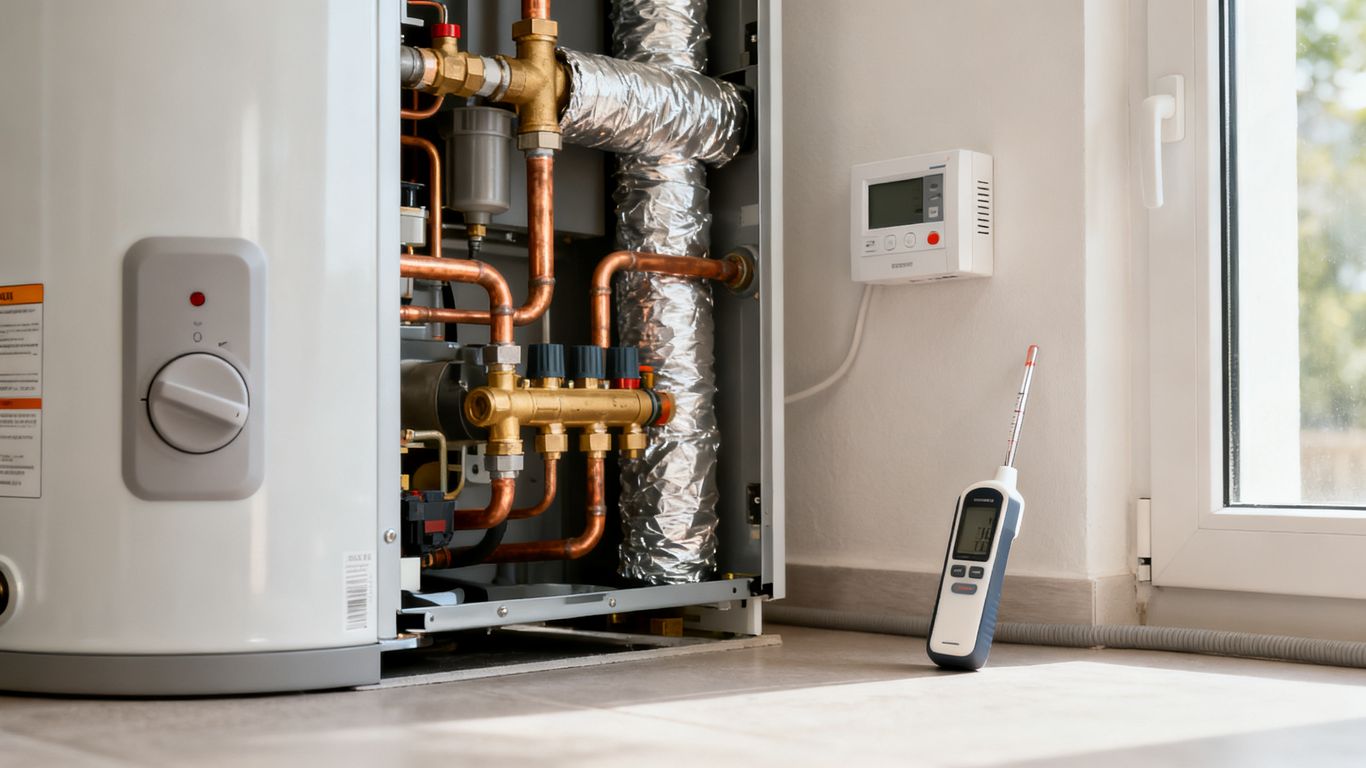
On an electric tank, the thermostat is usually located behind a cover under the tank, near the heating element. On a thermodynamic water heater, the setting may be accessible via an electronic interface or a control menu. A boiler producing domestic hot water often has a separate control for heating. The type of appliance must therefore be identified before looking for a dial or changing a setting.
How to Check the Actual Temperature Available at the Tap
Let the hot water run for a few moments without mixing, then measure it with a suitable thermometer. Repeat the process at another tap if the pipe length is significant. This check can reveal heat loss, a faulty mixer, or a setting that no longer corresponds to the actual operation. To complement this approach, the guide on