You’ve just bought an electric car and are wondering about its battery’s lifespan? That’s an excellent question, as this component represents a significant part of your investment. This article will shed light on what manufacturer warranties cover and how to care for your battery to maximize its longevity. You’ll also learn how to interpret its health status and what options are available once the warranty period ends. The goal is to give you all the keys for a worry-free electric vehicle experience.
Key Takeaways
- The standard warranty for an electric car battery generally covers 8 years or 160,000 km, with a minimum guaranteed capacity threshold, often set at 70%.
- Warranties exclude accidental damage, misuse, or repairs performed outside of an authorized network. It is therefore essential to carefully read your manufacturer’s specific terms and conditions.
- Cell chemistry (NMC or LFP), outside temperature, charge level, and the frequency of charge-discharge cycles directly influence battery lifespan.
- Battery State of Health (SoH) is measured as a percentage of remaining capacity. A sudden drop or an SoH below 80% after a few years may require a check to claim the warranty.
- To optimize your battery’s lifespan, favor partial charges (between 20% and 80%) and limit fast charging and exposure to extreme temperatures.
Understanding Electric Car Battery Lifespan Warranty
The Battery: A Strategic and Costly Component
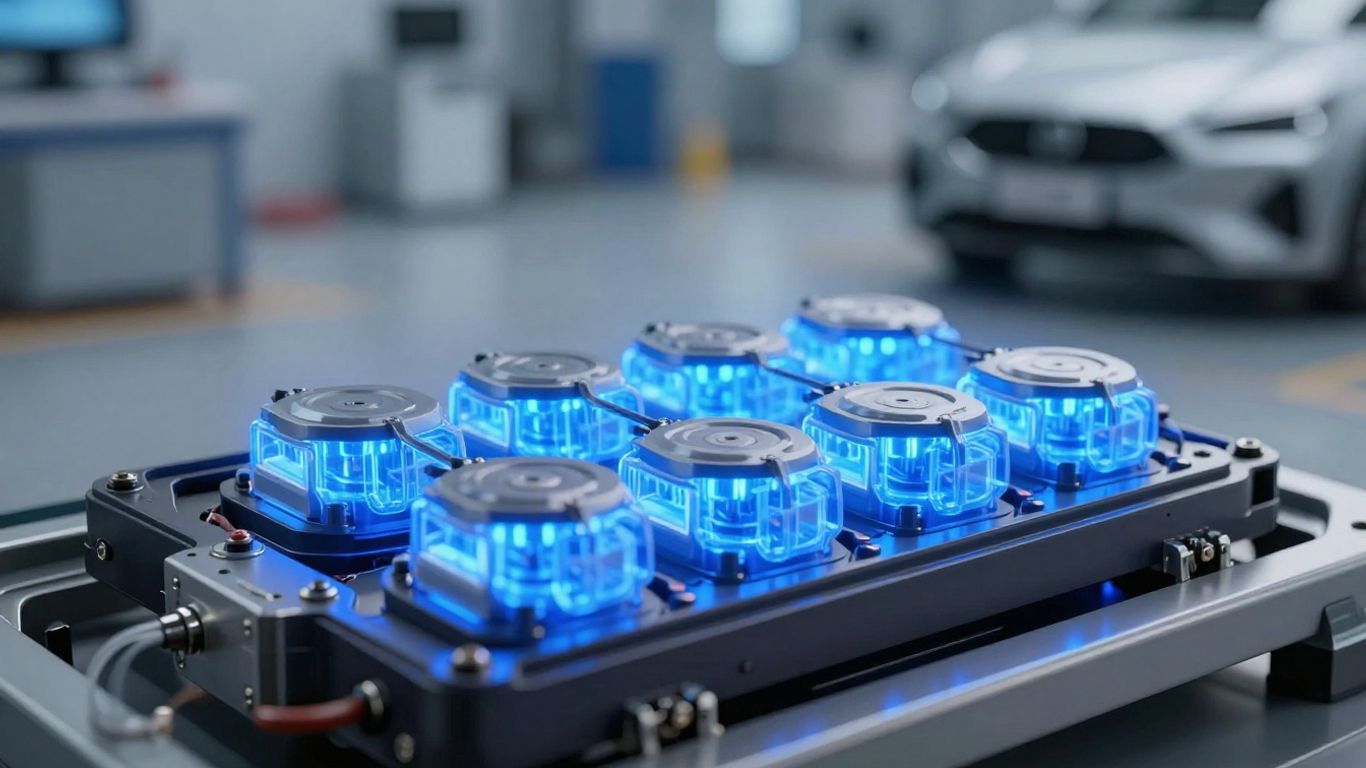
The battery is arguably the beating heart of your electric car. It’s what stores the energy needed to move you, and let’s be honest, it’s also the most expensive component of your vehicle. Its value can represent a significant portion of the car’s total price, sometimes up to 40%. When thinking about the longevity and performance of your electric vehicle, the battery is therefore a central element. Its reliability and ability to last over time condition not only your driving experience but also your car’s resale value. It’s therefore normal to have questions about its lifespan and, above all, what is covered in case of issues.
Manufacturer Warranty Objectives
The manufacturer’s warranty for the battery has a primary objective: to offer you peace of mind. It aims to protect you against manufacturing defects or abnormally rapid battery degradation. In simple terms, the manufacturer guarantees that your battery will maintain acceptable performance for a defined period. It’s a kind of promise regarding the quality and durability of this essential component. This warranty is a mark of confidence, especially considering that replacing a battery can be very costly. It’s there to secure your investment and allow you to enjoy your electric vehicle without major concerns about the battery. It’s also a key element for reselling the vehicle, as it reassures potential buyers about the battery’s condition. The battery is the central component of electric vehicles, both technically and economically.
Evolution of Technologies and Increased Longevity
A few years ago, the first generations of electric cars raised concerns about their battery lifespan. We heard about rapid degradation, sometimes over 30% in just five years. Fortunately, things have evolved significantly. Lithium-ion cell technologies have made enormous progress. Today, batteries are designed to be much more robust. A well-maintained battery can retain a large part of its original capacity, often over 80%, even after eight years of use. Cell chemistries like LFP (lithium-iron-phosphate), for example, are known for their superior durability, often exceeding 2,000 charge-discharge cycles. This translates into an expected lifespan that can range from 8 to 15 years in normal use, well beyond the average lifespan of the vehicle itself. This technological improvement makes electric cars more reliable and extends their lifespan. Advances in lithium-ion cells have changed the game.
The manufacturer’s warranty is a reassuring element, but it doesn’t cover everything. It’s important to understand its limitations and conditions of application to avoid unpleasant surprises.
What Manufacturer Warranties Cover for the Battery
When you buy an electric car, the battery is kind of the engine’s core, and let’s be honest, it’s also the most expensive component. Therefore, manufacturers have put warranties in place to reassure you. But be careful, not all warranties are equal, and you need to understand what they include.
Standard Warranty Duration and Mileage
Most manufacturers align on a duration of 8 years or 160,000 kilometers, whichever comes first. This is a fairly long period that covers a good portion of the vehicle’s life. For example, some manufacturers like Peugeot, Citroën, or DS offer this standard coverage. It’s always a good idea to check the specific terms for your model, as some brands may offer different durations or mileages, sometimes up to 10 years or 250,000 km for high-end models. This is significant protection for your initial investment.
Guaranteed Minimum Capacity Threshold
Beyond duration and mileage, the warranty covers the battery’s capacity. Generally, manufacturers guarantee that your battery will retain at least 70% of its original capacity during the warranty period. If the capacity drops below this threshold, the manufacturer commits to repairing or replacing the battery. This figure can vary: some manufacturers, like Toyota, raise this threshold to 80%. It’s important to note that this warranty does not cover normal degradation, which is typically 1-2% per year. It only applies if the capacity loss is deemed excessive and premature.
Common Warranty Exclusions
There are a few important points to keep in mind: the warranty doesn’t cover everything. For example, damage caused by an accident, misuse (like using an unapproved charger), or repairs performed outside the manufacturer’s authorized network are generally excluded. Similarly, alterations due to extreme or repeated charging cycles can void the coverage. It is therefore essential to follow the manufacturer’s recommendations regarding charging and maintenance of your vehicle. Remember to consult the general terms and conditions of your contract to know all the specific clauses.
It is crucial to carefully read the fine print of your warranty contract. What may seem covered at first glance might have significant exceptions. Good documentation of your battery’s condition and maintenance history is your best ally when needed.
Here is a summary table of standard warranties to give you an idea:
| Manufacturer | Duration | Max Mileage | Guaranteed Capacity Threshold |
|---|---|---|---|
| Peugeot / Citroën / DS | 8 years | 160,000 km | 70% |
| Mercedes | Up to 10 years | Up to 250,000 km | 70% |
| Tesla | 8 years | Up to 240,000 km | Not specified |
Factors Influencing Electric Car Battery Lifespan
Several elements come into play to determine how long your electric car battery will remain performant. It’s not just about the passage of time, but rather how the battery is used and the conditions it operates in.
Impact of Cell Chemistry (NMC vs LFP)
The very composition of your battery cells directly influences its longevity. There are mainly two broad categories: NMC (Nickel-Manganese-Cobalt) and LFP (Lithium-Iron-Phosphate). NMC cells, often favored for their energy density (more range for a given weight), generally have a slightly shorter cycle life, often ranging from 1,000 to 1,500 full cycles. LFP cells, on the other hand, are known for their robustness and their ability to withstand a much higher number of cycles, frequently exceeding 2,000 cycles. Although they offer lower energy density, their increased durability makes them an interesting choice, especially for entry-level models. The choice of cell chemistry is therefore a fundamental parameter for anticipating your battery’s longevity.
Role of Temperature and Charge Level
Ambient temperature is a key factor. Lithium-ion batteries do not tolerate extreme cold or excessive heat well. Prolonged exposure to high temperatures, for example, above 25°C on average annually, can accelerate battery degradation. Conversely, cold can temporarily reduce performance. The charge level also plays an important role. Keeping the battery consistently between 20% and 80% of its capacity is ideal for limiting chemical stress. Avoid leaving it at 100% for long periods whenever possible, especially if the vehicle is parked in direct sunlight. Likewise, regularly dropping below 20% puts more strain on the cells. Smart management of the charge level, favoring partial charges, significantly contributes to preserving your battery’s health in the long term. Consider checking your battery’s health status to better anticipate its evolution.
Importance of Charge-Discharge Cycles
A battery’s lifespan is not counted solely in years, but primarily in the number of charge and discharge cycles it undergoes. Every time you recharge your vehicle, you use a cycle. A full cycle corresponds to a charge from 0 to 100%. However, in practice, recharges are often partial. An NMC battery can withstand between 1,000 and 1,500 full cycles, while an LFP battery can withstand over 2,000. This translates into a mileage lifespan that can range from 200,000 to over 500,000 km, depending on the pack capacity and the chemistry used. Smooth driving, avoiding sudden acceleration and abrupt braking, helps to smooth out energy consumption and thus reduce the number of cycles needed to cover a given distance. Intensive use, such as by taxis or ride-sharing drivers, which involves many daily cycles, can lead to faster degradation. It is therefore important to understand that each recharge, each trip, contributes to battery wear, but this wear can be managed.
The way you use and maintain your battery daily has a direct impact on its longevity. Climatic conditions, cell chemistry type, and the frequency of charge-discharge cycles are all variables to consider for optimizing your battery’s lifespan.
Interpreting Battery Health Status
Understanding the health status of your electric car’s battery is essential, not only for anticipating potential problems but also for assessing its value and ensuring it’s performing as expected. It’s not just about looking at the charge level, but rather understanding its degradation over time.
Understanding SoH (State of Health)
The State of Health (SoH) is a key metric. It’s expressed as a percentage and indicates your battery’s current capacity compared to its original capacity when it was new. For example, an SoH of 90% means your battery can now store 90% of the energy it could hold initially. This data directly influences your real-world range and your vehicle’s resale value. It’s important not to confuse it with State of Charge (SOC), which is simply the current charge level, like the fuel level in a tank. SOC varies constantly, while SoH evolves much more slowly, reflecting the battery’s structural degradation [69b5].
Signs of Abnormal Degradation
Several indicators can suggest faster-than-normal degradation. You might notice a significant reduction in range, especially on long trips. The frequency of recharges might increase, even if you haven’t changed your driving habits. In some cases, warning messages may appear on the dashboard. It’s also possible that the maximum power delivered by the battery decreases slightly, affecting acceleration. Rapid degradation can be accelerated by factors such as too frequent fast charging, prolonged exposure to extreme temperatures (very hot or very cold), or consistently keeping the battery at very high (above 80%) or very low (below 20%) charge levels for extended periods [63c6].
Diagnosis to Secure Warranty
To accurately assess your battery’s health status and ensure it meets warranty criteria, a professional diagnosis is often necessary. Manufacturers generally offer tools or applications that allow reading the SoH. For example, some manufacturer apps integrate this information directly into the vehicle’s interface or via a dedicated mobile app. For less transparent brands, external tools like OBD-II dongles paired with specific applications can provide detailed data. This type of diagnosis not only verifies eligibility for an active warranty but also precisely quantifies the loss of value if the battery were to be out of warranty. It provides objective evidence in case of disputes or claims with the manufacturer.
Battery diagnostics are a valuable tool for anticipating maintenance needs, assessing resale value, and ensuring the vehicle maintains optimal performance. It allows for informed decisions regarding the battery, whether for targeted repair, reuse, or responsible recycling.
Here are some factors that can accelerate battery degradation:
- Intensive fast charging: Frequent use of very powerful charging stations can increase annual degradation.
- Constant hot climate: High average temperatures, above 25°C, can also have a negative impact.
- Prolonged extreme charge levels: Leaving the battery charged above 80% for most of the time, or letting it discharge very low, is detrimental.
- Intensive use: A very high number of charge-discharge cycles per day can also contribute to wear.
Managing the Battery at the End of Warranty
When your electric car battery’s warranty period is nearing its end, several questions may arise regarding its future and potential costs. It’s important to know that the end of the warranty doesn’t necessarily mean the end of the battery’s life. Current technologies are designed to last, and even after the manufacturer’s coverage period, your battery can still offer many years of service.
Replacement and Refurbishment Options
If your battery shows signs of weakness beyond the warranty period, a complete replacement isn’t always the only, or the most economical, solution. The cost of a new battery pack can be substantial, sometimes exceeding 10,000 euros, which is a major concern for many owners. Fortunately, more affordable alternatives are emerging.
- Refurbishment: This approach involves diagnosing the battery to identify defective or underperforming modules. Only these elements are then replaced or repaired, making the operation significantly less expensive than a full replacement. This is an increasingly structured solution in the industry.
- Targeted Repair: In some cases, a simple software adjustment or optimization of energy management may be sufficient to restore some performance. Manufacturers, like DS Automobiles, are increasingly favoring these methods for their economic and ecological aspects.
- Complete Replacement: Although costly, it remains an option if the diagnosis reveals widespread degradation or if other solutions are not viable. It is essential to compare quotes and ensure the quality of parts and labor.
Valuation for Second Life
A battery that is no longer deemed optimal for automotive use can still have significant value. Its remaining capacity, even if reduced, may be sufficient for other applications. A battery retains an average of 80% of its initial capacity after 200,000 km, making it potentially useful for less demanding uses.
- Stationary Energy Storage: Batteries can be reused to store energy produced by domestic solar panels, for example. They thus contribute to self-consumption and reduce electricity bills.
- Light Mobility: Batteries with lower capacity can power smaller vehicles, such as electric bikes or scooters, where range requirements are less critical.
- Industrial Applications: Some companies are developing reuse solutions for larger-scale energy storage needs.
Assessing the battery’s State of Health (SoH) is crucial for determining its potential for reuse.
The end of the manufacturer’s warranty is not a foregone conclusion. With good assessment and exploration of different options, it is often possible to extend your battery’s use or give it a new useful life, while controlling costs.
Responsible Recycling Process
When the battery is no longer usable for automotive use or for a second life, recycling becomes the final step. Manufacturers and specialized channels implement processes to recover valuable materials contained in batteries, such as lithium, cobalt, or nickel. Less than 3% of batteries require complete replacement during their lifetime, but when it happens, proper recycling is essential for the environment. This process limits the extraction of new resources and reduces the ecological impact of battery production. It is important to ensure that your battery is entrusted to certified professionals for this type of operation. You can inquire with your dealership or specialized centers to find out about approved battery recycling channels in your region.
Tips for Optimizing Electric Car Battery Lifespan
To ensure your electric car battery accompanies you for as long as possible, a few good habits can make a real difference. It’s not rocket science, but it requires a little daily attention.
Good Daily Charging Practices
The way you charge your vehicle has a direct impact on its battery’s health. It’s best to avoid charging it to 100% systematically, especially if you don’t need all that range. Likewise, don’t let it drop too low too often. Aim for a balance by charging between 20% and 80% of its capacity. This reduces stress on the cells and contributes to better longevity. Consider scheduling your recharges during off-peak hours, usually at night. Not only can this reduce your electricity bill, but it also allows the battery to charge at a more ambient temperature, which is less stressful for it.
Limit Fast Charging and Extremes
Fast charging stations are convenient, especially on long trips. However, excessive use can accelerate battery degradation. High power generates heat, and heat is not the best friend of lithium-ion batteries. Try to favor home charging or slower charging stations when possible. Similarly, avoid extreme temperatures as much as possible. Park your car in the shade in the summer and, if possible, in a garage in the winter. Preconditioning the cabin while the vehicle is still plugged in is an excellent idea in cold weather; it uses grid electricity rather than battery power to heat or cool the cabin and the battery itself.
Regular Maintenance and Adherence to Recommendations
Beyond charging, smooth driving also helps your battery. Sudden accelerations and abrupt braking put more strain on the battery. Smoother driving, by anticipating traffic and using regenerative braking, allows you to recover energy and reduce wear. Don’t forget that the battery’s thermal management system is also important. Ensure the coolant is checked during regular maintenance, as a faulty system can lead to overheating. Following the manufacturer’s recommendations, especially regarding servicing, is key to anticipating potential problems and preserving your battery in the long term. Good management of your electric vehicle also means a better battery lifespan.
In Summary: What to Remember for Your Battery
There you have it, we’ve covered what electric car battery warranties generally include. You can typically expect coverage for about 8 years or 160,000 kilometers, often with a condition on remaining capacity, usually around 70%. This is quite reassuring, as it means manufacturers are committing to the lifespan of this key component. Don’t forget to read the fine print of your contract carefully, as exclusions exist, particularly for accidental damage or misuse. By taking care of your battery daily, you maximize its chances of remaining performant well beyond the warranty period. It’s a long-term investment, and a good understanding of the warranties will help you drive with peace of mind.
Frequently Asked Questions
How long does an electric car battery typically last?
Most electric car batteries are designed to last a long time, often between 8 and 15 years. This is much longer than the usual warranty period, which is generally 8 years or 160,000 kilometers. Even after this period, your battery can still function, although its range may be slightly reduced.
What does the manufacturer’s warranty cover for the battery?
The manufacturer’s warranty protects your battery against excessive degradation. If the battery’s capacity drops below a certain percentage (often 70% of its original capacity) before the end of the warranty period, the manufacturer commits to repairing or replacing it.
What is not covered by the battery warranty?
The warranty generally does not cover normal battery wear and tear, which leads to a gradual loss of capacity over time. It also does not cover damage caused by an accident, misuse, or if you have not followed the manufacturer’s recommendations for charging and maintenance.
How can I tell if my battery is degrading too quickly?
You can check your battery’s health status (called SoH). If you notice a sudden and significant drop in range, or if the capacity percentage drops abnormally in a short period, it is advisable to get a diagnosis. This could indicate a problem that might be covered by the warranty.
What are the good habits to make my battery last longer?
To preserve your battery, try to charge it between 20% and 80% most of the time, and avoid letting it drain completely or charging it to 100% every day. Also, limit the use of ultra-fast charging stations and protect your car from very hot or very cold temperatures.
What happens if my battery is no longer under warranty?
If your battery reaches the end of its warranty or is too worn, you have several options. You can consider having it repaired or refurbished, which is often less expensive than a complete replacement. Another possibility is to give it a second life for other uses, or to have it responsibly recycled.