Considering switching to solar energy but installing panels on your roof isn’t an option? Don’t panic, the plug and play solar kit is here for you. It’s an increasingly popular solution for producing your own electricity without major work. But with the growing offer, which one to choose? This article guides you to find the best plug and play solar kit for your apartment or house.
Key Takeaways
- The plug and play solar kit is a simple solution for producing your own electricity, ideal if your roof is not suitable or if you are a tenant.
- Sunology’s PLAY2 model is recommended for getting started quickly and reducing your base consumption, as it comes ready to use.
- For increased autonomy, especially in the evening, Sunology’s PLAY Max includes a battery, allowing you to store energy produced during the day.
- Installation is generally easy: choose a well-exposed location, assemble the support if necessary, and plug the kit into a 230V outlet.
- Choosing the best plug and play solar kit depends on your specific needs, budget, and self-consumption goals.
1. Sunology Play2
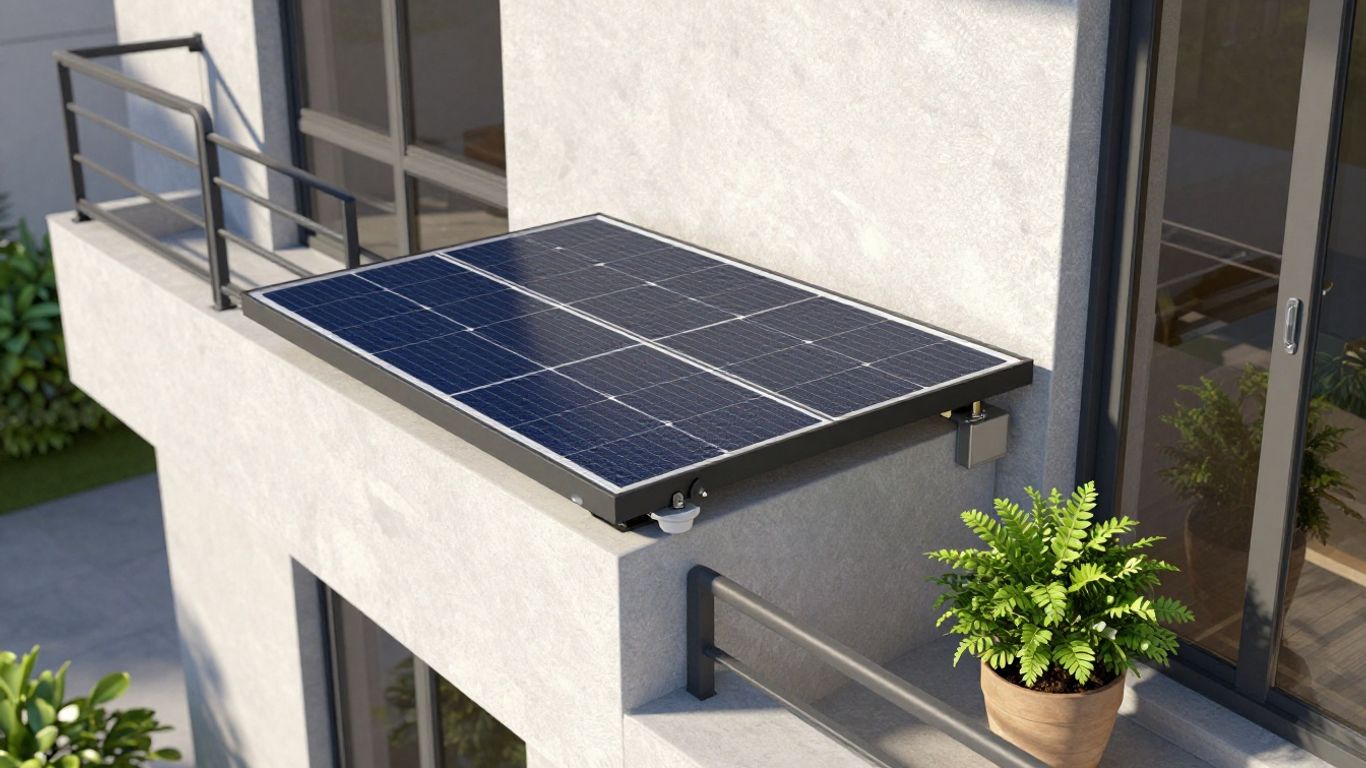
The Sunology Play2 is a particularly interesting solution for those who want to get into self-consumption without complications. It is a ready-to-use solar station designed to be plugged directly into a standard 230V electrical outlet. Its installation is incredibly simple: you receive it pre-assembled, and all you have to do is fix it and plug it in. This plug-and-play approach eliminates the need for a professional installer and associated administrative procedures, such as obtaining Consuel certification.
This kit stands out for its robust design and durability. The integrated photovoltaic panel is bifacial, meaning it captures light from both sides, increasing its efficiency, especially when installed on a reflective surface. The structure of the Sunology Play2 is designed to withstand bad weather, supporting significant loads, which attests to its reliability. Furthermore, Sunology offers a full 25-year warranty on the entire system (panel, micro-inverter, frame), a duration that exceeds the market average and ensures your long-term peace of mind.
Here are some key points to remember about the Sunology Play2:
- Ultra-fast installation: Less than 2 minutes are needed to get it up and running.
- No work required: Simply plug it into a 230V outlet.
- Scalability: You can add more Play2 stations to increase your electricity production.
- Dedicated app: Monitor your production and savings in real-time with the STREAM app.
- Support included: The kit comes with a weighted support, adaptable to different locations (terrace, garden, wall).
The Sunology Play2 is an excellent entry point into the world of solar energy for individuals. Its affordable cost, compared to traditional installations, and its ease of use make it a wise choice to reduce your electricity bill while doing your part for the environment. You can even consider installment payments to facilitate your initial investment.
In terms of performance, the Play2 panel has a power output of 460 Wp. Although government subsidies for solar energy are generally conditional on professional RGE-certified installations, the Play2 allows for immediate savings on your electricity consumption through self-consumption. It’s an accessible way to start producing your own green electricity. Discover the current price of the Sunology Play2 to assess its savings potential.
2. Sunology Play Max
Following the PLAY2 model, Sunology offers the PLAY Max. This solar station is distinguished by the integration of a battery, making it particularly interesting for smoothing out your electricity consumption in the evening. If you’re looking to optimize the use of solar energy even after sunset, the PLAY Max is an option to seriously consider.
This system is designed for those who want a more autonomous solution, capable of storing energy produced during the day for later use. It’s a logical evolution for those who have already experienced the benefits of a plug and play solar station and want to go further in their self-consumption journey.
Here are some key points about the Sunology PLAY Max:
- Integrated storage: The presence of a battery allows for storing excess solar energy, making it available when the sun is no longer shining. This is a major advantage for reducing your dependence on the electrical grid, especially during peak hours.
- Power and capacity: The PLAY Max is a 450W solar station, accompanied by a battery with a capacity of 700 Wh. This offers a good balance between production and storage for common household use.
- Simplified installation: As with other Sunology products, installation remains plug and play. You plug the station into a 230V outlet and start producing your own electricity. No complex work, no heavy administrative procedures like Consuel certification for this type of solution.
- Scalability: It is possible to add other solar stations, including the PLAY Max, to gradually increase your production and storage capacity, depending on your needs and budget. This is a flexible approach to building your energy system.
The PLAY Max represents an advancement in residential self-consumption, offering a more complete solution thanks to its storage aspect. It allows for better management of consumption and maximization of energy savings, even when the sun isn’t shining. The initial investment is higher than for a model without a battery, but the benefits in terms of autonomy and bill reduction can quickly justify it. Don’t forget to check customer reviews to get a more precise idea of the user experience with Sunology products, including their after-sales service.
The integration of a battery into a plug and play solar station like the PLAY Max transforms how you can use solar energy. It allows you to shift your consumption, making self-consumption more efficient and practical on a daily basis, especially for evening needs.
3. Dualsun Plug And Play Solar Panel
The Dualsun brand, already known for its traditional solar solutions, also offers a plug and play option that deserves your attention. This system combines ease of installation with the manufacturing quality characteristic of Dualsun. It is a solution designed for those who want to get into self-consumption without major commitment.
The Dualsun panel is designed to be easy to use. Once installed, simply plug it into a standard electrical outlet. The integrated micro-inverter, often located on the back of the panel, converts solar energy into electricity usable by your home. This micro-inverter is designed for good ventilation, which helps maintain optimal performance. The electricity produced directly powers your appliances, thus reducing your electricity consumption from the grid.
Here are the main advantages of this solution:
- Quick installation: Less than 10 minutes are needed to get it up and running.
- Modularity: You can start with one panel and add more if your needs evolve.
- Adaptability: Ideal for apartments or houses where a traditional installation is not possible.
It is important to note that the total power of plug and play panels connected to the same outlet should not exceed 900 Wp, according to ADEME recommendations. For Dualsun, this means you can generally install up to two 420 Wp panels on a single circuit. If you plan to install more panels, it would be wise to consult the specifics of choosing a complete solar kit.
The PREASY model from Dualsun stands out for its foldable design, making it particularly easy to transport and store, which is a major asset in case of moving or for optimizing its positioning towards the sun.
4. Edf Solutions Solaires Plug And Play Solar Kit
EDF Solutions Solaires offers a structured approach for those considering solar panel installation. Their offer is distinguished by a process that aims to simplify the transition to solar energy, whether for an apartment or a house. They focus on providing complete solutions designed to facilitate self-consumption.
What you need to know about their kit:
- Power and expandability: EDF Solutions Solaires’ solar kit allows for connecting up to four 405 Wp panels each. This gives you the option to reach a total power of 1,620 Wp, which can cover a significant portion of your daily energy needs.
- Quality and origin: The panels are designed and assembled in France, which can be a guarantee of quality and an argument for reducing carbon footprint. Additionally, they benefit from a 25-year warranty, offering you long-term peace of mind.
- Personalized support: EDF Solutions Solaires offers an appointment for a free and personalized solar assessment. This is an interesting step to accurately evaluate your savings potential and the relevance of the installation for your home.
It is important to note that a plug-and-play solar kit, even from EDF, is not intended to completely replace your current electricity provider. Its main role is to allow you to save on your bill by producing your own electricity, but it does not make your home completely energy independent.
Their offer is part of a comprehensive support approach, as detailed in their step-by-step guide to choosing, installing, and making your solar project profitable. The goal is to make solar energy more accessible and help you save money.
5. Plug And Play Solar Station
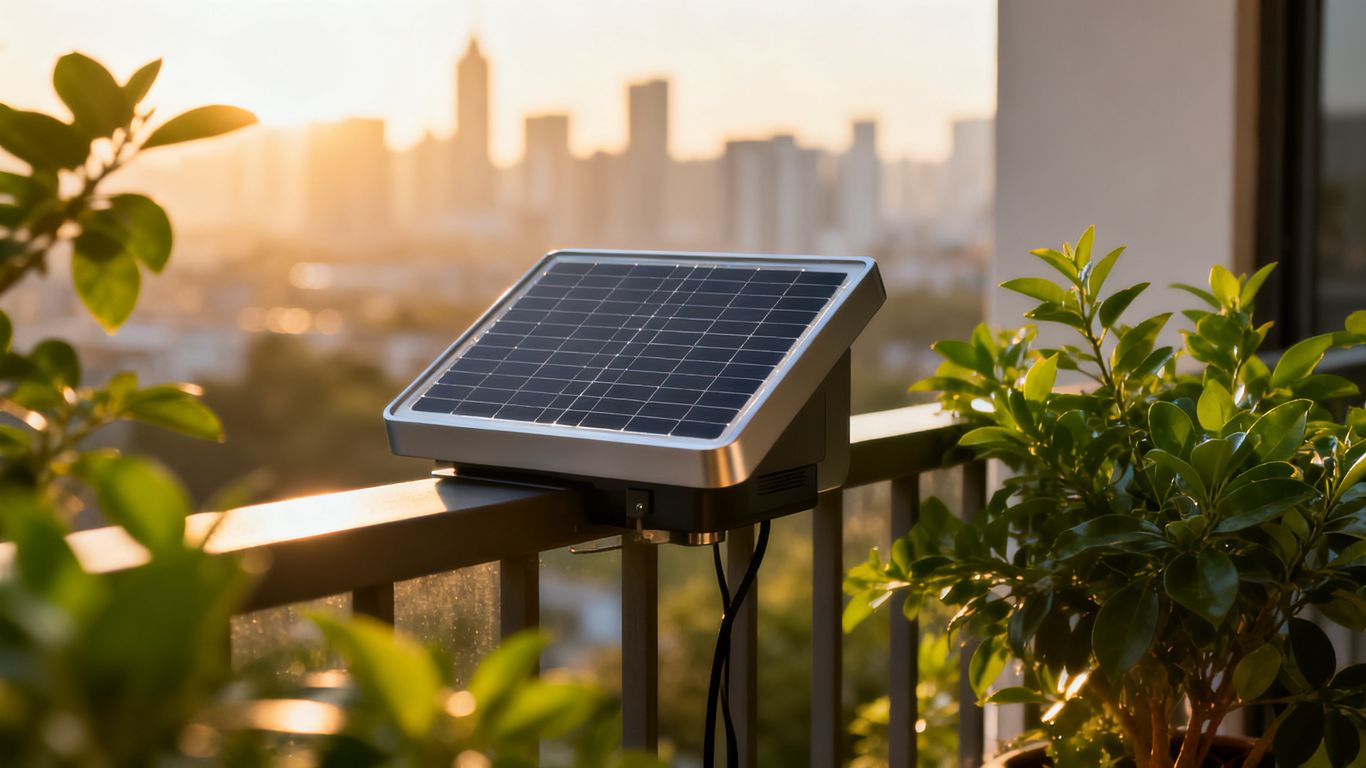
A plug and play solar station represents a particularly accessible solution for those who want to get into self-consumption without undertaking complex work. Its principle is simple: a solar panel is equipped with an integrated micro-inverter, and the whole unit plugs directly into a standard 230V domestic electrical outlet. It’s a bit like plugging in a new appliance, but this one produces electricity.
Installation is generally very quick, often achievable in less than 15 minutes. Simply choose a location well-exposed to the sun, assemble the support if necessary (some models come ready to use), and connect the cable to an outlet. This simplicity makes it ideal for tenants or for those who do not want to modify their home.
Here are the key components that generally make up a plug and play solar station:
- The photovoltaic panel: This is the heart of the system, the one that captures sunlight.
- The micro-inverter: It converts the direct current produced by the panel into alternating current usable by your appliances.
- The frame or support: It allows the panel to be positioned, whether on the ground, on a balcony, or on a wall.
- The connection cable: To connect everything to your electrical system.
It is important to note that the electricity produced is consumed first by your home. This means that during the day, your appliances will use solar energy before drawing from the public grid. This is a direct way to reduce your electricity bill. If you move, you can simply unplug your station and take it with you, which is a significant advantage for non-homeowners [ebdf].
The solar electricity produced by your station is injected directly into your domestic electrical circuit. It will be consumed first by the appliances in operation, thus reducing your dependence on the public grid and your electricity bill. The system is designed to be safe and easy to use on a daily basis.
6. Plug And Play Solar Kit to Connect to a 230 V Outlet
Considering installing a solar system without undertaking complex work? The plug and play solar kit that connects to a 230V outlet is a solution that might interest you. This type of kit is designed to be as easy to install as a conventional appliance. Simply connect it to a standard electrical outlet in your home to start producing your own electricity.
The principle is to convert solar energy into electricity usable by your domestic appliances. The panel integrates a micro-inverter that transforms the direct current generated by the sun into 230V alternating current. This electricity is then directly injected into your domestic network. You can thus power some of your appliances, such as the refrigerator, television, or recharge your electronic devices. It’s a simple way to reduce your electricity bill and contribute to the environment.
Here are the general steps to put such a system into operation:
- Choose the ideal location: Opt for a well-sunlit spot, ideally facing south, with no shading. A terrace, balcony, or even a garden can be suitable. Ensure the surface is stable and suitable for fixing or weighting the panel, especially for ground installations.
- Install the panel: Assembly is generally very quick. Some models come ready to use, requiring only an adjustment of the tilt to optimize production. Carefully follow the manufacturer’s instructions.
- Connect the system: Connect the panel’s cable to a 230V outlet. It is recommended to use a dedicated outlet, especially if you plan to add more panels later. For outdoor use, an IP44 type outlet is recommended for better protection.
This type of solution is particularly appreciated for its flexibility. It is ideal if you are a tenant, as you can easily dismantle and take it with you when you move. Furthermore, it does not require any modification to your existing electrical system, making it accessible to everyone. You can even consider connecting several of them to increase your production, while respecting the power recommendations per circuit, often around 900 Wp. This allows you to adjust your installation according to your needs and budget. If you are looking for a solution to reduce your consumption without major work, the plug & play solar kit is an option to seriously consider.
The main advantage lies in the simplicity of installation and modularity. It allows for a smooth transition to solar energy, without major commitment or technical constraints.
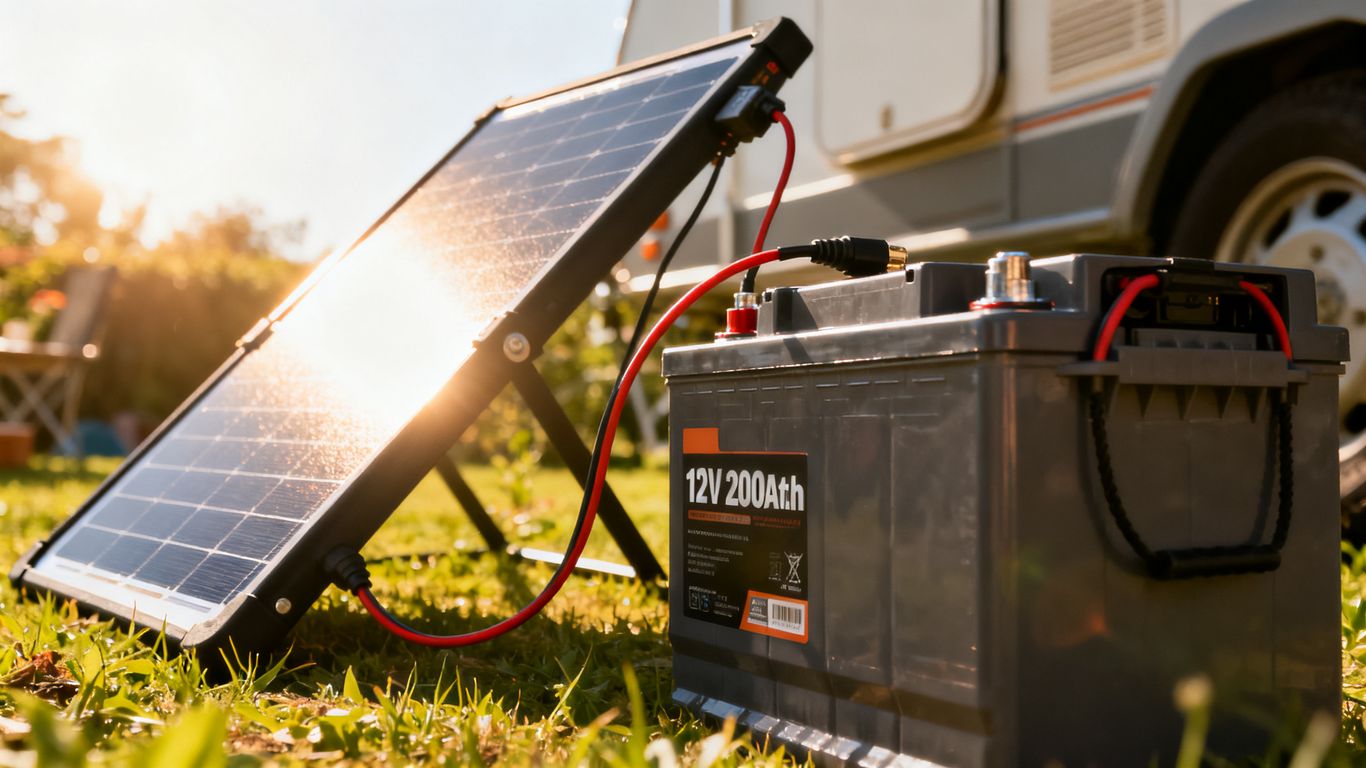
7. Solar Kit for Off-Grid Site
When you are not connected to the public electricity grid, an off-grid solar kit becomes an essential solution. Unlike classic plug-and-play kits that feed surplus into the grid, these systems are designed for total autonomy. They allow you to produce and store your own electricity, making you independent of energy suppliers. This approach requires a bit more planning, as the system must be properly sized to cover all your needs, including those during less sunny periods.
The main objective here is to ensure a constant supply. This generally involves the use of batteries to store the energy produced during the day. These batteries are the heart of the system, allowing you to use solar electricity in the evening, at night, or during cloudy weather. The sizing of these batteries is therefore a critical point. You need to accurately calculate your daily consumption and the necessary storage capacity to last several days without solar production, if needed.
Here are the key elements to consider for an off-grid solar kit:
- Solar panels: They capture sunlight and convert it into electricity. Their power must be sufficient to recharge the batteries and power your appliances.
- Charge controller: Essential for protecting batteries against overcharging and deep discharge. It optimizes the energy flow between the panels and the batteries.
- Storage batteries: They accumulate the energy produced. Their capacity is measured in ampere-hours (Ah) or kilowatt-hours (kWh).
- Inverter: It converts the direct current stored in the batteries into alternating current usable by your household appliances (230V).
- Cabling and protections: Ensure the safety and proper connection of all components.
Choosing the right equipment is crucial for ensuring the reliability and durability of your autonomous installation. It is often recommended to opt for robust components designed for intensive use. Also, consider scalability: you may wish to add panels or increase storage capacity later. A well-designed system offers you true energy freedom, far from grid constraints. It’s an investment for sustainable energy autonomy.
8. Plug And Play Solar Kit With Batteries
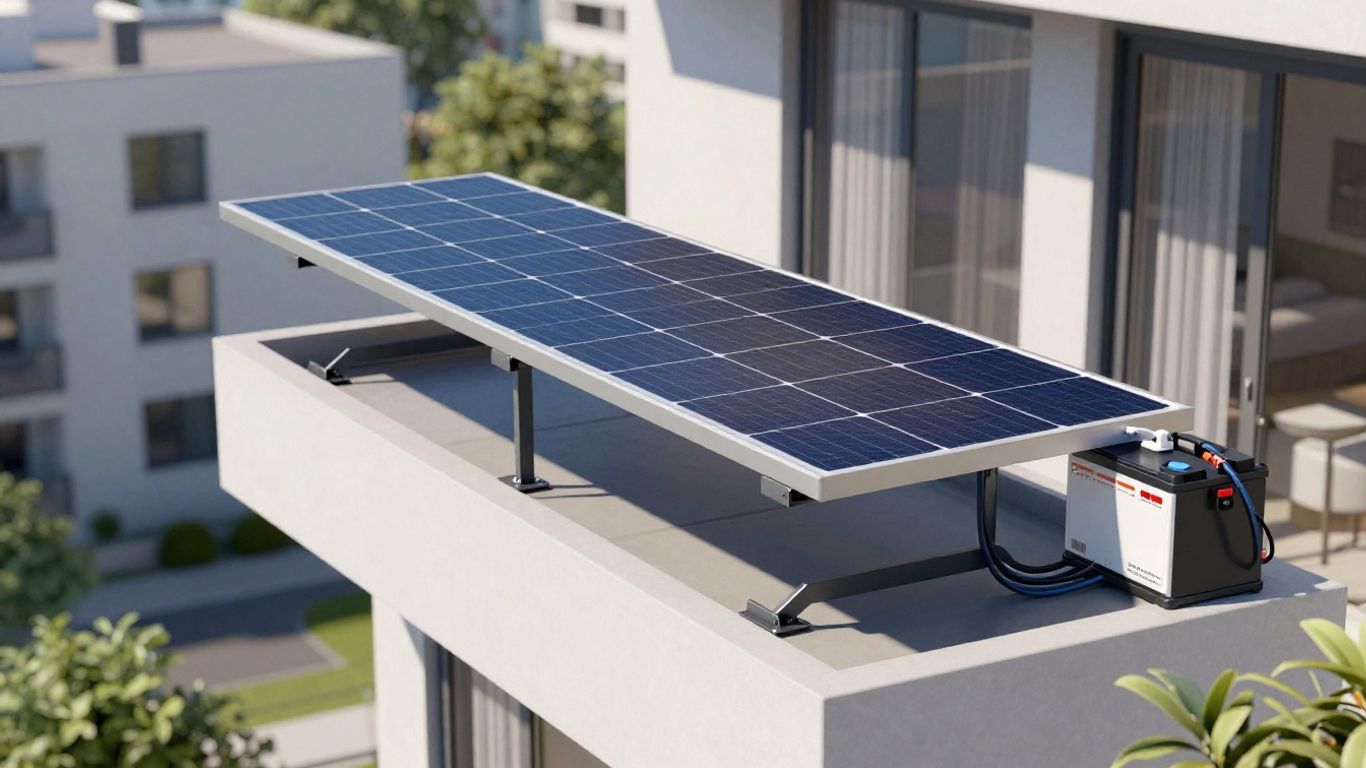
Plug and play solar kits with batteries represent an interesting evolution for those who want to go further in self-consumption. Adding a battery allows you to store excess energy produced during the day, so you can use it when the sun is no longer shining, for example in the evening. This is a solution that increases your energy independence and allows you to smooth out your consumption over 24 hours.
These systems combine the ease of installation of a plug and play kit with the storage capacity of an integrated or external battery. They are particularly suitable if you are not at home during optimal sunlight hours, or if you want to maximize the use of your solar production. The goal is to consume as much of the electricity you produce yourself as possible, thereby reducing your dependence on the traditional electrical grid.
Here are the key points to consider for a plug and play solar kit with a battery:
- Storage capacity: Measured in kilowatt-hours (kWh), it determines the amount of energy the battery can store. Choose a capacity adapted to your evening consumption needs or during periods without production.
- Output power: The maximum power the battery can deliver to your appliances. Ensure it is sufficient for the appliances you wish to power simultaneously.
- Lifespan and charge cycles: Batteries have a limited lifespan, measured in charge/discharge cycles. A battery with more cycles will offer better longevity.
- Battery Management System (BMS): It ensures the safety and optimizes the battery’s performance, protecting against overcharging or deep discharge.
Integrating a battery into a plug and play solar kit can represent a higher initial investment. However, it offers a significant advantage in terms of extended self-consumption and energy independence. It is important to carefully evaluate the potential return on investment based on your consumption habits and the cost of electricity.
Some models, like the Sunology PLAY Max, are designed with an integrated battery, further simplifying installation. Others may require the addition of a separate battery module. Modularity remains an asset: you can often start with a kit without a battery and add one later if your needs evolve. This allows you to enter the world of solar energy at your own pace and according to your budget [c5fd]. Installation generally remains simple, plugging into a 230V outlet, but it is always recommended to consult the manufacturer’s manual for your model’s specifics.
9. Plug-And-Play Photovoltaic Solar Kit
The plug-and-play photovoltaic solar kit is an increasingly popular solution for those who want to get into solar energy without committing to a complex installation. It essentially consists of a solar panel equipped with an integrated micro-inverter, designed to be plugged directly into a standard 230V domestic electrical outlet. This ease of installation makes it accessible to everyone, including tenants.
The operation is quite straightforward: the panel captures sunlight and converts it into electricity. The integrated micro-inverter then converts this direct current into alternating current, synchronized with your home’s electrical grid. The electricity produced is immediately injected into your domestic network, reducing your consumption of electricity from the public grid. If you no longer need to produce electricity, for example at night, simply unplug the kit. It’s a simple way to start producing your own green energy.
Here are the key steps to install such a kit:
- Choose the location: Find a well-sunlit area, ideally facing south, with no shading. A terrace, balcony, or wall can be suitable. Allow approximately 2m² per panel.
- Assemble the support: Assemble the provided mounting structure, following the manufacturer’s instructions. Some models allow for tilt adjustment to optimize production.
- Connect the kit: Connect the panel’s cable to a 230V electrical outlet. It is advisable to use a dedicated outlet to facilitate potential future additions and avoid power strips.
These kits are particularly interesting for their flexibility. You can start with a single panel and add more later, connecting them to each other or to separate outlets, depending on the power and recommendations (for example, not exceeding 900 Wp per circuit according to ADEME).
One of the great advantages of these kits is their more affordable initial cost compared to professional installations. By installing it yourself, you save on labor costs. Furthermore, their modular nature allows you to adapt your investment to your budget and evolving needs.
It is important to note that selling surplus electricity is generally not possible with these kits; they are designed for self-consumption. For those looking for a quick and economical solution to reduce their electricity bill, the plug-and-play solar kit is an excellent option. You can find complete solar kits that further simplify the acquisition and installation process.
10. Plug And Play Solar Panel
A plug and play solar panel, sometimes called a « solar station, » represents a particularly accessible renewable energy solution. Its principle is simple: it is a ready-to-use kit that transforms sunlight into electricity for your home, without requiring complex installation work. You simply plug it into a standard 230 V electrical outlet, and it begins powering your appliances.
The operation is quite straightforward. The photovoltaic panel captures solar energy and converts it into direct current (DC). A micro-inverter, often integrated behind the panel, then transforms this direct current into alternating current (AC), synchronized with your home’s electrical grid. This produced electricity is then consumed first by your household appliances. It’s a bit like having your own small power plant at home.
Here are the key components that generally make up a plug and play solar kit:
- The photovoltaic panel itself.
- A micro-inverter for current conversion.
- A frame or support for positioning the panel.
- A connection cable for plugging into the outlet.
Installation is incredibly simple: it only takes a few minutes to set up. You don’t need any special skills in DIY or electricity. It’s an ideal solution if you are a tenant, as the system is portable and can move with you in case of relocation. Furthermore, its cost is generally more affordable than a traditional solar installation, as you save on labor costs. You can even consider connecting several of them to increase your production, while respecting the power recommendations per circuit [d708].
It is important to note that the electricity produced by these kits is intended for self-consumption. This means you directly consume the energy you produce, without selling it back to the grid. It’s an excellent way to reduce your electricity bill and contribute to the environment by using clean energy daily.
One of the great advantages of these panels is their modularity. You can easily move them if an area is shaded or if you change homes. Some models are even designed to be foldable, making them easier to transport and store.
Conclusion: Your Informed Choice for Solar Energy
You now have all the keys to understand the operation and benefits of plug and play solar kits. Whether you are a tenant or an owner, whether your roof faces north or its structure does not allow for classic panel installation, these solutions adapt to many situations. Don’t forget to check the specifics of your home and your co-ownership rules if you live in an apartment. By choosing the kit that suits your needs, you take a concrete step towards more responsible energy consumption and achieve significant savings. Remember to compare offers carefully and favor certified products for a safe and efficient installation.
Frequently Asked Questions
What is a plug and play solar kit and how does it work?
A plug and play solar kit is a simple system for producing your own electricity from the sun. It consists of solar panels that capture sunlight and convert it into electricity. This electricity is then converted so you can use it at home, just like from your usual provider. The big difference is that you plug it directly into a normal electrical outlet, without complicated work.
In what situations is it worthwhile to use a plug and play solar kit?
This type of kit is perfect if you cannot install panels on your roof, for example, if your roof is not well-oriented (facing north), if it is too damaged, or if you are a tenant. It is also very useful for powering a camper van, an apartment balcony, or even for temporary uses.
Is it difficult to install a plug and play solar kit yourself?
No, that’s precisely one of its biggest advantages! The installation is truly designed to be easy and quick. You generally don’t need to be a DIY expert. Often, you just need to assemble a support, fix the panel, and then plug it into an outlet. Some kits, like the Sunology PLAY2, even come ready to be plugged in.
What is the best plug and play solar kit to start with?
To get started and reduce your basic electricity consumption (like that of your refrigerator or internet box), the Sunology PLAY2 kit is often recommended. It’s easy to install and allows you to start producing your own energy effortlessly.
Can you become completely independent with a plug and play solar kit?
A plug and play solar kit allows you to save on your electricity bill by producing part of the energy you need. However, it does not completely replace your electricity provider. For total independence, you would need to consider a larger installation, often on the roof.
Are there any financial aids for plug and play solar kits?
In France, aids like the purchase tariff or investment premium are generally reserved for roof installations carried out by qualified professionals (RGE). Plug and play kits, being simpler and often self-installed, do not directly benefit from these specific aids. It is always good to check for any local schemes that might exist.