Installing solar panels in a protected area, such as those under the authority of the Architects of French Buildings (ABF), can seem complicated. These areas, often rich in history and architecture, require special attention to ensure new installations blend in well. This article guides you through understanding the steps and obtaining the necessary approval for your solar panel project in an ABF zone.
Key Points to Remember
- Understand the role of the ABF: The Architect of French Buildings ensures that projects, including the installation of solar panels in a protected area, respect the heritage and aesthetics of the site. Their opinion is often binding, meaning it must be followed.
- Prepare a complete file: A well-documented file is essential. It should include precise plans, photos of the site, a descriptive notice, and ideally, a preview of the final result. Clarity and accuracy increase your chances of approval.
- Choose aesthetic solutions: For better integration, options such as red solar panels, building-integrated photovoltaics, or discreet installations on outbuildings can be considered to meet ABF requirements.
- Follow administrative procedures: Depending on the installation’s power output, a prior declaration of works or a building permit is required. The timeframe for obtaining the ABF’s opinion is generally 1 to 2 months, but can vary.
- Handle an unfavorable opinion: If the ABF refuses your project, it is possible to understand the reasons, modify your proposal, or initiate an appeal. Professional support can be very helpful in these situations.
Understanding the Role of the Architect of French Buildings in a Protected Area
If you are considering installing solar panels and your property is located in a protected area, it is essential to understand the role of the Architect of French Buildings (ABF). Their involvement is often a key step in obtaining the necessary authorizations.
Definition and Mission of the ABF
The Architect of French Buildings is a representative of the State whose primary mission is to ensure the preservation and enhancement of architectural, urban, and landscape heritage in France. They intervene in areas where the quality of life, historical, artistic, or picturesque interest justifies special protection. Their role is to ensure that development or construction projects, including the installation of solar panels, integrate harmoniously into their environment and comply with established protection rules.
Areas Covered by the ABF’s Opinion
The ABF’s opinion is required in several types of protected areas. This includes not only the immediate surroundings of historical monuments. The areas concerned also include:
- Remarkable Heritage Sites (SPR): Formerly protected sectors, these areas encompass urban or rural ensembles of great historical, architectural, or landscape interest.
- Classified or Registered Sites: These perimeters, defined by the Environmental Code, aim to protect landscapes, natural elements, or built ensembles for their exceptional character.
- Surroundings of Historical Monuments: Generally a radius of 500 meters around a classified or registered monument. Within this perimeter, any external modification of a building may require their opinion.
- Perimeters delimited by local authorities for the protection of built or unbuilt heritage.
It is important to check if your property is located in one of these areas before starting your project. A simple search on your town hall’s website or with the urban planning department can provide clarification.
The Binding Opinion: An Obligation for Solar Projects
In the areas mentioned above, the ABF’s opinion is not always a mere recommendation. For solar panel installation projects, their opinion is often qualified as a binding opinion. This means that the authority issuing the urban planning permit (usually the town hall) is required to follow the ABF’s decision. If the opinion is unfavorable, the project cannot be authorized as is. This procedure aims to ensure that solar installations, while useful for the energy transition, do not detract from the architectural and landscape heritage of protected sites.
Preparing a Strong File for Approval from the Architects of French Buildings
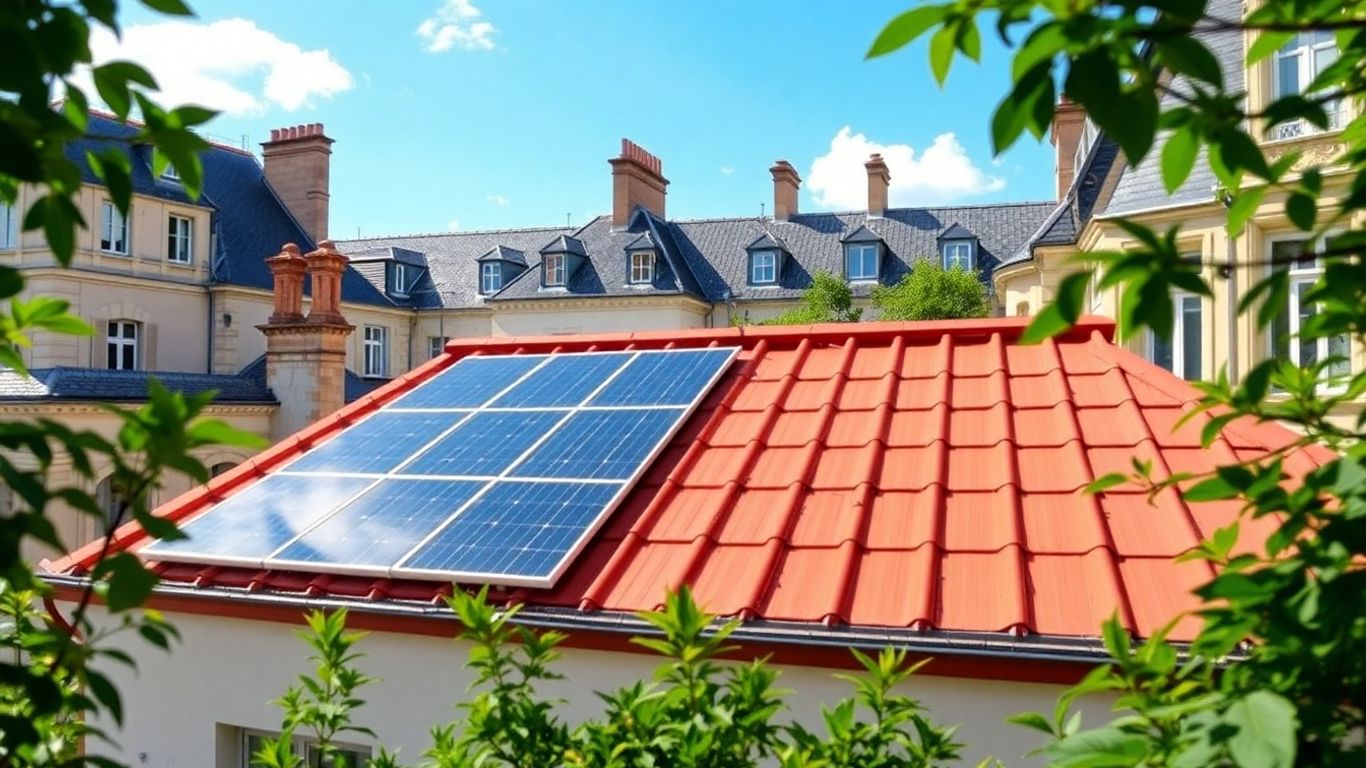
For your solar panel installation project to receive approval from the Architect of French Buildings (ABF), it is essential to submit a complete and well-reasoned file. This document will serve as the basis for the ABF to assess the compatibility of your installation with the character of the protected site. Meticulous preparation of this file is key to increasing your chances of obtaining a favorable opinion.
Essential Elements to Include in Your File
Your file should be a detailed snapshot of your project and its environment. Here are the documents to systematically gather:
- Descriptive Notice: Clearly explain your project, its objectives, and how it integrates into the existing landscape and architecture. Mention the technical and aesthetic choices made.
- Photographs: Provide views of your building from different angles, its immediate surroundings, and especially the roof or the planned location for the panels. Photos taken from public spaces are particularly useful.
- Site Plan: This plan precisely situates your property and the intended location for the solar installation in relation to its environment.
- Facade or Roof Plans: Indicate the exact placement of the panels on the building.
- Visual Simulation: A photomontage or 3D simulation is highly recommended. It allows you to visualize the final appearance of the installation from relevant viewpoints, ideally from the street or a public place.
The Importance of Documentation and Precision
Every detail counts. A precise, clear, and well-organized file greatly facilitates the processing of your request. It demonstrates your seriousness and your consideration of heritage issues. Conversely, an incomplete or vague file can lead to requests for additional documents, thus delaying your project, or even result in an unfavorable opinion. Remember to verify that all information is up-to-date and accurately reflects your project.
The ABF examines your project from the perspective of heritage preservation. They ensure that the installation integrates harmoniously without altering the character of the place. Your file should therefore highlight this compatibility.
Anticipating Local Urban Plan Requirements
Even before compiling your file for the ABF, it is advisable to consult your municipality’s Local Urban Plan (PLU). This urban planning document may contain specific rules regarding the exterior appearance of buildings, including for solar installations in protected areas. Identifying these rules will allow you to adapt your project in advance and submit a request that is already aligned with local expectations. This could concern, for example, restrictions on panel colors, their type of integration, or their placement.
Aesthetic Solutions for Harmonious Integration in ABF Zones
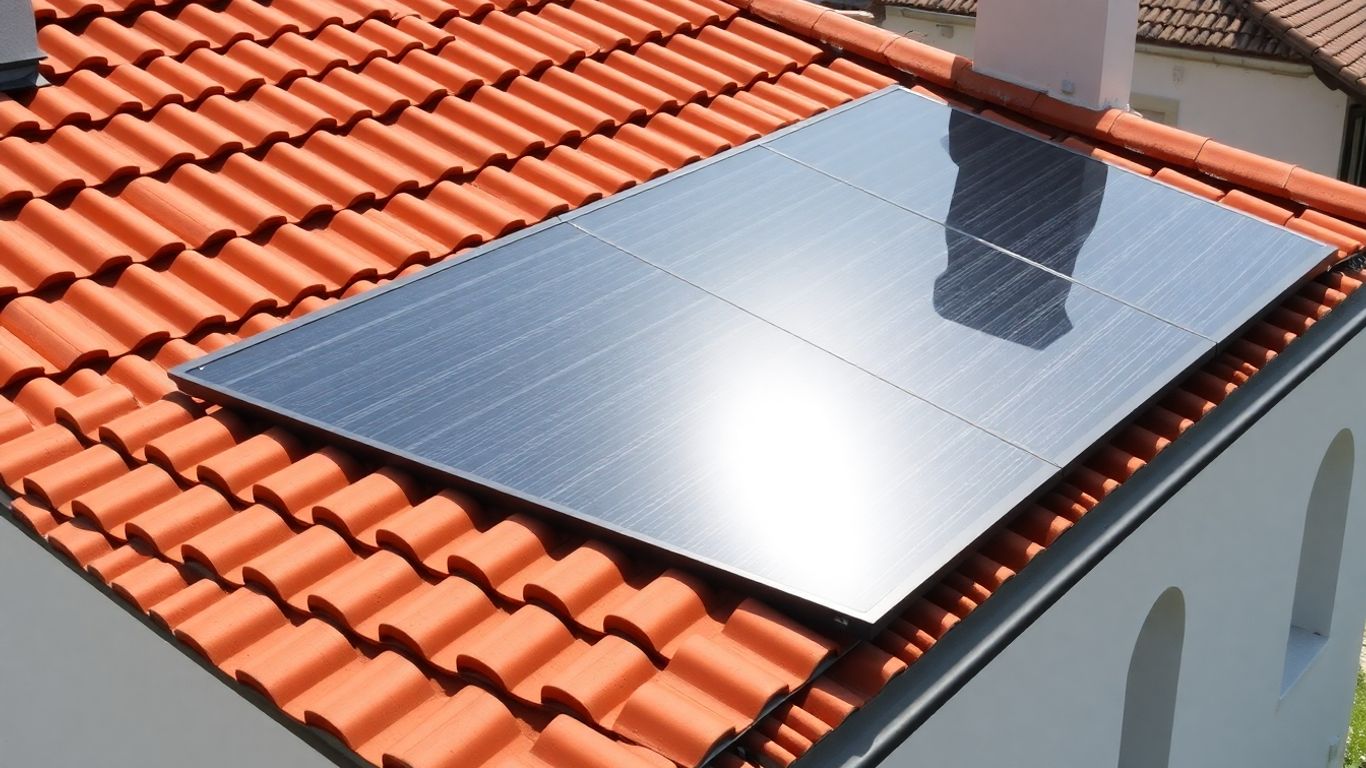
Installing solar panels in an area protected by the Architects of French Buildings (ABF) can seem complex, especially when it comes to respecting the aesthetics of the site. Fortunately, solutions exist to reconcile energy production and heritage preservation. The goal is to make your installation as discreet and integrated as possible.
Red Solar Panels: A Response to Aesthetic Constraints
Given the requirements of the ABF, particularly in Alsace where traditional roofs often have specific colors, red solar panels are a prime alternative. These panels, such as the Tarka 126 VSMS Rubis model from Voltec Solar, are designed to mimic the color of traditional tiles. Their brick-red hue allows for better harmonization with the built environment, thus facilitating ABF approval. It is important to note that despite their specific color, these panels maintain good energy efficiency. They represent a technical solution recognized by the ABF for projects in protected areas.
Building Integration and Discreet Alternatives
Beyond color, building integration is a key point. This involves ensuring that the panels do not detract from the overall appearance of the building or the site. This can be achieved through several approaches:
- Choice of Location: Prioritize areas less visible from public spaces, such as certain roof slopes or discreetly integrated ground-mounted installations.
- Type of Integration: Opt for systems that are directly integrated into the roof (building-integrated photovoltaics) rather than panels placed on a visible structure.
- Dimensions and Layout: Adapt the size and layout of the panels to harmonize with the existing structure.
ABF approval is based on a case-by-case assessment. It is therefore crucial to prepare your file thoroughly in advance, taking into account the local architectural specificities and your municipality’s urban planning rules, such as those specified in the Local Urban Plan.
Choosing Materials for Optimal Landscape Rendering
The choice of materials is not limited to the panels themselves. Mounting structures, wiring, and any other visible elements must also be considered. The objective is to achieve a coherent and discreet overall appearance. For example, using dark-colored panel frames or frames that match the roof can make a difference. Similarly, particular attention to managing wiring to make it as inconspicuous as possible contributes to a better landscape rendering. Choosing an installer experienced in protected areas is a major asset to ensure all these details are taken into account.
Procedures and Timelines for Installing Solar Panels in Protected Areas
Installing solar panels in a protected area, such as those under the Architect of French Buildings (ABF), requires special attention to administrative procedures. It’s not just about putting up panels; a precise process must be followed to obtain the necessary authorization. The first step is to correctly identify the applicable regulations for your situation.
The procedures vary mainly depending on the power of the photovoltaic installation you are considering:
- For installations with a power of 3 kWc or less: A prior declaration of works is generally sufficient. This is a simplified procedure that informs the administration of your project. The processing time is about one month.
- For installations with a power of more than 3 kWc: You will need to submit a building permit application. This file is more substantial and its processing is longer, as it involves a more in-depth analysis of your project and its integration.
In both cases, if your property is located in a protected area (classified site, surroundings of a historical monument, remarkable heritage site, etc.), the ABF’s opinion will be required. This opinion is considered ‘binding,’ meaning the town hall cannot issue the permit if the ABF opposes it, except in case of appeal.
It is important to note that even if your house does not seem directly concerned, it may be located in a buffer zone or a partially protected parcel. If in doubt, always consult your town hall’s urban planning department or use tools like the Atlas of Heritage to check the classification of your parcel.
The average time to obtain the ABF’s opinion can vary. For a prior declaration, it is added to the basic one-month processing time, but the ABF generally must provide its opinion within this timeframe. For a building permit, the processing time is longer (often several months), and the ABF’s opinion is part of this process. It is therefore advisable to anticipate these steps. Thorough preparation of your file, including appropriate aesthetic solutions, can greatly facilitate obtaining this opinion. You can start with a simulation of your solar project to assess its feasibility before you begin.
Installing solar panels without authorization in a protected area carries serious penalties, including fines, the obligation to dismantle the installation, and reimbursement of any public aid received. It is therefore crucial to scrupulously follow the current procedures.
What to Do in Case of an Unfavorable Opinion from the Architect of French Buildings?
Receiving an unfavorable opinion from the Architect of French Buildings (ABF) can seem discouraging, especially after investing time and effort in preparing your solar project. However, it is important to know that this decision is not necessarily a dead end. Several options are available to try to get your installation approved.
Understanding the Reasons for Refusal
The first and arguably most important step is to carefully analyze the reasons cited by the ABF for its unfavorable opinion. Generally, a refusal is linked to a perceived incompatibility between the installation project and the heritage characteristics of the protected site. This could be the visual impact of the panels on the landscape, their architectural integration, or non-compliance with the specific rules of the Local Urban Plan (PLU) or the Remarkable Heritage Site (SPR).
It is therefore essential to request precise explanations from the ABF or the town hall that processed your application. A clear understanding of the blocking points will allow you to target your future actions.
Appeals and Project Modification Options
If you believe the ABF’s opinion is not justified or if you wish to try to have it reconsidered, several steps are possible. The most common approach is to submit a new file with substantial modifications to your initial project. This may involve revising the panel placement, opting for more discreet integration solutions such as solar tiles or specific colored panels (e.g., red solar panels), or installing them on less visible outbuildings. The goal is to demonstrate that you have taken the ABF’s concerns into account and that your project now better respects the protected environment.
Another option is a hierarchical appeal to the regional prefect. You generally have two months from the notification of the unfavorable opinion to initiate this procedure. Your file will then be re-examined by the competent services, often the Regional Directorate of Cultural Affairs (DRAC). It should be noted that this type of appeal is often complex, and the chances of success may be limited if the project has not been significantly adapted.
The Importance of Professional Support
Given the complexity of regulations and administrative procedures, it can be very beneficial to seek professional support. A specialized engineering firm for solar installations, or an architect with knowledge of the constraints related to protected areas, can help you to:
- Precisely analyze the reasons for refusal.
- Propose alternative technical and aesthetic solutions.
- Compile a new, solid, and well-reasoned file.
- Manage appeal procedures if necessary.
This support can make a real difference in obtaining your authorization. Do not forget that installing solar panels in a protected area is subject to the ABF’s binding opinion, meaning their approval is mandatory for your project to materialize. Good preparation and intelligent adaptation of your project are therefore key to overcoming an unfavorable opinion and succeeding in your energy transition. It is always best to prepare your file thoroughly for the Architect of French Buildings to avoid such situations.
Conclusion: Solar Integration in Protected Areas, a Feasible Challenge
Installing solar panels in a protected area can seem complicated, especially with the requirements of the Architects of French Buildings (ABF). But rest assured, it is entirely possible. The key is to prepare your file thoroughly. Show that your project respects the local landscape and architecture. Consider discreet solutions, such as brick-red colored panels that blend better with traditional roofs. If you have any doubts, do not hesitate to seek advice. Good preparation and a careful presentation of your project greatly increase your chances of obtaining approval. Remember that the energy transition and heritage preservation can go hand in hand. Your initiative contributes to a greener future while enhancing your town’s history.
Frequently Asked Questions
What is an ABF zone and why is special approval needed for solar panels?
An ABF zone is an area near a historical monument or a site of special architectural or landscape value. If you want to install solar panels there, you need to get permission from the Architect of French Buildings (ABF). It’s like asking a heritage guardian for permission to ensure your panels won’t spoil the beauty of the area.
How do I know if my house is in an ABF zone?
To find out if your house is affected, you can check your town hall’s Local Urban Plan (PLU). It’s like a rulebook for what you can and cannot do on your property. You can also check websites like ‘Atlas des patrimoines’ provided by the Ministry of Culture. If you’re unsure, it’s best to ask your town hall directly.
What types of solar panels are best accepted by the ABF?
The ABF prefers things that integrate well. Standard solar panels, often black, can be too conspicuous. That’s why there are ‘red’ solar panels or panels in colors that resemble traditional tiles. They are designed to blend into the landscape and are therefore more easily accepted. Direct integration into the roof is also a good option.
How long does it take to get ABF approval?
Once you have prepared your file well and submitted it to the town hall, the ABF generally has one to two months to give its opinion. Be aware that if your file is unclear or missing information, it can take longer and delay your project. You need to be patient and precise!
What should I do if the ABF refuses my solar panel project?
If the ABF says no, the town hall cannot give you the green light. But all is not lost! You can try to understand why they refused and modify your project to better meet their expectations. For example, choose more discreet panels. If that doesn’t work, you can request that the file be re-examined at a higher level, but this is a more complicated process.
Am I at risk if I install solar panels without ABF approval?
Installing solar panels without authorization in a protected area is risky. You could face a fine, be forced to remove everything, and have to repay any aid you received. It is really important to follow the rules and obtain all necessary approvals before starting work.